Potty Training Your Dog: A Comprehensive Guide for Any Age
Potty training is the first real test of patience for every dog owner. Whether you’re starting with an 8-week-old puppy or an adult rescue who never learned the rules, the fundamentals are the same: consistency, timing, and management. I’ve guided hundreds of dog owners through this process, and the ones who succeed aren’t the ones with the “smartest” dogs—they’re the ones who follow the system without shortcuts.
This guide covers potty training for dogs of all ages, from brand-new puppies to adult dogs who need a fresh start. The principles are universal; the timeline varies based on your dog’s age, history, and your consistency.
Understanding Your Dog’s Bladder
Before diving into techniques, you need to understand the biology you’re working with. An 8-week-old puppy can hold their bladder for about 2 hours during the day—sometimes less when they’re active. A general rule: puppies can hold it for roughly one hour per month of age, plus one. So a 3-month-old puppy maxes out at about 4 hours.
Adult dogs can typically hold it for 6-8 hours, but just because they can doesn’t mean they should have to. If you’re potty training an adult dog, start with frequent breaks (every 2-3 hours) and gradually extend as they demonstrate reliability.
Key biological triggers for elimination:
- Waking up from sleep (the bladder fills during rest)
- After eating or drinking (digestion stimulates the bowel and bladder)
- After play or excitement (physical activity increases pressure)
- After a stressful event (fear can trigger elimination)
Every one of these triggers is a potty break opportunity. Miss them, and you’ll have an accident. Catch them, and you’ll have a success to reward.
The Core Potty Training Method
Potty training comes down to three principles: prevent accidents, reward success, and clean up mistakes properly.
Step 1: Establish a Schedule
Dogs thrive on routine. Take your dog to the same potty spot using the same route at these times:
- First thing in the morning (immediately—carry puppies if needed)
- After every meal (within 5-15 minutes)
- After every nap
- After play sessions
- Every 1-2 hours during active time (puppies) or every 3-4 hours (adult dogs)
- Last thing before bed
Step 2: Reward Immediately
When your dog eliminates in the correct spot, praise enthusiastically and give a treat within 2 seconds. Not when you get back inside—right there, right then. Bring treats with you every single time you go out for potty breaks.
Use a consistent cue word like “go potty” or “do your business” while they’re in the act. Over time, this cue will prompt them to eliminate on command—incredibly useful for travel, vet visits, and rushed mornings.
Step 3: Supervise or Confine
Your dog should never be unsupervised in areas where they haven’t proven reliable. This means:
- Direct supervision: Eyes on your dog. If you can’t watch them, they should be confined.
- Confinement options: Crate, exercise pen, or a small puppy-proofed room with easy-to-clean floors.
- Tethering: Clip the leash to your belt loop so your dog stays within arm’s reach. You’ll notice pre-potty signals (sniffing, circling) instantly.
Check Price on Amazon →
Handling Accidents Correctly
If you catch them in the act: Interrupt with a cheerful “Outside!” or clap your hands. Scoop them up (if small enough) and rush to the potty spot. If they finish outside, reward big. If they already finished inside, just clean up—the teaching moment passed.
If you find an accident after the fact: Clean it up silently. That’s it. Your dog cannot connect punishment to something they did minutes or hours ago. Rubbing their nose in it, scolding, or showing them the mess teaches them nothing except that you’re unpredictable and scary.
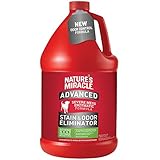
Critical cleaning step: Use enzymatic cleaner only. Regular cleaning products don’t break down the proteins in urine that dogs can still smell. If your dog can smell old urine in a spot, they’ll return to it. Enzymatic cleaners destroy the odor completely.
Potty Training Adult Dogs
Adult dogs from shelters or rescue situations often need potty training from scratch. The process is the same as with puppies, with a few key differences:
Advantages: Adult dogs have larger bladders and better physical control. They can hold it longer between breaks, which means fewer overnight trips and faster progress on the schedule.
Challenges: Adult dogs may have established habits of going indoors (if they were in a shelter kennel or never house-trained). They may also have anxiety-related elimination, especially rescue dogs adjusting to a new home.
Approach: Treat them exactly like a puppy for the first 2 weeks. Frequent breaks, constant supervision, crate when unsupervised. Don’t assume they know the rules just because they’re adults. Once they’ve had zero accidents for 2 weeks, gradually increase their freedom.

Check Price on Amazon →
The Pee Pad Debate
I generally advise against pee pads for dogs being trained to go outside. Pads teach dogs that eliminating indoors is acceptable, which directly contradicts your ultimate goal. Every pad success is technically an indoor accident from the dog’s perspective.
When pads make sense:
- High-rise apartment living where outdoor access takes 5+ minutes
- Elderly or disabled owners who can’t do frequent outdoor trips
- Very small breeds that will primarily use an indoor potty area permanently
- Medical situations where a dog is recovering from surgery
If you must use pads, commit fully to pad training or outdoor training—not both simultaneously. Mixed signals delay the entire process.
Potty Training Regression
It’s normal for dogs to have setbacks. Common causes include:
- Adolescence (6-12 months): Hormonal changes and boundary testing can cause regression. Go back to basics—more frequent breaks, closer supervision.
- Changes in routine: New job schedule, moving to a new home, new family member. Re-establish the schedule in the new context.
- Medical issues: Sudden regression in a previously trained dog warrants a vet visit. UTIs, digestive issues, and diabetes can all cause increased elimination.
- Stress: Thunderstorms, fireworks, separation anxiety, and conflicts with other pets can trigger accidents. Address the underlying stressor.
Regression isn’t failure—it’s a signal to tighten up the management plan and go back to the last level where your dog was reliable.
Frequently Asked Questions
How long does potty training take?
Puppies: Most achieve basic reliability (few accidents) within 2-4 weeks of consistent training. True reliability (can be trusted unsupervised) typically comes at 4-6 months old. Adult dogs: Usually 2-4 weeks for a dog that’s physically healthy and hasn’t had years of indoor elimination habits.
My dog goes outside but then comes in and pees. Why?
They likely didn’t fully empty outside. Stay outside for at least 5-10 minutes after the first elimination. Walk around—movement stimulates the bladder and bowels. Don’t rush back inside the moment they go once.
Should I limit water to prevent accidents?
Never restrict water during the day—dehydration is dangerous. You can pick up the water bowl 2 hours before bedtime to help with overnight bladder capacity, but always provide free access to water during waking hours.
Can I potty train my dog to use a specific area of the yard?
Yes. Always take them to the same spot on leash. The accumulated scent encourages them to use that area. Use your cue word (“go potty”) consistently. Within a few weeks, they’ll head to that spot automatically.
Potty training isn’t glamorous, and it’s not always fun at 2 AM in the rain. But it’s temporary. The strict schedule, the constant vigilance, the treats in your pocket at all hours—it all pays off when your dog reliably takes themselves to the door when they need to go. Stay consistent, clean up accidents without drama, and reward every success like they just won the championship.