
How to Stop Your Dog From Pulling on Leash Without a Harness
You don’t want a harness. Maybe your dog hates wearing one, maybe you think they look ridiculous, or maybe you’ve tried three different harnesses and your dog still pulls like a freight train. Whatever the reason, you want your dog to walk on a regular collar and leash without dragging you down the street.
Good news: it’s entirely possible. Harnesses are tools, not solutions. They manage pulling mechanically, but they don’t teach your dog to stop pulling. A dog who walks nicely without a harness has actually learned to control their own behavior—which is more reliable and more transferable than any piece of equipment.
The bad news: it requires more effort from you, more consistency, and more patience than strapping on a no-pull harness. But the result is a dog who walks well on any equipment, in any situation, because they understand what you’re asking.
Why Your Dog Pulls (And Why Equipment Doesn’t Fix It)
Your dog pulls on the leash for one reason: pulling works. Every time they strain forward and you keep walking, they’ve been rewarded. They got where they wanted to go. The interesting smell, the other dog, the direction of the park—pulling got them there faster.
Check Price on Amazon →
Harnesses manage this by physically redirecting or limiting your dog’s ability to pull. But they don’t change the underlying motivation. Take the harness off and the pulling comes right back. Many dogs even learn to pull differently in a harness—they adjust their body mechanics to work around it.
True loose-leash walking means your dog chooses not to pull. Not because they can’t, but because they’ve learned that staying near you is more rewarding than surging ahead.
Check Price on Amazon →
The Foundation: What You Need Before You Start
The Right Collar
Use a flat buckle collar or a martingale collar. That’s it.
Flat buckle collar: Standard collar that buckles or clips. Works for most dogs. Make sure it fits snugly enough that your dog can’t slip out—you should be able to fit two fingers between the collar and their neck.
Martingale collar: Tightens slightly when your dog pulls, preventing escape, but has a built-in limit so it can’t choke. Excellent for dogs with narrow heads (Greyhounds, Whippets) or dogs who back out of flat collars.
What to avoid:
- Choke chains: Create constant tracheal pressure and can cause serious injury. They also don’t teach anything—they just hurt.
- Prong/pinch collars: Pain-based tools that suppress the behavior without addressing the cause. Many dogs habituate to the pain and pull through it anyway. They also risk creating negative associations with whatever your dog is looking at when the correction happens.
- Slip leads: Fine for brief use (vet visits, shelters) but not ideal for daily walking. Constant tightening on the neck is uncomfortable and doesn’t teach loose-leash skills.
High-Value Treats
You’re competing with the entire outside world for your dog’s attention. Kibble won’t cut it. You need treats that make your dog’s brain light up:
- Small pieces of real cooked chicken
- Hot dog bits (cut into pea-sized pieces)
- String cheese torn into tiny bits
- Freeze-dried liver or lung
- Whatever your dog values most
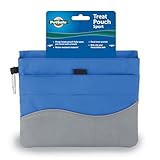
Keep them in a treat pouch on your hip so they’re instantly accessible. Timing matters—a treat delivered 5 seconds late teaches nothing.
Check Price on Amazon →
A 6-Foot Leash
Standard 6-foot leash, not retractable. A retractable leash teaches your dog that pulling extends their range, which directly undermines everything you’re about to train.
The Three-Phase Method
Phase 1: Teach the Position (Indoors)
Before you go outside, your dog needs to understand where you want them. This is not about obedience—it’s about creating an association between a specific position and a reward.
The magnet game:
Check Price on Amazon →
- Stand still with treats in one hand at your side (whichever side you want your dog to walk on)
- When your dog comes to that side, mark it (“yes!”) and deliver a treat right at your leg
- Take 2-3 steps forward
- When your dog is at your side, mark and treat again
- Repeat for 5 minutes, 3 times daily
You’re building a picture: “Being next to this human’s leg = treats appear.” Your dog doesn’t need a command yet. They just need to discover that the position itself is rewarding.
Increase difficulty gradually:
- Walk in different rooms
- Walk in figure-8 patterns
- Walk at different speeds
- Add gentle turns
Only move to Phase 2 when your dog automatically moves to your side when you start walking indoors.
Phase 2: The Penalty Yard (Outdoors, Low Distraction)
Now you take it outside. Your yard, a quiet parking lot, or the least exciting section of your street.
The rules are simple:
- Start walking
- The instant the leash gets tight, stop completely. Don’t jerk, don’t pull back—just stop
- Wait. Don’t say anything. Don’t look at your dog
- The moment the leash goes slack OR your dog looks at you, mark (“yes!”) and treat at your side
- Continue walking
- Repeat every single time the leash tightens
The first session will be maddening. You’ll take 3 steps, stop. 2 steps, stop. 1 step, stop. You might cover 20 feet in 10 minutes. This is the process working. Your dog is learning that pulling makes everything stop.
Add the direction change: When stopping alone isn’t getting the message across, turn and walk the opposite direction when the leash tightens. Don’t yank your dog—just smoothly change direction. They’ll have to follow you. When they catch up to your side, mark and treat.
The direction change is powerful because it’s unpredictable. Your dog can’t pull toward something if they don’t know which direction you’re going next.
Phase 3: Real Walks With the Three-Second Rule
Once your dog can walk on a loose leash in a low-distraction area for 5-10 minutes, you’re ready for real walks. But real walks have real distractions—other dogs, squirrels, interesting smells, people.
The three-second rule: At any moment during the walk, your dog has a 3-second window. If they pull, you stop. If they don’t return their attention to you within 3 seconds, you turn and walk away. If they do come back to you, mark, treat, and you can actually walk toward the thing they wanted (at a loose-leash pace).
This is the key insight most people miss: Let the interesting thing be the reward. Your dog wants to sniff that fire hydrant? Great. Walk toward it on a loose leash, and the fire hydrant is the reward. Pull toward it, and you turn and walk away.
Your dog learns: pulling = we move away from the thing. Loose leash = we go to the thing.
Specific Situations and How to Handle Them
When They See Another Dog
Most leash pulling escalates when your dog spots another dog. Whether they want to play or they’re reactive, the result is the same—they lunge forward and you’re water-skiing.
The protocol:
- See the other dog before your dog does (scan ahead constantly)
- Start rapid-fire treating at your side—one treat every 2-3 seconds
- If your dog notices the other dog but stays at your side, jackpot reward (5 treats rapid-fire)
- If your dog pulls toward the dog, stop. Wait for any attention back to you, then turn and walk away
- Only approach other dogs at a loose-leash pace. Any tension = you stop or turn
When They Hit a Scent Trail
Dogs experience the world through their nose. When they hit a good smell, pulling becomes involuntary—their brain is screaming “INVESTIGATE THIS.”
The deal: Let them sniff, but on your terms. When they start pulling toward a scent, stop. Wait for them to check in with you (even a brief glance). Then say “go sniff” and walk with them to the spot. Give them 15-20 seconds of investigation, then say “let’s go” and reward when they move on.
This turns sniffing from a battle into a structured reward. Your dog learns that checking in with you is the gateway to all the good smells.
When They Pull at the Start of the Walk
Many dogs are worst in the first 5 minutes. They’ve been inside all day, they’re excited, and the walk represents freedom.
Solutions:
- Do 5 minutes of training exercises in your yard before hitting the sidewalk (sits, touches, spins—anything that engages their brain and burns off the initial excitement)
- Don’t leave your property until your dog is on a loose leash. If they pull in the driveway, you haven’t started the walk yet
- Start the walk in the most boring direction (away from the park, away from the route they know)
When They Pull to Go Home
Some dogs pull in both directions—toward the walk and then toward home. Pulling toward home is usually excitement about getting food, getting to their yard, or getting to rest.
Same rules apply. Pulling toward home still means stop and wait. Your dog gets home faster by walking slowly on a loose leash than by pulling and getting stopped every 3 feet.
Troubleshooting Common Problems
“I’ve been doing this for two weeks and nothing’s changed”
Check these common errors:
- Are you ALWAYS stopping? One walk where you “just need to get home” and allow pulling undoes days of training. Consistency must be absolute.
- Are you rewarding frequently enough? In early outdoor training, you should be delivering treats every 5-10 seconds of loose leash walking. Not every minute—every few seconds.
- Is your dog too aroused? If they’re bouncing off the walls before the walk, no technique will work. Burn energy first with fetch, tug, or play.
- Are your treats good enough? If your dog glances at the treat and then pulls anyway, the treat isn’t competing with the environment. Upgrade to real meat.
“My dog walks fine at first but gets worse as the walk goes on”
Your dog is getting mentally fatigued. Loose-leash walking requires concentration, and concentration is exhausting. Keep training walks short—15-20 minutes—and end before your dog falls apart. Longer walks can happen once the behavior is more automatic.
“My dog walks perfectly at home but pulls everywhere else”
Your dog hasn’t generalized the behavior yet. Dogs don’t automatically transfer skills from one environment to another. You need to practice in multiple locations: different streets, different parks, parking lots, pet stores. Each new environment is basically starting from scratch, but it goes faster each time.
“My dog pulls toward every person who wants to pet them”
Ask people not to pet your dog when the leash is tight. Only allow greetings when your dog is sitting calmly with a loose leash. Most people will comply if you explain you’re training. For those who reach for your dog anyway, step between them and your dog. Your training trumps a stranger’s desire to pet your dog.
“I have a large/strong breed and I physically can’t stop them”
If your dog is stronger than you, you need to solve this with smarts, not strength.
- Train during low-energy times (after exercise, not before)
- Start in zero-distraction environments until the behavior is strong
- Use a leash anchored to your waist (hands-free) so your entire body weight is the anchor, not your arms
- Shorten initial walks to 5-10 minutes—better to do a short perfect walk than a long chaotic one
If the physical strength difference makes any collar unsafe, use a front-clip harness temporarily while you build the behavior. The goal is to graduate out of it, not live in it forever.
How Long This Takes
Straight talk: Teaching loose-leash walking on a flat collar, without equipment aids, is one of the hardest skills in dog training. It takes:
- Week 1-2: Indoor work and low-distraction outdoor practice. Progress feels slow.
- Week 3-4: Your dog starts “getting it” in familiar environments. You can walk a block without stopping.
- Week 5-8: The behavior becomes more automatic. You’re stopping less, walking more. New environments still cause regression.
- Month 3+: Most dogs can walk reliably on a loose leash in familiar areas. Novel environments still need refreshers.
Puppies under 6 months learn faster because they have no pulling history. Adult dogs with years of pulling habits take longer because you’re replacing an established behavior.
When to Add a Verbal Cue
Don’t add a command word (“heel,” “with me,” “close”) until your dog is reliably walking at your side without prompting. Adding a cue too early associates the word with confused behavior, not the polished version you want.
Once your dog can do 2-3 minutes of loose-leash walking without treats every few seconds, you can start saying “with me” (or whatever cue you choose) just before you start walking. This labels the behavior they already know.
Frequently Asked Questions
Won’t my dog’s throat get hurt walking on a collar?
A dog walking on a loose leash puts zero pressure on their collar. Pressure only happens when they pull. The training is specifically designed to teach them not to pull, which means collar pressure decreases over time. If your dog is a constant hard puller who hasn’t yet learned loose-leash skills, use a harness during non-training walks to protect their neck while you work on the behavior separately.
My trainer recommends a prong collar. Should I use one?
A prong collar can stop pulling quickly because it causes discomfort when the dog pulls. However, the dog hasn’t learned anything—they’ve just learned to avoid pain. Remove the prong collar and the pulling returns. There’s also risk of creating negative associations with whatever the dog sees when the correction happens (other dogs, people, etc.), which can lead to reactivity. The method in this article takes longer but produces a dog who walks well because they want to, not because they’re afraid not to.
Can I ever let my dog walk in front of me?
Of course. “Loose leash” doesn’t mean “heeling at your side.” It means the leash has slack in it. Your dog can walk ahead of you, beside you, or behind you—the only rule is that the leash stays loose. Many dogs naturally walk a few feet ahead, and that’s fine as long as they’re not pulling.
My dog pulls differently with different family members. Why?
Dogs learn different rules for different people. If one family member is consistent about stopping when the leash is tight and another lets pulling slide, the dog pulls with the permissive handler. Everyone who walks the dog needs to follow the same rules, every time.
Is it okay to use a harness sometimes and a collar other times?
Yes. Many owners use a harness for exercise walks (where the goal is physical activity, not training) and a collar for training walks. As long as you’re consistently training loose-leash skills on the collar, using a harness for other walks won’t undo your progress. Just don’t practice pulling on a harness and then expect good behavior on a collar.
Walking your dog on a simple collar and leash without being dragged is the most fundamental skill in dog ownership, and it’s the one most people struggle with the longest. There’s no shortcut—it takes consistency, repetition, and the discipline to stop walking every single time that leash gets tight. But the dog on the other side of this process is one who walks with you by choice, not because a piece of equipment is forcing them to. That’s a dog who understands what you’re asking and has decided it’s worth their time. And that’s worth the effort.


