My Dog Pulls on Leash Only When Seeing Other Dogs: How to Fix This Specific Trigger
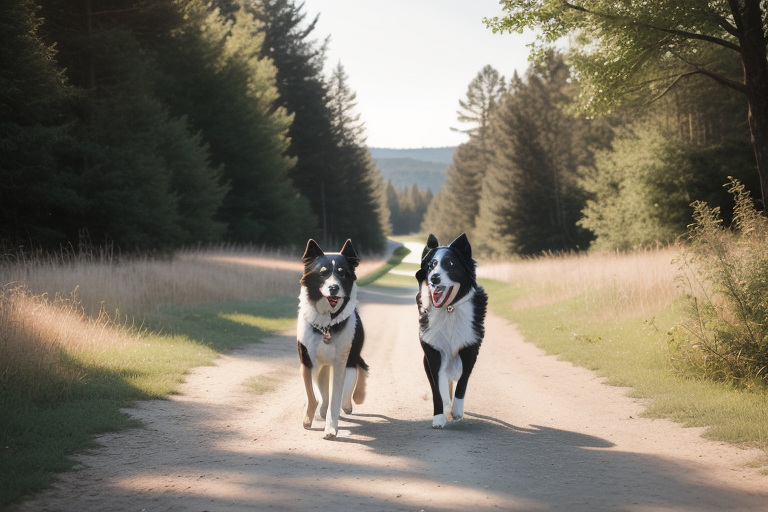
Your dog walks beautifully most of the time. Loose leash, nice pace, checks in with you regularly. Then another dog appears, and your calm, well-behaved companion transforms into a 60-pound missile locked onto a target. The leash goes tight, your shoulder nearly dislocates, and every command you’ve ever taught evaporates like it never existed.
This is one of the most common and most frustrating leash problems dog owners face. Your dog clearly knows how to walk on a loose leash—they prove it on every dogless stretch of sidewalk. The issue isn’t leash training. The issue is specifically what happens in your dog’s brain when they see another dog.
Understanding that distinction is critical, because the fix for dog-specific leash pulling is completely different from general leash training. General pulling is a skills problem. Pulling only toward other dogs is an emotional response problem—and emotional responses require different tools.
What’s Actually Happening in Your Dog’s Brain
When your dog spots another dog on a walk, their brain goes through a rapid cascade:
Step 1: Detection. They see, hear, or smell the other dog. This triggers an immediate arousal spike.
Step 2: Assessment. Their brain quickly categorizes: friend or threat? For most dogs pulling on leash toward other dogs, the answer is “FRIEND! I NEED TO SAY HI RIGHT NOW!” For some, the answer is “THREAT! I NEED TO DEAL WITH THIS!”
Step 3: Emotional overwhelm. Regardless of whether the motivation is friendly or reactive, the emotional intensity overrides their trained behaviors. Their cerebral cortex (the thinking, trained-behavior part) gets hijacked by their limbic system (the emotional, instinctual part).
Step 4: Physical response. They pull, lunge, whine, bark, or some combination of all four.
This is why corrections and commands don’t work in the moment. Your dog isn’t choosing to disobey you. Their brain has literally shifted into a state where learned behaviors are inaccessible. Telling them to “heel” when they’re over threshold is like asking someone having a panic attack to do long division.

Check Price on Amazon →
Friendly Frustration vs. Reactivity
Before you can fix the problem, you need to identify which type of pulling your dog is doing. The approach differs significantly.
Friendly frustration (frustrated greeter):
– Pulls toward other dogs with a wiggly body
– Tail wagging (usually big, sweeping wags)
– Whining or excited barking
– Wants to play, not fight
– Calms down quickly if allowed to greet
– May redirect excitement onto you (jumping, mouthing)
Leash reactivity:
– Pulls with a stiff body
– Hackling (raised fur along the back)
– Hard, direct stare at the other dog
– Growling, snarling, or aggressive-sounding barking
– Lunging with teeth visible
– Doesn’t calm down quickly even when the other dog leaves
Important: Many dogs display a mix of both. Some frustrated greeters look reactive because the frustration of not being able to reach the other dog manifests as barking and lunging. If you’re not sure which category your dog falls into, consult a certified trainer for an assessment.
The Fix for Friendly Frustration
Your dog wants to greet other dogs, and you’re going to use that desire as the reward. The goal is teaching your dog that the fastest way to get to another dog is to walk calmly, not pull.
Step 1: Find Your Dog’s Threshold Distance
Walk your dog on a normal route. When you spot another dog, note the distance at which your dog first notices them. This is their “alert” distance. Then note the distance at which the pulling starts. This is their “threshold” distance.
For most dogs, the alert distance is 50-100 feet and the threshold distance is 20-40 feet. Your training happens between these two distances—close enough that your dog is aware of the other dog, far enough that they can still think.
Step 2: The “Look at That” Game
This technique comes from behavior modification science, and it’s the single most effective tool for dog-specific pulling.
Check Price on Amazon →
How it works:
- You’re walking. You spot another dog at or beyond your dog’s alert distance.
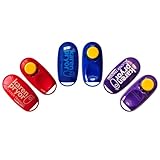
- The moment your dog notices the other dog (head turns, ears perk up), say “yes!” and deliver a high-value treat at your side.
- You’re literally rewarding your dog for looking at the other dog. This feels counterintuitive, but stay with me.
- Repeat: your dog looks at the other dog, you mark and treat. Look at dog, mark and treat.
- After 3-5 repetitions, most dogs start a pattern: look at other dog → look back at you (expecting the treat). This is the magic moment.
- When they automatically look back at you after spotting a dog, jackpot reward (5 treats rapid-fire, verbal praise).

Check Price on Amazon →
What you’re building: An automatic response chain. Dog appears → your dog looks → your dog looks back at you → reward. Over time, seeing another dog becomes a cue to check in with you instead of a trigger to pull.
Step 3: Gradually Decrease Distance
Once your dog is reliably doing the “look at that” pattern at their alert distance, close the gap by 5 feet. Practice at the new distance until it’s easy. Then close another 5 feet.
This is a weeks-long process, not a days-long one. Rushing the distance decrease will blow up the training. If your dog starts pulling at a new distance, you’ve moved too close too fast. Back up to where they were successful.

Check Price on Amazon →
Step 4: Add the “Say Hi” Reward
Once your dog can walk past another dog at 10-15 feet without pulling, you have a powerful new reward to use: controlled greeting.
The protocol:
- You see a dog. Your dog notices and checks in with you. Mark and treat.
- Say “let’s go say hi” and walk toward the other dog at a loose-leash pace.
- If the leash goes tight, stop immediately. Wait for the leash to go slack.
- Resume walking toward the other dog.
- If the leash stays tight for more than 5 seconds, turn and walk away. The greeting is canceled.
- If your dog walks on a loose leash all the way to the other dog, they get the greeting.
Your dog learns the ultimate lesson: pulling = you move away from the dog. Loose leash = you walk toward the dog. The thing they want most in the world becomes the reward for the behavior you want most.
Practical note: This requires cooperation from the other dog’s owner. Ask from a distance: “My dog is in training, can we do a controlled greeting?” Most dog owners are happy to help. If the other owner can’t or won’t cooperate, use it as a “Look at That” practice session instead.
The Fix for Leash Reactivity
If your dog is reactive (stiff body, growling, aggressive behavior) toward other dogs on leash, the approach is different. You’re not dealing with excitement—you’re dealing with fear, anxiety, or aggression that needs professional-level behavior modification.
Counter-Conditioning and Desensitization (CC&D)
This is the gold standard for leash reactivity. The principle is simple: change your dog’s emotional response to other dogs from negative to positive.
How it works:
- Identify your dog’s threshold distance (where they react).
- Position yourself WELL beyond that threshold—far enough that your dog notices the other dog but doesn’t react.
- Every time your dog sees the other dog, deliver a constant stream of high-value treats (chicken, cheese, hot dogs). Not one treat—a continuous flow.
- When the other dog is out of sight, the treats stop.
- The association: other dog = amazing food raining from the sky. No other dog = nothing special.
The timeline: This takes weeks to months. You’re changing an emotional response, not teaching a skill. Progress is slow and nonlinear. Some days will be great. Some days your dog will react at a distance they were fine with yesterday. This is normal.
Management While You Train
Reactivity training takes time, and you still need to walk your dog in the meantime.
Strategies:
- Cross the street when you see another dog approaching. Distance is your best friend.
- Do a U-turn before your dog hits threshold. Don’t wait until they’re already reacting.
- Use visual barriers. Step behind a parked car, a bush, or a fence when a dog passes.
- Walk at off-peak times. Early morning and late evening typically have fewer dogs.
- Drive to quiet locations. A short drive to a less-populated trail or neighborhood gives you more distance to work with.
When to Hire a Professional
Leash reactivity—especially if it involves aggression—benefits enormously from professional guidance. A certified applied animal behaviorist (CAAB) or a certified professional dog trainer (CPDT-KA) with experience in reactivity can:
- Accurately assess whether the behavior is fear-based, frustration-based, or aggression-based
- Create a custom desensitization protocol for your specific situation
- Help you read your dog’s body language more accurately
- Adjust the plan when you hit plateaus
This is not a failure on your part. Reactivity is one of the most complex behavior issues in dog training, and professional support significantly improves outcomes.
Common Mistakes That Make the Problem Worse
Tightening the Leash When You See a Dog
Your instinct is to shorten the leash and hold your dog close when another dog appears. This does three harmful things:
- Physical tension on the leash increases your dog’s arousal
- Your dog reads your tension and concludes that other dogs are something to worry about
- The tight leash triggers the opposition reflex (pulling against pressure)
Instead: keep the leash at its normal length. If you need to prevent contact, use distance (cross the street) rather than leash tension.
Saying “It’s Okay” or “Leave It” Repeatedly
Verbal reassurance doesn’t reassure dogs. Your anxious tone actually confirms that there’s something to worry about. And “leave it” only works if your dog is below threshold—once they’re in emotional overdrive, verbal commands don’t register.
Instead: stay silent or use a calm, upbeat tone. Your body language speaks louder than words.
Punishing the Reaction
Yelling at your dog, jerking the leash, or using a shock collar when they react to another dog creates a worse association: “Other dogs appear AND then I get hurt/scared.” This intensifies the emotional response and can turn a frustrated greeter into a genuinely reactive dog.
Instead: manage the distance and reward calm behavior. Prevention and positive association beat punishment every time.
Forcing Greetings
“Oh, they just need to meet and they’ll be fine.” This is one of the most dangerous assumptions in dog training. Forcing a reactive dog into close contact with another dog can result in a fight, a bite, or a severely traumatic experience that sets training back months.
Instead: let your dog set the pace. Greetings happen when your dog can approach calmly, not when you decide they should.
Avoiding All Dogs
Going to the opposite extreme—never walking where dogs are—prevents your dog from ever learning to cope. They need controlled, gradual exposure to improve. Avoidance maintains the problem.
Instead: seek out controlled exposure at distances your dog can handle. Training classes specifically for reactive dogs can be invaluable.
Building a Long-Term Protocol
Week 1-2: Assess and Manage
- Identify your dog’s threshold distance for different contexts (passing dogs, stationary dogs, small dogs vs. large dogs)
- Start “Look at That” practice at comfortable distances
- Manage all real-world encounters with distance and avoidance
- Stock up on high-value treats (you’ll go through a lot)
Week 3-4: Build the Pattern
- Your dog should be starting to check in with you when they spot dogs at longer distances
- Begin slowly decreasing distance
- Practice in multiple locations
- Note which scenarios are easier and which are harder
Week 5-8: Generalize
- Practice in increasingly challenging environments
- Start working with controlled setups (friend’s calm dog at a measured distance)
- Introduce the controlled greeting protocol for friendly frustration dogs
- Continue CC&D for reactive dogs
Month 3+: Maintenance
- Expect continued improvement with occasional regression
- Keep treating for dog-sightings (you can reduce frequency but don’t stop entirely)
- New environments or high-stress days may cause setbacks—this is normal
- Annual refresher sessions help maintain the behavior
Frequently Asked Questions
My dog is fine with dogs at the dog park but pulls toward every dog on leash. Why?
The leash is the difference. Off-leash, your dog can approach, sniff, and communicate using normal dog body language. On-leash, they can’t. The restraint creates frustration (or anxiety) that doesn’t exist off-leash. This is one of the most common patterns, and it responds well to the protocols above.
Should I let my pulling dog greet other dogs?
Only if you can do it on your terms (loose leash approach, controlled greeting). Allowing greetings while the leash is tight rewards the pulling and teaches your dog that pulling gets them what they want. If you can’t manage a controlled greeting, skip it.
Will neutering/spaying fix my dog’s pulling toward other dogs?
Unlikely. Leash pulling and reactivity are behavioral, not hormonal. Neutering may slightly reduce same-sex aggression in some dogs, but it won’t affect friendly frustration or leash-specific behavior. Training is the solution.
My dog only pulls toward certain dogs (big dogs, small dogs, specific breeds). What does this mean?
Your dog has specific triggers within the broader “other dogs” category. This is actually useful information—it tells you where to focus your training. Practice the protocols with the specific type of dog your dog reacts to most, starting at greater distances than you’d need with less-triggering dogs.
How do I handle it when another off-leash dog runs up to us?
This is a management situation, not a training opportunity. Put yourself between your dog and the approaching dog. Use a firm “No!” to the approaching dog. If possible, toss a handful of treats at the approaching dog to redirect them. If the situation escalates, pick up your small dog or move behind a barrier with your large dog. Then report the off-leash dog to the owner (if present) or local animal control.
A dog who pulls only toward other dogs isn’t a bad walker—they’re a dog with one very specific trigger that overrides everything else they’ve learned. That’s actually encouraging, because it means the foundation is already there. You don’t need to teach loose-leash walking from scratch. You need to change your dog’s emotional response to one specific stimulus. It takes patience and consistency, but the reward is a dog who can pass another dog on the sidewalk without turning your walk into a wrestling match.