Dog Lunges at Other Dogs on Leash Training: A Complete Guide to Leash Reactivity
If your dog lunges, barks, or pulls frantically toward other dogs while on leash, you're not alone. Leash reactivity is one of the most common and frustrating challenges dog owners face. The good news? With patience, consistency, and the right training techniques, most dogs can learn to walk calmly past their canine neighbors.
This comprehensive guide will walk you through everything you need to know about training a leash-reactive dog, from understanding why it happens to implementing proven behavior modification techniques.
Why Dogs Lunge at Other Dogs on Leash
Before we dive into training solutions, it's crucial to understand what's happening in your dog's mind when they lunge at other dogs. Leash reactivity isn't about your dog being mean or aggressive—it's usually about fear, frustration, or excitement.
Fear-Based Reactivity
Many dogs lunge because they're scared. When a dog feels threatened and can't escape (because they're attached to a leash), they may choose to make themselves look bigger and scarier. The lunging, barking, and growling are their way of saying "stay away from me!" This defensive behavior often works—the other dog usually does go away—which reinforces the behavior.
Frustration-Based Reactivity
Some dogs are actually friendly and desperately want to greet other dogs, but the leash prevents them from doing so. This creates intense frustration that explodes into lunging and barking. These dogs might play perfectly well off-leash but lose their minds when restrained.
Check Price on Amazon →
Barrier Frustration
The leash itself can create what behaviorists call "barrier frustration." Your dog knows they can't reach what they want, and this restriction intensifies their emotional response. It's similar to how people might feel more agitated when stuck in traffic versus walking freely.
Poor Socialization History
Dogs who missed critical socialization windows as puppies or had negative experiences with other dogs may not know how to communicate appropriately. Their lunging might stem from never learning proper canine social skills.
Understanding Trigger Stacking
One critical concept in managing leash reactivity is trigger stacking. This refers to the accumulation of stressful events that build up in your dog's system before they finally react.
Think of your dog's tolerance like a bucket. Each stressful event—a loud noise, a scary truck, someone jogging past—adds water to that bucket. When the bucket overflows, your dog reacts. Individual triggers might not cause a reaction on their own, but when they stack up throughout a walk, even a small trigger can cause an explosion.
This explains why your dog might handle seeing another dog calmly at the beginning of a walk but lunge at a dog later on. Their stress bucket has been filling up with each stimulus they encountered.
Managing Trigger Stacking
- Keep early training walks short and in low-distraction environments
- Give your dog "decompression time" after stressful events
- Notice what fills your dog's bucket and avoid stacking too many triggers in one outing
- Consider whether your dog had enough rest before the walk
- Monitor your own stress levels—dogs are incredibly perceptive and can feel your tension through the leash

Check Price on Amazon →
The Importance of Threshold Distance
The single most important concept in training leash reactivity is working under threshold. Your dog's threshold is the distance at which they notice another dog but can still think, learn, and respond to you. Once they cross that threshold and go into reactive mode, learning stops.
For some dogs, the threshold might be 100 feet or more. For others, it might be 20 feet. Your job is to figure out your dog's specific threshold distance and always work within it during training.
How to Identify Your Dog's Threshold
Watch for these early warning signs that you're approaching threshold:
- Body stiffening or freezing
- Fixed stare at the other dog
- Ears forward and alert
- Stopping and refusing to move
- Increased panting or drooling
- Not responding to their name or simple commands they know well
When you see these signs, you're at the edge of threshold. You want to work at a distance where your dog is aware of the other dog but still relaxed enough to take treats and respond to you.
The Look At That (LAT) Game
The Look At That game is a cornerstone technique for treating leash reactivity. Developed by trainer Leslie McDevitt, LAT teaches your dog that looking at their trigger predicts good things and that they can choose to look away and check in with you.
How to Play the LAT Game
Step 1: Start at a distance where your dog notices other dogs but remains calm (under threshold). Bring high-value treats your dog absolutely loves.
Step 2: When your dog looks at another dog, immediately say "yes!" or click if you use a clicker, and give them a treat. You're marking the moment they look at the other dog, not when they look back at you.
Step 3: Repeat this process. Your dog looks at trigger, you mark it, you reward. Over many repetitions, your dog learns that seeing other dogs predicts treats from you.
Step 4: Eventually, your dog will start to automatically look back at you after noticing another dog, as if to say "Where's my treat?" This is the breakthrough moment—your dog has learned to disengage from the trigger on their own.
LAT Game Tips
- Be patient—this process takes weeks or months, not days
- Always work under threshold; if your dog lunges, you're too close
- Use extremely high-value treats like small pieces of chicken, cheese, or hot dogs
- Keep sessions short (5-10 minutes) to prevent stress buildup
- Practice in different locations with various distractions
- Don't ask your dog to sit or perform other commands initially—just reward the looking
Behavior Adjustment Training (BAT)
Behavior Adjustment Training, developed by Grisha Stewart, is another powerful approach to treating leash reactivity. BAT focuses on giving your dog the opportunity to learn new behaviors through natural reinforcement.
The Core Principle of BAT
The key insight of BAT is that what your dog actually wants is often distance from the trigger or the opportunity to gather more information about it. Instead of using treats as the primary reinforcer, you use functional reinforcements—giving your dog what they actually want in that moment.
How to Practice BAT
Step 1: Set up a training scenario with a helper dog at a distance well under your dog's threshold.
Step 2: Let your dog approach at their own pace on a long line (15-20 feet). Don't lure or pull them forward.
Step 3: Watch for "replacement behaviors"—calmer behaviors your dog chooses instead of lunging, such as sniffing the ground, looking away, shaking off, or checking in with you.
Step 4: The moment you see a replacement behavior, mark it with a word like "yes" and immediately move away from the trigger. The reward is gaining distance from what makes them uncomfortable.
Step 5: After a break, allow your dog to approach again if they want to. Over time, your dog learns they have control over the situation and develops better coping strategies than lunging.
Why BAT Works
BAT works because it addresses the root of the problem—your dog's emotional response to other dogs. Instead of just managing the symptoms (the lunging), you're helping your dog feel differently about the trigger itself. It also gives your dog agency and choice, which reduces stress and builds confidence.
The Emergency U-Turn Technique
No matter how carefully you plan, you'll eventually encounter a dog at closer range than expected. The emergency U-turn is a crucial management tool for these situations.
Training the Emergency U-Turn
Step 1: In a distraction-free environment, practice having your dog turn and walk quickly in the opposite direction with you. Use a verbal cue like "let's go!" in a happy, excited voice.
Step 2: Make yourself very interesting—pat your legs, make happy noises, jog backward if needed. Reward generously when your dog turns with you.
Step 3: Practice this in increasingly distracting environments until it's automatic.
Step 4: When you see a trigger dog approaching, before your dog reaches threshold, use your cue and execute a quick, positive U-turn. Get to a safe distance, then reward your dog heavily.
U-Turn Dos and Don'ts
- DO keep your energy upbeat and positive, not panicked
- DO reward your dog after you've moved away
- DON'T yank or drag your dog
- DON't wait until your dog is already reacting—be proactive
- DO practice regularly in low-stress situations so it's second nature
Essential Management Tools
While you're working on training, proper management tools can make the process much easier and safer.
Front-Clip Harnesses
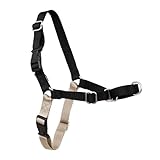
A front-clip harness (where the leash attaches at the chest) gives you better control and naturally turns your dog toward you when they pull. This makes it much harder for your dog to lunge forward with full force. Popular options include the Freedom Harness and the Easy Walk Harness.
Double-Ended Leashes
These leashes have clips at both ends, allowing you to attach to both a collar and harness simultaneously. This provides maximum control and safety during training.
Long Lines for Practice
For practicing BAT and other techniques in controlled environments, a 15-20 foot long line gives your dog freedom to move while you maintain control. Never use retractable leashes for reactive dogs—they don't provide adequate control.
High-Value Treats
Regular kibble won't cut it for reactivity training. You need treats your dog finds irresistible—real meat, cheese, freeze-dried liver, or whatever makes your dog's eyes light up. Keep them in an easily accessible treat pouch.
Visual Barriers
Sometimes the best tool is simply blocking your dog's view. If a dog appears suddenly, stepping in front of your dog or moving behind a car can prevent a reaction and give you time to create distance.
Creating a Training Plan
Successful reactivity training requires a systematic approach. Here's how to structure your training plan.
Week 1-2: Assessment and Management
- Identify your dog's threshold distance
- Note all triggers (certain dog types, sizes, or situations)
- Get proper equipment (front-clip harness, treat pouch, high-value rewards)
- Choose low-traffic times and locations for walks
- Practice emergency U-turns in distraction-free environments
- Avoid situations that will cause reactions—focus on management, not training
Week 3-6: Foundation Building
- Begin LAT game at distances well under threshold
- Practice name response and basic attention exercises without distractions
- Gradually introduce controlled exposures to triggers at safe distances
- Keep sessions very short (5-10 minutes)
- End each session on a positive note
- Continue avoiding over-threshold situations
Week 7-12: Gradual Progression
- Slowly decrease distance to triggers as your dog shows progress
- Introduce different types of trigger dogs (various sizes, colors, energy levels)
- Practice in different locations
- Add mild distractions to your training
- Continue heavy reinforcement for calm behavior
Month 4+: Real-World Application
- Begin practicing in busier environments
- Gradually increase difficulty
- Always be ready to increase distance if needed
- Continue rewarding heavily for good choices
- Remember that this is ongoing maintenance, not a "fixed forever" problem
Common Mistakes to Avoid
Many well-intentioned owners accidentally make leash reactivity worse. Here are the most common pitfalls:
Flooding
Flooding means exposing your dog to their trigger at full intensity, hoping they'll "get used to it." This approach typically backfires spectacularly with reactive dogs, making the problem worse and potentially causing long-term psychological damage. Always work gradually and under threshold.
Punishment-Based Methods
Yanking the leash, yelling, or using shock collars when your dog reacts might suppress the visible behavior temporarily, but they don't address the underlying emotion. In fact, these methods often increase fear and anxiety, making the root problem worse. Your dog may also associate the punishment with the presence of other dogs, strengthening the negative association.
Inconsistency
Allowing your dog to react sometimes but not others sends confusing messages. Everyone in your household needs to follow the same training protocol. Inconsistency dramatically slows progress.
Moving Too Fast
The most common mistake is progressing too quickly. If your dog has multiple reactions in a week, you're moving too fast. Back up to an easier level where your dog can succeed consistently.
Tight Leash Tension
Keeping the leash tight communicates tension to your dog and restricts their natural body language, which can actually trigger more reactivity. Practice keeping a loose leash (except during an actual lunge, when safety requires maintaining control).
When to Hire a Professional Trainer
While many cases of leash reactivity can be improved with dedicated owner training, some situations call for professional help.
Signs You Should Hire a Trainer
- Your dog has bitten or attempted to bite another dog
- The reactivity is getting worse despite your training efforts
- You feel unsafe or unable to control your dog
- Your dog shows reactivity toward people as well as dogs
- You're feeling overwhelmed, discouraged, or unsure how to proceed
- Your dog shows other concerning behaviors (resource guarding, aggression in the home)
- You've been working on the problem for several months without improvement
Finding the Right Trainer
Look for trainers with specific experience in reactivity and aggression. Seek out professionals with certifications like CPDT-KA, KPA-CTP, or CBCC-KA. Most importantly, find someone who uses force-free, positive reinforcement methods. Avoid anyone who promotes dominance theory, alpha rolls, or punishment-based techniques.
A good trainer will want to see your dog in action, will create a customized plan for your specific situation, and will teach you how to continue the training independently. They should explain the science behind their methods and make you feel empowered, not dependent.
Realistic Expectations and Long-Term Success
It's important to set realistic expectations for your reactive dog's progress. Leash reactivity is not typically "cured" in a few weeks. Most dogs need months of consistent training to show significant improvement.
What Success Looks Like
Success doesn't necessarily mean your dog wants to greet every dog they see. For many reactive dogs, success means they can walk past other dogs calmly at a reasonable distance without lunging or excessive stress. That's a huge achievement.
You might always need to be more aware on walks than owners of non-reactive dogs. You might always carry high-value treats. You might always choose less crowded walking times. That's okay—these are small accommodations for the safety and wellbeing of your dog.
Celebrating Small Wins
Notice and celebrate incremental progress:
- Your dog looked at another dog and looked back at you without prompting
- You got three feet closer before your dog reacted
- Your dog recovered from seeing a trigger more quickly than before
- You successfully executed an emergency U-turn
- Your dog had a full walk with no reactions
These small victories add up to major behavior change over time.
Taking Care of Yourself
Living with and training a reactive dog can be stressful and emotionally draining. It's not uncommon for owners to feel embarrassed, frustrated, or isolated. Remember that leash reactivity is incredibly common, and you're not failing as an owner.
Take breaks when you need them. It's okay to sometimes choose low-stress activities like backyard play or mental enrichment games instead of walks. Your mental health matters too, and your dog will benefit from a calmer, more patient handler.
Consider joining online support groups for reactive dog owners. Connecting with others who understand your challenges can provide valuable emotional support and practical tips.
Final Thoughts
Training a dog who lunges at other dogs on leash is challenging, but it's far from hopeless. With patience, consistency, and the right techniques, most reactive dogs can learn to walk more calmly past their triggers. The key is understanding why your dog reacts, working under threshold, using positive reinforcement methods like the LAT game and BAT, and celebrating incremental progress.
Remember that every dog is an individual, and what works for one might not work for another. Be flexible, stay patient, and don't hesitate to seek professional help when needed. Your commitment to helping your dog feel safer and more comfortable in the world is what matters most.
The journey may be long, but the reward—peaceful walks with your dog—is absolutely worth the effort.


