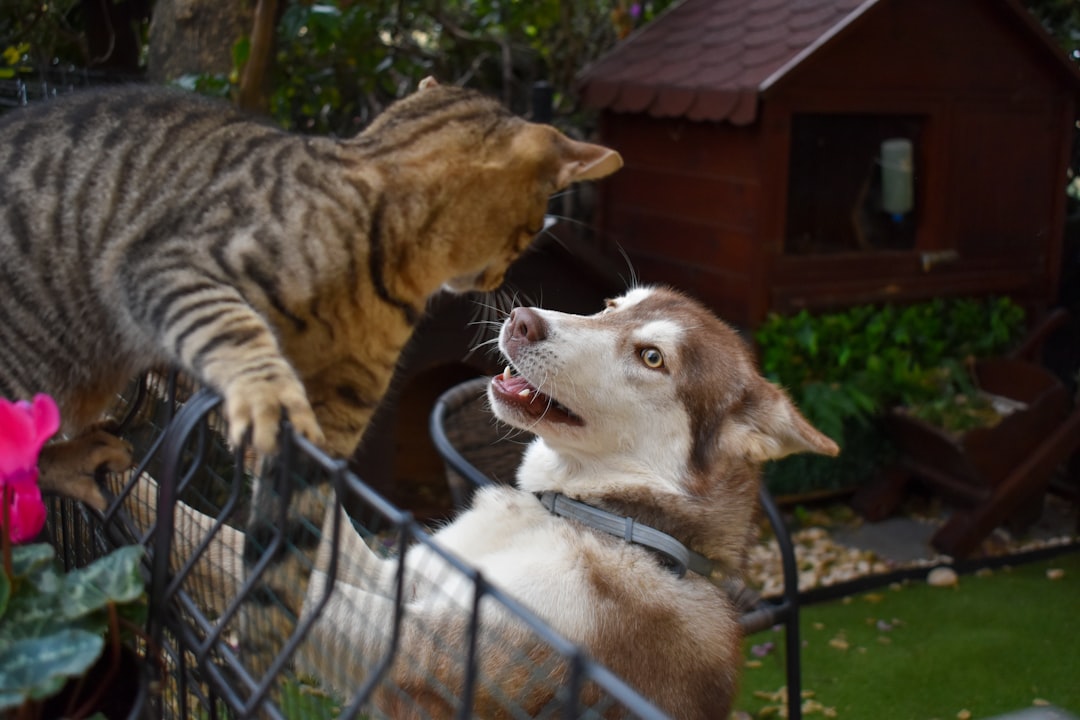
Dog Aggressive Toward Cats? Training Fixes That Work
Introduction
Picture this: You're relaxing on the couch when your cat strolls into the room. In an instant, your dog's body goes rigid. Ears forward. Eyes locked. Before you can react, your dog launches across the room in a frenzy of barking and lunging. Your cat bolts for safety, and your heart is racing just as fast.
If you've experienced this gut-wrenching moment, you're not alone. Dog-cat aggression is one of the most stressful behavioral issues pet owners face. It transforms your home from a peaceful sanctuary into a constant battleground of management and worry. You find yourself living in two separate households under one roof, always vigilant, always one step away from disaster.
Here's the good news: dog-cat aggression is not a life sentence. With the right approach, consistency, and commitment, the vast majority of dogs can learn to coexist peacefully with cats—or at the very least, to ignore them completely. I've worked with hundreds of dog owners facing this exact challenge, and I've seen remarkable transformations when people follow proven training protocols.
What This Guide Will Cover
This comprehensive guide walks you through everything you need to transform your dog's relationship with cats:
- Assessment: How to determine whether your dog's behavior stems from prey drive, fear, territorial aggression, or overexcitement
- Safety protocols: Critical steps to protect your cat while training progresses
- Training techniques: Step-by-step methods using positive reinforcement and desensitization
- Realistic timelines: What to expect week by week, and how to measure progress
Understanding What You're Really Dealing With
Success starts with understanding that dogs and cats are fundamentally different species with distinct communication styles. What looks like playful behavior to your dog may signal a life-threatening attack to your cat. Your dog's intense stare—which means "I'm concentrating" in dog language—reads as "I'm hunting you" to a cat.
Many dogs chase cats not from malice, but from hardwired predatory instincts triggered by fast movement. Others react from fear, frustration, or simple lack of proper socialization. Your dog isn't "bad"—they're responding to natural drives that need to be redirected and managed.
Setting Realistic Expectations
Let me be direct: this process takes time. You won't fix dog-cat aggression in a weekend, or even in a week. Depending on your dog's age, breed, intensity of the behavior, and your consistency with training, you're looking at anywhere from several weeks to several months of dedicated work.
But I can also tell you this: most dogs can learn to live peacefully with cats. I've seen reactive terriers learn to nap beside cats. I've watched high-prey-drive herding breeds completely ignore feline roommates. The key ingredients are your commitment, the right techniques, and realistic expectations about the journey ahead.

Check Price on Amazon →
The transformation is possible. Your home can become peaceful again. Let's get started.
Understanding Why Dogs Show Aggression Toward Cats
Before you can address your dog's aggressive behavior toward cats, you need to understand what's actually driving it. Many owners assume their dog simply "hates cats," but the reality is far more nuanced. The behavior you're seeing likely stems from one of several distinct causes—and identifying the right one is crucial for choosing an effective training approach.
The Predatory Chase Sequence Explained
What looks like aggression is often prey drive—a hardwired hunting sequence that begins with eye-stalk-chase-grab-bite. When your dog spots a cat, their brain may automatically engage this sequence, especially if the cat runs. Sight hounds like Greyhounds and Whippets, terriers bred for hunting small animals, and herding breeds with strong chase instincts are particularly prone to this response.
The trigger? Movement. A cat darting across the yard activates your dog's predatory motor patterns faster than conscious thought. Add in high-pitched meows or hissing, and you've got a sensory cocktail that's nearly irresistible to certain dogs. Even the cat's scent can prime your dog's nervous system for the chase.
Here's the key distinction: prey-driven dogs often appear focused, intense, and eerily quiet during the approach. They're not barking furiously or showing fear signals—they're locked on target.
Fear vs. Prey Drive: Identifying the Root Cause
Not all cat-directed aggression stems from hunting instincts. Some dogs are genuinely afraid of cats, especially if they've been scratched or cornered by one. Fear-based aggression looks different: you'll see whale eyes (whites of eyes showing), pinned-back ears, a tucked tail, or a dog trying to increase distance while barking defensively.
Territorial aggression is another possibility. If your dog perceives the cat as an intruder in "their" space, they may display stiff body language, raised hackles, and barrier frustration—particularly intense when separated by a
Check Price on Amazon →
or window.
Redirected aggression happens when your dog gets worked up by seeing a cat they can't reach, then redirects that arousal onto whatever's nearby—including you or another pet.
The socialization window matters enormously here. Puppies exposed to calm, confident cats between 3-14 weeks old typically develop neutral or positive associations. Miss that critical period, and you're working against stronger instincts and less neural flexibility.
When Aggression Is Actually Overstimulation
Sometimes what appears as aggression is really frustration-based arousal. Your dog desperately wants to interact with (or chase) the cat but can't, creating mounting tension. This often manifests as frantic barking, lunging, spinning, or even self-directed behaviors like scratching at doors.
Previous experiences shape these responses too. A dog who once successfully "caught" a cat may have that behavior reinforced. Conversely, a dog punished harshly for cat interest may develop anxiety-fueled reactivity around felines.
Understanding your specific dog's motivation—prey drive, fear, territoriality, frustration, or some combination—is the foundation for everything that follows. Watch your dog's body language carefully, consider their breed background, and think about their history with cats. This detective work will guide your entire training plan.
Assessing Your Dog's Level of Cat Aggression
Before you can help your dog overcome cat aggression, you need to understand exactly what you're dealing with. Not all dog-cat interactions are created equal—there's a world of difference between curious interest and dangerous predatory drive.
The Threshold Distance: Finding Your Dog's Breaking Point
Your dog's threshold distance is the magic number where they can see a cat but still respond to you. Start by observing from far away—across the street or at the end of your yard—and gradually note where your dog's behavior changes.
At a safe distance, your dog might glance at the cat, then look back at you. That's good—they're still thinking. Move closer, and you might see their body stiffen. Keep approaching, and they may lunge or bark. That point where they stop responding to their name? That's their threshold.
Use a

Check Price on Amazon →
during these initial assessments so you can maintain control while giving your dog enough distance to display natural behavior. Never rush this process—safety comes first for both species.
Body Language Clues That Predict Aggression
Learning to read your dog's signals is crucial. Here's what to watch for, in order of intensity:
Early warning signs (manageable):
- Brief glances toward the cat
- Ears perked forward with interest
- Slight body tension
- Whale eye (showing whites of eyes)
Escalating arousal (intervention needed):
- Fixed, hard stare lasting several seconds
- Stalking posture: lowered body, slow deliberate steps
- Raised hackles along the spine
- Body weight shifted forward onto front legs
- Tail high and rigid, or tucked and tense
Dangerous territory (immediate separation required):
- Lunging against the leash
- Sustained, intense barking or growling
- Snapping or air biting
- Complete inability to disengage focus
- Trembling from excitement or arousal
The key difference between manageable interest and predatory behavior? Recovery time. A curious dog redirects attention within seconds. A dog in prey drive remains fixated, often shaking with intensity, and may not respond even to high-value treats.
When to Seek Professional Help Immediately
Some situations require expert intervention from a certified veterinary behaviorist or credentialed dog behavior consultant:
- Your dog has already injured or killed a cat
- Your dog shows intense predatory sequences (stalk-chase-grab) even at maximum distance
- Aggression has escalated rapidly over weeks
- Your dog redirects aggression toward people when interrupted
- You have cats at home and your dog shows any concerning behaviors
Medical considerations matter too. Pain, thyroid issues, or neurological problems can amplify aggressive responses. Schedule a thorough vet exam before assuming this is purely behavioral. I've seen dogs whose "cat aggression" improved dramatically after treating an undiagnosed ear infection or joint pain.
Environmental factors also play a role. Is your dog frustrated from lack of exercise? Are they seeing outdoor cats through windows, rehearsing the behavior daily? Does the aggression worsen at certain times? These patterns provide valuable clues for creating an effective training plan.
Remember: honest assessment prevents dangerous situations. It's always better to overestimate the severity and work cautiously than to put anyone at risk.
Creating a Safe Environment Before Training Begins
Before you attempt a single training exercise, you need to hit the pause button on your dog's access to your cat. I know this sounds basic, but management is actually where most people fail. Every time your dog lunges, barks, or chases your cat, they're practicing that behavior—and what gets practiced gets stronger.
Management Tools That Prevent Rehearsal of Aggression
Think of management as your training foundation. Your goal is zero unsupervised interactions until your dog has proven they can remain calm around your cat.
Here's what effective separation looks like:
- Physical barriers: Install
Check Price on Amazon →
at key doorways to create distinct dog zones and cat zones. For determined dogs, you may need stacked gates or floor-to-ceiling barriers.
– **Separate rooms**: Dedicate specific areas of your home to each pet. Your cat gets the bedroom and office; your dog gets the living room and kitchen.
– **Exercise pens**: These create flexible, moveable boundaries that let you adjust your setup as training progresses.
– **Visual barriers**: Attach cardboard or fabric to gates so your dog can’t spend hours staring at the cat. This constant fixation builds obsession rather than calmness.
Establish completely separate routines for feeding, bathroom breaks, and playtime. Your dog should never "accidentally" encounter the cat because you forgot to close a door.
Why Your Cat Needs Escape Routes
Your cat didn't ask to be trapped in a home with a predatory dog. Give them options.
Vertical territory is essential. Cats feel safest when they can get up high, so install:
- Wall-mounted shelves creating a "cat highway" near the ceiling
- Tall cat trees in multiple rooms
- Cleared-off bookshelf space where only the cat can access
Place these escape routes strategically near doorways and in rooms where training will eventually happen. Your cat should never feel cornered—they need to know they can always retreat to safety. This isn't just about physical safety; it's about preventing your cat from developing anxiety or aggression issues of their own.
Muzzle Training: When and How to Introduce It
Let's be honest: if your dog has made contact with your cat, lunged intensely, or has a high prey drive, muzzle training is non-negotiable for safety.

Check Price on Amazon →
I recommend basket-style muzzles that allow panting, drinking, and taking treats—never use fabric "grooming" muzzles for training work.
Introduce the muzzle gradually before you need it:
- Let your dog sniff it and reward with treats
- Hold it while feeding treats through the openings
- Briefly slip it on, reward immediately, then remove
- Build up duration over multiple sessions until your dog is comfortable wearing it for 20-30 minutes
This process typically takes 5-7 days. Never skip ahead or use the muzzle as punishment.
Finally, tire your dog out. A dog who's had a 45-minute walk and worked through a puzzle toy is far less likely to obsess over the cat. Mental and physical exercise lower arousal levels, making your dog more capable of learning. This isn't optional—it's fundamental to success.
Foundation Training: Building Impulse Control and Focus
Before you can address your dog's cat aggression, you need to build a solid foundation of impulse control and focus. Think of it this way: a dog who can't ignore a dropped treat isn't ready to ignore a running cat. We're building the mental muscles your dog needs to make better choices when those feline triggers appear.
The 'Watch Me' Command: Your Most Important Tool
The "watch me" or "look at me" command is your secret weapon. When your dog makes eye contact with you, they literally cannot stare at the cat. Start in a boring environment with zero distractions:
- Hold a treat near your eyes and say "watch me"
- The instant your dog makes eye contact, mark it with "yes!" and reward
- Gradually increase the duration from 1 second to 5-10 seconds
- Practice in different rooms, then your yard, then on walks
The real magic happens when you can get your dog's attention away from something interesting. Once your dog understands the basic command, practice near mild distractions—a toy on the floor, another person walking by, or birds outside a window. Your goal is a dog who reflexively checks in with you when they see something exciting.
Check Price on Amazon →

Check Price on Amazon →
Impulse Control Games That Build Self-Regulation
Impulse control isn't about dominance—it's about teaching your dog that good things come to those who wait. These exercises create a dog who thinks before acting:
"Leave It" Progression: Start with a treat in your closed fist. When your dog stops pawing or sniffing, immediately reward with a different treat. Graduate to treats on the floor, then toys, then practice near windows where cats might appear. Always reward compliance generously—you're competing with the cat's interest level.
Sit-to-Say-Please: Your dog must sit before anything good happens—meals, walks, petting, doorways. This builds a default "check with my human first" mentality instead of reactive lunging.
The Wait Command: Practice having your dog wait before going through doors, exiting the car, or approaching their food bowl. Hold them in position for 3-5 seconds initially, building to 30+ seconds. This transfers directly to "wait, don't chase that cat."

Check Price on Amazon →
Teaching Your Dog to Disengage on Cue
This is the skill that changes everything. You need your dog to voluntarily look away from the cat and back to you.
Emergency U-Turn: While walking on-leash, suddenly turn 180 degrees and move in the opposite direction while saying "let's go!" in a happy voice. Reward your dog for following. This becomes your escape hatch when you spot a cat ahead.
Pattern Games: Use "1-2-3 Treat" to build engagement. Count out loud while dropping treats between your dog's front paws. The predictable pattern keeps their brain engaged with you instead of scanning for cats. When something interesting appears, continue the pattern—your dog learns you're more rewarding than environmental distractions.
Practice these foundations for 10-15 minutes daily, broken into short 2-3 minute sessions. Solid impulse control takes 4-6 weeks to develop, but it's the difference between managing and actually solving cat aggression.
Counter-Conditioning and Desensitization Protocol
Counter-conditioning works by changing your dog's emotional response to cats from "threat!" to "treat!" When you pair the presence of a cat (or cat-related stimulus) with something your dog absolutely loves, you're rewiring their brain at a fundamental level. This isn't about obedience—it's about shifting how your dog feels when they encounter a cat.
The science is solid: repeated positive associations create new neural pathways. Instead of your dog's amygdala firing up with predatory or fear-based aggression, they start anticipating good things. But this only works when done correctly, at the right pace, and below your dog's reaction threshold.
Step-by-Step Desensitization From Distance to Close Proximity
Start far from actual cats. Begin with indirect stimuli:
Week 1-2: Indirect Exposure
- Present a cloth that's been rubbed on a cat
- Play recordings of cat sounds at low volume
- Show cat toys or photos
Immediately follow each presentation with high-value rewards. Keep sessions short—3-5 minutes maximum.
Week 3-4: Visual Exposure at Distance
Once your dog can handle indirect stimuli calmly, set up controlled visual exposure. Use a
Check Price on Amazon →
or window to create a safe barrier. Start at whatever distance keeps your dog under threshold—this might be 50 feet or more.
The moment your dog notices the cat but before they react, mark with "yes!" and deliver treats continuously. We're rewarding the awareness, not the aggression.
Week 5+: Gradual Distance Reduction
Decrease distance only when your dog consistently shows relaxed body language. This might mean reducing by just 5 feet per week. There's no rushing this process.
Choosing Rewards That Truly Motivate Your Dog
Regular kibble won't cut it. You need rewards your dog would do backflips for:
- Small pieces of cheese
- Hot dogs
- Freeze-dried liver
- Real meat or fish
- Whatever makes your specific dog lose their mind
Keep rewards pea-sized and delivered rapidly—we want continuous reinforcement when the cat is visible.
Check Price on Amazon →
Reading Your Dog's Stress Signals During Training
Watch for these signs you're pushing too fast:
- Stiff body posture
- Whale eye (showing whites of eyes)
- Lip licking or yawning
- Panting when not hot
- Inability to take treats
- Fixated staring
If you see these, you've gone over threshold. Create more distance immediately.
What to Do When Your Dog Goes Over Threshold
If your dog reacts aggressively despite your precautions, don't panic—but do act quickly:
- Interrupt calmly: Use a verbal marker like "let's go" (not a harsh correction)
- Increase distance: Move away until your dog can disengage
- Don't reward after a reaction: Wait for calm behavior
- Note the distance: Next session, start further away
- Never punish: This increases stress and worsens aggression
The golden rule: Your dog should never practice aggressive behavior during training. Every aggressive rehearsal strengthens the neural pathway you're trying to weaken. If your dog is regularly reacting, you're working too close, too fast.
Plan sessions 2-3 times daily, keeping them short and successful. Consistency matters more than duration. This protocol takes weeks or months, not days—but it creates lasting change when done right.
Practical Training Exercises and Protocols
Now that your dog understands basic impulse control, it's time to introduce structured exercises that specifically address cat-directed arousal. These protocols build on each other, so resist the urge to skip ahead—slow progress is lasting progress.
The 'Look at That' Game: Turning Triggers into Rewards
The LAT game, developed by trainer Leslie McDevitt, transforms your dog's natural instinct to notice the cat into a rewarded behavior. Instead of trying to stop your dog from looking at the cat (impossible), you'll reward the looking itself—but only calm looking.
Start with your cat in a carrier or behind a
Check Price on Amazon →
at a distance where your dog notices but doesn’t react intensely. The moment your dog looks at the cat, mark it with “yes!” and immediately deliver a high-value treat. Your timing matters—reward the glance, not what happens after.
Check Price on Amazon →
Practice in 3-5 minute sessions. You'll know it's working when your dog starts glancing at the cat, then immediately whipping their head back to you expecting a reward. This creates a new association: "Cat presence = good things happen when I stay calm."
Common mistake: Only rewarding when your dog looks away from the cat. That teaches avoidance, not calmness. We want your dog comfortable acknowledging the cat exists.
Structured Parallel Activity Training
Once your dog can handle stationary exposure, introduce movement—but controlled movement. Set up parallel walking exercises where you walk your dog on one side of a hallway while someone carries the cat in a carrier on the other side, moving in the same direction.
Keep these sessions short (30-60 seconds initially) and reward continuously for any calm behavior: loose body, soft eyes, or checking in with you. Gradually increase duration before decreasing distance.
Next level: Practice while the cat moves naturally in a protected space. Your cat roams freely behind a baby gate while your dog practices basic obedience nearby—sits, downs, eye contact. Start at whatever distance maintains your dog's ability to respond to cues. If they can't sit when asked, you're too close.
Increase duration before difficulty. Your dog should comfortably handle 10 minutes of the cat moving around protected space before you consider closer proximity.
Advancing to Supervised Same-Room Time
This stage requires patience—sometimes weeks or months of preparation. Use a
Check Price on Amazon →
so you can intervene instantly without grabbing at your dog (which creates tension).
Incorporate positive interrupters before your dog fixates: a kissy noise, their name in a happy tone, or a pre-trained "touch" cue where they bop your hand with their nose. These redirect attention before arousal builds.
Practice relaxation protocols simultaneously. Have your dog lie on a

Check Price on Amazon →
or mat while the cat is present. Reward stillness and calm breathing every few seconds initially, gradually extending the time between treats.
Context matters: Practice in different rooms, at different times of day, with different people present. Dogs don't automatically generalize—calm behavior in the living room doesn't guarantee calm behavior in the kitchen. Treat each new location as a mini training exercise.
Remember: these exercises build tolerance, not friendship. Your goal is peaceful coexistence, not forced interaction.
Long-Term Management and Realistic Expectations
Let's talk honestly: not every dog will cuddle with your cat on the couch, and that's completely okay. Managing your dog's prey drive or cat reactivity isn't about achieving some Instagram-worthy fantasy—it's about creating a safe, peaceful home where everyone can coexist comfortably.
Can All Dogs Live Peacefully With Cats?
The truth? Some dogs will eventually ignore cats completely. Others will learn to coexist respectfully with management. And yes, a small percentage will always need strict separation.
Your outcome depends on several factors:
- Prey drive intensity: A retired racing greyhound may always see cats as prey, while a laid-back Cavalier might just need basic impulse control work
- Your dog's history: A dog who has already injured or killed a cat faces a much steeper road than one who's just overly enthusiastic
- Consistency: Weekend warriors get weekend results—daily practice is non-negotiable
- Individual personalities: Some cats are confident and set boundaries; others bolt at the slightest movement, triggering chase behavior
Realistic goal: Most dogs can learn to remain calm in the same room with a cat behind a
Check Price on Amazon →
. Many progress to supervised coexistence. Fewer achieve completely reliable, unsupervised interaction—and that’s the truth nobody wants to hear but everyone needs to know.
How Long Does This Training Actually Take?
If someone promises you'll fix cat aggression in two weeks, run the other direction.
Typical timelines:
- Mild reactivity (barking, fixating): 6-12 weeks of consistent training
- Moderate issues (lunging, intense arousal): 3-6 months minimum
- Severe aggression (biting, attack behavior): 6-12+ months, possibly lifelong management
I've seen dedicated owners achieve supervised coexistence in eight weeks. I've also worked with dogs who, after six months of daily training, still couldn't be trusted alone with cats—but could peacefully exist in separate zones of the house.
Progress isn't linear. You'll have breakthrough days followed by frustrating setbacks. That's normal, not failure.
Maintaining Progress for Life
Here's what successful long-term management looks like:
Weekly practice sessions: Even after your dog reliably ignores the cat, do 10-minute training refreshers twice weekly. Use the same commands and reward calm behavior around the cat.
Environmental management: Keep
Check Price on Amazon →
strategically placed throughout your home. When your dog spontaneously chooses to look at you instead of fixating on the cat, capture that moment with a reward.
Recognize stress signals: Whale eyes, stiff posture, or intense staring means your dog isn't as "fine" as they appear. Interrupt and redirect before arousal escalates.
Celebrate the small stuff: Your dog walked past the cat's food bowl without lunging? Victory. They held a down-stay while the cat crossed the room? Massive win. These everyday moments are the success.
Know your limits: If you're constantly vigilant and anxious, permanent separation might be the kindest choice for everyone. A baby gate creating separate living zones isn't defeat—it's responsible pet ownership.
Some dogs genuinely become cat-friendly. Others learn reliable neutrality with supervision. Both outcomes represent successful training. The goal isn't perfection—it's safety, reduced stress, and a home where both species can thrive in whatever capacity works for your specific pack.
Frequently Asked Questions
How long does it take to train a dog to stop being aggressive toward cats?
There's no one-size-fits-all timeline, but expect 3-6 months of consistent work for moderate cases. Dogs with deeply ingrained prey drive or fear-based aggression may need a year or more. The key factors? Your dog's age, how long the behavior has existed, and your consistency with training. A puppy showing mild interest is much quicker to redirect than a 5-year-old with years of practiced chasing behavior.
Can any dog learn to coexist peacefully with cats?
Most dogs can learn to tolerate or even befriend cats, but some have prey drives so strong that safe coexistence isn't realistic. Breeds developed for hunting small game (terriers, sighthounds) often struggle more, though individuals vary widely. Be honest about your dog's behavior—if they show intense, uncontrollable fixation despite months of training, management (keeping them separated) might be your safest long-term solution.
My dog is fine with our cat but aggressive toward strange cats. Is this normal?
Absolutely. Dogs can absolutely distinguish between "their" cat who's part of the family and unfamiliar cats in the yard. This is actually progress! It shows your dog can learn impulse control. For outdoor situations, work on strong recall and "leave it" commands. A
Check Price on Amazon →
gives you control during outdoor training sessions without giving your dog full freedom to chase.
Should I punish my dog for going after the cat?
No. Punishment often backfires by increasing stress and potentially creating negative associations with the cat. Your dog might think "when the cat appears, bad things happen to me," which can actually intensify aggression. Instead, interrupt the behavior with a calm "uh-uh" or redirect to an incompatible behavior (like sitting or coming to you), then reward heavily when they comply.
What if my dog has already hurt my cat?
This requires immediate professional help from a certified dog behaviorist or veterinary behaviorist. In the meantime, complete separation is non-negotiable—use
Check Price on Amazon →
setups or separate rooms to ensure everyone’s safety. Never leave them unsupervised together, even for a moment. Some dogs with a bite history toward cats simply cannot be safely rehabilitated, and rehoming to a cat-free environment may be the kindest option for everyone.
My cat antagonizes my dog. Whose behavior should I address first?
Both! Cats who swat, hiss, or run erratically can trigger a dog's prey drive or defensive reactions. Give your cat vertical escape routes (cat trees, shelves), safe zones the dog can't access, and reward calm behavior from both animals. The dog still needs to learn impulse control regardless of the cat's behavior—"the cat ran" doesn't excuse chasing.
Is it too late to train an older dog?
Never. While older dogs with established habits need more patience, they're absolutely capable of learning new behaviors. Senior dogs often have the advantage of being calmer and less impulsive than youngsters.
Frequently Asked Questions
Can a dog with high prey drive ever be trusted alone with a cat?
Many dogs with strong prey drive can learn to coexist peacefully with cats under supervision but should never be left alone together unsupervised. Success depends on the individual dog's arousal level, training consistency, and the ability to generalize calm behavior. Some dogs will always require physical separation when owners aren't present, and this is a responsible management choice, not a training failure.
How do I know if my dog's aggression toward cats is too dangerous to work on at home?
Seek immediate professional help if your dog has already injured or killed a cat, shows intense predatory behavior with zero response to commands, or displays resource guarding aggression that escalates rapidly. Red flags include a dog who becomes completely fixated and unreachable, shows no calming signals or warnings before attacking, or has bitten humans when prevented from reaching cats. A certified veterinary behaviorist can assess whether medication combined with behavior modification is needed.
What's the difference between a dog that wants to chase cats and one that wants to hurt them?
Chase-motivated dogs display playful body language (play bows, loose body, pausing to reengage) and often stop or slow down when the cat stops running. Dogs with true predatory aggression show intense stalking behavior, hard stares, stiff body posture, and typically don't stop at a warning swat from the cat. The key difference is arousal level and intent signals: playful dogs are bouncier and more responsive while predatory dogs are calculated and focused.
My dog is fine with my cat but aggressive toward strange cats outside—is this normal?
Yes, this is very common and shows your dog has learned to accept your specific cat as a family member but hasn't generalized that calm behavior to all cats. Territorial behavior and barrier frustration (window or fence reactivity) often amplify aggression toward outside cats. This pattern is actually easier to manage since your dog has proven they can coexist with cats; you'll focus training on generalization and threshold management for outdoor cat encounters.
Should I let my cat defend itself by scratching my dog to teach the dog a lesson?
No—allowing confrontations where either pet gets hurt is dangerous and can worsen aggression rather than resolve it. A cat's defensive scratching can increase a dog's reactivity, create fear-based responses, or intensify predatory behavior. Proper training focuses on creating positive associations and preventing rehearsal of aggressive behavior entirely, not on corrections or allowing natural consequences that could lead to injury or trauma for both animals.