Recall Training for a Dog That Runs Away: The Complete Guide
Few things are as terrifying as watching your dog bolt away from you at full speed, ignoring your desperate calls. Whether your dog slips out the front door, takes off at the park, or disappears into the woods after a squirrel, a failed recall can be dangerous — even deadly. The good news is that recall training, even for dogs with a history of running away, is absolutely achievable with the right approach, patience, and consistency.
In this comprehensive guide, we will walk you through exactly why dogs run away, how to build a bulletproof recall from the ground up, and the management strategies that keep your dog safe while you train. This is not about quick fixes. This is about building a genuine, reliable communication system between you and your dog.
Why Dogs Bolt: Understanding the Root Cause
Before you can fix a recall problem, you need to understand why your dog is running in the first place. Dogs do not bolt to spite you or because they are bad. They run because something in the environment is more rewarding than coming back to you — and that is a training problem, not a character flaw.
Common Reasons Dogs Run Away
- Prey drive: Squirrels, rabbits, cats, and birds trigger a deeply hardwired chase instinct. For many breeds, this drive is incredibly powerful and can override even well-trained behaviors.
- Social motivation: Your dog spots another dog or a friendly human and wants to say hello. Off-leash greetings have become more rewarding than staying with you.
- Fear or panic: Fireworks, thunderstorms, or sudden loud noises can send a dog into flight mode. A panicking dog is not thinking — they are reacting on pure survival instinct.
- Boredom and under-stimulation: Dogs who do not get enough physical exercise or mental enrichment may bolt simply because the outside world is far more interesting than their daily routine.
- Reproductive drive: Intact males and females in heat are significantly more likely to roam. Hormones can make even well-trained dogs unpredictable.
- Learned behavior: If your dog has successfully escaped before and had a great time — running free, exploring, playing keep-away while you chased them — they have learned that bolting pays off.

Check Price on Amazon →

Check Price on Amazon →
Understanding your dog specific motivation is critical because it shapes your training plan. A dog who runs to chase squirrels needs a different approach than a dog who bolts out of fear.
Check Price on Amazon →
The High-Value Rewards Hierarchy
Here is the uncomfortable truth about recall training: you are competing with the entire outside world. That means your rewards need to be spectacular. Not just good — spectacular. The foundation of reliable recall is making coming back to you the best thing that happens to your dog all day.
Building Your Reward Hierarchy
Think of rewards on a scale from 1 to 10. Regular kibble is a 1 or 2. You need to figure out what your dog considers a 9 or 10 and reserve those rewards exclusively for recall training.
- Tier 1 (everyday): Regular kibble, verbal praise, a pat on the head. These are fine for simple behaviors like sit at home.
- Tier 2 (good): Commercial training treats, small pieces of cheese, carrot bits. Good for general training sessions.
- Tier 3 (great): Hot dog pieces, string cheese, freeze-dried liver, cooked chicken. These should come out for recall practice.
- Tier 4 (jackpot): Real steak bits, sardines, a special toy that only appears for recalls, or a chance to chase a flirt pole. These are your emergency recall rewards.
The Jackpot Principle
When your dog comes to you on a recall, do not hand them one tiny treat and call it done. Throw a party. Give them five or six treats in a row, one at a time, while telling them how brilliant they are. This is called a jackpot and it creates a strong positive association with the recall cue. Your dog should think every time I hear that word and run back, something amazing happens.
One crucial rule: never use your recall rewards for anything else. If hot dogs are your recall treats, they only appear when your dog comes when called. This keeps them special and high-value.
The Long Line: Your Most Important Safety Tool
A long line is a lightweight leash, typically 15 to 30 feet long, that gives your dog freedom to move while keeping you in control. It is hands-down the most important tool in recall training, and it is non-negotiable during the training process.

Check Price on Amazon →
Why the Long Line Matters
Every time your dog ignores your recall and runs off successfully, they are practicing the wrong behavior. They are learning that ignoring you works and is fun. The long line prevents this from happening. It ensures that your dog cannot self-reward by blowing you off.
How to Use a Long Line Correctly
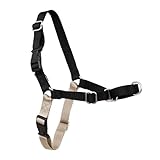
- Attach it to a harness, not a collar. If your dog hits the end of the line at speed, a collar can cause a neck injury. A back-clip harness distributes the force safely.
- Let it drag on the ground. Do not hold the line taut. Let your dog feel like they have freedom. You are only there as a safety net.
- Never yank the line to reel your dog in. The long line is not for pulling your dog to you. It is for preventing them from leaving the area. If you call and they do not respond, gently pick up the line and guide them toward you, then reward generously.
- Use it in every outdoor session until recall is reliable. This might take weeks or months. That is fine. Patience here prevents dangerous situations later.
Check Price on Amazon →
Think of the long line as training wheels on a bicycle. It is there to prevent falls while your dog builds the skills to succeed without it. You will fade it out gradually as your dog proves reliable.
The Chase Me Game Reversal
One of the worst things you can do when your dog runs away is chase them. When you run toward your dog, you are playing their favorite game — keep away. And you will lose every time because your dog is faster than you.
Flip the Script
Instead of chasing your dog, make your dog chase you. Here is how to train this:
- Step 1: In a safe, enclosed area, call your dog name in an excited, high-pitched voice.
- Step 2: The moment they look at you, turn and run away from them. Make yourself exciting — wave your arms, make silly noises, run in a zigzag pattern.
- Step 3: When your dog catches up to you (and they will — dogs cannot resist chasing a moving target), throw a huge party. Treats, praise, play, the whole package.
- Step 4: Repeat this game multiple times per week. It teaches your dog that moving toward you is the most fun thing in the world.
This game taps into the same chase instinct that makes your dog run after squirrels, but it redirects that energy toward you. Over time, your dog starts to see you as the most exciting thing in any environment.
Emergency Application
If your dog does get loose and will not come to you, resist every urge to chase. Instead, run in the opposite direction while calling their name excitedly. Drop to the ground and pretend to find something interesting. Most dogs cannot resist investigating. This is not a guaranteed solution, but it works far more often than chasing.
Starting in Low-Distraction Environments
One of the biggest mistakes people make with recall training is starting in the hardest possible environment. They take their untrained dog to a busy dog park and expect them to come when called while surrounded by dozens of playmates, smells, and distractions. That is like taking a student who just learned to add and putting them in a calculus exam.
The Distraction Ladder
Build your recall training systematically, starting from the easiest scenarios and slowly increasing difficulty:
- Level 1 — Inside your home: Practice recall in your living room with no distractions. This is where your dog first learns what the recall cue means.
- Level 2 — Your backyard: More smells and distractions, but still a familiar, controlled space.
- Level 3 — Quiet street or empty field: New environment, but minimal distractions. Use your long line here.
- Level 4 — Park with some distractions: Other people walking by, some distant dogs, birds. Still on the long line.
- Level 5 — Busier environments: Parks with other dogs nearby, hiking trails with wildlife smells, areas with more foot traffic.
- Level 6 — High distraction environments: Near dog parks, areas with squirrels, places with lots of other dogs. This is the final exam, and you should not be here until your dog is nailing every previous level.
Only move to the next level when your dog is succeeding at least 8 out of 10 times at the current level. If they start failing, you have moved up too quickly. Go back a level and practice more.
Proofing Progression: Making Recall Bulletproof
Proofing means testing your dog recall under increasingly challenging conditions. This is different from the distraction ladder — proofing involves adding specific variables one at a time to strengthen the behavior.
Variables to Proof Against
- Distance: Start with recalls from 5 feet away, then 10, then 20, then 50. Increase distance gradually.
- Duration: Can your dog hold a stay and then recall from a distance after 10 seconds? 30 seconds? A full minute?
- Distractions: Practice with food on the ground nearby, with toys scattered around, with other dogs at increasing proximity.
- Your body position: Can your dog recall when you are sitting down? Lying on the ground? Facing away from them?
- Different locations: A recall that works in your backyard but nowhere else is not a reliable recall. Practice in as many locations as possible.
- Different people: Can other family members call your dog successfully? Practice with everyone in the household.
The Two-Recall System
Many professional trainers recommend having two separate recall cues: an everyday recall and an emergency recall.
Your everyday recall (like come or here) is for daily use. It should be reliable, but it is okay if it is not perfect in every situation.
Your emergency recall (a unique word like now or a specific whistle) is reserved for true emergencies. This cue should be paired with the absolute best rewards you have — real meat, a favorite toy, something extraordinary. Practice it sparingly (once or twice a week) so it never loses its power. When your dog hears this cue, they should turn on a dime and sprint to you because the reward history is so strong.
Fence and Gate Management
While you are training recall, management is your best friend. No amount of training matters if your dog escapes through a gap in the fence every Tuesday.
Securing Your Property
- Inspect your fence regularly. Walk the perimeter looking for gaps, loose boards, spots where the ground has eroded underneath, or areas where a determined dog could climb or jump.
- Install coyote rollers or lean-in extensions on top of fences if your dog is a climber or jumper.
- Add a secondary barrier at gates. A simple baby gate or exercise pen inside the main gate creates an airlock system. Even if one gate opens, the dog hits a second barrier.
- Use door manners training. Teach your dog that doors and gates opening does not mean they can charge through. Practice wait at every door until released.
- Post signs for visitors. A simple do not open gate, dog in yard sign can prevent well-meaning visitors from accidentally letting your dog out.
Door Dashing Prevention
For dogs who bolt out the front door, create a management protocol:
- Keep a leash hanging by the front door at all times.
- Teach a place command — your dog goes to a specific spot (a mat or bed near the door) whenever the doorbell rings.
- Use baby gates to block access to the front door area when you are expecting deliveries or guests.
- Never open the door while your dog is crowding it. Wait until they are sitting or on their place.
GPS Trackers: Your Safety Net
No matter how good your training is, accidents happen. A GPS tracker on your dog collar can be a literal lifesaver.
What to Look For in a GPS Tracker
- Real-time tracking: You want to see your dog location updating live, not on a delay.
- Geofencing: Set up a virtual boundary around your property. If your dog crosses it, you get an alert immediately.
- Battery life: Look for trackers that last at least several days on a single charge.
- Durability and waterproofing: Your dog tracker needs to survive rain, mud, swimming, and rough play.
- Cellular coverage: Most GPS trackers use cellular networks. Make sure the tracker network has good coverage in your area.
Popular Options
Products like the Fi collar, Apple AirTag (limited range but useful in urban areas), and Tractive GPS are popular choices among dog owners. Each has different strengths depending on your needs and location. A GPS tracker is not a substitute for training, but it provides invaluable peace of mind while you work on building that reliable recall.
Common Recall Training Mistakes to Avoid
Even well-intentioned owners can accidentally sabotage their recall training. Here are the most common pitfalls:
- Calling your dog only for unpleasant things. If come always means the fun is over — leash goes on, they go in the crate, or bath time starts — your dog will learn to avoid it. Call your dog, reward them, and let them go play again most of the time.
- Repeating the cue. Saying come, come, COME, COME HERE teaches your dog that the first few repetitions do not matter. Say it once. If they do not respond, go get them with the long line. Then make it easier next time.
- Punishing your dog when they finally return. Even if your dog took 20 minutes to come back, you must reward them when they arrive. Punishing a dog for returning teaches them that coming to you is dangerous.
- Moving through distraction levels too quickly. Impatience is the enemy of recall training. Go slow to go fast.
- Only practicing during training sessions. Recall should be practiced randomly throughout the day — in the house, in the yard, on walks. The more varied the practice, the stronger the behavior.
A Sample Recall Training Plan
Week 1-2: Foundation
- Choose your recall cue (a word or whistle you have never used before if your current cue is poisoned).
- Practice 10-15 recalls per day inside your home.
- Every single recall earns a jackpot reward.
- Play the chase me game in the house or yard daily.
Week 3-4: Backyard
- Move training to your yard on a long line.
- Practice recalls when your dog is mildly distracted (sniffing, exploring).
- Continue indoor recalls as well.
- Begin proofing for distance — call from farther away.
Week 5-8: Low Distraction Outdoor
- Take training to quiet outdoor locations on the long line.
- Practice recalls around mild distractions.
- Begin introducing your emergency recall with ultra-high-value rewards.
- Start door manners and gate training.
Week 9-12: Increasing Distractions
- Practice in environments with moderate distractions.
- Proof for distance, duration, and different body positions.
- Test recall with other family members.
- Begin lengthening the long line or using a lighter one.
Week 13 and Beyond: Advanced Proofing
- Practice near high-distraction environments (still on long line).
- Gradually allow more freedom as success rate stays above 80 percent.
- Continue random daily recalls for the life of your dog.
- Never stop rewarding recalls — even years from now, make coming to you worth it.
Final Thoughts
Recall training for a dog that runs away is not a weekend project. It is a commitment that requires consistent daily practice, management to prevent escapes during the training process, and a willingness to make yourself more interesting than the entire outside world. But the payoff is extraordinary — the freedom and peace of mind that comes with knowing your dog will come back to you, no matter what.
Start today. Grab some high-value treats, choose a new recall cue, and practice five recalls in your living room. That is step one. Every recall you practice is one more deposit in the bank of reliability. And remember: management first, training second. Keep your dog safe with fences, long lines, and GPS trackers while you build the recall of your dreams.