How to Stop Your Dog From Being Reactive to Other Dogs
If your dog lunges, barks, growls, or completely loses it when they see another dog on a walk, you are not alone. Reactivity is one of the most common behavioral challenges dog owners face, and it can make every walk feel like a stressful ordeal. The embarrassment, the anxiety, the feeling that everyone is judging you — it is exhausting.
But here is what you need to know: reactivity is not aggression. It is not a sign that your dog is dangerous or broken. And while it may never be completely cured, it can absolutely be managed to the point where walks become enjoyable again. This guide will walk you through exactly what reactivity is, why it happens, and the proven techniques that help reactive dogs learn to cope with the world around them.
What Reactivity Actually Is
Reactivity is an overreaction to a stimulus — in this case, other dogs. A reactive dog has a bigger emotional response than the situation warrants. Where a non-reactive dog might glance at another dog and move on, a reactive dog explodes into barking, lunging, spinning, or whining.
It is important to understand that reactivity is an emotional response, not a choice. Your dog is not deciding to be difficult. They are experiencing a flood of emotions that overwhelm their ability to think clearly. This distinction matters because it changes how you approach the problem. You cannot punish emotions away. You have to change them.
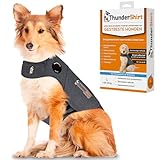
Check Price on Amazon →
Check Price on Amazon →
Fear-Based Reactivity vs. Frustration-Based Reactivity
Not all reactivity looks the same, and understanding the root emotion is essential for effective training.
Fear-based reactivity is the most common type. Your dog sees another dog and feels threatened or scared. Their explosive behavior is a defensive strategy — make yourself look big, loud, and scary so the other dog stays away. Dogs with fear-based reactivity often:
- Try to increase distance from the other dog (pulling backward, trying to hide behind you)
- Show stress signals like lip licking, yawning, whale eye, or tucked tail before the outburst
- Bark with a higher pitch or with pauses that suggest uncertainty
- Calm down relatively quickly once the other dog is out of sight
Frustration-based reactivity (sometimes called frustrated greeter) looks different. These dogs actually want to meet the other dog but cannot because they are on leash. Their frustration boils over into what looks like aggressive behavior. Dogs with frustration-based reactivity often:
- Pull toward the other dog (trying to get closer, not escape)
- Whine or cry in addition to barking
- Have loose, wiggly body language underneath the chaos
- Do perfectly fine off-leash or in controlled greetings
Some dogs have a mix of both. And some dogs who start as frustrated greeters develop genuine fear-based reactivity over time, especially if they have had negative experiences with other dogs. A qualified trainer or veterinary behaviorist can help you identify what is driving your specific dog.
Understanding Thresholds
The single most important concept in reactivity training is the threshold. Your dog threshold is the point at which they can no longer cope with a trigger and their behavior falls apart. Think of it as a line in the sand. On one side, your dog can see another dog and still think, take treats, and listen to you. On the other side, they are in full reaction mode and learning is impossible.
What Threshold Looks Like
Below threshold (where you want to train):
- Your dog notices the other dog but can look away
- They can take treats from your hand
- Their body is relatively relaxed, maybe a little tense but manageable
- They can respond to known cues like sit or watch me
Over threshold (no learning is happening here):
- Your dog is barking, lunging, or spinning
- They refuse treats or snatch them frantically
- They cannot hear you or respond to any cues
- Their body is stiff, hackles may be raised, pupils dilated
Your entire training strategy revolves around keeping your dog below threshold so they can learn a new emotional response. Every time your dog goes over threshold and practices the reactive behavior, it strengthens the neural pathways for that response. Your job is to manage the environment so reactions happen as rarely as possible.

Check Price on Amazon →
Finding Your Dog Threshold Distance
Start by figuring out how far away another dog needs to be for your dog to notice but not react. For some dogs, this might be 50 feet. For others, it might be 200 feet. There is no wrong number — you just need to find your starting point. This distance is where all your training begins.
Check Price on Amazon →
Counter-Conditioning with Treats
Counter-conditioning is the process of changing your dog emotional response to a trigger. Instead of other dog equals scary or frustrating, you want your dog to think other dog equals good things happen.

Check Price on Amazon →
How It Works
The protocol is deceptively simple:
- Step 1: Your dog notices another dog (below threshold).
- Step 2: You immediately start feeding high-value treats. Chicken, cheese, hot dogs — whatever your dog goes crazy for.
- Step 3: The other dog disappears from view.
- Step 4: The treats stop.
The timing here is critical. The treats appear when the other dog appears, and they disappear when the other dog disappears. Over many repetitions, your dog brain starts making a new association: other dogs predict amazing food. The emotional response shifts from fear or frustration to anticipation of something good.
Key Rules for Counter-Conditioning
- Stay below threshold. If your dog is already reacting, the treats will not work. You need to be at a distance where your dog is aware of the trigger but can still think.
- Use extraordinary treats. This is not the time for kibble. Use something your dog would sell their soul for.
- Feed continuously. While the trigger is visible, you should be shoveling treats. One treat per second is not too many.
- Do not ask for behaviors. You are not asking your dog to sit or look at you. You are simply pairing the presence of the trigger with food. Behavior comes later — right now you are changing emotions.
- Be consistent. Every single time your dog sees another dog at a manageable distance, treats should appear. Consistency builds the new association faster.
The Engage-Disengage Game
The engage-disengage game, developed by trainer Amy Cook, is a structured version of counter-conditioning that gives your dog active participation in the process. It is one of the most effective tools for reactive dogs.
Phase 1: Engage (Mark and Treat for Looking)
- Your dog notices the trigger (another dog at a safe distance).
- The moment they look at the other dog, you mark with a clicker or a yes.
- You feed a treat.
- Repeat. Every time they look at the trigger, mark and treat.
In this phase, you are rewarding your dog for noticing the trigger. It sounds counterintuitive, but you are teaching them that looking at other dogs is a treat-earning behavior, not a scary event.
Phase 2: Disengage (Mark and Treat for Looking Away)
After several sessions of Phase 1, something magical starts to happen. Your dog will look at the trigger and then voluntarily look back at you, expecting a treat. This is the behavior you have been building toward.
- Your dog notices the trigger and looks at it.
- Your dog voluntarily looks away from the trigger (back to you).
- You mark and treat the moment they look away.
Phase 2 is where the real progress shows. Your dog is now choosing to disengage from the trigger on their own. They are making a decision — I see the dog, and I am going to look at my person instead because that is what pays off.
Tips for Success
- Start at a distance where your dog can easily succeed.
- Keep sessions short — 5 to 10 minutes maximum. Reactivity training is mentally exhausting for dogs.
- End on a success. If your dog has a reaction, create distance, get one good repetition, and end the session.
- Practice 3 to 5 times per week for steady progress.
Creating Distance: Your Most Powerful Tool
Distance is the reactive dog owner best friend. When in doubt, add more distance between your dog and the trigger. You can solve almost any reactive situation by simply moving farther away.
Practical Distance Strategies
- Cross the street. When you see another dog approaching on the same sidewalk, cross to the other side. This simple move can be the difference between a reaction and a calm pass.
- U-turn and walk away. If you cannot cross the street, turn around and walk in the opposite direction. There is no rule that says you have to keep walking toward a trigger.
- Use visual barriers. Duck behind a parked car, a hedge, or a building. If your dog cannot see the trigger, they are much less likely to react. This is not avoiding the problem — it is managing the environment while you train.
- Walk at off-peak times. Early morning and late evening tend to be quieter. Fewer dogs on the street means fewer surprises and more successful training opportunities at your chosen distance.
- Scout ahead. When turning corners or entering open areas, peek ahead first. Being surprised by a trigger around a blind corner is a setup for failure.
Managing Triggers in Daily Life
Training is what you do during dedicated practice sessions. Management is what you do the rest of the time to prevent your dog from practicing reactive behavior.
Walk Management
- Choose your routes carefully. Avoid the dog park perimeter, the busy trail, and the street where three off-leash dogs roam. Pick quieter routes where you have more control over the environment.
- Use a front-clip harness. These harnesses redirect your dog toward you when they pull, giving you more physical control during an unexpected encounter.
- Keep treats on you at all times. You never know when a training opportunity (or an emergency) will present itself.
- Have an escape plan. Before you start any walk, know your exit strategies. Where can you cross the street? Where can you duck behind a car? Where can you turn around?
Home Management
- Block window access if your dog reacts to dogs passing by outside. Use window film, close blinds, or block access to the room.
- Manage fence lines. If your dog runs the fence barking at neighbor dogs, limit unsupervised yard time or install visual barriers on the fence.
- Control arrivals. If guests have dogs, manage introductions carefully or keep the dogs separated if needed.
Muzzle Training: A Tool, Not a Punishment
If your dog reactivity includes snapping, biting attempts, or if you are simply not confident in your ability to manage encounters safely, muzzle training is a responsible and compassionate choice.
Why Muzzle Training Matters
A properly fitted basket muzzle allows your dog to pant, drink water, and take treats while preventing bites. It protects other dogs, other people, and — critically — it protects your dog. A dog who bites another dog may face severe legal and practical consequences. A muzzle prevents that worst-case scenario.
How to Introduce a Muzzle
- Day 1-3: Let your dog sniff the muzzle. Feed treats near it, then through the opening. Build a positive association.
- Day 4-7: Hold the muzzle so your dog puts their nose in to reach treats. Do not fasten it yet.
- Day 8-14: Briefly fasten the muzzle (a few seconds) while feeding treats continuously. Remove it while your dog is still happy.
- Day 15+: Gradually increase the duration. Pair muzzle-wearing with things your dog loves — walks, car rides, play.
The goal is for your dog to see the muzzle like they see the leash — as a signal that something fun is about to happen. Never force the muzzle on or use it as punishment. Take the introduction slowly, and your dog will accept it willingly.
Setting Realistic Expectations
This might be the hardest part of living with a reactive dog: accepting that management may always be part of your life. Some dogs make incredible progress and can eventually walk calmly past other dogs at close range. Others improve significantly but will always need some level of distance and management.
Management vs. Cure
Reactivity is rarely cured in the way most people hope. Your dog may never be the dog who plays happily at the dog park or greets every dog on the sidewalk with a friendly sniff. And that is okay. The goal is not to create a dog who loves all other dogs. The goal is to create a dog who can see other dogs and cope — who can walk through the world without constant emotional meltdowns.
Think of it like managing an anxiety disorder in humans. Therapy and coping skills can make life dramatically better, but the underlying tendency may always be there. Your dog can learn to manage their big feelings, especially with your support and consistent training.
Progress Is Not Linear
You will have great days and terrible days. Your dog might walk beautifully past three dogs and then lose it at the fourth. This is normal. Setbacks are not failures — they are information. Maybe your dog was tired, overstimulated, or the trigger was too close. Analyze what went wrong, adjust, and keep going.
Celebrate Small Wins
Did your dog notice another dog and look at you instead of reacting? That is huge. Did you successfully cross the street before a reaction happened? That is management mastery. Did your dog recover from a reaction faster than they used to? That is progress. These small wins add up over time into a transformed daily experience for both of you.
When to Seek Professional Help
If your dog reactivity is severe — if they have bitten another dog or person, if you are afraid to walk them, or if you have been working on your own without progress — it is time to bring in a professional.
What to Look For in a Trainer
- Credentials: Look for certifications like CPDT-KA, CAAB, or DACVB (for veterinary behaviorists).
- Methods: Seek out trainers who use force-free, science-based methods. Reactivity does not improve with punishment — it gets worse.
- Experience: Ask specifically about their experience with reactive dogs. This is a specialty area and not every trainer is equipped to handle it.
- Veterinary support: In some cases, medication can help take the edge off your dog anxiety enough for training to be effective. A veterinary behaviorist can evaluate whether medication might benefit your dog.
A Step-by-Step Action Plan
Immediate Actions (This Week)
- Identify your dog threshold distance — how far do they need to be from another dog to stay calm?
- Stock up on high-value treats (cooked chicken, string cheese, hot dogs).
- Get a front-clip harness if you do not have one.
- Plan walking routes with escape options and minimal dog traffic.
- Start keeping a log of reactions — what triggered it, how far away, what time of day, your dog stress level before the walk.
Short-Term Actions (Next 2-4 Weeks)
- Begin counter-conditioning at threshold distance during every walk.
- Practice the engage-disengage game in controlled setups.
- Start muzzle training if needed.
- Manage the environment to minimize over-threshold experiences.
Medium-Term Actions (1-3 Months)
- Gradually decrease distance as your dog shows improvement.
- Transition from Phase 1 to Phase 2 of the engage-disengage game.
- Expand walking routes as confidence builds.
- Consider working with a professional trainer for personalized guidance.
Long-Term Mindset
- Accept that management is an ongoing part of life with a reactive dog.
- Continue rewarding calm behavior around other dogs indefinitely.
- Keep carry treats on walks as a permanent habit.
- Celebrate progress, no matter how small.
Final Thoughts
Living with a reactive dog can feel isolating and overwhelming. You may feel like you are the only one dealing with this, but the truth is that reactivity is incredibly common. You are not a bad owner, and your dog is not a bad dog. You are both doing your best with a difficult situation.
The path forward is not about forcing your dog to like other dogs. It is about helping them feel safe in a world that sometimes overwhelms them. With consistent counter-conditioning, smart management, appropriate distance, and a whole lot of patience, you can transform your walks from stressful ordeals into manageable — even enjoyable — outings.
Start where you are. Work at your dog pace, not yours. And remember that every calm moment in the presence of another dog is a victory worth celebrating.