Train Your Dog to Go Potty on Command Outside (2026)
Picture this: it's 11 PM, raining sideways, and you're standing in your backyard in soaked pajamas while your dog sniffs every blade of grass like he's writing a novel. Twenty minutes later, nothing. You finally give up, head inside — and he immediately squats on your kitchen floor.
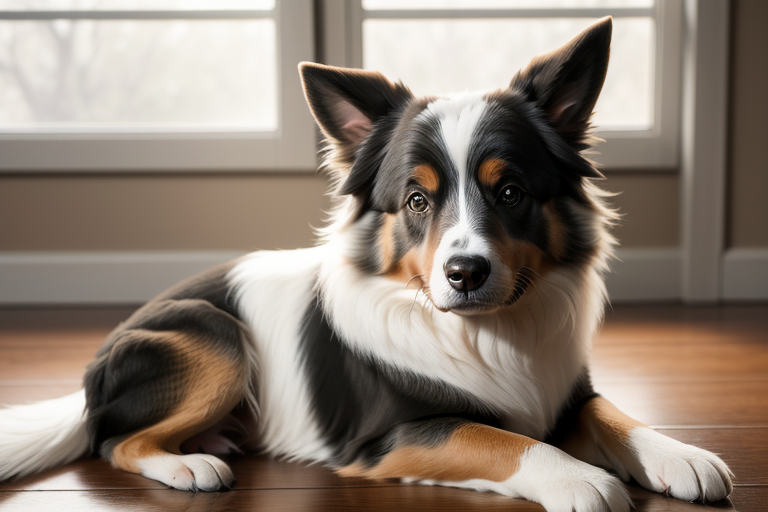
I've lived that scene more times than I care to admit, both with my own dogs and with the hundreds of client dogs I've worked with over the past 15 years. But here's what changed everything for me: the day I taught my Border Collie mix, Scout, to eliminate on a specific verbal cue in under 45 seconds flat. No more marathon sniff sessions. No more soggy pajamas. Just a simple phrase, a predictable response, and we're both back inside before the coffee gets cold.
Teaching a bathroom command — sometimes called a "potty cue" or "elimination cue" — is one of the most underrated skills in dog training. Most owners never bother with it, assuming their dog will just "figure it out." And technically, he will. But a dog who eliminates on request, in a specific spot, within a specific window of time? That's a dog who's genuinely easier to live with, travel with, and keep healthy.
This guide covers everything: the science behind why this works, the exact step-by-step process I use with client dogs, the mistakes that quietly sabotage your progress, and how to troubleshoot the stubborn cases that make owners want to pull their hair out.
Let's start with the question most people don't think to ask — why does this command matter so much in the first place?
Why Teaching a Bathroom Command Is One of the Best Things You Can Do for Your Dog

Let me tell you about the worst morning of January 2026.
I was standing in my driveway at 5:47 AM, breath fogging in the cold, with my Labrador Biscuit doing absolutely everything except what I needed him to do. Sniffing a frozen patch of grass. Staring at a distant streetlight. Trotting hopefully toward the neighbor's yard. We had a six-hour road trip starting in 20 minutes, and I needed confirmation — actual, witnessed confirmation — that his bladder was empty before we loaded up. Forty-five minutes later, he finally went. I was half-frozen, completely frazzled, and we hit rush-hour traffic we would have otherwise missed entirely.
That morning was the moment I stopped thinking of the bathroom cue as a "nice extra" and started treating it as an essential life skill.
The Difference Between Waiting and Asking
Most dog owners operate in passive mode: you take your dog outside, you wait, and eventually nature takes its course. That system works — until it doesn't.
A dog who eliminates on cue is a fundamentally different experience to own. You're not at the mercy of your dog's timeline, distractions, or mood. You give a clear signal, your dog responds, and you both move on with your day. That shift from waiting to asking sounds small, but it changes the daily rhythm of life with a dog in ways that compound over months and years.
The predictability alone is worth the training investment. When you know your dog has emptied their bladder because you asked them to and they did, you're not spending the next two hours anxious about accidents. Dog owners who've trained this command talk about that quiet confidence constantly — it's one of the most underrated benefits in all of dog training.
When This Command Actually Earns Its Keep
Here are the real-world situations where a reliable bathroom cue goes from convenient to absolutely indispensable:
- Rushed mornings — When you have 8 minutes before school drop-off, you cannot afford a 20-minute sniff-around. One cue, one result, back inside.
- Rainy or extreme weather — Standing in a downpour is miserable. A dog who performs on cue means you're out there for 90 seconds, not 15 minutes.
- Travel — Rest stops, parking lots, and unfamiliar environments are full of distractions. A cue cuts through all of it and gets the job done efficiently before you get back on the road.
- Vet visits — Many vets need a fresh urine or stool sample, and being able to prompt elimination at the right moment is genuinely useful. I've watched owners struggle for 30 minutes in a clinic's tiny grass patch while their dog just stared at them.
- Post-surgery recovery — After a spay, neuter, or any abdominal procedure, vets often ask you to document whether your dog has successfully urinated or defecated in the first 24 hours. A dog who understands a cue makes that verification straightforward rather than stressful.
- Apartment or urban living — When the only outdoor space is a small designated area, you need your dog to use it purposefully, not go on an exploratory mission.
I'd recommend pairing this training with a
from the very beginning — having high-value rewards immediately accessible the moment your dog performs is crucial for building the association quickly.
Building on What You Already Know
If your dog is already housetrained to any degree, the foundation for this skill is already laid. Your dog has learned that outside equals appropriate bathroom location. The bathroom command doesn't teach them a new behavior — it teaches them to perform an existing behavior on your signal rather than purely on their own impulse.
That's a much shorter training journey than most people expect. You're not starting from scratch; you're adding a cue to something your dog already does multiple times every single day.
The dogs who struggle with this command, in my experience, aren't dogs who can't learn it — they're dogs whose owners underestimated how deliberately the association needs to be built. That's exactly what the rest of this guide addresses.
Understanding the Science: How Dogs Learn to Eliminate on Cue
Here's something most dog owners don't realize: your dog is already associating elimination with specific cues. The smell of wet grass, a particular patch of ground, the cool morning air — these environmental signals are already triggering biological readiness to go. Your job isn't to teach your dog something completely new. You're essentially hijacking an existing neural pathway and attaching a word to it.
That realization changed how I approach this training entirely.
Classical Conditioning + Operant Conditioning: Why You Need Both
The bathroom command works through two overlapping learning processes, and understanding the difference matters more than most training guides let on.
Classical conditioning is what happens when your dog starts to associate your cue word — let's say "go potty" — with the act of eliminating. This is Pavlov's famous mechanism: pair a neutral stimulus with a meaningful event enough times, and the neutral stimulus starts predicting the event. Your word becomes a signal that says this is what we're here for.
Operant conditioning is the reward side of the equation. When your dog goes on cue and gets a treat or enthusiastic praise, they learn that performing the behavior produces something good. This is what motivates a dog to actively try to comply with your cue rather than simply associating the word with an involuntary act.
The reason your training timeline matters: classical conditioning takes repetition across multiple sessions, not just multiple repetitions in one session. I've watched owners get frustrated after two days because their dog "still doesn't get it." But learning of this kind consolidates during sleep. Expect the association to start solidifying somewhere between 7 and 14 days of consistent practice — not 48 hours.
The Role of the Autonomic Nervous System
You cannot command a dog to eliminate the way you'd command a sit. Elimination is governed by the autonomic nervous system — the same system that controls your heart rate and digestion. It's not fully under voluntary control.
What you can do is create conditions that make elimination highly probable within a 2–3 minute window. Movement helps — a short walk gets the digestive system moving. Sniffing helps — it activates a relaxed, exploratory state that lowers physiological arousal. Returning to a familiar spot helps — dogs have strong location associations with elimination. Stack all three, add your cue word, and you're not forcing anything; you're stacking probabilities.
A quick note on puppies: if your dog is under 12 weeks old, they have limited voluntary sphincter control regardless of how well you train. The neural pathways governing that control simply aren't fully developed yet. Full voluntary control typically develops between 12 and 16 weeks, so set your expectations accordingly.
The Capture vs. Lure Debate: Which Method Works Faster
Two camps exist in dog training circles on how to build the bathroom command.
Capture means waiting for your dog to begin eliminating naturally, then introducing your cue word mid-stream and immediately rewarding. You're "capturing" the behavior as it happens. This is slower to establish because you're dependent on the dog's natural bathroom schedule, but the resulting behavior is extremely reliable — there's no artificial setup required.
Luring means you create conditions most likely to trigger elimination (post-meal, after a nap, after play) and use your cue word proactively before the behavior happens, hoping to predict it correctly. This builds the association faster in terms of calendar days, but it requires better timing and a solid understanding of your individual dog's patterns.
I personally use a combined approach: lure with timing and environment, then layer in a
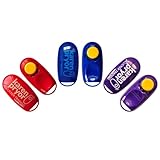
to mark the exact moment elimination begins, then reward with

. The click bridges the gap between the behavior and the treat, which is especially useful outdoors where you may be a few feet away.
Why Consistency in Your Cue Word Matters More Than the Word Itself
"Go potty." "Hurry up." "Business time." "Do your thing." None of these is inherently better than any other — dogs don't speak English, and the actual phonemes are irrelevant.
What is critical: everyone in your household uses the exact same word, in the same tone, every single time. I once worked with a family whose dog was wildly inconsistent outdoors. Turned out the husband said "go potty," the kids said "go pee," and the grandmother said nothing at all — just stood and waited. The dog had never formed a stable association with any single cue. One week of unified cue use, and the behavior snapped into place.
Pick your word, commit to it, and brief every human in your dog's life before day one.
What You Need Before You Start Training
Good preparation separates a smooth training process from a frustrating one. The owners who struggle most aren't struggling because their dog is difficult — they're struggling because they started without the right setup in place. Spend 20 minutes getting these fundamentals sorted before you say your first cue word, and you'll save yourself weeks of confusion.
Choosing Your Cue Words
You have two options here, and both work — what matters is picking one and committing to it completely.
Option 1: Two separate cues. I personally use "go potty" for urination and "get busy" for defecation. The advantage is precision. When you're traveling, visiting the vet, or have limited time before getting in the car, you can specifically prompt the behavior you need.
Option 2: A single phrase like "go pee" or "do your business" applied to both. This is simpler to remember and works perfectly well for most pet owners. The trade-off is that you lose the ability to specifically request one or the other.
My recommendation: if you have a puppy or you're starting fresh, go with two cues. If you're working with an older dog who already knows some version of a bathroom routine, a single phrase is often easier to layer onto existing behavior. Whatever you choose, make sure every person in your household uses identical wording. I once spent three sessions troubleshooting a young Lab's "confusion" before discovering his owner said "go potty" and her teenage son said "outside now, buddy" — two completely different signals to the dog.
Your equipment checklist:
- A standard 6-foot leash (not retractable — retractable leashes give you almost no control over where and when the dog sniffs and circles)
worn at your waist so treats are accessible within two seconds of the behavior
– High-value **small treats** — think pea-sized pieces of chicken, cheese, or
— not kibble, which isn’t motivating enough for this early stage
Setting Up the Designated Bathroom Spot Outside
Your dog needs a consistent location — at least 6×6 feet of ground space — that becomes the "this is where we eliminate" zone. Grass is ideal because the texture and scent cues reinforce the behavior, but gravel or mulch also works.
Repeated elimination in the same spot leaves scent markers that help trigger the urge to go. You're letting your dog build a biological shortcut. Within a week or two of consistent use, most dogs will begin sniffing and circling the moment you bring them to that spot.
Pick something away from heavy foot traffic and distractions. A spot right next to the kids' swing set will make focus nearly impossible for a young or excitable dog.
Building a Feeding Schedule That Predicts Elimination Windows
Free-feeding causes real problems here. When food is available all day, you can't predict when your dog's digestive system will move — and unpredictable digestion means unpredictable elimination. You can't build a reliable cue around something you can't anticipate.
Switch to scheduled meals — typically two per day for adult dogs, three for puppies — and stick to the same times daily. Within a few days, your dog's bathroom needs will become surprisingly clockwork.
Once you're on a schedule, learn your dog's natural elimination windows:
- Within 5–15 minutes of waking up (mornings especially)
- Within 10–20 minutes after finishing a meal
- After vigorous play or excitement
These windows are your training opportunities. Don't miss them.
One final point before you start: rule out medical issues first. A dog with a urinary tract infection, intestinal parasites, or a GI sensitivity won't respond predictably to any training protocol — and it's not fair to attribute slow progress to a behavioral problem when something physical may be happening. If your dog is eliminating frequently, straining, producing unusual stool, or showing signs of discomfort, a vet visit comes before training. I've seen owners spend six weeks on a bathroom command with a dog who had a low-grade parasite load the whole time. Treat the body, then train the behavior.
The Step-by-Step Training Process: From First Cue to Reliable Response
Here's where most training guides get it backwards — they tell you to say "go potty" as you walk outside, then wonder why the dog ignores the cue for months. The sequence below is built around how dogs actually learn associations, not how we wish they would.
Phase 1: Capture and Mark
Walk your dog on leash to your designated spot and then do almost nothing. Stand still. Stay quiet. Let your dog sniff around, but don't repeat commands, don't point at the ground, don't say anything.
The moment your dog begins to squat or lift a leg — not a second before — say your cue word clearly once. "Go potty," "get busy," "do your thing" — whatever you've chosen. The instant they finish, mark with a firm "yes" and deliver a reward from your
**within 3 seconds**.
This timing is everything. A dog has no idea what "go potty" means on day one. Your job in Phase 1 is to say that cue word at the exact moment the behavior is already happening, so the dog begins to form an association between that sound and the physical sensation of eliminating. Saying it before they start — while they're still wandering and sniffing — just teaches them that "go potty" means "mill around aimlessly."
I made this exact mistake with a 4-month-old Labrador named Biscuit. His owner had been saying "go potty, go potty, GO POTTY" from the moment they stepped outside. Three weeks in, the phrase meant absolutely nothing to him. We reset, went silent for a full week of captures, and he had solid cue recognition within 10 days.
Aim for 10–15 successful captures before moving to Phase 2.
Phase 2: Introduce the Cue Earlier
Once you have 10–15 repetitions logged, your dog is starting to connect the word to the action. Now you can begin moving the cue earlier in the behavioral chain — saying it when your dog is actively sniffing and circling in that pre-elimination dance, rather than waiting for the squat itself.
Over the next week or two, gradually shift the cue earlier: first during circling, then during purposeful sniffing, eventually right after you arrive at the spot. You're not dragging the cue backward randomly — you're following the dog's natural behavioral sequence upstream.
Phase 3: Proof the Cue
This is where most owners stop, which is exactly the wrong time to stop. Test the cue:
- At a different outdoor spot — a park, a friend's yard, the corner of a parking lot
- At an unusual time of day for your dog
- When your dog hasn't eliminated in 3+ hours (a moderate biological need makes compliance more reliable)
Reliable on-command performance in new locations typically takes 4–8 weeks. Initial cue recognition at home usually appears within 7–14 days. Both timelines are normal.
Reward every successful response for the first 3 weeks, then shift to variable reinforcement. Don't eliminate treats entirely — this behavior is too useful to let fade through extinction.
Training Puppies vs. Adult Dogs: Key Adjustments to the Protocol
Puppies have limited bladder capacity and eliminate frequently, which works in your favor — you get more capture opportunities per outing. Take them out every 45–60 minutes and you'll accumulate Phase 1 repetitions quickly. Adult dogs may need longer waits between outings to build enough biological urgency to trigger elimination on schedule. The associations form at the same speed for both; you're simply working with fewer daily opportunities with older dogs.
How to Handle a Dog Who Sniffs Forever but Won't Go
Some dogs, especially anxious ones or those new to an environment, will sniff endlessly without eliminating. Keep the leash short enough to prevent full exploration — 4 to 6 feet — and stay stationary. Movement actually delays elimination. Give it 5 minutes of stillness. If nothing happens, go back inside for 10 minutes and try again. Don't repeat the cue during the wait; silence is your tool here.
When to Use a Leash vs. Long Line During Training
Use a standard 6-foot leash during active training phases — it keeps your dog close enough that you can read their body language and deliver rewards quickly. A

is useful later during proofing sessions in open spaces where you need distance without losing control. Avoid retractable leashes entirely during training; the inconsistent tension genuinely confuses dogs about boundaries.
Common Mistakes That Derail Bathroom Command Training
The same patterns keep derailing owners at predictable points. These aren't random failures — they're specific errors with specific consequences. Here's what to watch for.
Saying the Cue Before the Behavior Is Locked In
This is the most common mistake, and it does real damage. Owners hear "bathroom command training" and immediately start saying "go potty, go potty, go potty" the moment they step outside. What actually happens: your dog hears the words, looks around, sniffs a leaf, wanders to the fence, eventually eliminates — and now "go potty" means absolutely nothing. It's become background noise.
The rule I use with all my clients is simple: don't say the cue until you can predict, with 90% confidence, that elimination is about to happen within the next 5 seconds. That takes patient observation first. Once you can read those signals — the tight circling, the dropped nose, the sudden stillness — then you introduce the cue word.
Rewarding Even One Second Too Late
The 5-second window after elimination finishes is not a guideline — it's biology. Dogs cannot link a reward to a behavior that happened 10 or 15 seconds ago.
Keep a
Similar Posts
Therapy Dog Certification Training Requirements Guide 2026
Introduction Picture a golden retriever named Bailey settling beside a stroke patient's wheelchair, her calm presence bringing the first smile to his face in weeks. Or imagine a gentle Lab named Murphy sprawled across a library carpet while an anxious third-grader practices reading aloud, finally relaxing because "dogs don't judge if you mess up." These…
5 Minute Dog Training Sessions: Benefits & Why They Work
Introduction: Why Short Training Sessions Transform Your Dog's Learning I'll never forget the day a client came to me, nearly in tears, because her intelligent Border Collie had started walking away during training sessions. "We practice for 45 minutes every evening," she explained. "Why won't he cooperate anymore?" The problem wasn't her dog's intelligence or…
How to Calm a Hyper Australian Shepherd: Expert Tips
Understanding Your Australian Shepherd’s Energy: Why They’re Wired to Work If you’ve got an Australian Shepherd bouncing off the walls at 8 PM after a “full day,” you’re not dealing with a hyperactive dog. You’re dealing with an unemployed workaholic. Born to Work All Day (Literally) Australian Shepherds were developed to herd livestock across massive…