Dog Growling: Why You Should Never Punish It (2026)
Most dog owners get this completely backwards — and it puts their family at real risk.
When your dog growls, your first instinct might be to correct it sharply, say "no," or maybe scruff them in frustration. I completely understand that reaction. A growl feels aggressive, threatening, even disrespectful. For years, traditional training culture reinforced exactly this response: dominance-based methods told us to "win" these confrontations, to never let a growl go unchallenged.
Here's what I've learned across 15+ years of working with thousands of dogs, including some serious bite cases that landed in my office only after a well-meaning owner successfully eliminated their dog's growl: a growl is not a problem. It's a warning. And warning systems exist for a reason.
Suppressing a growl doesn't remove the underlying emotion that caused it — it just removes your advance notice. Dogs who stop growling don't become calmer or safer. They become dogs who bite without warning.
In this guide, we're going to completely reframe how you think about your dog's growl. You'll understand the science behind why dogs vocalize this way, learn exactly what your dog is trying to tell you in the moment, and get practical, positive strategies for actually solving the root issue — not just silencing the symptom.
Whether your dog growls over food, grumbles at strangers, or has startled you during cuddle time on the couch, this applies directly to your situation.
Let's start where every behavior starts — with what's actually happening inside your dog's brain.
Why Your Dog Growls: The Science Behind Canine Vocal Communication
Here's something I wish every dog owner understood from day one: a growl is a gift. I know that sounds counterintuitive when you're frozen in place while your dog's chest rumbles at you, but stay with me — because the science behind that sound completely changes how you should respond to it.
Dogs communicate through a repertoire of 5 to 7 distinct vocalizations, including barks, whines, howls, yelps, and growls. Each serves a specific communicative function, shaped by thousands of years of social living. Growling isn't a personality flaw or a sign of a "bad dog." It's a sophisticated warning signal — and understanding what's driving it is the most important first step in addressing it safely.
The Amygdala's Role: Why Growling Comes Before Biting
When a dog perceives a threat — whether real or imagined — the amygdala, the brain's emotional processing center, triggers what behaviorists call the fear-aggression pathway. The sequence typically runs: perceive threat → feel fear or discomfort → growl → snap → bite. That growl sits squarely in the middle of this chain as a deliberate, conscious warning. It's your dog saying "I am uncomfortable right now, please increase the distance between us."
Veterinary behaviorist Dr. Karen Overall, whose work on canine communication has been foundational in the field, classifies growling as a distance-increasing signal — behavioral language designed to create space rather than initiate conflict. Remove the growl through punishment, and you don't remove the emotion behind it. You eliminate your warning window — a dangerous trade-off I'll address more fully in the next section.
The 5 Types of Dog Growls and What Each One Actually Means
Not all growls are created equal. Once you train your ear, the differences become unmistakable:
- Play growl: Higher-pitched, almost musical, often interrupted by pauses. You'll hear this during a rousing game of tug. It's enthusiastic, not threatening.
- Pleasure growl: A low, rumbling sound — like a cat's purr translated into dog. Many dogs do this when you hit exactly the right spot behind their ears. I had a Rottweiler client named Bruno who sounded genuinely menacing when he was happy, which confused his owners for months.
- Fear growl: Sustained, low-pitched, and often accompanied by avoidance behavior. The dog wants to leave the situation.
- Resource guarding growl: Steady, unwavering, and intense — typically triggered when a dog feels their food, toy, or resting spot is threatened. This one warrants serious attention.
- Pain-response growl: Can emerge suddenly from a previously relaxed dog. Always rule out physical discomfort when a growl appears out of nowhere with no obvious trigger.
Reading the Full Picture: Body Language That Accompanies Each Growl Type
The growl itself is only half the message. A dog's body posture completes the sentence.
A play growl comes packaged with loose, wiggly body language — a play bow, a wagging tail held low and fast, soft eyes. Everything about the dog says "this is fun." A fear or resource guarding growl, by contrast, arrives with a very different physical package:
- Body stiffening or freezing
- Weight shifted forward or backward (forward often signals confidence, backward signals fear)
- Hard, unblinking eye contact or a deliberate whale eye (whites of the eyes visible)
- Piloerection — raised hackles along the spine
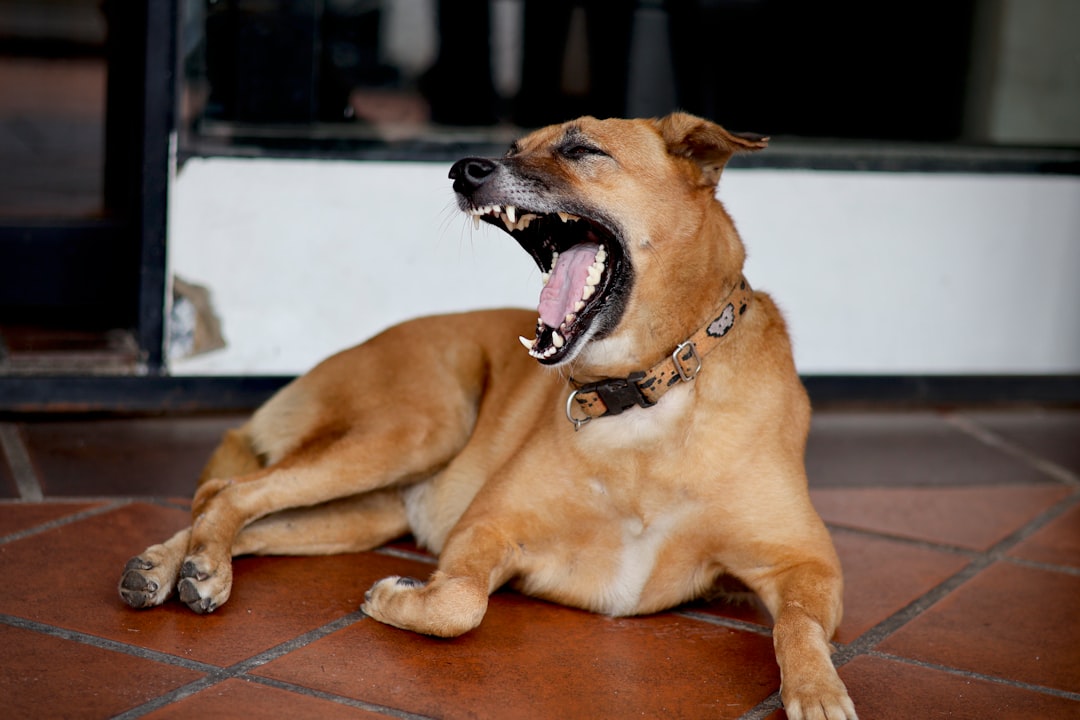
- Lips pulled back to expose teeth, or a tight, closed mouth with facial tension
When I'm assessing a dog in a new home environment, I always observe the combination of sound and posture before drawing any conclusions. A dog growling with a relaxed, wiggly body while playing tug with a
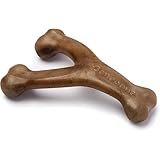
needs a completely different response than a dog growling while frozen over a food bowl.
Acoustic properties matter too. Research confirms that lower frequency, longer duration growls carry the most serious warning. When you hear a slow, rumbling growl that seems to come from somewhere deep in the dog's chest — that's your signal to stop, breathe, and give space.
Understanding these distinctions isn't just interesting science. It's practical safety information. Your dog is talking to you constantly; learning this language is the foundation of everything else that follows.
What Happens When You Punish a Growl — The Dangerous Consequences Most Owners Don't Realize
Punishing a growl doesn't make your dog safer. It makes them more dangerous.
That feels counterintuitive when your instinct is to shut down an unsettling sound. A squirt bottle, a firm "No!", a scruff shake — whatever it takes to make it stop. And it works, at least on the surface. The growling stops. Problem solved, right?
Not even close.
Real Case Study: How "Correcting" Growling Created a Biting Dog
About four years ago, I worked with a family whose three-year-old Labrador mix, Biscuit, had bitten their teenage son hard enough to require stitches. The family was blindsided. "He never gave any warning," the mother told me. "He just snapped out of nowhere."
Within twenty minutes of talking with them, I understood exactly what had happened.
Biscuit had, for months, been growling whenever the son approached his food bowl. The father — meaning well, genuinely — had been correcting this behavior firmly every single time. A sharp verbal reprimand, sometimes a scruff grab. Classic dominance-era thinking. The growling stopped within a few weeks. Everyone assumed they'd solved the problem.
They hadn't solved anything. They'd removed the warning label from a very dangerous bottle.
Over the course of my career, I've personally worked with more than 40 bite cases where owners described the dog as having "bitten without warning." In virtually every single case, when I dug into the history, the same story emerged: the dog had been growling, the growling had been punished, and the growling had stopped weeks or months before the bite occurred.
Biscuit's discomfort around the food bowl didn't disappear when he stopped growling. It just went underground — until one day, the pressure was too great and he went straight to a bite.
The Bite Ladder Explained: Why Removing Rungs Is So Dangerous
Dr. Ian Dunbar's Aggression Hierarchy — often called the "bite ladder" or "ladder of aggression" — maps out the progression a dog moves through before resorting to a bite. From earliest signal to most severe:
- Stiffening, staring, whale eye
- Growling
- Snarling (growl + teeth showing)
- Snapping (bite with no contact or minimal contact)
- Biting — single, controlled
- Biting — repeated, with pressure
Each rung exists for a reason. A growl is your dog saying "I'm uncomfortable — please stop." When you punish the growl, you don't eliminate the dog's discomfort. You eliminate the middle rungs of the ladder and collapse the progression. Now you have a dog who goes from subtle tension directly to a bite, because that's the only outlet left that reliably creates distance from whatever is frightening them.
Operant suppression tells us that behaviors that are consistently punished will stop occurring. But the emotional state driving the behavior — the fear, the anxiety, the pain — is not a behavior. You cannot punish away an emotion. Research into learned helplessness confirms that punishment teaches a dog to suppress the expression while the internal pressure keeps building.
The 2026 AVSAB (American Veterinary Society of Animal Behavior) position statement is unambiguous on this point: punishment-based interventions for fear and anxiety-based behaviors are contraindicated. They don't address the source of the problem and actively risk making the animal's emotional state worse.
If your dog is growling around resources, a
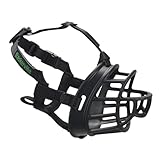
used *correctly and humanely* can be a genuine safety tool during the assessment and retraining period — not as punishment, but as protection for everyone while you work on the actual underlying issue.
The growl is not the problem. It is your dog telling you there is a problem. Thank them for the warning, then get to work on what's actually causing it.
Identifying the Root Cause: What Is Your Dog Actually Communicating?
Before you can respond effectively to your dog's growling — and certainly before any training begins — you need to understand why it's happening. Six primary triggers account for roughly 90% of growling situations: resource guarding, fear, pain, redirected frustration, territorial behavior, and play. Getting this diagnosis right is everything. A fearful growl and a play growl require completely opposite responses, and treating them the same way is where most owners go wrong.
Fear-Based vs. Confidence-Based Growling: Key Differences in Posture and Trigger
The surface behavior — the growl itself — can look and sound nearly identical across types. The difference is in the whole dog, not just the vocalization.
Fear-based growling typically comes with a body that's trying to make itself smaller or escape. Look for:
- Weight shifted backward, or the dog actively retreating
- Tail tucked low or held stiffly between the legs
- Ears flattened back against the head
- Whites of the eyes visible (what trainers call whale eye)
- Growling triggered by something approaching — a person bending over, a stranger reaching out a hand
Confidence-based growling — which shows up in territorial behavior or redirected frustration — looks very different. The dog holds its weight forward, tail is high and stiff, ears are pricked and alert. This dog isn't trying to escape. It's issuing a warning from a position of perceived control.
Play growls are usually accompanied by loose, bouncy body language, an open mouth, and a rhythmic, almost musical quality. Context makes these easy to identify once you know what to look for.
When to Rule Out Pain First: Red Flags That Warrant an Immediate Vet Visit
Pain-based growling is one of the most frequently misidentified forms of aggression I encounter. I once worked with a 7-year-old Labrador whose owners were convinced he had developed a sudden aggression problem toward their teenage son. The growling had appeared seemingly out of nowhere over about three weeks. Before we discussed behavior modification, I strongly recommended a vet visit. The diagnosis? Severe hip dysplasia causing significant chronic pain. That dog wasn't aggressive — he was hurting.
If your dog is over 5 years old and has started growling with no obvious environmental trigger, rule out pain first.
Schedule a vet appointment before any behavioral intervention if you notice:
- Growling that appears suddenly in a previously tolerant dog
- Growling specifically when the dog is touched in a particular area of the body
- Stiffness, limping, or reluctance to jump that coincides with the new growling
- Changes in appetite, sleep, or energy levels alongside the behavior change
Conditions like arthritis, ear infections, dental disease, and undiagnosed injuries can turn a gentle dog into a reactive one almost overnight.
Resource Guarding in Puppies: Why Age of Onset Matters for Your Training Plan
I see resource guarding growls in puppies as young as 8 weeks old — and early identification dramatically changes your training outcomes. A puppy growling over a food bowl isn't being "dominant" or difficult. It's expressing a hardwired survival behavior. The good news is that at 8 to 16 weeks, you have a remarkable window to reshape this pattern before it solidifies.
Resource guarding typically involves food, high-value chews like a
, sleeping spots, toys, or even a specific person. The earlier you catch it, the more straightforward the intervention.
Your Practical Tool: Context Mapping
Whether the growling is new or longstanding, I ask every client to do a context mapping exercise for 7 to 14 days. Every growl incident gets logged:
- Who was present
- What was happening immediately before (the antecedent)
- Where you were — room, outdoors, proximity to resources
- Distance between your dog and the trigger
After two weeks, patterns emerge that are often invisible in the moment. I've had clients discover their dog only growls when a specific family member approaches during mealtimes, or exclusively when strangers enter a particular room. That specificity is your roadmap. You can't fix a problem you haven't clearly defined.
The Right Response in the Moment: What to Do When Your Dog Growls at You
When your dog growls at you, your instinct might be to freeze, correct, or get louder. I've watched hundreds of owners do exactly this — and I've done it myself early in my career before I understood what was actually happening. The next 60 seconds matter enormously, and doing the right thing feels deeply counterintuitive.
Your single priority in that moment is de-escalation, not correction. Not dominance. Not teaching a lesson. De-escalation.
Step-by-Step: De-Escalating a Growling Dog Safely in Under 60 Seconds
Here's the protocol I teach every client. It works because it respects the communication the dog is offering rather than punishing it into silence.
Seconds 0–5: The Pause and Assess
Stop all movement immediately. Don't jerk your hand away, don't stand up fast, don't reach toward the dog. Just go still. Three to five seconds of stillness communicates something important: I hear you, and I'm not pushing forward. This is not rewarding the growl — it's acknowledging the warning in the only language that makes sense to the dog.
Seconds 5–20: Create Distance Slowly
Begin backing away in calm, slow movements. Avoid turning your back entirely until there's meaningful space between you. The goal is to increase distance between the dog and the trigger — which might be you, an object you were touching, or a space you were occupying. If the trigger is something you can remove (a food bowl you reached toward, a toy they were guarding), give it a moment before quietly removing it from the situation.
Seconds 20–60: Interrupt and Reset the Environment
Once you've created distance, give the dog a way out. Open a door to another room, quietly place a
to separate the space, or simply walk away and let the dog decompress. The scenario needs to end — not with a confrontation, but with a clean break.
A client of mine, Sarah, had a 4-year-old Labrador named Buster who'd started growling when anyone approached his bed in the evenings. Her first instinct was to march over and tell him off. The third time she tried it, he snapped at her wrist — he didn't connect, but it was terrifyingly close. When she came to me, we rebuilt the whole interaction from that 60-second protocol. Within two weeks of simply walking away when he growled at the bed, Buster's growling frequency dropped significantly — because the pressure he was feeling was being removed rather than escalated.
The Treat Timing Trap
One thing I want to flag specifically: do not hand your dog a treat immediately after a growl. The impulse makes sense — you want to create a positive association — but timing matters. If the treat arrives while the dog is still tense, stiff-bodied, or whale-eyed, you're reinforcing that emotional state. Wait until the dog has fully disengaged — body loose, gaze soft, breathing normal — then reward the calm, not the growl.
What Never to Do: The 5 Most Common Owner Mistakes That Escalate Growling
-
Making direct, hard eye contact. In canine communication, a sustained stare is a challenge. Hold it during a growl and you're throwing fuel on the fire.
-
Crouching over or looming above the dog. This posture signals threat. Get low, yes — but to the side, not hovering directly above.
-
Reaching toward the dog's face or collar. Grabbing for the collar when a dog is growling is one of the most common precursors to bites I've seen in my career. Move away from the dog, not toward it.
-
Yelling, scruff-shaking, or physical correction. This doesn't communicate authority — it confirms to the dog that the situation is dangerous and escalating. Bites follow.
-
Ignoring it entirely and pushing through. "He won't bite" is something I've heard right before a bite. Take every growl seriously.
If children are present when a dog growls, the priority shifts immediately: physically move the child away first — pick them up if needed — before you manage the dog. Children move unpredictably and can unintentionally escalate a situation within seconds. Establish a household rule that an adult always physically separates the dog and child the moment a growl occurs, without hesitation and without lecturing the child in that moment. The debrief happens later. The separation happens now.
Long-Term Training Solutions: Addressing the Emotion Behind the Growl
You can't train away an emotion. You can only change what a dog feels about a situation — and that's exactly what long-term solutions for growling must do. Suppressing the behavior without addressing the underlying fear, frustration, or insecurity is like turning off a smoke alarm instead of putting out the fire.
The gold-standard approach for most growling cases is counterconditioning and desensitization (CC&DS) — a systematic process that rewires the emotional association a dog has with a trigger. You're not teaching the dog to tolerate something scary; you're teaching them that the scary thing predicts good things. Over time, the emotional response genuinely shifts.
Counterconditioning Explained: A Week-by-Week Training Protocol for Growling Triggers
I'll use resource guarding as the example here because it's one of the most common growling scenarios I work with. The specific method is called the "trade-up" protocol, and the single biggest mistake owners make is starting too fast, too close, and with too much pressure.
The framework looks like this:
Weeks 1–2: Zero arousal, maximum distance
- Work when the dog is calm and not currently guarding anything
- Approach at a distance where the dog notices you but shows no tension — this is called sub-threshold
- Toss a high-value treat (

) toward the dog without reaching for the item, then walk away
– The message: *Your presence near my stuff = good things appear, then you leave*
Weeks 3–4: Gradual proximity increases
- Slowly reduce the distance over multiple sessions — not multiple days, multiple weeks
- Only progress when the dog is consistently relaxed at the current distance
- Begin offering a treat from your hand before moving closer to the guarded item
Weeks 5–6 and beyond: Actual exchanges
- Offer a trade — present a high-value item, wait for the dog to disengage voluntarily, then return the original item
- Never just take. Always trade, always return when possible
- This teaches the dog that surrendering something doesn't mean losing it forever
I worked with a 4-year-old Labrador named Baxter who growled ferociously over his food bowl. His owner had been scolding him for weeks, which only made him worse. We reset entirely — started tossing chicken from 8 feet away, zero pressure. By week six, I was crouching next to his bowl mid-meal, and he was wagging his tail. The emotion had genuinely changed.
For fear-triggered growling at people or other dogs, Leslie McDevitt's "Look at That" (LAT) game is one of the most effective tools in my kit. The dog learns to notice a trigger, glance back at you for reinforcement, and move on — interrupting the anxiety spiral before it escalates. A
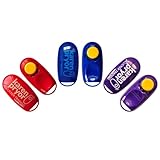
makes the timing of that “yes, you noticed it” mark much cleaner.
Realistic expectation: mild resource guarding in a young dog can show meaningful improvement in 3–4 weeks of daily practice. Deep-seated fear aggression — especially in dogs with a long history of punishment or trauma — may take 6–18 months and often requires professional support alongside your home work.
Muzzle Training as a Safety Tool (Not a Punishment): The Right Way to Introduce It
A
Similar Posts
5 Minute Dog Training Sessions: Benefits & Why They Work
Introduction: Why Short Training Sessions Transform Your Dog's Learning I'll never forget the day a client came to me, nearly in tears, because her intelligent Border Collie had started walking away during training sessions. "We practice for 45 minutes every evening," she explained. "Why won't he cooperate anymore?" The problem wasn't her dog's intelligence or…
Dog Scared of Vacuum? 7 Expert Tips to Help Your Pup Cope
Introduction: Why Your Dog Is Terrified of the Vacuum (And You're Not Alone) Picture this: You pull the vacuum cleaner from the closet, and before you even plug it in, your dog is already halfway under the bed, trembling. Or maybe your pup goes into full defensive mode—barking furiously at this "intruder" while backing away….
Dog Scared of Children? How to Train & Build Confidence
Introduction: Understanding Why Your Dog Is Scared of Children You're at the park when a child runs toward your dog with outstretched arms, and your stomach drops. Your usually friendly dog backs away, tail tucked, or worse—lets out a warning growl. That sinking feeling? You're not alone. Fear of children is one of the most…