Potty Training Regression: Causes & Fixes (2026)
Your perfectly house-trained dog just squatted in the middle of your living room — again. And you're standing there wondering if you somehow imagined the last six months of successful potty training.
You didn't. Regression is real, it's frustrating, and it happens to dogs who genuinely knew what they were doing.
In my 15+ years working with dogs and their owners, regression cases are some of the most emotionally charged situations I encounter. I've seen owners in tears, convinced their dog is being spiteful or "broken." I've also seen those same dogs fully recover within two to three weeks once we identified the actual cause — and that's the critical word here: cause. Regression is always telling you something. Your job is to figure out what.
What I've learned from working through hundreds of these cases is that most owners make the same mistake: they jump straight to retraining without understanding why the regression started in the first place. That approach wastes weeks and often makes things worse.
This guide will change how you look at this problem entirely. We'll start by clarifying what regression actually looks like versus what it isn't, then walk through the eight most common triggers I see in 2026 — from household changes to subtle medical issues that get missed constantly. From there, you'll get a concrete recovery protocol, trigger-specific fixes, and a clear picture of when the problem runs deeper than behavior alone.
By the end, you'll have a specific action plan, not just general advice.
Let's start with the most important question: what you're actually dealing with.
What Potty Training Regression Actually Looks Like (And What It Isn't)
Before you can fix potty training regression, you need to know if you're actually dealing with it — because I've seen dozens of owners go down the wrong path by misidentifying what's happening with their dog. The fixes for true regression, medical leaking, and excitement urination are completely different, and applying the wrong one wastes weeks of effort and can make things worse.
True Regression vs. Normal Training Variability
Here's a distinction I wish more owners understood from the start: a dog who has two accidents in a week after three clean weeks is not necessarily regressing. House training is not a perfectly linear process. Dogs have off days. A thunderstorm rolls in, the household routine shifts, your dog ate something unusual — and suddenly there's a puddle on the kitchen floor. That's normal variability, not a pattern.
True regression has a different character entirely. The warning signs I look for are:
- Daily accidents returning after 4+ weeks of reliable house training — not a one-off, but a consistent breakdown
- Returning to old favorite spots — that corner behind the couch, the same patch of carpet they used as a puppy
- Loss of the alert signal — a dog who used to whine, sit by the door, or paw at you suddenly gives no warning before going inside
- Accidents happening at times that used to be clean — right after a walk, immediately after being let out, in the middle of the night
I worked with a four-year-old Labrador named Biscuit in early 2026 who had been reliably house trained for three years. His owner called me convinced he was "broken." When I dug into the details, Biscuit had started having accidents every single morning — same spot, no warning, within 30 minutes of waking up. That specificity told me a lot. That's not a dog who forgot his training. That's a dog communicating something changed. (We'll get to what that was in a later section.)
The 7-Day Observation Rule
Before drawing any conclusions, I always ask owners to do one thing: track every accident for seven days. Note the time of day, location, and context. Was anyone home? Had the dog just eaten? Was there a visitor in the house? Were there any sounds or weather events?
This data transforms vague frustration into actionable information. Accidents clustered around a specific trigger look completely different from accidents scattered randomly through the day. You can keep it simple — a notes app on your phone works fine — but the pattern you find in that week will tell you more than any amount of guessing.
Medical Leaking vs. Behavioral Regression — How to Tell the Difference
This is where owners most commonly go wrong, and it's the reason the next section covers medical causes before anything else.
Excitement urination looks like regression but isn't. It typically happens the moment you greet your dog — a small squirt, sometimes without the dog even seeming aware of it. It's most common in puppies and young dogs and usually disappears with maturity and calmer greetings.
Submissive urination is similar in appearance but happens in response to perceived pressure — someone leaning over the dog, direct eye contact, a raised voice. The dog isn't failing at potty training; they're communicating anxiety through a deeply instinctive response.
Medical leaking has its own signature. You might find small wet spots where your dog was sleeping, on their

, or in the crate — places no dog would deliberately toilet. The dog often shows no posturing or intentional elimination behavior at all. Spayed females, older dogs, and dogs with urinary tract infections are particularly prone to this.
The critical distinction: behavioral regression is something a dog is doing; medical leaking is something happening to them. Treating a UTI or hormonal incontinence with potty training protocols will accomplish nothing except frustrating you both.
If you're unsure which category you're dealing with, the 7-day tracking log is your first step — and a vet visit should follow closely behind before you change a single thing about your training routine.
The 8 Most Common Causes of Potty Training Regression in Dogs
Most owners dealing with regression are trying to solve the wrong problem — treating a stress response like a training failure, or blaming a medical issue on bad behavior. Here are the eight causes I see most often, and what makes each one distinct.
1. Household Changes
New baby. New pet. New home. Owner returning to the office after two years of remote work. Any of these can destabilize a dog's sense of routine and safety almost overnight.
I've seen regression triggered within 48 hours of a new cat arriving in the home. The dog wasn't poorly trained — he was overwhelmed. His entire social environment had shifted, and the accidents reflected that disruption, not a gap in his training history.
2. Schedule Disruption
Dogs are biological clocks with fur. Feeding time shifts of even 30 to 60 minutes can throw off a dog's elimination rhythm completely. If you've always fed at 7am and suddenly you're feeding at 8:30am because your commute changed, expect downstream effects — literally — to follow at unpredictable times. Consistency in feeding creates consistency in elimination. Disrupt one, you disrupt both.
3. Adolescent Hormonal Regression: The 6–12 Month Problem
This one catches a lot of owners completely off guard. A dog who was reliably housetrained at 5 months starts lifting his leg on the couch at 8 months, and owners think the training "didn't stick."
What's actually happening is hormonally driven marking behavior, not a failure of learning. Intact males going through adolescence experience surges in testosterone that trigger an instinct to mark territory — and that instinct can override previously reliable training. This isn't regression in the true sense; it's a new behavior emerging on top of existing training. Neutering often resolves it, but timing matters and deserves a conversation with your vet.
4. Premature Freedom
This is the single most common mistake I see, and I made a version of it myself early in my career with a client's Border Collie mix. The dog had been clean for six weeks, the owner felt confident, the
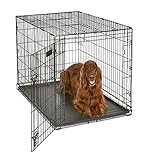
came down, and full roaming access was granted. Two days later: accidents everywhere.
Consistent success for less than 6 months is not the same as a reliably housetrained dog. Freedom has to be earned incrementally, and pulling back the boundaries too fast — even with a dog who seems ready — sets them up to fail.
5. Reinforcement Breakdown
Owners stop rewarding outdoor elimination the moment training feels solid. Totally understandable — it feels redundant once the behavior is established. But this quietly weakens the behavior chain over time. The habit persists for a while on momentum, then starts to erode. Intermittent reinforcement doesn't have to mean treats every single time, but dropping reinforcement entirely, too soon, is a common contributor to regression that nobody notices until the accidents reappear.
6. How Stress Physically Affects Your Dog's Bladder Control
This point surprises people: stress doesn't just affect behavior — it directly impacts physical bladder and bowel function in dogs. During a stress response, the autonomic nervous system can reduce a dog's ability to hold it. Thunderstorms, fireworks, separation anxiety, a chaotic household — these aren't just emotional triggers. They produce physiological changes that make accidents more likely regardless of how well-trained the dog is. An

can take the edge off for some dogs during acute stress events, buying you a window to get them outside in time.
7. Diet Changes
Switching food brands abruptly causes GI upset that physically makes holding it harder — this is not a behavioral issue at all. A dog experiencing loose stools or increased urgency due to a protein source change cannot comply with training expectations, no matter how solid their foundation. Always transition foods over 7–10 days, and if you're seeing regression alongside a recent food switch, start there.
8. When the Cause Is Medical, Not Behavioral
UTIs, bladder stones, intestinal parasites, and — in senior dogs especially — cognitive dysfunction syndrome can all produce accident patterns that look identical to behavioral regression. A dog with a UTI feels urgency that genuinely cannot be resisted. A senior dog with cognitive decline may simply forget where the door is.
The next section covers how to rule these out systematically, because until you do, no training protocol will solve the problem.
Step One Before Any Fix: Rule Out Medical Issues First
Here's the mistake I see owners make constantly: they come to me frustrated, saying they've spent three weeks going back to basics — constant supervision, tighter schedules, high-value rewards — and nothing is working. The dog keeps having accidents. And when I ask whether they've seen a vet, the answer is almost always no.
If there's a physical reason your dog is losing bladder or bowel control, no amount of behavioral retraining will fix it. A dog with a urinary tract infection genuinely cannot hold her bladder the way she could last month. She's not being stubborn or forgetting her training. Her body is working against her, and every failed trip outside just adds confusion and stress to an already uncomfortable situation.
Before you adjust a single schedule or buy another bag of

, pick up the phone and call your vet.
Symptoms That Mean You Skip Retraining and Go Straight to the Vet
Some symptoms aren't "wait and see" situations. If your dog is showing any of the following, the vet visit isn't a precaution — it's urgent:
- Straining to urinate — squatting repeatedly with little or no output, or appearing to push without result
- Blood in the urine — pink, red, or cloudy urine is never normal and always warrants same-day attention
- Whimpering or vocalizing during accidents — if elimination is painful, your dog will tell you
- Dramatic increase in accident frequency — going from one accident a week to four or five accidents a day is a red flag, not a training problem
- Drinking significantly more water than usual — increased thirst paired with increased urination can signal kidney disease, diabetes, or Cushing's disease
A basic vet workup for elimination issues in 2026 typically includes a urinalysis (checking for infection, crystals, or blood), a fecal exam (ruling out parasites that can affect bowel control), and — for dogs over 7 years old — most vets will also recommend a thyroid and kidney panel. These blood panels catch the conditions that quietly cause regression in middle-aged and senior dogs and are routinely missed when owners focus only on behavior.
My rule of thumb: if regression started within two weeks of any physical symptom, or if your dog is over 7 years old, the vet comes first — always.
Senior Dog Regression: Cognitive Dysfunction vs. Behavioral Backslide
Senior dog regression is one of the most heartbreaking things I work with, partly because it's so often misdiagnosed — by owners and, honestly, sometimes by vets who aren't specifically watching for it.
Canine cognitive dysfunction (CCD) is the dog equivalent of dementia, and it's significantly underdiagnosed in dogs over 9 or 10 years old. A dog with CCD may forget she was just outside. She may lose the association between "outside" and "elimination" that she's held reliably for eight years. She may wake up from a nap disoriented and squat before she's even fully registered where she is. This isn't a behavioral backslide — it's neurological, and it requires a completely different management approach than standard retraining.
I worked with a 12-year-old Labrador named Biscuit whose owner was convinced she'd "forgotten" her training out of spite after the family moved. In reality, Biscuit was showing four classic signs of CCD: nighttime restlessness, staring at walls, getting "stuck" in corners, and house soiling. Once her vet confirmed the diagnosis, we shifted entirely away from retraining and toward management — more frequent outdoor trips, a
left open as a safe den space, and a consistent routine that reduced the cognitive load on her.
If your senior dog's regression came on gradually, happens most often at night or after napping, or is paired with any changes in sleep, awareness, or interaction, bring this up explicitly with your vet. Ask about CCD by name. It's more common than most owners realize, and catching it early means you can manage it well.
Behavioral fixes work beautifully — once you've confirmed the problem is behavioral.
The Regression Recovery Protocol: Restarting Potty Training Without Starting Over
Here's what I tell every client who calls in a panic about their previously house-trained dog suddenly eliminating indoors: you don't need to go back to square one. What you need is what I call a soft reset — a structured, temporary tightening of supervision and routine that treats your dog as if they're two weeks into training, not day one. The difference matters enormously for your sanity and your dog's confidence.
The 14-Day Supervision Tightening Framework
The benchmark I use with every regression case is 14 consecutive clean days. Until you hit that number, your dog does not earn unsupervised freedom in the house — full stop. That sounds harsh, but it's actually the kindest thing you can do, because every indoor accident reinforces the wrong habit.
During these 14 days, you're working with what I call the supervision triangle:
- Crate — When you can't actively watch your dog, they're in their
. A properly sized crate (just enough room to stand, turn, and lie down) uses a dog’s natural instinct not to soil their sleeping space.
– **Tether** — When you want your dog near you but you’re busy cooking, working, or otherwise distracted, a 4–6 foot leash clipped to your belt or a nearby anchor point keeps them in your immediate space. No sneaking off to the back bedroom.
– **Direct visual supervision** — When you’re actively engaged with your dog, eyes on them. Not “in the same room while I scroll my phone.”
I worked with a Labrador named Barley in 2026 who had been reliably house-trained for eight months before his owners had a second baby. Classic life-change regression. His owners swore they were "watching him" — but what they meant was he was loose in a 2,400 square foot house while they managed an infant. We implemented the tether method for 12 days. On day 13, no accident. Day 14, clean. They reintroduced freedom room by room over the following three weeks and never had another problem.
Re-establishing the Schedule That Works for Your Dog's Biology
During your soft reset, schedule overrides everything. Regardless of your dog's age, take them outside:
- Every 90 minutes during waking hours
- Within 10–15 minutes of every meal
- Immediately after naps, even short ones
- Within 5 minutes of any vigorous play session
Yes, even if your dog is four years old and "should know better." Right now, you're rebuilding a habit loop from a place of clarity, not assumption.
Restart high-value food reinforcement for outdoor elimination, even if your dog had graduated to verbal praise. Go back to small pieces of cooked chicken or freeze-dried liver delivered the instant four paws are back inside after a successful outdoor bathroom trip. I've seen dogs that had been praise-only trained for a year snap back into reliable outdoor elimination within five days when real food rewards reappeared. The brain doesn't care how long ago the original training happened — reinforcement still works.
Keep a simple paper log: date, time, outdoor success or indoor accident. No app required. Just a notepad on the kitchen counter. One client discovered her dog was having accidents exclusively between 3:00 and 4:30 PM — right when her kids came home and the household energy spiked. That log turned a mystery into a solvable problem.
Enzymatic Cleaners and Why Incomplete Odor Removal Sabotages Retraining
If your dog has had accidents in specific spots, those spots are actively calling them back. Dogs can detect urine odors at concentrations roughly 1,000 times lower than humans can — so if you cleaned with a regular household cleaner and think the smell is gone, your dog absolutely disagrees.
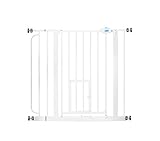
For 30 days minimum, those spots must be physically blocked using a
or furniture, AND treated with a true **enzymatic cleaner** that breaks down uric acid crystals at a molecular level. As of 2026, I consistently recommend **Nature’s Miracle Advanced** or **Rocco & Roxie Professional Strength**. Soak the area — don’t just spray the surface — and allow it to air dry completely before your dog accesses it again.
Skipping this step is one of the most common reasons regression protocols fail. You can have perfect supervision and a flawless schedule, but if the scent marker remains, you're fighting biology with behavior modification. You need both.
Fixing Regression Caused by Specific Triggers
Once you've ruled out medical causes, the next step is identifying exactly what changed in your dog's world. Regression tied to a specific trigger responds well to targeted fixes — but only if you match the solution to the actual cause. Here's how to tackle the most common scenarios I see in my work with clients.
New Baby or Family Member in the Home
A new baby doesn't just disrupt your sleep — it completely reorganizes the scent, sound, and energy landscape your dog has come to rely on. I had a client in 2026 whose 2-year-old Labrador, fully housetrained for over a year, started having accidents within a week of bringing home a newborn. The dog wasn't being defiant. She was unmoored.
The fix here is twofold: desensitization and routine preservation.
- Start exposing your dog to baby sounds, new equipment, and changed furniture arrangements before the baby arrives if possible
- Maintain the dog's core schedule as an anchor — same wake-up time, same feeding times, same elimination outings. When everything else is chaos, that predictability is stabilizing
- Assign a second adult to own the dog's outings during the first 4–6 weeks. This period is chaotic by definition, and eliminations that get delayed or skipped are exactly how regression takes hold
- Use brief, positive one-on-one sessions daily to reinforce that the dog still has a place in the family
The goal isn't perfection — it's preventing a gap in the training foundation from becoming permanent.
New Pet in the Home
Adding a second dog or cat creates competition for resources that your dog may not vocalize but absolutely feels. Many owners assume their resident dog is "fine" because there's no growling — but subtle stress shows up in the elimination pattern first.
Key management steps:
- Separate feeding zones from day one, and keep them separate
- Separate elimination zones during the adjustment window — walk each dog independently for outdoor potty breaks, at least for the first few weeks
- Carve out individual training and exercise time for your original dog so they don't feel replaced
- Give yourself a realistic patience window of 3–6 weeks before expecting normal