Dog Training Myths That Harm Dogs (2026 Guide)
Every week, I still encounter at least one dog whose behavioral problems were created by their owner's best intentions. A fearful rescue made worse by well-meaning correction. A dog who stopped growling — not because he became safer, but because his last warning was trained away. A puppy whose housetraining took six months longer than it needed to because someone rubbed his nose in an accident.
After 15+ years working with dogs ranging from family Labradors to court-ordered bite cases, the pattern is impossible to ignore: outdated training myths don't just fail dogs — they actively hurt them. And the most damaging advice tends to come from the most confident-sounding sources.
The behavioral science is clear. We understand how dogs actually learn, how fear responses work, and why dominance-based frameworks were built on flawed wolf studies that researchers themselves have since retracted. And yet the myths persist — passed down through generations of well-intentioned owners, recycled on social media, and sometimes still promoted by trainers who should know better.
This article tackles eight of the most stubborn and harmful myths in dog training head-on. You'll learn exactly why each one is wrong, what the real science says, and — most importantly — what to do instead. Whether you're raising a new puppy, working through a behavioral challenge, or just second-guessing advice you received years ago, this is the honest guide you deserve.
We'll start with the myth that has probably caused more damaged dog-owner relationships than any other: the idea that your dog is constantly plotting to dominate you.
Why Dog Training Myths Are More Dangerous Than You Think

I spent the first three years of owning my German Shepherd, Koda, doing everything wrong — and genuinely believed I was doing everything right.
I alpha-rolled him when he resource-guarded his food bowl. I scruffed him when he jumped on guests. I used a prong collar because a well-meaning neighbor — a guy who'd "trained dogs for 30 years" — told me it was the only thing that worked for a "hard" breed like Koda. The results looked like progress on the surface. He stopped jumping. He stopped growling at the food bowl. He seemed more obedient.
What I didn't realize until much later was that I hadn't trained away those behaviors. I had simply terrified him into suppressing them.
How I Recognized I Was Using Harmful Methods
The turning point came when Koda bit a child at a family barbecue — without warning, seemingly out of nowhere. No growl. No stiff posture. Just a snap that required stitches and left me devastated.
What I learned from a certified applied animal behaviorist afterward fundamentally changed how I understood dog training. Koda hadn't bitten "without warning." I had spent three years punishing away his warnings. The growling I'd corrected, the stiffening I'd dismissed — those were his communication signals, and I had methodically trained him to skip them and go straight to biting.
That experience sent me back to the research, and what I found was sobering. Many of the techniques I'd been using traced directly back to wolf dominance studies conducted in the 1960s and 1970s — studies that even their original author, Dr. David Mech, has spent decades publicly disavowing. Mech's early captive wolf research described rigid dominance hierarchies that later field work showed simply don't exist in natural family groups. Wolves — and dogs — don't organize their social lives around constant status challenges. The entire theoretical foundation for "alpha" training was built on flawed science.
But the myths didn't die with the research. They got amplified by cable television, republished in bestselling books from the 1980s and 1990s still sitting on people's shelves, and passed down through generations of well-intentioned owners who swear by what "worked" for them — without recognizing what it cost their dogs.
The Real Cost of Myth-Based Training
The harm isn't abstract. Peer-reviewed studies consistently show that aversive training methods produce measurable physiological stress responses in dogs:
- Chronically elevated cortisol levels in dogs trained with punishment-based techniques
- Learned helplessness — a state where a dog stops offering any behavior because it has learned that its actions don't reliably produce safe outcomes
- Paradoxically, increased aggression — the exact problem most aversive techniques claim to solve
That last point deserves emphasis, because it's counterintuitive. When you suppress a dog's natural warning signals through punishment, you don't eliminate the underlying anxiety or conflict. You remove the early-warning system while leaving the pressure to build. The result is a dog that appears "calm" until it suddenly isn't.
The behavioral fallout has real-world consequences beyond the individual dog. The ASPCA identifies behavioral problems as one of the leading reasons dogs are surrendered to shelters each year — and a significant portion of those problems are either caused or worsened by training approaches rooted in outdated dominance theory.
I think about that every time I meet a "difficult" dog in my practice — a reactive German Shepherd, an anxious rescue Labrador who won't make eye contact, a Rottweiler someone calls "untrainable." More often than not, I'm not looking at a dog with a behavior problem. I'm looking at a dog that someone tried very hard to fix using methods that made things worse.
The myths in the sections that follow aren't harmless old wives' tales. They're ideas with documented costs — to dogs' welfare, to the human-animal bond, and to the millions of animals who end up in shelters because the humans who loved them were working from a broken playbook. Understanding where these myths came from, and why they're wrong, is the first step toward something better.
Myth #1: You Must Be the 'Alpha' or Your Dog Will Dominate You
Of all the harmful ideas circulating in the dog training world, this one has the longest reach and the most stubborn grip on popular culture. I still hear it constantly — from well-meaning owners, from neighbors, from people who watched a television show fifteen years ago and took it as gospel. "You have to show him who's boss." "She's trying to dominate you." "If you don't establish yourself as alpha, he'll walk all over you."
It sounds logical. It feels intuitive. And it is, in the most meaningful scientific sense, wrong.
Where the Alpha Wolf Myth Actually Came From
The entire edifice of "dominance theory" in dog training traces back to a single 1947 study by Swiss animal behaviorist Rudolph Schenkel, who observed wolves at the Basel Zoo in Switzerland. Here's the critical detail that almost nobody mentions: these were captive, unrelated wolves thrown together in an enclosure — not a natural family pack. The stress-driven, competitive behaviors Schenkel documented were artifacts of an artificial and stressful situation, not normal wolf social structure.
That flawed foundation was amplified in 1970 when biologist David Mech published The Wolf, bringing "alpha," "beta," and pack hierarchy into mainstream consciousness. What almost no dog owner knows is this: Mech has spent decades publicly trying to undo this. He has written articles, given interviews, and personally asked his publisher to stop printing The Wolf because the science it's based on has been thoroughly overturned. Wild wolves live in family units — parents and offspring — where the "dominant" animals are simply the parents. There's no violent struggle for rank because there's no rank to fight over in the way the captive wolf studies suggested.
And then there's the biggest logical leap of all: dogs are not wolves. They have co-evolved alongside humans for at least 15,000 years — some estimates push that to 40,000 years. That relationship has profoundly shaped canine cognition, behavior, and social structure. Applying observations from stressed, captive, unrelated wolves to your Labrador is roughly like studying prison social dynamics and using them to explain how families behave at dinner.
What Real Canine Leadership Looks Like in Practice
Here's where the myth causes its most direct harm. When owners believe they must establish physical dominance, they reach for physical tools: the alpha roll (forcing a dog onto its back), the scruff shake, the hard stare-down, the "dominance down." I've had clients come to me after trying these techniques, bewildered that their previously nervous dog had started snapping.
They weren't confused. Their dog was terrified, and a terrified dog eventually runs out of appeasement signals and moves to the only option left: defensive aggression.
A 2009 study published in the Journal of Veterinary Behavior put numbers to what I've seen firsthand. Dogs trained with confrontational techniques — including alpha rolls, stare-downs, and physical corrections — showed aggression in approximately 25% of cases. Dogs trained with reward-based methods showed near-zero aggression in the same contexts. That's not a marginal difference. That's a fundamental one.
I remember working with a 3-year-old German Shepherd named Bruno whose owner had been told to "alpha roll" him whenever he pulled on leash. By the time I met Bruno, he was shutting down on walks — ears flat, tail tucked, refusing to move. He wasn't dominant. He was a dog who had learned that interacting with his owner sometimes meant being physically overpowered without warning. We spent six weeks just rebuilding his confidence with a
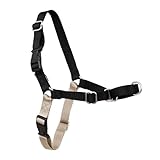
and a

full of high-value rewards. The “stubborn, dominant” dog turned out to be a dog who needed to feel safe.
Real leadership for dogs looks like this:
- Consistent, predictable daily routines for feeding, walks, and rest
- Clear, calm communication — cues that always mean the same thing
- Following through on what you ask, without anger or intimidation
- Being the source of good things: food, play, safety, and calm
Dogs don't need a dictator. They need a trustworthy guide — a role any owner can fill without a single alpha roll.
Myth #2: Rubbing a Dog's Nose in Accidents Teaches Housetraining
This one breaks my heart every time I see it, because it's so deeply embedded in dog-owning culture that people genuinely believe they're doing the right thing. I've had clients look me in the eye and say, "But my parents always did it this way." The logic seems sound — catch the dog, show him the crime, make it unpleasant. Classical cause-and-effect thinking. The problem is that dogs don't experience cause and effect the way we do, and this method doesn't just fail — it actively makes housetraining harder.
The Science Behind Why Dogs Cannot Connect Past Actions to Present Punishment
Dogs live almost entirely in the present moment. Their associative learning window — the time frame in which they can connect a behavior to a consequence — is roughly 2 to 3 seconds. Not minutes. Seconds.
By the time you've walked into the room, noticed the puddle, felt your frustration rise, and brought your dog over to "show" him what he did, that window has slammed shut. It doesn't matter if the accident happened 2 minutes ago or 20. Your dog has no neurological mechanism to link your current anger to something his body did earlier.
What he does learn is this:
- Humans become unpredictable and frightening near certain spots on the floor
- Approaching an accident site causes something bad to happen
- The safest strategy is to eliminate in hidden locations — behind the sofa, in the back bedroom, anywhere out of your sight
This is exactly why clients who come to me with "stubborn" housetraining dogs almost always have a history of nose-rubbing. The dog hasn't become defiant. He's become strategic. I remember one client, a first-time owner with a 6-month-old Labrador named Biscuit, who was convinced her dog was spiteful. Biscuit would eliminate perfectly outside during walks, then sneak behind the armchair 20 minutes later. Within two weeks of dropping the punishment entirely and switching to the protocol below, Biscuit was reliably clean in the house. The problem was never stubbornness. It was fear.
And then there's the "guilty look." That tucked tail, flattened ears, and avoidant body posture you see when you discover an accident? That is not guilt. That is appeasement behavior triggered entirely by your body language in that moment — your tight jaw, your stiff posture, your lowered voice. Your dog reads all of it and responds with calming signals to de-escalate your tension. Alexandra Horowitz's research at Barnard College confirmed this conclusively: dogs displayed the "guilty look" even when they had done nothing wrong, as long as the owner believed they had and approached accordingly.
Beyond the behavioral damage, there is real physical harm to consider. Forcibly pressing a dog's face into feces or urine exposes mucous membranes to bacteria, can cause respiratory irritation from ammonia, and creates profound psychological distress — particularly in young puppies during critical socialization windows.
A Proven 4-Week Housetraining Protocol
Here's what actually works. When owners follow this consistently, most puppies are reliably housetrained within 3 to 4 weeks.
The foundation principles:
- The 15-minute rule: Take your puppy outside every 15 minutes during active, unsupervised time, and immediately after waking, eating, or playing
- Crate training as management: A properly sized
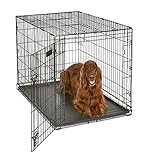
leverages a dog’s natural instinct to keep his sleeping area clean — it prevents accidents when you can’t actively supervise, not as punishment
– **The 3-second reward window:** The moment your dog eliminates in the correct spot, mark it (“yes!”) and deliver a high-value

within 3 seconds. That timing is everything
– **Enzymatic cleanup:** Any accident inside should be cleaned with an

— standard cleaners leave odor traces that signal “this is a bathroom” to your dog’s nose
When accidents happen indoors — and they will — your response is simple: say nothing, interrupt calmly if you catch it in progress, take the dog outside, and clean up thoroughly. No drama, no correction, no lesson delivered after the fact. There is no lesson to deliver. The window is already closed.
Housetraining is a management problem, not a discipline problem. Reframe it that way, and everything gets easier.
Myth #3: Letting Your Dog on the Bed or Furniture Causes Behavioral Problems
Few pieces of dog training advice get repeated with as much confidence — and as little evidence — as this one. Tell someone your dog sleeps in the bed and you'll often get a knowing look, followed by some version of: "You know that's going to cause problems, right?"
No. It isn't. Not inherently, anyway.
No peer-reviewed study has ever established a causal link between furniture access and dominance-related behavior problems. Not one. This myth is pure folklore, passed down through generations of trainers working from the same outdated dominance theory debunked in Myth #1.
Where the Confusion Comes From
I've worked with dozens of clients convinced their sofa was the source of their dog's behavioral issues. In almost every case, what we actually found was a dog with pre-existing resource guarding tendencies — a dog who would guard anything he valued: food bowls, toys, a particular corner of the yard. The bed or couch became one more item on that list. But the furniture access didn't create the resource guarding. The guarding behavior was already there, expressed in a new location. Removing sofa privileges doesn't treat resource guarding — it just moves the problem around. The guarding itself needs direct behavior modification regardless of where it shows up.
One client of mine, a woman named Diane, had banned her anxious rescue greyhound from all furniture on the advice of a trainer. The dog became increasingly clingy and restless, and started showing stress behaviors during the night. When Diane finally let him back on the

she’d originally bought him and eventually the couch with her, the dog visibly settled. His nighttime pacing stopped within a week. The furniture wasn’t the problem — the isolation was.
The Real Cost of This Myth
What gets overlooked is the psychological cost to the dog when owners withhold physical closeness based on bad information. Dogs are social animals who derive genuine comfort from proximity to their people. For sensitive, anxious, or newly adopted dogs especially, being consistently pushed off furniture can:
- Increase baseline anxiety
- Weaken the human-dog bond during a critical trust-building period
- Confuse dogs who can't understand why closeness is sometimes permitted and sometimes punished
A 2015 survey by the American Pet Products Association found that over 50% of dog owners allow their dogs on furniture — and reported no meaningful behavioral consequences. If furniture access were genuinely causing widespread behavioral dysfunction, we'd see it clearly in the data. We don't.
When Furniture Rules Do Make Sense
There are completely valid, practical reasons to set furniture boundaries — they're just not about dominance or behavior science:
- Orthopedic concerns: For dogs with hip dysplasia, spinal issues, or recovering from surgery, repeated jumping on and off furniture causes real physical harm
- Multi-pet conflict: In households where two dogs are already competing for resources, the bed or couch can become a flashpoint — managing access temporarily while you work on the underlying tension is smart
- Owner preference: You simply don't want dog hair on your couch. That's a legitimate human preference requiring no scientific justification
The point is: these are your reasons, based on your household's needs — not a behavioral prescription.
A Smarter Approach Than Blanket Bans
Rather than prohibiting furniture access entirely, teaching a solid "off" cue gives you flexibility without deprivation. A dog who understands "off" and responds reliably can enjoy the couch when invited and vacate it on cue when needed — guests arriving, a child sitting down, whatever the situation calls for.
You can reinforce this with a
and a simple marker word or clicker, and most dogs pick it up within a handful of short sessions. That’s training that fits real life.
Sharing your sofa or your bed with your dog is not a behavioral time bomb. It's an expression of the bond you're building — and for most dogs, that closeness is genuinely good for them.
Myth #4: Punishment-Based Training Is More Effective for 'Stubborn' or 'Dominant' Breeds
Few myths do more damage than the idea that certain breeds are too hardheaded for "soft" training and need a firmer hand. I've heard it from well-meaning owners at the dog park, from outdated trainers at pet stores, and even from some veterinarians who should know better. The breeds that get saddled with this reputation — Siberian Huskies, Beagles, Basset Hounds, Maremmas, Great Pyrenees — aren't stubborn. They're specialized.
Understanding Independent Breeds: What They Actually Need
These dogs were selectively bred over generations to make decisions without waiting for human input. A Beagle following a scent trail through dense undergrowth needed to commit to that track independently. A Great Pyrenees guarding a flock on a remote hillside had to assess threats and respond without a shepherd standing beside it. That self-directed decision-making is not a character flaw. It's a genetic feature that humans specifically cultivated.
When you understand this, the training solution becomes obvious: you don't need harsher consequences. You need to become more interesting and more relevant than everything else in the dog's environment.
For Beagles especially, this means working with the nose rather than fighting it. I've had tremendous success starting Beagle recall training by dragging
Similar Posts
Jealousy Between Dogs in Same Household: Expert Solutions
Introduction You've dreamed about it for months—bringing home a second dog to keep your first pup company. But within hours of the new arrival, your once-friendly dog refuses to eat, plants herself between you and the newcomer, or even snaps when the new dog approaches. The guilt hits hard. Did I make a terrible mistake?…
Dog Aggression Toward Strangers on Property (2026)
Most dogs that bite a stranger on their owner's property weren't "random" — the warning signs were there for weeks or months before anyone took them seriously. I've seen this pattern play out dozens of times in my career, and it's one of the most preventable tragedies in dog ownership. I started working specifically with…
How to Calm a Hyper Australian Shepherd: Expert Tips
Understanding Your Australian Shepherd’s Energy: Why They’re Wired to Work If you’ve got an Australian Shepherd bouncing off the walls at 8 PM after a “full day,” you’re not dealing with a hyperactive dog. You’re dealing with an unemployed workaholic. Born to Work All Day (Literally) Australian Shepherds were developed to herd livestock across massive…