3 Ds of Dog Training: Distance, Duration & Distraction
Here's a frustrating scenario I've watched play out hundreds of times in my training career: a dog sits perfectly on command in the living room, earns a treat, and the owner beams with pride — then takes that same dog to the park and acts completely shocked when the dog ignores the same command entirely. The owner blames the dog. The dog has no idea what went wrong. And I'm standing there knowing exactly what the problem is.
Your dog didn't forget how to sit. You just never actually finished teaching it.
This is where the Three Ds of dog training come in — distance, duration, and distraction — and understanding them is the difference between a dog that sort of listens and one that genuinely responds reliably in the real world. I've been using this framework for over 15 years, from first-time family puppies to competitive obedience dogs, and without exception, every training breakdown I've seen traces back to someone skipping steps within these three dimensions.
Most owners don't even know the Three Ds exist. Of those who do, the majority get the order completely backwards — which is why their training stalls, their dogs seem "stubborn," and recall fails at the worst possible moment.
In this guide, you'll learn exactly what each D means, why the sequence matters enormously, and how to systematically apply them to build behaviors that hold up when your dog is excited, distracted, and 30 feet away from you.
What the Three Ds of Dog Training Actually Mean (And Why Most Owners Get Them Backwards)

The Three Ds of dog training are Distance, Duration, and Distraction. Together, they describe the three variables that determine how reliably your dog performs any cued behavior in the real world. Think of them as the stress-test conditions every trained behavior needs to pass before it's actually trained.
Here's what each one means in plain terms:
- Duration — how long your dog can hold a behavior (like staying in a sit for 30 seconds versus 3 seconds)
- Distance — how far away you can move from your dog while they maintain the behavior
- Distraction — how well your dog performs when competing stimuli are present — other dogs, squirrels, strangers, interesting smells, you name it
Simple enough, right? The problem is what happens next.
Why Most Owners Get This Completely Backwards
In my classes, roughly 8 out of 10 new dog owners make the exact same mistake: they skip ahead to high-distraction environments long before their dog has any real foundation in duration or distance. It feels logical. You want a well-behaved dog at the dog park, so you practice at the dog park. You want your dog to come when called near traffic, so you try it near traffic.
But from the dog's perspective, that approach is like learning to ride a bike on a highway. The skills aren't there yet, and the environment is working against them.
I worked with a client in 2026 who had a two-year-old Labrador named Biscuit. Biscuit had a rock-solid "down" on the living room rug — she'd hold it for nearly a minute while her owner moved around the room. Her owner was convinced she was ready for off-leash work at their neighborhood park. Within thirty seconds of unclipping the leash, Biscuit was gone, sprinting toward a group of children with zero response to her name. The recall wasn't broken. Distraction had simply never been trained. Biscuit's weakest D exposed everything.
This gets to the foundational rule that shapes everything in this article: a dog is only as reliable as its weakest D. You can have spectacular duration and distance, but if distraction proofing is a gap, that's what the real world will find — every single time.
The Simple Test That Reveals Your Dog's Weakest D
You can identify your dog's weakest D right now without any special equipment. Ask your dog to sit, then run through these three checks:
- Duration check: Can your dog hold the sit for 30 seconds while you stand still, one step away? If they break before that, duration is your gap.
- Distance check: Can your dog hold the sit while you walk 10 feet away and turn your back? If they follow you or break position, distance needs work.
- Distraction check: Can your dog sit and hold it while someone else walks into the room, a knock sounds at the door, or you toss a
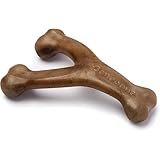
across the floor? If they break immediately, distraction is underdeveloped.
Most dogs will pass one or two of these checks and reveal an obvious weak point on the third. That weak point is your starting place — not the dog park.
How the Three Ds Connect to Real-World Obedience Goals
Understanding the Three Ds isn't just academic. It's the difference between a dog that performs in training sessions and one that behaves in your actual life. The goals most owners care about — a reliable recall at the dog park, polite greetings when guests arrive, holding a wait at a busy doorway, off-leash reliability on hiking trails — every single one requires your dog to handle all three Ds simultaneously.
A

is one of the most practical tools I recommend for early diagnostic work. It gives you the ability to safely test distance and distraction in real environments before trust is fully established.
The following sections break down exactly how to build each D deliberately, in the right order, without skipping steps.
Duration: Building the Foundation Before Anything Else
Here's something I see constantly with new clients: they teach their dog a beautiful sit, practice it fifty times in the kitchen, and then wonder why the dog pops right back up the moment they take a step backward. The problem isn't the sit. The problem is that the dog learned a moment of sitting, not the behavior of sitting.
Duration fixes this — and it's the D you should almost always train first, before you ever worry about distance or distraction.
Duration means the dog understands that a behavior continues until you say it's over. Not until they get bored. Not until something interesting happens. Until you give them permission to move. That shift in understanding — from "I did the thing" to "I hold the thing" — is the foundation everything else is built on.
Choosing and Teaching a Rock-Solid Release Cue
Before you can build duration, your dog needs a clear signal that the behavior is finished. This is called a release cue, and I use the word "free" with every dog I train. It's short, punchy, and you're unlikely to say it accidentally mid-conversation — unlike "okay," which I've watched owners accidentally deploy dozens of times mid-stay.
Teaching it is simple: ask for a sit, wait two seconds, say "free" in a bright, upbeat tone, and encourage your dog to move. Toss a treat away from you if needed to get them physically breaking position. Repeat until your dog visibly relaxes and shifts weight the moment they hear "free."
The release cue is what creates duration. Without it, your dog has no way of knowing when the behavior is supposed to end — so they guess, and they usually guess wrong.
Building Duration in 5-Second Increments: A Step-by-Step Protocol
I worked with a Labrador in 2026 who couldn't hold a down-stay for more than four seconds without squirming back up. His owner had been releasing him the same way every time — exactly five seconds, like clockwork — and the dog had simply learned to anticipate it. Classic predictability problem.
Here's the protocol I use to build a down-stay from roughly 3 seconds to 3 minutes over two to three weeks:
- Days 1–3: Ask for a down, wait 3–5 seconds, mark and reward before the dog moves, then release. Keep sessions short — ten reps maximum.
- Days 4–7: Mix intervals. Try 3 seconds, then 8, then 5, then 12. Variable duration intervals are far more effective than linear progression because your dog can't clock-watch their way out of the behavior.
- Week 2: Push toward 20–30 second holds, still with variability. The longest interval should represent roughly a 10% increase from your previous session's longest hold — a useful ceiling to avoid progression that outruns your dog's confidence.
- Week 3: Begin mixing in holds up to 60–90 seconds, then work toward 3 minutes using the same variable approach.
Use

cut small — you want something your dog values, but not something so exciting it breaks their focus mid-stay.
Why Your Dog Keeps Breaking the Stay (And How to Fix It Without Frustration)
Breaking early is normal. It's information, not defiance.
When a dog breaks position before release, most owners either repeat the command — which teaches the dog that "stay" is negotiable — or get visibly frustrated, which poisons the whole exercise. Neither helps.
Here's what I do instead: quietly and neutrally return the dog to position, reset, and immediately make the next repetition easier. If your dog broke at 15 seconds, do your next rep at 6 seconds and end on a success. You're not punishing the break — you're adjusting the criteria to something your dog can actually handle right now.
Ask yourself these three questions when a dog is consistently breaking:
- Am I progressing too fast? Pull back 20% and rebuild.
- Is my body language anxious or hovering? Dogs read tension and it makes them restless.
- Am I always releasing from the same distance? Returning to reward position before releasing builds far more reliability than releasing from across the room.
Duration isn't glamorous training. But every reliable behavior I've ever built — whether it's a competition-level heel or a simple front-door greeting sit — started with a dog who understood hold it until I tell you otherwise. Get this right, and the other two Ds become dramatically easier.
Distance: Teaching Your Dog That Commands Work From Across the Room
Here's something that surprises almost every dog owner I work with: your dog doesn't actually know the word "sit." What your dog knows is your version of sit — delivered at your usual distance, in your usual tone, with your usual body posture. Change any of those variables, and you might as well be speaking a foreign language.
Distance is defined as the physical space between you and your dog either when you give a cue or while your dog holds a behavior after the cue. It sounds simple. It isn't.
Why Distance Is Psychologically Harder Than It Looks
Dogs are social animals, and proximity to their handler is inherently reinforcing. You are comfort, safety, food, and fun — all in one package. When you step away, you're not just changing a training variable. You're removing something your dog actually wants. That creates low-level stress, and stress degrades performance.
I saw this play out clearly with a Border Collie named Finn in 2026. His owner had worked diligently for weeks, and Finn had a genuinely excellent sit — crisp, fast, reliable. At two feet away. The moment his owner stepped back to six feet and gave the cue, Finn stared at her like she'd asked him to do calculus. He wasn't blowing her off. The cue simply hadn't been proofed at that distance yet, and it registered as a completely different event. This is far more common than owners expect, and it's never the dog's fault.
A Progressive Distance-Building Protocol
Don't jump from heel position to across the room. Work through this progression deliberately, spending 2–3 successful sessions at each increment before advancing:
- Step 1 (1–2 feet): Your baseline. The dog should succeed 8 out of 10 reps before moving on.
- Step 2 (3–4 feet): Step back one large step. Mark and reward immediately on success.
- Step 3 (6 feet): The first real test. Many dogs fumble here — expect it and plan for it.
- Step 4 (10 feet): Use a
so the dog can’t self-reward by wandering off.
– **Step 5 (15–20+ feet):** Real-world functional distance for most household situations.
The marker for advancing: 8 successful completions out of 10 attempts at the current distance, across at least two separate training sessions. One good day doesn't count.
Stay vs. Distance Cues: Two Different Skills That Look Similar
These are genuinely separate behaviors that require separate training tracks.
Distance-holding (stay) means your dog maintains a position — sit, down, or stand — while you move away. The dog is stationary; you are the one creating the distance.
Distance cuing means your dog is at a distance when you give the cue. A recall ("come") is the most obvious example, but a down-from-a-distance is another critical one for off-leash safety.
Both require distance proofing, but the emotional challenge differs. In stay work, the dog watches you leave and must suppress the urge to follow. In distance cuing, the dog has to process and respond to a cue without the reinforcing effect of your proximity. Train them separately before combining them.
Using a Long Line to Train Distance Safely
A
(typically 15–30 feet) is the single most useful tool for distance training. It serves two functions: it prevents the dog from rehearsing failure by wandering off, and it gives you a physical way to gently guide the dog back without turning into a frustrating game of chase.
Keep the line loose — it's a safety net, not a leash. The goal is for the dog to respond to the cue, not to feel pressure from the line.
Common Distance Training Mistakes and How to Avoid Them
- Moving too fast. Adding 10 feet overnight is a setup for failure. One or two feet per session is genuine progress.
- Repeating the cue. If your dog doesn't respond at six feet, don't call it again. Move closer, reset, and reward — then build back out.
- Only practicing in one location. A dog who holds a sit at six feet in your kitchen may not do it at six feet in the backyard. Distance and distraction are always interacting, which is exactly why the Golden Rule of the Three Ds matters so much.
Distance training is slow work, but the payoff is a dog who listens when you're across the room — not just when you're standing right over them.
Distraction: The Most Misunderstood D and How to Actually Proof Against It
Here's where most trainers — and I include my earlier self in this — get things completely wrong. Distraction isn't just "stuff happening nearby." A distraction is anything in the environment that competes with your reinforcer. That framing matters enormously, because it means the solution isn't simply exposing your dog to more chaos. It's about understanding the economics of attention: what does your dog find more rewarding right now — you or that squirrel?
The answer changes depending on the dog, the day, and how hungry that squirrel looks.
Building Your Dog's Personal Distraction Hierarchy
One of the most useful tools I give my clients is a personal distraction hierarchy — a ranked list, from 1 to 10, of what actually derails their specific dog. I stress the word "personal" because triggers vary enormously between individual dogs.
I worked with a Border Collie mix named Rue who was completely unbothered by other dogs at distance — maybe a 3/10. But a kid on a bicycle? Instant 10/10. Her owner had been drilling her around other dogs at the park, wondering why she still blew past cues. When we mapped Rue's actual hierarchy, we had our answer.
To build yours, observe your dog across environments and rate what triggers loss of focus:
- 1–3 (Low): Background sounds, people walking calmly at distance, a treat bag rustling on the counter
- 4–6 (Medium): A familiar dog across the street, a jogger passing, mild outdoor smells
- 7–10 (High): Squirrels, dogs running toward them, skateboards, school dismissal crowds, other dogs playing loudly
Start every new behavior at a 1 or 2 on your dog's scale — not a generic one.
Indoor Distraction Proofing: Controlled Scenarios You Can Set Up at Home
Indoor training gives you something outdoor training rarely does: precise control over distraction intensity. Use this phase deliberately before stepping outside with a new behavior.
A few scenarios I've used with client dogs that work remarkably well:
- The trickling treat bag: Place a
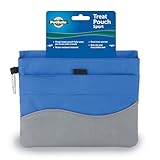
on the floor nearby and ask for a sit or stay. The smell is genuinely distracting, which makes succeeding around it meaningful. Start with it 10 feet away, then gradually closer.
– **The running vacuum:** Begin with the vacuum off, then on in another room, then on in the same room. This also doubles as desensitization for noise-reactive dogs.
– **The

decoy:** Scatter kibble on a snuffle mat and place it just outside your dog’s reach while they hold a down-stay. It’s a controlled, gradeable distraction you can move closer or farther in seconds.
The goal indoors is to build a track record of success at gradually increasing difficulty before real-world variables enter the picture.
Outdoor Distraction Proofing: How to Use Public Spaces Strategically
The biggest mistake I see — and it sets dogs back weeks — is taking a dog who's just nailed a 30-second kitchen sit directly to a dog park to "test it." That's not proofing. That's gambling, and the house almost always wins. When the dog fails in an overwhelming environment, you haven't just lost that rep. You've chipped away at their confidence and yours.
Instead, treat public spaces like a dial you turn up slowly:
- Empty parking lot, mid-morning — low foot traffic, mild ambient noise
- Quiet residential sidewalk — occasional passersby, but predictable
- Outside a school, 20 minutes before dismissal — controlled chaos building toward a peak
- A busy trail on a weekend morning — dogs, bikes, strollers, all at once
That school dismissal scenario is one I use regularly. The energy ramps up predictably over about 15 minutes, which gives you a natural distraction dial you can simply walk away from if your dog hits threshold.
One more distinction worth making: passive distractions (a dog walking 50 feet away) and active distractions (a dog sprinting directly at yours) are genuinely different training challenges that require separate work. Don't assume mastery of one transfers to the other automatically.
Proof deliberately. Proof in layers. Build a dog that trusts you to set them up to win.
The Golden Rule of the Three Ds: Never Increase More Than One at a Time
If there's one rule worth internalizing above all others, it's this: when you increase one D, reduce the other two to near-zero. Everything else in three-D training is commentary.
I learned this the hard way with a Belgian Malinois named Rook about eight years ago. His owner had been working a solid "stay" for weeks — reliable at 10 feet, holding for 30 seconds, in their quiet backyard. Feeling confident, she brought him to a park (new distraction level), asked for a 30-second stay (same duration), and walked 15 feet away (increased distance). Rook broke within four seconds, she repeated the command, he broke again, and by the fifth repetition he was treating "stay" like a suggestion rather than a behavior. In one session, she'd accidentally started poisoning the cue. We spent three weeks rebuilding what had taken three days to create.
The Three-D Matrix: A Visual Framework for Planning Training Sessions
Think of your three variables as sliders on a mixing board. At any given moment, your setup should look something like this:
| Training Focus | Distance | Duration | Distraction |
|---|---|---|---|
| Building Duration | Close (2 ft) | Increasing | Minimal |
| Building Distance | Increasing | Short (5 sec) | Minimal |
| Building Distraction | Close (2 ft) | Short (5 sec) | Increasing |
When you're pushing a new distance milestone — say, stepping back to 15 feet for the first time — keep duration short (5 seconds short) and work somewhere genuinely boring. Your hallway is perfect. Not the backyard, not the living room with kids doing homework. The hallway. One variable at a time.
This connects to a concept borrowed from behavioral science called splitting vs. lumping. Splitting means carving your goal into the smallest possible achievable steps and rewarding each one. Lumping means stacking criteria — asking for more distance and more duration and working near the dog park all at once. The Three Ds give you a concrete framework for splitting