Counter Conditioning Fearful Dogs: Complete 2026 Guide
Most people give up on their fearful dogs too soon — and I completely understand why. When I first started working with reactive and fearful dogs back in 2011, I made every mistake in the book. I flooded a border collie named Remy with the very thing that scared him, thinking "exposure therapy" meant pushing through the panic. It made him worse. Significantly worse. That failure sent me back to the research, and what I found changed everything about how I approach fear in dogs.
Here's what most owners don't realize: a dog who is scared isn't choosing to be difficult. Fear is a physiological response — the brain is literally in a different operating mode. You cannot train a dog out of fear using the same tools you'd use to teach a sit. What actually works is a science-backed process called counter conditioning, and when it's done correctly, the results can be genuinely life-changing for both dog and owner.
This guide covers everything I've learned from 15+ years of hands-on work with fearful dogs — from understanding exactly what counter conditioning is (and the critical mistakes that make it fail) to building a step-by-step protocol you can start this week. You'll also learn how to read your dog's stress signals before they escalate, which reinforcers actually move the needle, and when the situation calls for professional support.
Whether your dog is terrified of strangers, other dogs, loud noises, or something seemingly random like umbrellas, this guide applies directly to your situation.
Let's start with the foundation — because most people misunderstand what counter conditioning actually means.
What Counter Conditioning Actually Is (And What It Isn't)
If you've ever been told to "just let your dog get used to it," you've already encountered one of the most well-meaning but potentially damaging pieces of advice in dog training. Counter conditioning is something fundamentally different — and understanding exactly what it is (and what it isn't) will make or break your success with a fearful dog.
Counter conditioning means changing your dog's emotional response to a trigger, not simply changing their behavior in the presence of that trigger. This distinction matters more than most people realize. A dog can learn to stay still and stop barking around strangers while still being absolutely terrified on the inside. That's behavior suppression — and it's a ticking clock.
I learned this the hard way early in my career. I worked with a Belgian Malinois mix named Renzo who'd been through several training programs before he came to me. He'd been "corrected" every time he reacted to other dogs — and by the time I met him, he would stand rigidly still, hackles up, pupils dilated, barely breathing. His previous trainers called this "calm." It wasn't calm. It was shutdown. Six weeks later, without any provocation anyone could identify, Renzo bit. The fear had never been addressed — just silenced.
Counter conditioning resolved the actual problem: Renzo needed to feel differently about other dogs, not just behave differently around them.
The Difference Between Counter Conditioning and Desensitization
These two terms get used interchangeably all the time, but they are distinct tools — both valuable, and most powerful when used together.
Desensitization means gradually reducing a dog's reaction to a stimulus by exposing them to it at a low enough intensity that it doesn't trigger a fear response. Think of it as turning down the volume on the scary thing, slowly and systematically.
Counter conditioning pairs that stimulus — even at low intensity — with something the dog genuinely loves, like a piece of real chicken or a beloved toy. The goal is to shift the emotional association from scary to predicts something wonderful.
Here's a simple breakdown of how they complement each other:
- Desensitization controls the threshold — keeping the trigger below your dog's reactivity point
- Counter conditioning rewires the meaning — building a new positive emotional response
- Together, they're called systematic desensitization and counter conditioning (DSCC), which is the gold standard protocol used by certified behaviorists worldwide
The science behind this pairing is rooted in classical conditioning — the same mechanism Pavlov identified. When a scary stimulus is consistently paired with something the dog loves, the brain's amygdala (the fear center) begins to associate the trigger with safety and reward rather than threat. With repetition, this rewiring becomes durable and genuine.
A

with high palatability — think real meat, cheese, or freeze-dried liver — is worth seeking out specifically for this work. The reinforcer needs to be something your dog finds genuinely extraordinary, not just acceptable.
Why Suppressing Fear Behavior Is Not the Same as Resolving Fear
This is where flooding, punishment-based methods, and "just expose them to it" approaches cause serious, sometimes permanent damage.
Flooding means exposing a dog to their fear trigger at full intensity until they "give up" reacting. Even when it appears to work, what you're often seeing is learned helplessness — the dog has concluded there's no escape and stops trying. The fear is intact. The trust in you may be shattered. And in my practice, I've seen flooding backfire into severe aggression in dogs who had previously shown only avoidance behavior.
Punishment during fear responses is similarly counterproductive. You're adding something aversive (pain, fear, startle) on top of an already aversive emotional state. The dog doesn't learn "I don't need to be scared." They learn "being scared leads to bad things happening." Fear compounds.
Realistic expectations matter here: counter conditioning done correctly takes weeks to months, not days. That's not failure — that's neuroscience. You're asking a brain to rebuild emotional associations that were often formed through repeated or intense trauma. Rushing it by moving too fast, using too weak a reinforcer, or working above your dog's threshold will stall or reverse progress entirely.
Patience here isn't just a virtue. It's the mechanism.
Identifying Your Dog's Fear Triggers and Stress Signals Before You Start
Here's the mistake I see constantly, even from well-meaning owners who've done their research: they start counter conditioning before they truly know what they're counter conditioning. They say their dog is "afraid of strangers" and start tossing treats whenever a person appears — then wonder why nothing improves. The problem isn't the technique. It's the precision.
You cannot effectively counter condition a vague concept. You can counter condition "men wearing hats who stop walking and make direct eye contact within 8 feet." That level of specificity is what separates a training plan that works from one that spins its wheels for months.
Before you deliver a single treat, spend at least two weeks doing nothing but watching and documenting.
Stress Signals You Might Be Missing: From Subtle to Obvious
Most owners don't catch fear until it becomes impossible to ignore — the lunge, the bark, the snap. But by that point, your dog has been communicating anxiety for quite a while. The earlier chapters of the story were easy to miss.
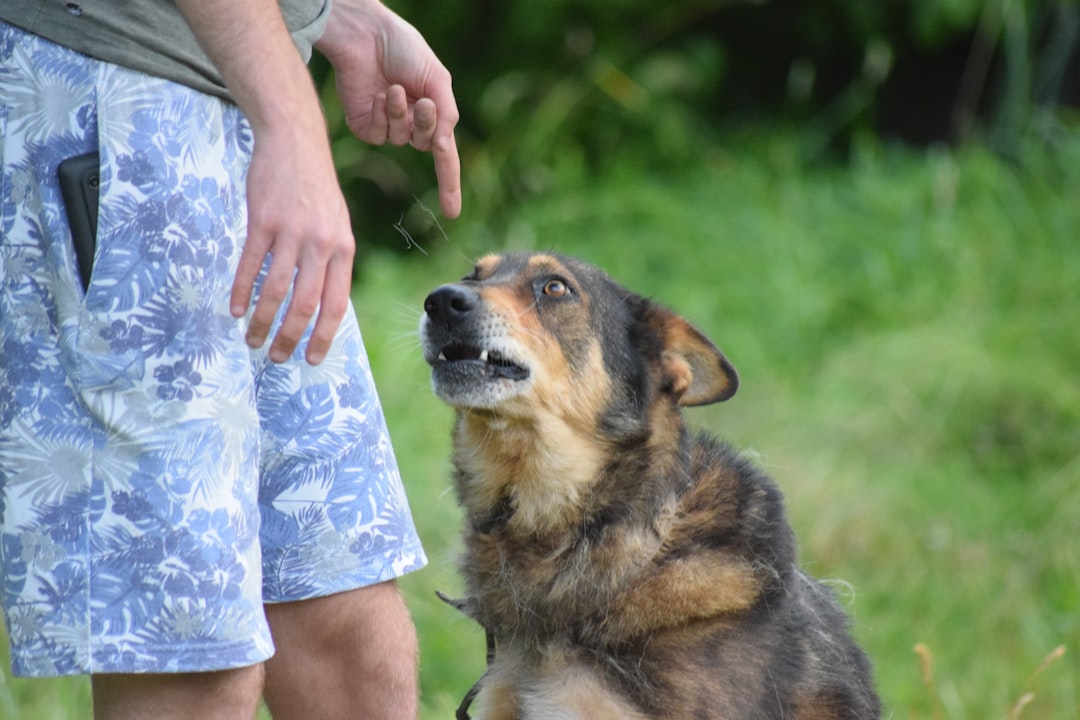
Canine stress signals exist on a spectrum, and the early ones are easy to dismiss as "just something dogs do":
Early warning signs (easy to miss):
- Lip licking when no food is present
- Yawning outside of tiredness — often a quick, tight yawn
- Whale eye — the whites of the eyes become visible as the dog averts their gaze while keeping their head still
- Tail tucked or held low and rigid, not wagging
- Freezing — even a half-second pause before moving away
- Excessive sniffing of the ground in an otherwise uninteresting spot
- Suddenly refusing food they'd normally eat eagerly
Escalated signals (harder to ignore):
- Growling, snarling, or showing teeth
- Barking in a high, rapid pattern
- Lunging or snapping
- Attempting to flee or hide
The gap between these two categories is exactly where most training falls apart. If you only respond to the lunging, you're waiting until your dog is in full panic before intervening. The early signals are your actual training window.
I carry a
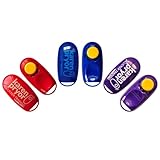
with me during observation walks specifically because it helps me stay sharp and present — but during this assessment phase, I’m clicking nothing. I’m just watching.
How to Build a Fear Trigger Hierarchy
Once you've spent time observing, it's time to get organized. A fear trigger hierarchy is a ranked list of everything that causes your dog stress, rated from 1 (mild discomfort) to 10 (full panic response). This becomes the blueprint for your counter conditioning sessions — you always start at the bottom, never the top.
Here's how to build yours:
- Keep a fear journal for 14 days. For every stress response you observe, record: the date, the specific trigger, the distance from your dog, the context (time of day, location, what happened before), and your dog's exact response using the signal list above.
- Be brutally specific. Not "dogs" but "large black dogs moving quickly off-leash." Not "traffic" but "trucks accelerating from a stoplight."
- Rate each trigger based on how quickly and intensely your dog responds, not on how scary you think it should be.
A real example: I worked with a client whose Border Collie seemed reactive to skateboards. We'd been treating for the visual presence of skateboards for three weeks with minimal progress. When we reviewed her fear journal carefully, a pattern emerged — the dog's stress signals spiked before the skateboards came into view. The true trigger was the sound of polyurethane wheels on pavement, not the skateboard itself. We shifted to audio-only desensitization using recordings at low volume, and within two weeks the progress was remarkable.
That's what a fear journal catches. You won't get that insight from guessing.
A
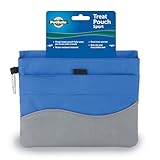
worn during your observation walks keeps your hands free and helps you respond if needed, but resist the urge to start treating reactively before your data collection is complete. The two weeks of groundwork you do now will make every future training session dramatically more efficient.
Your trigger hierarchy is the map. Counter conditioning is the journey. Don't start traveling before you know where you're going.
Setting Up the Right Environment and Choosing Your Reinforcers
Before you run a single counter conditioning session, you need two things working in your favor: the right physical setup and the right rewards. Get either of these wrong and you're not doing counter conditioning — you're just exposing your dog to scary things and hoping for the best.
Understanding Threshold Distance
Threshold is the invisible line between "my dog notices the trigger but can still function" and "my dog has completely lost the plot." Every session must start well below that line — I typically aim for 2–3 times the distance at which your dog first orients toward the trigger. If your dog notices a stranger at 20 feet, start your session at 40–60 feet.
I worked with a dog who was terrified of skateboards. His owner had been practicing outside a skate park — basically at the fence line — and couldn't understand why he wasn't improving. We moved back to a parking lot across the street, roughly three times the distance, and within two sessions he was eating happily while boards clattered in the background. Distance is a dial, not a detail.
If your dog has multiple triggers — say, strangers and bicycles and loud vehicles — resist the temptation to tackle them all at once. Pick the one that causes the least intense response and start there. Working multiple triggers simultaneously floods the nervous system and muddies the emotional association you're trying to build. Sequence them, don't stack them.
How to Test Whether Your Treats Are High-Value Enough
Your dog's regular kibble almost never works for counter conditioning. The whole point is to create a powerful, almost involuntary positive emotional response. Dry biscuits from the bottom of a bag don't do that.
My go-to reinforcers are:
- Real cooked chicken (plain, boneless — the smell alone works wonders)
- Freeze-dried liver — intensely aromatic, easy to carry
- String cheese, torn into pea-sized pieces
- Boiled hot dog slices for dogs who need something extra compelling
Here's the diagnostic test I use with every client: bring your chosen treat to within a reasonable distance of the trigger and offer it to your dog. If your dog won't take the treat, sniffs and walks away, or takes it and immediately spits it out — you are over threshold. Full stop. This is the single most reliable sign that your dog's stress response is outcompeting your food. Either increase your distance or upgrade your treat. Usually both.
A
keeps your high-value rewards accessible and your hands free — especially important when you’re managing leash tension and body position simultaneously.
Managing the Physical Environment to Prevent Setbacks
Where you train matters as much as how you train. For sound-sensitive dogs, start with recorded audio at low volume indoors before ever working near real-world triggers. A dog afraid of thunderstorms can be gently introduced to distant rumbles through a speaker at a volume where they notice but don't react — then you build up incrementally. Real storms give you zero control over intensity or timing.
For dogs reactive to visual triggers, use the environment as your ally:
- Train behind a fence, car, or hedgerow that partially blocks sightlines
- Work during off-peak hours — early morning walks before foot traffic builds up are transformative for reactive dogs in urban settings
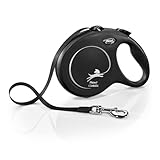
- Use a

to give your dog freedom of movement without the tight, anxious leash pressure that communicates stress straight up the line to your dog’s collar
Speaking of equipment — avoid prong collars, e-collars, and any tight leash pressure during counter conditioning sessions. These introduce new aversive sensations at exactly the moment you're trying to build positive associations. At best, they confuse the emotional picture. At worst, your dog learns that the trigger predicts both the scary thing and physical discomfort — a pairing that makes fear dramatically worse.
The environment you construct is essentially the container that holds your training. A well-managed setup means your dog spends each session slightly under their stress ceiling, which is exactly where learning happens. Push past it and you're not training — you're surviving, and so is your dog.
The Step-by-Step Counter Conditioning Protocol for Fearful Dogs
This is where the rubber meets the road. You've identified your dog's triggers, you've gathered your reinforcers, and now it's time to actually run the protocol. Here is exactly how I structure this process — including the sequencing mistake that costs most people weeks of progress.
The Open Bar / Closed Bar Technique Explained
The foundation of every counter conditioning session is a deceptively simple rule: trigger appears = treats rain down, trigger disappears = treats stop completely. Certified behaviorist Leslie McDevitt popularized this framing, and in 15 years I haven't found a cleaner way to explain it.
Here's a concrete example. Suppose your dog is frightened of skateboarders. A skateboarder rolls into view at 50 feet — the bar opens. You're delivering small, high-value pieces of
continuously, almost like you’re sprinkling them. The skateboarder rolls out of sight — bar closes immediately. No more treats, full stop. Your dog doesn’t have to do anything. There’s no “sit,” no “look,” no performance required. The trigger’s mere presence is what earns the food.
Why the sequence matters more than anything else: Trigger first, treat second. Always. If the treat appears before the dog notices the trigger, you've flipped the equation and you're no longer conditioning an emotional response — you're just feeding a dog near something scary, which accomplishes far less. I keep a
clipped at my hip so there’s never a scramble delay between the dog spotting the trigger and the food arriving.
Phase 1 — Association building runs at this basic level until you see a specific change in your dog's body language. Don't rush it. I've spent three full weeks here with some dogs before moving an inch forward.
How to Know When to Progress vs. When to Hold
Phase 2 begins when your dog shows what trainers call the "Look At That" response — a term from McDevitt's Control Unleashed system. Instead of freezing, lunging, or looking away when the trigger appears, your dog glances at it and then immediately turns back to look at you, anticipating the treat. That head-swivel toward you is not a trained behavior you've asked for. It emerges spontaneously. It means the emotional association has genuinely shifted.
This is your green light to progress — and it's unmistakable once you've seen it.
Phase 3 — Incremental criteria raising follows one rule: adjust one variable at a time. Move one foot closer OR make the trigger slightly more intense (louder, faster-moving, more of them). Never both simultaneously. I learned this the hard way with my own rescue dog. I got impatient in week four, decreased distance and switched from a single stranger to two strangers at once. She shut down completely, and we spent six days rebuilding trust we'd already earned. One variable. Every time.
Signs you should hold at the current level rather than progress:
- Dog stops eating (stress has exceeded threshold)
- Dog looks away or turns body away from you
- Yawning, lip-licking, or shaking off between reps
- The "Look At That" response disappears
When any of these appear, increase distance immediately and end the session on a calm moment — not a successful treat delivery, just calm.
Structuring Daily Training Sessions for Maximum Neurological Impact
3–5 minutes, two to three times daily beats one 30-minute marathon every single time — neurologically and practically. Short, frequent sessions prevent fatigue, keep treats valuable, and allow the dog's nervous system time to consolidate what it's learning between exposures.
To avoid fooling yourself with optimistic memory, keep a structured session log. Mine includes four columns: date/time, starting distance from trigger, dog's initial reaction (1–5 scale), and dog's response by end of session. Three minutes of honest notes per session will reveal trends your memory will smooth over.
If you have access to a helper, use one. Assign one person to trigger presentation and one to treat delivery. The timing gap between "dog sees trigger" and "treat arrives" should be under one second. Two people makes that far more achievable than one person juggling both, especially in dynamic environments where triggers aren't perfectly controllable.
Precision is the whole game here. Run it sloppy and you'll wonder why nothing is changing.
Common Mistakes That Stall Progress (And How to Fix Them)
Most stalled counter conditioning programs aren't failing because the method doesn't work — they're failing because of a handful of predictable, fixable mistakes. Here's what I see most often and exactly how to course-correct.
Moving Too Fast Because the Dog "Seemed Fine"
This is the number one mistake I see, without exception. An owner reports that last Tuesday's session went beautifully, so they closed the distance to the trigger by half, increased the intensity, or introduced a second scary stimulus. Then they're confused when their dog falls apart.
"Seemed fine" is not the same as genuine confidence. A dog who tolerates something is not the same as a dog who has formed a positive emotional association with it. Look for approach behavior, relaxed body language, and — my personal favorite indicator — the dog glancing at the trigger and then looking back at you for the treat. That voluntary check-in tells you, "I see that thing, and I know good stuff follows." That's your green light to progress. Tolerance is not.
The fix: Stay at each distance or intensity level for at least three to five successful, relaxed sessions before advancing.
Practicing Over Threshold — And How to Reset
You'll know you've exceeded your dog's threshold mid-session when stress signals escalate: scanning stops, the body stiffens, barking or lunging begins, or the dog refuses high-value treats they were happily eating ten seconds ago. Treat refusal is particularly reliable — if your dog won't take a piece of chicken, you've gone too far.
When this happens, do not push through. Immediately increase distance from the trigger. Move calmly, without dragging or scooping the dog, until you see the body soften. Give a few easy, happy reps of something your dog already knows ("sit" or "touch") with
Similar Posts
How to Train High Energy Dogs to Calm Down Indoors
Introduction You've just returned from a two-hour hike. Your arms ache from throwing the ball approximately four hundred times. Your high-energy dog should be exhausted, right? Instead, they're zooming around your living room, knocking over the coffee table, and treating your couch as a launching pad. You collapse on the sofa, utterly spent, while your…
How to Socialize an Adult Dog with Other Dogs (2026 Guide)
Introduction If you've ever watched your adult dog lunge, bark, or cower at the sight of another dog, you know how stressful it can be. Maybe you adopted a rescue who spent their formative months in a kennel. Perhaps your dog had a scary encounter at the dog park that changed everything. Or maybe life…