Dog Aggression Toward Strangers on Property (2026)
Most dogs that bite a stranger on their owner's property weren't "random" — the warning signs were there for weeks or months before anyone took them seriously. I've seen this pattern play out dozens of times in my career, and it's one of the most preventable tragedies in dog ownership.
I started working specifically with property-aggressive dogs about twelve years ago, after a neighbor's Labrador — a breed most people wouldn't flag as a risk — sent a delivery driver to urgent care. The dog had been "just barking" at the fence for two years. Nobody intervened. That case changed how I approach every consultation involving a dog that guards its space.
Here's what I want you to understand upfront: aggression toward strangers on your property is not a personality flaw, and it's not a lost cause. It's a behavior with identifiable triggers, measurable intensity levels, and — in the vast majority of cases — real solutions. But it requires honest assessment, structured management, and training built on actual behavior science, not dominance myths or "be the pack leader" shortcuts that most of us have thankfully left behind.
In this guide, you'll learn how to accurately read your dog's aggression level, set up safety protocols that protect everyone while you work, and apply counter-conditioning methods that genuinely change how your dog feels about strangers approaching your home. We'll also cover the often-overlooked factors — stress load, enrichment, and sometimes medication — that determine whether your training sticks long-term.
Before any training protocol makes sense, though, you need to understand why your dog is doing this in the first place.
Understanding Why Dogs Show Aggression Toward Strangers on Property

Before you can change a behavior, you need to understand what's driving it. This sounds obvious, but I've watched well-meaning owners apply completely the wrong intervention because they misread the motivation behind the behavior. That mistake doesn't just waste time — it can make things significantly worse.
Let me be direct about something I've observed across 400+ reactive dogs: the vast majority of dogs who show aggression toward strangers on their property are fear-motivated, not dominance-driven. The "my dog is protecting his territory" narrative is compelling, and sometimes partly true, but more often I'm looking at a dog who is genuinely frightened and has learned that lunging, barking, and snapping makes the scary thing go away. That's a fundamentally different problem requiring a fundamentally different solution.
Territorial, Fear-Based, and Protective Aggression: Why the Distinction Matters
These three categories overlap in their outward appearance — growling, lunging, barking, snapping — but their internal drivers are distinct.
-
Territorial aggression is about space ownership. The dog is communicating "this area is mine, you don't belong here." This is often more confident in presentation: upright posture, forward weight distribution, sustained eye contact. Breeds selected for guarding work — Kangals, Anatolian Shepherds, Caucasian Ovcharkas — carry a strong genetic predisposition for this response. It's not a flaw in these dogs; it's literally what centuries of selective breeding produced.
-
Fear-based aggression looks like offense but is rooted in defense. Watch for: tucked tail even while lunging, whale eye, panting, piloerection along the spine, and a dog that backs up if the stranger holds still. I worked with a 4-year-old German Shepherd named Ranger in 2026 who had bitten two delivery drivers. His owners were certain he was "dominant and territorial." When I watched him on video, I saw a dog in a panic — his tail never came above neutral, and after each lunge he retreated several feet. Ranger wasn't protecting the property. Ranger was terrified.
-
Protective aggression is specifically directed at guarding an individual rather than a space. This is often context-dependent — the dog may be perfectly fine with strangers when the owner isn't present, but becomes reactive when they are.
Misidentifying fear as territorial confidence leads owners toward dominance-based corrections that increase the dog's anxiety and suppress warning signals without addressing the underlying emotion. That's a dangerous path.
The Role of Genetics, Breed, and Early Development
Genetics load the gun; environment pulls the trigger. Livestock guardian breeds are genetically wired to treat unfamiliar presences as threats — that wariness kept sheep alive for thousands of years. Herding breeds like German Shepherds and Belgian Malinois often carry high environmental sensitivity that can tip easily into reactivity. Neither predisposition is a death sentence for training, but it does set the baseline you're working with.
More influential than breed, in my experience, is what happened during the critical socialization window between 3 and 14 weeks. During this period, a puppy's brain is actively cataloguing "normal." Strangers, surfaces, sounds, and situations encountered positively during this window get filed as safe. Everything else gets filed as potentially threatening — and that filing system doesn't get a clean reset. A puppy who spent weeks 4 through 12 in a rural kennel with minimal human variety will almost certainly show elevated stranger wariness as an adult, regardless of how much socialization happens afterward.
The Difference Between Alert Barking, Reactive Barking, and True Aggression
Not all barking at strangers is equal, and conflating them leads to mismanagement.
Alert barking is informational — a few barks, then the dog looks back at you, body loose. This is normal and often desirable.
Reactive barking is escalated, repetitive, and the dog struggles to disengage. The dog isn't communicating; they're reacting. A

can help you safely manage distance during these moments before formal training begins.
True aggression involves intent to make contact: hard staring, stiff body, low growl, snapping, or biting.
How Rehearsed Behavior Makes Property Aggression Worse Over Time
Every time a dog barks at the mail carrier and the mail carrier leaves, the dog logs a win. The behavior worked. Over weeks and months, this rehearsal deepens the neural groove — the threshold for triggering the response drops, the intensity increases, and the dog's confidence in the strategy grows. A
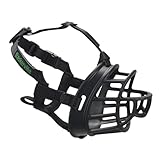
used correctly isn’t punishment; it’s a safety tool that lets you interrupt this rehearsal cycle while you work on the underlying problem. The longer property aggression goes unaddressed, the more entrenched it becomes — early intervention is genuinely more effective, not just easier.
Accurately Assessing Your Dog's Aggression Level Before You Train Anything
Before you watch a single training video or order a book on reactive dogs, do one thing: get an honest, clear-eyed read on what you're actually dealing with. Jumping into training protocols that weren't designed for your dog's actual threat level can accidentally make aggression worse. Assessment first. Everything else second.
Using the Dunbar Bite Scale to Categorize Your Dog's Behavior
Ian Dunbar's Bite Scale runs from Level 1 through Level 6, and it's the most practical framework I know for quickly categorizing severity.
- Level 1: Snapping, air bites — no skin contact
- Level 2: Teeth make contact but don't break skin
- Level 3: One to four punctures from a single bite, shallower than half the tooth length
- Level 4: Deep punctures, lacerations from the dog holding or shaking
- Level 5: Multiple bite attacks in a single incident
- Level 6: Death of the victim
Here's the hard truth: Level 3 and above means you should not attempt DIY training protocols without first working with a certified professional. I had a client in 2026 whose German Shepherd had bitten two mail carriers — clean punctures, Level 3. She'd already bought three online courses. I asked her to close them all until we'd done a proper assessment together. The training itself wasn't wrong; the sequencing was.
Levels 1 and 2 — lunging, barking, snapping at air — are genuinely workable territory for dedicated owners following evidence-based methods. But even then, don't skip the assessment step.
Reading Body Language: What Your Dog Is Actually Telling You
Aggression looks different depending on whether it's rooted in confidence or fear, and that distinction changes your entire training approach.
Signs of offensive/confident aggression:
- Hard, direct stare
- Stiff, high tail (may wag slowly — don't mistake this for friendliness)
- Piloerection (raised hackles) along the back and shoulders
- Forward weight shift — dog is leaning toward the trigger
- Closed mouth, tight lips
Signs of fear-based aggression:
- Whale eye (whites of the eyes visible)
- Tucked tail or low tail position
- Crouching, lowered body posture
- Ears pinned back
- Lunging forward but then retreating — the push-pull pattern
Many dogs show a mix of both. A dog that charges the fence with hackles raised but retreats the moment the stranger responds is telling you something important about the emotional cocktail underneath the behavior.
Identifying Your Dog's Specific Triggers
Pattern recognition is critical here. Dogs are rarely aggressive toward "strangers" as a broad category — they're reactive to specific features of strangers. Common triggers include:
- Uniform carriers (postal workers, delivery drivers)
- Men wearing hats or hoods
- Children moving unpredictably
- People carrying large objects (boxes, umbrellas, bags)
- Specific ethnicities (often tied to limited early socialization)
- Anyone approaching the property at speed
Track your dog's threshold distance — the point at which they first notice and react to a trigger. This might be 50 feet for a delivery truck or 15 feet for a jogger. Write it down. That number becomes your baseline for measuring progress over the coming months.
Creating a Simple Trigger Log to Identify Patterns
A notes app on your phone works fine. After each incident, record:
- Date and time
- What the trigger was (person type, what they were doing)
- Distance at first reaction
- Behavior shown (bark, lunge, snap, bite)
- What happened immediately before (was your dog already stressed? Tired? Had guests earlier?)
After two to three weeks, patterns emerge that you genuinely couldn't see in the moment. I've had owners discover their dog only redirected aggression on days with high foot traffic earlier — stress stacking made the evening delivery trigger unbearable.
Fit your dog with a
during this logging period if there’s any contact risk. Observation doesn’t require exposure without precaution.
When to Call a Certified Professional — And Which Credentials Actually Matter
Red flags that mean you need a veterinary behaviorist, not just a trainer:
- Redirected bites (dog misses the trigger and bites you instead)
- Unpredictable escalation with no clear warning sequence
- Aggression toward family members in addition to strangers
- Rapid escalation from calm to full bite with minimal warning
On credentials: look for a DACVB (Diplomate of the American College of Veterinary Behaviorists) for severe cases, or a CAAB/ACAAB (Certified Applied Animal Behaviorist). For moderate cases, a CPDT-KA with documented aggression experience is a reasonable starting point. The title "trainer" alone means nothing — anyone can use it.
Safety Management: Your Non-Negotiable First Step
Management is not training. It won't change how your dog feels about strangers on your property. What it will do is stop your dog from rehearsing aggressive behavior while you work on the real fix. Every lunge, bark, or snap that goes unchecked is essentially a rep in the gym — your dog gets better at aggression through practice. Management cuts off that practice loop.
I had a client in 2026 whose German Shepherd had bitten two delivery drivers in eighteen months. By the time she called me, the dog had a deeply ingrained routine: hear the truck, explode to the fence, driver flinches, dog "wins." We couldn't begin counter-conditioning until we completely restructured the physical environment. That restructuring was what finally stopped the bleeding — literally and figuratively.
Physical Barriers: Your First Line of Defense
Start with what your dog can see. Chain-link fencing is one of the worst choices for a property-aggressive dog because it provides full visual access to every passing stranger, delivery vehicle, and neighbor. If replacing fencing isn't realistic right now, privacy screening attached to chain-link is a cheap, immediate improvement. Solid wood or vinyl privacy fencing is the long-term solution.
Inside the home, window film on front-facing windows is something I recommend to almost every client. Frosted or one-way film blocks your dog's sightline to the street without significantly darkening the room. You can install it in an afternoon for under $30.
For the entry point itself, double-gating is the single most effective physical modification you can make. Two gates — one at the property perimeter, one at the front door — create an airlock that prevents a dog from reaching a stranger even if someone makes a mistake. This is non-negotiable if your dog has any bite history.
Equipment Essentials
For any on-leash management situation, a properly fitted front-clip harness distributes pressure across the chest and gives you far better steering control than a collar. The
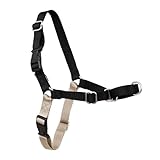
is worth investing in before any structured training work — a dog that can physically drag you toward a stranger is a safety failure waiting to happen.
Muzzle Training: Making Your Dog Comfortable Before You Need It
A basket muzzle is a safety net, not a punishment — but only if your dog has been conditioned to wear it before a high-stakes moment arrives. The mistake I see constantly is owners cramming a muzzle onto a stressed dog right before the vet visit or the contractor walkthrough, creating a negative association that makes the muzzle itself a trigger.
Start weeks in advance. Let your dog sniff the
, feed treats through the basket, then progress to brief wearing sessions paired with high-value rewards. A dog that voluntarily pushes its nose into a muzzle for a piece of chicken is a very different animal from one that’s been forcibly muzzled in a moment of panic.
Protocols for Predictable Arrivals
Delivery drivers and mail carriers arrive on a schedule you can actually work with. Build a specific routine your dog learns to anticipate:
- The moment you see or hear a delivery vehicle, calmly move your dog to a back room or designated safe zone
- Deliver a long-lasting chew or stuffed

to build a positive association with confinement during arrivals
– Greet the driver yourself, collect the package, and close the door before releasing your dog
Repetition of this routine — not the training protocols we'll cover later — is what prevents incidents right now.
Warning Visitors Before They Arrive
This step is uncomfortable for a lot of people, but skipping it is how dogs bite people. Before any service worker, house guest, or repair technician arrives, send a specific message: "I have a dog in training for reactivity toward strangers. Please do not approach the gate without texting me first. I will secure him before you enter."
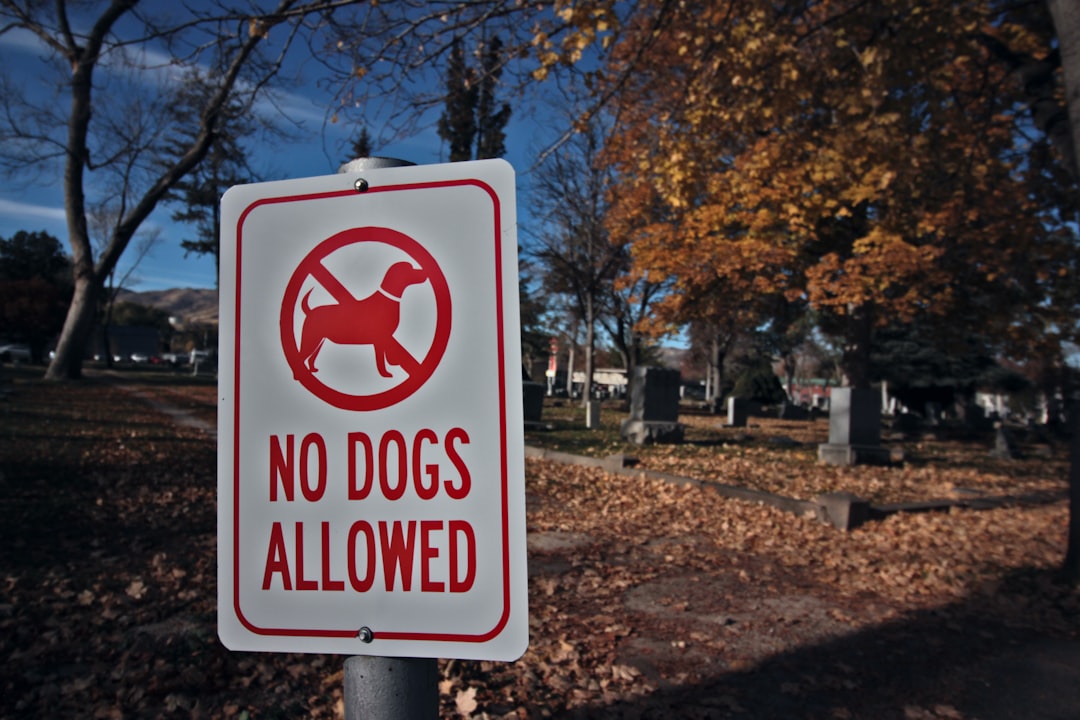
Post a visible sign at your gate — not a decorative novelty sign, but a clear, direct warning. In the US, visible warnings can meaningfully affect your legal liability in a bite incident, though laws vary by state. Consult a local attorney if your dog has any bite history. The sign costs you nothing. The lawsuit costs you everything.
The Science Behind Changing Aggressive Responses: Counter-Conditioning and Desensitization
Here's the single most important concept to hold onto: we're not trying to suppress your dog's aggressive behavior. We're trying to change how your dog feels about strangers on the property. That distinction matters enormously, because a dog who's been punished into silence is still terrified or furious — and has simply lost the ability to warn you before biting.
The two tools that actually accomplish emotional change are counter-conditioning and desensitization, and they work best together.
Counter-conditioning means pairing the scary or threatening trigger (a stranger near your fence, someone walking up the driveway) with something your dog genuinely loves — usually high-value food. The formula is blunt and beautiful: stranger appears, extraordinary food appears. Stranger leaves, food disappears. Repeat hundreds of times. Over weeks, the dog's brain begins making a new association: "that person near my yard" stops predicting danger and starts predicting cheese. You're not bribing the dog to behave. You're rewiring the emotional response at a neurological level.
Desensitization means exposing your dog to the trigger at an intensity low enough that they can process it without reacting — what trainers call below threshold. A stranger a half-block away before a stranger at the gate. Duration (how long the trigger is present) before distance (how close it gets). The critical rule: never let your dog run through a full aggressive response during a training session. Every lunge, every prolonged bark spiral, every full-alarm display reinforces the neural pathway you're trying to dismantle. If your dog goes over threshold, the session is done. You moved too fast.
The BAT 2.0 Framework
For property-specific aggression, I've found Behavior Adjustment Training 2.0, developed by Grisha Stewart, particularly effective. BAT 2.0 uses functional rewards — the dog is rewarded by getting to do what they naturally wanted to do anyway. If your dog notices a stranger at the property edge and looks away, you immediately create distance (which is what the dog actually wanted). The dog learns that calm, disengaged behavior works to remove the pressure. It's enormously powerful for dogs whose property arousal is rooted in anxiety rather than pure territorial bluster.
Classical Work Comes First
One mistake I see constantly: owners asking for an obedience response — "sit," "look at me" — before the emotional work has taken hold. This is operant conditioning layered on top of an unresolved emotional state. Your dog can learn to sit while still feeling dread. The sit doesn't fix anything; it just masks the feeling temporarily.
Classical conditioning (the automatic emotional association: stranger = good thing) must be established first. Once your dog is genuinely orienting toward a stranger with a relaxed body and an expectant expression — now you can start asking for behavioral responses. Not before.
Step-by-Step: Your First Three Counter-Conditioning Sessions at the Property Line
Keep sessions to 3–5 minutes maximum. Have

ready — something extraordinary, like real chicken or cheese, not kibble.
- Session 1: Helper stands at maximum distance where your dog notices but doesn't react. The moment your dog looks at the helper, feed continuously until the helper walks away. End there.
- Session 2: Same distance. Watch for any spontaneous glance away from the helper — that's the first green shoot of emotional shift. Feed it heavily.
- Session 3: Marginally closer — only if Sessions 1 and 2 produced relaxed, food-focused behavior. If your dog is still stiff or scanning, repeat Session 1's distance.
I worked with a Border Collie mix named Petra in late 2026 whose owner had spent months trying to get her to "leave it" when the mail carrier came up the walk. Petra would comply — then explode the moment the owner's back was turned. Three weeks of systematic counter-conditioning, without asking for a single obedience behavior, and Petra started moving toward the window when she heard the mail truck. That's emotional change. That's what you're after.
Common Mistakes That Reset Your Progress
- Moving too fast on distance. If your dog reacted today, your helper was too close.
- Inconsistent helpers. Using different people at different distances scrambles the association. Standardize early.
- Punishing reactions. A leash correction during a bark spike doesn't teach calm — it confirms that strangers predict bad things.
- Expecting linear progress. Setbacks after good weeks are normal, especially with

Similar Posts
Dog Agility Training at Home: A Beginner’s Guide
Introduction Picture this: your dog weaves through poles you've set up in the backyard, leaps over a homemade jump, and races through a tunnel—tail wagging, eyes bright with joy. This isn't a scene from a professional competition. It's a Tuesday afternoon in your own yard, and you're building something incredible with your best friend. Agility…
Train Dog to Stop Barking When Left Alone (2026 Guide)
Introduction: Why Your Dog Barks When You Leave (And How to Fix It) You know the feeling. You grab your keys, head toward the door, and before you've even turned the handle, your dog starts whining. Five minutes after you leave, the barking begins—and according to your neighbor's pointed text message, it doesn't stop for…
Dog Aggressive at Dog Park? What to Do (Expert Guide)
Understanding Why Your Dog Is Aggressive at the Dog Park Before you can fix your dog’s aggressive behavior at the park, you need to understand what’s driving it. I’ve worked with countless dogs who seem like Jekyll and Hyde the moment they step through those gates, and the reasons are rarely simple. Fear-Based Aggression vs….
Group Class vs Private Dog Training: Which Is Right for You?
Introduction: Choosing the Right Training Path for Your Dog I've watched countless dog owners stand at this crossroads, wrestling with a decision that feels overwhelming: should they sign up for that Saturday morning group class at the local pet store, or invest in private sessions with a trainer? Here's the truth—this choice matters more than…
How Long Should Dog Training Sessions Be? Expert Guide
Introduction You've carved out twenty minutes to teach your dog to sit, stay, and come when called. Fifteen minutes in, your once-eager pup is staring at the wall, sniffing the ground, or worse—completely ignoring you. Sound familiar? Here's the truth most trainers won't tell you upfront: you're probably training way too long. The conventional wisdom…
Dominance Theory Dog Training Debunked: Science-Based Facts
Introduction Sarah was at her wit's end. Her rescue dog, Max, would pull on the leash, jump on guests, and refuse to come when called. A well-meaning neighbor told her she needed to "show him who's boss" and "be the alpha." So Sarah tried it all—she ate before Max, walked through doors first, and even…