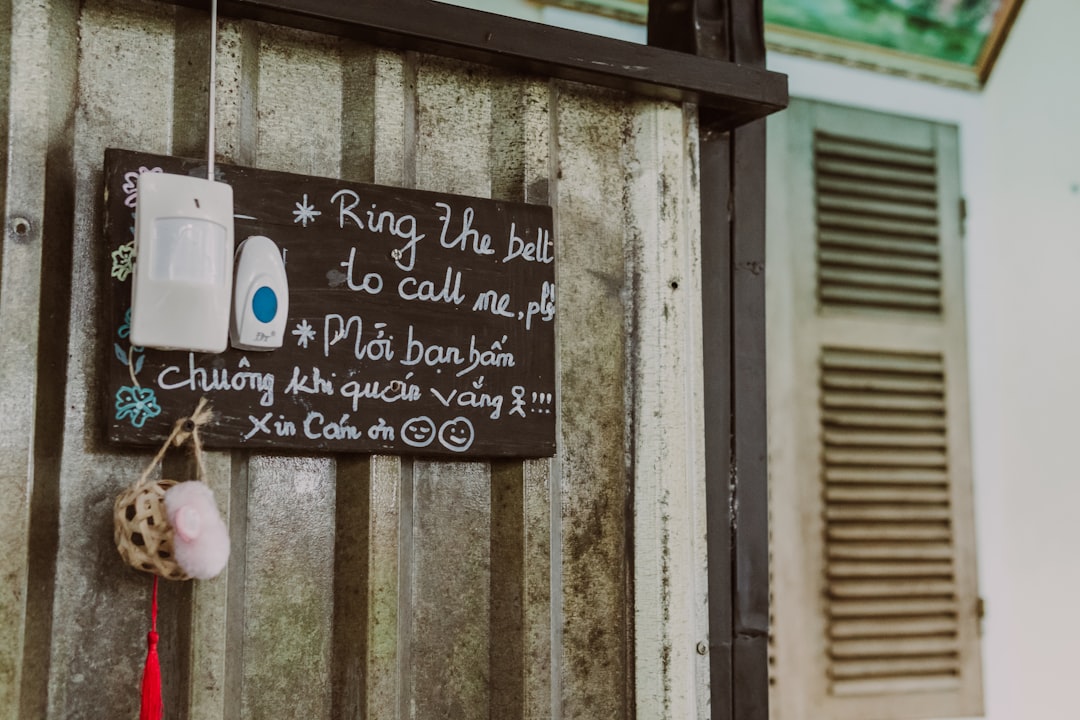
Train Your Dog to Stay Calm When the Doorbell Rings (2026)
The doorbell rings. In the next 4 seconds, your dog transforms from a calm companion into a 60-pound chaos machine — barking, spinning, launching themselves at the door while your visitor stands awkwardly on the porch wondering if they should leave.
I've worked with hundreds of reactive dogs over my career, and doorbell reactivity is hands-down one of the top three complaints I hear from owners. What most people don't realize is that their dog isn't being "bad" or "dominant" — they're experiencing a genuine neurological alarm response that's been accidentally reinforced dozens, maybe hundreds of times. By the time most owners seek help, the behavior is deeply wired.
Here's what gives me confidence that your situation is fixable: I've helped transform dogs who had been barking at the doorbell for seven years. If those dogs could learn a new response, yours can too.
What you're about to read is the same systematic protocol I use with private clients — a three-phase approach that first changes how your dog feels about the doorbell sound, then builds a reliable, incompatible behavior, and finally stress-tests everything against real-world distractions. I'll also walk you through the eight sticking points that derail most training attempts, plus breed-specific nuances that can make or break your progress.
This isn't a "try saying 'no' more firmly" kind of guide. It's a complete behavior change program grounded in current learning science — one that produces results you'll actually notice when company comes over.
To understand why the training works, it helps to first understand exactly what's happening in your dog's brain the moment that bell sounds.
Why Your Dog Loses It When the Doorbell Rings (And Why It's Not Their Fault)

Let me be honest about something I see constantly in my work: owners who are genuinely embarrassed by their dog's doorbell behavior, convinced their dog is badly trained, poorly socialized, or just "a problem dog." Your dog isn't broken. They're doing exactly what thousands of years of selective breeding designed them to do — and understanding that is the first step toward actually changing it.
The Doorbell-Excitement Feedback Loop: How It Gets Worse Over Time
Dogs are hardwired to alert the pack when a stranger approaches. That instinct predates domestication and runs deeper than any training you've done in the last two years. When the doorbell rings, your dog's nervous system floods with arousal chemicals before a single conscious thought occurs. The barking, spinning, and launching themselves at the door isn't defiance — it's an involuntary alert response doing exactly what it evolved to do.
Here's where it gets complicated. Through classical conditioning, the doorbell sound itself has become a powerful trigger. Think about every time your doorbell has rung in your dog's life. What happened? Someone arrived. There was movement, voices, your own change in energy, possibly the best thing ever — a visitor who wanted to say hello. The doorbell has been paired with high-value social events at a 100% reinforcement rate. That's an extraordinarily strong association. Your dog isn't reacting to a sound anymore; they're reacting to a prediction: something enormous is about to happen.
And then there's your response. I've watched hundreds of owners instinctively grab their dog's collar, say "no no no" in a tight, stressed voice, or physically block them from the door. I've done it myself with my own dogs. The problem is that your stress response is information to your dog. You tense up, your voice gets sharp, and suddenly not only is the doorbell predicting a visitor — it's predicting that you will become anxious and physically engaged too. The arousal escalates, and every repetition burns the pattern deeper.
This is why dogs don't grow out of doorbell reactivity on their own. Without deliberate intervention, each ring of the bell is another training session — just not the one you want.
Identifying Your Dog's Specific Doorbell Behavior Type
Before starting any training protocol, honestly assess which problem you're dealing with. In my experience, doorbell reactivity falls into three distinct patterns, and they don't all respond the same way:
-
The Alarm Barker — Barks urgently at the sound, positions themselves near the door or window, but settles within 30–60 seconds once nothing threatening materializes. This dog is doing their job. They have the lowest arousal ceiling and typically respond fastest to training.
-
The Fence-Runner — This dog has significant barrier frustration. Their reaction isn't purely about the doorbell; it's about not being able to get to what's on the other side. These dogs often pace, scratch at the door, or redirect their frustration onto furniture, other pets, or even owners. A
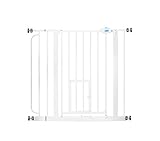
becomes an essential tool here, not just a convenience.
- The Social Lunger — This dog isn't frightened or guarding — they are overwhelmingly excited and want to greet the visitor immediately. They may barely bark at all but will bulldoze past you, jump on guests, and be completely unable to settle. Counterintuitively, this type is often the trickiest to train because the visitor is the reward, and every successful greeting reinforces the chaos that preceded it.
I had a client in 2026 with a four-year-old Labrador who was a textbook Social Lunger. She assumed the problem was aggression because the behavior looked so intense. It wasn't — but the training approach for her dog was completely different from what I'd use for a fearful alarm barker, and conflating the two would have set them back significantly.
Take a few days to observe and honestly categorize your dog before moving forward. Video yourself answering the door if you need to — most owners are surprised by what they see.
Realistic expectation for all three types: a genuinely calm doorbell response takes 4–8 weeks of consistent daily practice for most dogs. This is not a weekend project. The good news is that once the new association is established, it holds — and the work is absolutely worth it.
Tools and Setup You Need Before Training Starts
Before you play a single doorbell sound, pause and honestly assess whether you have the foundation in place to make this training work. I've seen well-meaning owners jump straight into desensitization exercises with a dog who has no reliable default behavior — and wonder why, six weeks later, nothing has changed. The preparation phase isn't glamorous, but it's where the real work happens.
Building a Solid 'Place' Command First: A 5-Day Foundation Protocol
The 'place' or 'go to your mat' behavior is the single most important prerequisite for everything that follows. Without it, you're not training your dog to be calm at the door — you're just teaching them that the doorbell sound is slightly less alarming. Those are very different outcomes.
Here's a 5-day foundation protocol I use with almost every client:
- Days 1–2: Lure your dog onto the mat with a treat, click or mark the moment all four paws are on it, and reward. Do 10 repetitions per session, twice daily. No verbal cue yet — just building the physical association.
- Day 3: Add the verbal cue "place" just before the lure. Start fading the lure by Day 3's second session.
- Day 4: Practice sending your dog to the mat from increasing distances — start at 2 feet, work up to 6 feet. Reward a duration stay of 5, then 10, then 15 seconds before releasing.
- Day 5: Proof it with mild distractions — someone walking through the room, a knock on a table. If your dog can hold place for 20 seconds with low-level distractions, you're ready to move forward.
For the mat itself, surface and placement matter more than most people realize. I recommend a non-slip raised cot — the

options with rigid edges work well — positioned **8 to 12 feet from the front door** with a clear sightline. Too close and you’re setting your dog up to fail when visitors arrive. Too far back and the behavior chain becomes disconnected from the trigger.
Choosing the Right High-Value Reinforcer for Doorbell Distraction Work
I worked with a Vizsla named Boone in early 2026 who was so amped up by the doorbell that he couldn't register a piece of chicken. His owner had been training with kibble — the same food Boone ate from his bowl every morning. That's like trying to get someone's attention at a rock concert by whispering.
High-value treats for this kind of work must be:
- Something your dog genuinely doesn't get at any other time
- Soft, small, and fast to consume (we're talking pea-sized pieces)
- Smelly enough to cut through arousal — think real meat, cheese, or freeze-dried liver
Keep these treats in a dedicated

that only comes out during doorbell training. The pouch itself becomes a conditioned cue that something good is about to happen, which actually helps settle dogs into a working mindset.
Your Other Non-Negotiables Before Training Begins
A doorbell app changes everything. Using Pavtalk or Ring's built-in tone scheduler lets you control the exact moment the sound plays at the exact volume you choose. Relying on real visitors means you lose control of timing, intensity, and frequency — the three variables that determine whether your dog is learning or just surviving.
Assess your dog's arousal threshold before session one. Walk to your front door and have someone play a doorbell sound at normal volume. Can your dog take a treat from your hand within 3 seconds? If yes, you can start at full volume. If they're spinning, barking, or refusing food entirely, begin with the sound muffled — phone wrapped in a towel, volume at 20%, played from another room. Starting above threshold isn't brave training; it's just noise.
Finally, baby gates or exercise pens aren't optional during the weeks your dog is still learning. Every time your dog rehearses the frantic, door-charging routine between training sessions, that pattern gets stronger. Management isn't a failure — it's how you protect the progress you're building.
Phase 1 — Desensitization: Changing What the Doorbell Sound Means
Before your dog can learn what to do when the doorbell rings, their brain needs to stop treating that sound like an emergency. That's the entire job of desensitization — and skipping it is the single biggest reason doorbell training fails.
Right now, your dog has an emotional response wired to that sound. The doorbell doesn't just mean "someone's at the door." It means excitement, chaos, possible threat, possible best day ever — instinct firing all at once. You cannot train a calm behavior on top of a panicking nervous system. You have to change the emotion first.
Desensitization means exposing your dog to the doorbell sound at an intensity low enough that it doesn't trigger a reaction, then pairing it with something genuinely good. Repetition at that calm level is what rewires the association.
The Sound Threshold Ladder: A Week-by-Week Volume and Distance Progression
I had a client in 2026 with a three-year-old Vizsla named Pepper who would hit the front window like a battering ram every time the doorbell rang. Her owner had already tried three different training approaches. When I asked how they'd started, the answer was always the same: real doorbell, full volume, straight away. We went back to square one, and within eight days of proper desensitization, Pepper was eating her dinner calmly while the doorbell sound played from a speaker in the hallway.
Here's the progression I use:
Week 1 — Days 1–3:
- Play a doorbell recording from your phone at 20% volume in a different room while your dog eats their regular meal
- No commands. No training. No eye contact. Just sound + something inherently good happening
- Target: zero visible reaction — no ear-pinning, no stiffening, no scanning toward the door
Week 1 — Days 4–7:
- Same room as the dog, phone still at 20% volume, still during mealtime or paired with a

smeared with something high-value
– Only progress if you see **zero stress signals for 3 consecutive sessions** at the current level
Week 2:
- Gradually increase volume in small increments — 30%, then 40%, then 50%
- Move from mealtime pairing to hand-delivered

immediately after the sound plays
– Begin closing the distance between the sound source and the front door area
Week 3 and beyond:
- Work up to full volume from a phone before introducing the actual doorbell
- The real doorbell comes last — not first
The "week-by-week" framing is a guideline, not a deadline. Some dogs cruise through this in five days. Others need three weeks at a single volume level. Follow your dog's signals, not the calendar.
Reading Stress Signals vs. Excitement Signals During Sessions
This distinction matters enormously, because both stress and excitement can look like "reacting" — but they require different responses.
Stress signals to watch for:
- Ears pinned flat or rotated back
- Body stiffening or low, rigid posture
- Yawning, lip-licking, or turning away immediately after the sound
- Scanning — that rapid, searching head movement toward the door
Excitement signals (different problem, same solution for now):
- Ears forward, body loose and bouncy
- Barking or whining but with a wagging tail and soft eyes
- Spinning or jumping up
If you see either set of signals, you've gone too loud or too close too fast. Drop back to the previous level without making a fuss about it.
The mistake I see constantly is owners dismissing the quiet-sound approach because it "feels fake." I understand the impulse. Playing a tinny doorbell sound from a phone at low volume while your dog eats breakfast does feel ridiculous compared to the chaos of your actual front door. But that low-stakes repetition is doing real neurological work. Jumping to the real doorbell because the training "feels too easy" skips the emotional relearning step entirely, and you'll spend weeks wondering why nothing is sticking.
The sign you're ready for Phase 2: your dog hears the doorbell sound and looks at you instead of the door. That moment — that little glance that says "is something good about to happen?" — is called a conditioned emotional response, and it means the rewiring is working. Don't rush past it. Celebrate it. Then move on.
Phase 2 — Counter-Conditioning: Teaching the 'Doorbell = Go to Place' Behavior Chain
By the time you reach this phase, your dog should be noticeably calmer when they hear the doorbell sound — maybe a flick of the ears, maybe a glance toward the door, but no more launching off the couch like they've been fired from a cannon. Now we build something onto that neutrality: a specific, rewarded behavior that gives your dog a job to do the moment the bell rings.
That job is going to their mat and lying down. And the way we teach it — working backwards — is what makes this approach genuinely different.
Why Back-Chaining Works Better Than Forward Training
Most people try to teach this sequence in order: ring bell, ask dog to go to mat, reward. The problem is that by the time you've rung the bell, your dog is already partly aroused, and you're trying to install a new behavior on top of a stress response. It's like trying to teach someone to parallel park in rush-hour traffic.
Back-chaining reverses that. You start at the end — rewarding the dog just for being on the mat — and work backward, adding each earlier piece of the chain only after the later piece is solid. The result is a dog who finds the mat intrinsically rewarding before they ever have to navigate the doorbell part.
Here's the sequence in full:
- Reward the dog for standing near the mat
- Reward four paws on the mat
- Reward a down on the mat
- Add duration on the mat (2 seconds → 30 seconds over 5–7 days)
- Add the door opening as a distraction
- Add approaching the front door
- Add the doorbell sound last
The 10-Step Ring-and-Reward Drilling Protocol
Once your dog has a solid, reliable down-stay on the mat — 80% success rate with a 20-second duration — you're ready to introduce the ring-and-retreat drill.
Here's exactly how to run one session:
- Use a doorbell app on your phone (or have a helper ring the physical bell)
- The moment the bell sounds, guide or lure your dog to the mat
- The instant all four paws are on and they begin to lower into a down, mark with a clicker or your marker word — precision here matters enormously. You're competing with one of the most exciting environmental cues your dog knows
- Deliver five rapid-fire treats in a row while they hold position — one every 2 seconds
- Use your release word ("free" or "okay") and let them get up
- Repeat this 10 times per session, with 1–2 minutes between repetitions
I worked with a two-year-old Vizsla named Pepper who was genuinely explosive at the door — barking, spinning, the full production. After six sessions of this drill alone, she was voluntarily trotting toward her mat when she heard the bell. Her owner texted me a video and I honestly watched it three times. A
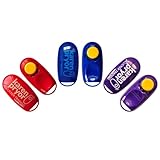
and a
worn at the hip made the timing and treat delivery fast enough to make this work — fumbling with a bag on the counter would have cost them several markers’ worth of precision.
Adding Door-Opening as a Distraction Without Losing the Stay
Door-opening is its own distraction layer and needs to be introduced deliberately. Once your dog holds the mat through 10 repetitions of the bell drill, have a helper slowly open the front door — just six inches — while you continue reinforcing the stay. If your dog breaks position, the door closes immediately. No punishment, no drama. The door closing is the consequence.
Build this gradually: 6 inches open → door fully open → helper visible in doorway → helper steps inside. At each stage, continue marking and rewarding the mat behavior every 5–10 seconds using a variable reinforcement schedule to build persistence.
When to Introduce a Real Helper at the Door
Bring in a real person only after your dog can hold a 30-second down-stay with the door fully open. Choose someone your dog knows moderately well — not their favorite person in the world (too exciting) and not a stranger (too unpredictable at this stage).
Brief your helper on one non-negotiable rule: if the dog gets up and approaches, they turn their back and go silent. No eye contact, no pushing the dog away, no "it's okay." Attention — even corrective attention — is a reinforcer for a dog in this state.
The release word is your final piece here. A dog without a clear signal that the mat behavior is over will often break position on their own timeline, which unravels the whole chain. "Free" means the exercise is done. Until they hear it, the mat is where life happens.
Phase 3 — Generalization: Training with Real Visitors and Real-World Variables
Here's the hard truth I've watched play out dozens of times: a dog who holds a perfect "place" behavior through 50 solo practice sessions can completely detonate the moment a real human being walks through the door. The owner calls me frustrated, convinced the training "didn't work." It worked — they just skipped the most important phase.
Generalization is the process of teaching your dog that the rules apply everywhere, with everyone, under every condition. Dogs don't automatically transfer learned behaviors across contexts the way humans do. Your dog isn't being stubborn or stupid — their brain genuinely needs to practice the behavior with real visitors, real smells, real energy, and real unpredictability before it becomes reliable.
Scripting Your Training Visitors: A Step-by-Step Briefing Guide
Your first real-visitor sessions require confederates — people willing to follow your exact protocol rather than just showing up and overwhelming your dog. In 2026, I typically recruit neighbors or offer to return a favor, because you need someone who will actually listen to your instructions. Your enthusiastic aunt who "loves dogs" and immediately baby-talks them at the door is not your first training visitor.
Before they arrive, brief them clearly on these non-negotiables:
- Ring the bell, then wait 30 seconds before the door opens — this gives you time to cue your dog to place and reward the initial calm response
- No eye contact with the dog until you explicitly release them to greet — direct eye contact is social invitation and will spike arousal instantly
- **Move slowly and