When Is Your Puppy Ready to Leave the Crate Behind?
The transition from crate to free roaming is one of the most exciting milestones in puppyhood, but rushing it can lead to destroyed furniture, potty accidents, and a step backward in training. Most puppies aren't ready for full house freedom until they're at least 1-2 years old, though some mature faster than others.
Before you even think about ditching the crate, your puppy needs to demonstrate consistent reliability in several key areas. This isn't about age alone—it's about behavior and maturity.

Check Price on Amazon →
Signs Your Puppy Is Ready for More Freedom
Your puppy is likely ready to start the transition when they can check off most of these boxes:
- Hasn't had a potty accident inside for at least 4-6 weeks
- Voluntarily enters their crate and seems comfortable there
- Can hold their bladder for 4-6 hours during the day
- Doesn't destroy items when left alone in the crate
- Has moved past the intense chewing phase of puppyhood
- Understands basic commands like "leave it" and "settle"
- Stays calm when you leave the room
- Has been consistently following house rules for several months

Check Price on Amazon →
If your puppy is still having accidents, chewing furniture, or showing anxiety when alone, they need more time. There's no shame in keeping the crate routine going longer—it's far better than dealing with the fallout of premature freedom.

Check Price on Amazon →
The Age Factor: What's Typical?
While every dog is different, most puppies need to be at least 12-18 months old before they're trustworthy with full house access. Smaller breeds often mature faster than larger breeds, which can take up to 2-3 years to fully settle into adulthood.
Don't compare your puppy to your neighbor's dog or what you read online. Some puppies are ready at 10 months, while others need until they're 2 years old. Your puppy's individual behavior is the only metric that matters.
The Room-by-Room Approach to Freedom
The biggest mistake owners make is going from crate to complete house freedom overnight. This setup is a recipe for disaster. Instead, use a gradual, room-by-room approach that builds your puppy's privileges slowly over weeks or months.
Phase 1: Single Room Freedom
Start by giving your puppy freedom in just one room while you're home. Choose a room where you spend a lot of time—often the living room or kitchen works best. This room should already be thoroughly puppy-proofed.
During this phase:
- Keep the crate door open in the room so your puppy can still access it
- Stay in the room with your puppy for the first several sessions
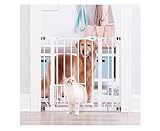
- Use baby gates to block off access to other areas
- Practice leaving the room for 5-10 minutes while your puppy stays
- Gradually increase the time you're out of sight
- If your puppy has an accident or chews something inappropriate, go back to the crate for a week before trying again
Check Price on Amazon →
Spend at least 2-4 weeks in this phase. Your puppy should have zero accidents and zero destructive incidents before you move forward.
Phase 2: Two-Room Access
Once your puppy has mastered one room for several weeks, add a second room. This might be an adjacent room like the dining room if you started in the kitchen, or a hallway that connects two spaces.
The key here is to choose areas that flow naturally together. Don't jump from the living room to an upstairs bedroom—keep the expanded territory logical and connected.
Continue using baby gates to prevent access to the rest of the house. Practice leaving your puppy alone in these two rooms for increasing periods, starting with 15-20 minutes and building up to an hour or more.
Phase 3: First Floor or Main Living Area
After another 3-4 weeks of success, you can expand to your main living floor or the area where you spend most of your time. For many homes, this means the kitchen, living room, dining room, and any connecting hallways.
At this stage, you might still want to block off bedrooms, bathrooms, and stairs. These areas present unique temptations and risks that your puppy may not be ready to handle.
Start leaving your puppy alone in this expanded space for short periods—run to the mailbox, take out the trash, or sit in your car for 10 minutes. Gradually work up to leaving for an hour, then two, then a full workday if needed.
Phase 4: Whole House Freedom
Only after months of success in the main living area should you consider giving access to bedrooms, bathrooms, and additional floors. These rooms often contain the most tempting items to chew and the most valuable belongings to destroy.
Many dog owners choose to permanently keep certain rooms off-limits, especially bedrooms or home offices. This is perfectly acceptable and often wise. Your dog doesn't need access to every square foot of your home to be happy.
Puppy-Proofing Checklist for Each New Space
Before you give your puppy access to any new room, run through this thorough puppy-proofing checklist. Even well-trained puppies can't resist certain temptations.
Remove or Secure These Items:
- Electrical cords and charger cables (use cord covers or tape them along baseboards)
- Shoes, socks, and clothing (even worn items in hampers)
- Books, magazines, and papers within reach
- Remote controls, game controllers, and electronics
- Houseplants (many are toxic to dogs)
- Trash cans without lids
- Medications, vitamins, and supplements
- Cleaning supplies and chemicals
- Small objects that could be choking hazards
- Children's toys, especially small pieces
- Throw pillows, blankets, and anything with stuffing
- Window blind cords
- Food items on counters or low tables
Pet-Safe Your Furniture
Consider using furniture covers or throws during the transition period. Even if your puppy hasn't shown interest in chewing furniture while supervised, unsupervised time can bring out different behaviors.
Block access to furniture you don't want your puppy on. If you plan to allow couch privileges later, wait until they're fully trustworthy before introducing that option. It's much easier to grant permission than to take it away.
Create Safe Zones with Baby Gates
Quality baby gates are your best friend during this transition. Pressure-mounted gates work well for doorways, while hardware-mounted gates are better for wide openings or the top of stairs.
Use gates to:
- Block off rooms you're not ready to open yet
- Prevent access to stairs
- Keep your puppy in areas with easy-to-clean floors during early phases
- Create a defined space that feels secure but not confined like a crate
Some dogs learn to jump or push through cheap gates, so invest in sturdy options that are appropriately sized for your puppy's breed and strength.
Nighttime vs. Daytime Freedom: Two Different Timelines
Many dog owners assume that if their puppy is ready for daytime freedom, nighttime freedom should follow immediately. This is rarely the case. The nighttime transition often takes much longer and should be treated as a separate process.
Why Nighttime Is Different
During the day, your puppy may be calm and trustworthy because they've had exercise, mental stimulation, and bathroom breaks. At night, the situation changes dramatically:
- Your puppy will be unsupervised for 7-10 hours straight
- They may need to eliminate during the night if they're young
- Boredom and pent-up energy can lead to destructive behavior
- Nighttime anxiety is more common than daytime anxiety
- You won't know if there's a problem until morning
Transitioning from Crate to Bedroom at Night
Start by moving the crate from wherever it usually is into your bedroom. Let your puppy sleep crated in your room for several weeks. This helps them associate nighttime with calm, close proximity to you.
Next, try leaving the crate door open at night while keeping your bedroom door closed. Your puppy can choose to sleep in the crate or on a dog bed beside it. Many dogs will continue to sleep in their crate by choice because it feels safe.
If this goes well for several weeks, you can consider giving your puppy free access to your bedroom at night with the door closed. Don't attempt whole-house freedom at night until you're confident with daytime freedom for at least 2-3 months.
Signs Your Puppy Isn't Ready for Nighttime Freedom
If you try open-door sleeping and your puppy paces, whines, has accidents, or gets into trouble, they're telling you they're not ready. Go back to the crate at night without shame or frustration. Some dogs need the security of a crate for sleep well into adulthood.
Handling Regressions and Setbacks
Even with careful planning, regressions happen. Your puppy might have a potty accident after weeks of perfection, chew a baseboard after months of good behavior, or suddenly become anxious when left alone.
Common Causes of Regression
Understanding why regressions occur can help you respond appropriately:
- Medical issues like urinary tract infections or digestive upset
- Changes in routine or household schedule
- New stressors like construction, visitors, or a new pet
- Adolescence (yes, teenage dogs are a real thing)
- Not enough exercise or mental stimulation
- Moving too fast through the transition phases
How to Respond to Setbacks
When regression occurs, don't panic or punish. Simply take a step back to the previous level of freedom where your puppy was successful. If they have an accident with two-room access, go back to one room for another week or two.
Never punish after-the-fact mistakes. If you come home to find a chewed shoe or a puddle on the floor, your puppy won't connect your anger to the crime. You'll only create anxiety around your arrivals.
Instead, focus on prevention:
- Increase exercise before periods alone
- Provide more engaging toys and puzzles
- Shorten alone time temporarily
- Double-check your puppy-proofing
- Consider whether your puppy needs more training foundations
When to Consult a Professional
If regressions persist despite going back to basics, or if you notice signs of separation anxiety (excessive drooling, destructive behavior focused on exit points, panic-level distress), consult a professional dog trainer or veterinary behaviorist.
Some puppies genuinely struggle with alone time due to anxiety rather than immaturity. These cases need specialized treatment plans, not just more crate time.
Maintaining Success Long-Term
Once your puppy has earned house freedom, don't assume the work is done. Maintaining good behavior requires ongoing management and reasonable expectations.
Keep the Crate as an Option
Even after your dog no longer needs crating, keep the crate set up with the door open. Many dogs continue to use their crate as a preferred sleeping spot or safe retreat. If you need to crate them for travel, vet visits, or emergencies, they'll already be comfortable.
Continue Regular Exercise and Enrichment
A tired dog is a well-behaved dog. Don't let your exercise routine slip just because your puppy is trustworthy now. Boredom is the number one cause of destructive behavior in dogs who previously had house freedom.
Provide daily physical exercise through walks, play sessions, or dog sports. Add mental stimulation through training practice, puzzle toys, sniff walks, and food-dispensing toys.
Don't Test Limits Too Quickly
Just because your puppy can be alone for 4 hours doesn't mean they should be alone for 8 hours tomorrow. Gradually increase alone time, and consider that even adult dogs shouldn't routinely be left alone for more than 8-10 hours.
If your schedule requires longer absences, arrange for a dog walker, pet sitter, or doggy daycare to break up the day.
Accept That Some Dogs Need More Management
Not every dog will earn complete house freedom, and that's okay. High-energy breeds, anxious dogs, or those with strong chewing drives may always need some level of confinement or supervision.
You might find that your dog does great with freedom on the first floor but can't be trusted upstairs. Or they're perfect for 6 hours alone but start getting into trouble after that. Tailor your management to your individual dog's needs rather than following an arbitrary ideal.
The Bottom Line on Crate to Free Roaming Transitions
Transitioning your puppy from crate to free roaming is a gradual process that should take months, not days. Start with one room, build success slowly, proof each area thoroughly, and don't rush the timeline.
Remember that daytime and nighttime freedom are separate milestones, and regressions are normal. When they happen, simply take a step back without frustration.
Your puppy will tell you when they're ready through their behavior. Listen to what they're showing you rather than what you hope they can handle. The goal isn't to get out of the crate as fast as possible—it's to build a trustworthy, confident dog who thrives with the freedom they've earned.
With patience and proper preparation, most puppies will eventually enjoy safe, supervised house freedom. But there's no magic age or timeline. Follow your puppy's lead, and you'll both get there when the time is right.