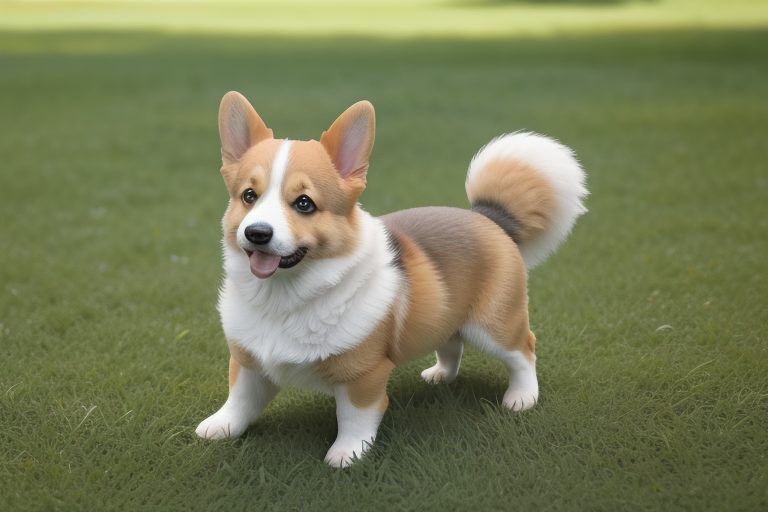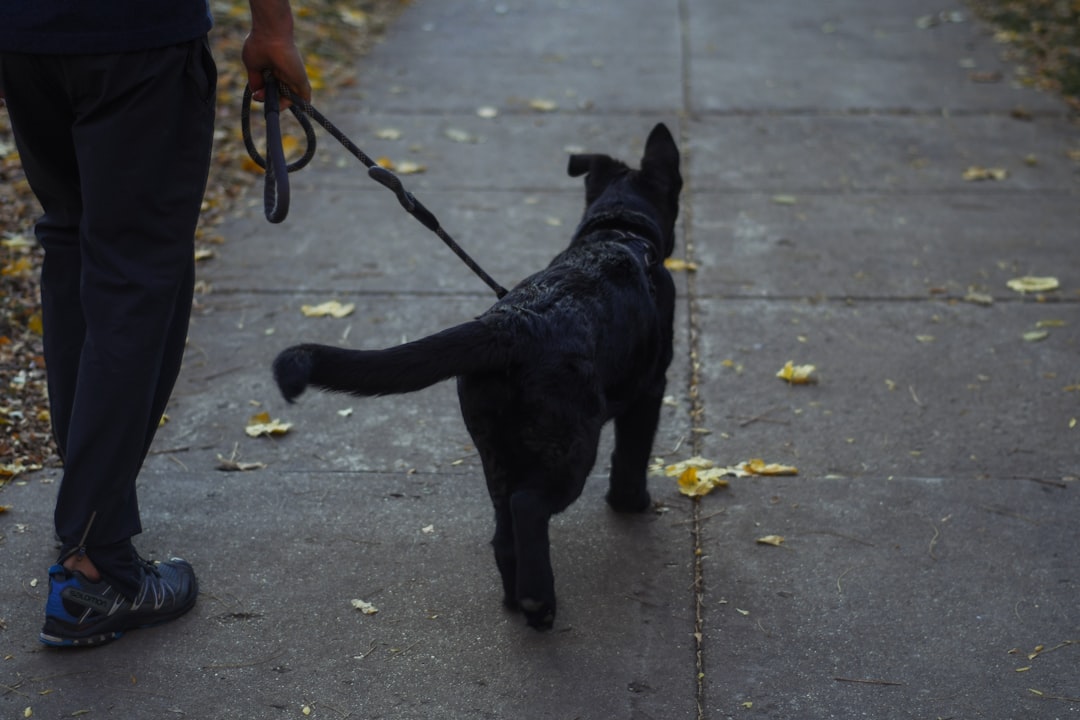
Loose Leash Walking Without Treats: It Works (2026)
Most dog trainers will tell you that treats are non-negotiable for loose leash walking. After 15 years working with hundreds of dogs, I'm here to respectfully disagree.
I've trained everything from hyperactive Border Collies to stubborn Basset Hounds, and I've watched plenty of owners succeed beautifully without a single piece of chicken in their pocket. I've also watched the treat-dependent approach backfire — the dog who walks perfectly until the reward pouch runs empty, then immediately plants his paws and transforms into a 60-pound anchor. Sound familiar?
Here's the truth: treats are a tool, not a requirement. Loose leash walking is fundamentally about communication, connection, and teaching your dog that a slack leash leads somewhere worth going. Once you understand that core principle, you realize there are multiple roads to the same destination.
Maybe you have a dog who's simply not food-motivated on walks. Maybe your dog has dietary restrictions that make constant treating impractical. Maybe you're just tired of carrying a bait bag every single time you leave the house. Whatever your reason, you're not setting yourself up for failure by skipping the treats — you just need the right framework.
In this guide, you'll learn exactly how to build reliable loose leash walking using equipment, timing, real-life rewards, and relationship-based techniques that hold up on a busy street corner just as well as they do in your quiet backyard. These methods stick — because they're built on something more durable than a training treat.
Let's start where every successful walk actually begins: long before you clip on the leash.
Why Treats Aren't the Only Path to Loose Leash Walking
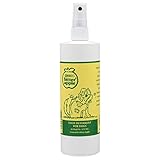
Treats are genuinely excellent tools, and I use them regularly. But over 15 years of working with dogs, I've watched plenty of well-meaning owners arrive at class with a
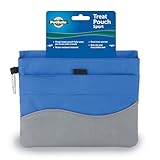
stuffed with chicken, only to find their dog still dragging them toward every squirrel, dog, and interesting smell within a 50-foot radius. The treats aren’t failing because they’re bad — they’re failing because they’re being asked to compete with rewards the dog values even more.
Understanding why that happens changes everything about how you approach loose leash training.
The Real Reason Your Dog Pulls — and Why Treats Sometimes Miss It
Pulling on leash isn't defiance or dominance. It's the most straightforward thing in the world: your dog has learned that forward momentum gets them to things they want. The sidewalk smells incredible. That dog across the street is fascinating. The park is RIGHT THERE. Pulling has been reinforced thousands of times, often accidentally, simply because forward movement followed.
Here's where treats hit their ceiling. When a dog is operating at high arousal — heart rate elevated, nose twitching, eyes locked onto something stimulating — the prefrontal processing required to respond to a food lure drops dramatically. The dog isn't being stubborn. Their brain is genuinely prioritizing environmental information over your treat. I've seen this hundreds of times with reactive dogs who will work beautifully for cheese in the backyard, then act as though the same cheese doesn't exist the moment another dog appears down the street.
There's also the practical reality: owners forget the treat pouch. They run out of treats mid-walk. They're walking in their work clothes and don't want to carry food. A training system that only functions when you're perfectly prepared is a fragile system.
For certain dogs, the gap between food value and environmental value is simply too wide to bridge reliably. In my experience, Belgian Malinois, most terrier breeds, and sighthounds like Greyhounds and Whippets fall into this category more often than not. I worked with a six-year-old Malinois named Koda in 2026 whose owner had tried three different trainers, all treat-based approaches. Koda would take food at home, ignore it on walks, and pull hard enough to leave bruises. Within two weeks of switching to motion-based rewards and structured play, his loose leash consistency jumped dramatically. For him, the leash going slack and getting to move forward was a far more powerful payoff than any treat could be.
What Counts as a Reward If Not Food?
Operant conditioning gives us enormous flexibility here, because the science is clear: a reinforcer is simply anything that increases the likelihood of a behavior being repeated. Food is one option, not the only option.
For most dogs, these non-food reinforcers are genuinely powerful:
- Forward movement itself — being allowed to continue walking is a reward; stopping when the leash tightens removes that reward
- Sniffing — allowing your dog to investigate a scent patch after a stretch of good walking uses their primary sense as a reinforcer
- Verbal praise paired with genuine enthusiasm — not monotone "good boy," but the kind of voice that actually signals to your dog that something great just happened
- Play and physical engagement — tugging, chasing, a quick game with a
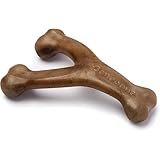
mid-walk
– **Access to greetings** — being allowed to approach another dog or person after demonstrating loose leash behavior
The key insight is that these rewards are often already present in the environment. You're not adding something from your pocket; you're controlling access to what your dog already wants. That's a powerful position to train from.
One honest caveat: treat-free training typically takes 20-30% longer in the early stages compared to food-based shaping. You're building a communication system without the speed and clarity that food marking provides. Be patient during those first few weeks. The payoff is that the behaviors tend to generalize far better — a dog who's learned to walk nicely because walking nicely itself becomes rewarding doesn't suddenly forget their training when the treat pouch stays home.
The Right Equipment Setup Before You Train a Single Step
I've watched owners spend months struggling with loose leash walking, convinced their dog was stubborn or untrainable — then switch their equipment and see dramatic improvement within a single walk. Gear isn't everything, but the wrong setup actively works against you, especially when you're not using treats to bridge the gap between behavior and reward.
Before you take one training step, get this part right.
My Go-To Equipment Recommendations for 2026
Front-clip harnesses are the single biggest game-changer for treat-free loose leash training. When a dog pulls forward on a front-clip harness, the attachment point at the chest causes their body to rotate toward you rather than lurch ahead. This mechanical redirection doesn't hurt — it just physically interrupts the pulling pattern long enough for you to reinforce the position you want.
I consistently recommend two options:
- Freedom No-Pull Harness — has a dual-clip design (front and back), fits most body types well, and the front ring sits at a good angle for steering. The martingale belly strap adds gentle pressure when the dog pulls, giving a subtle feedback signal without any pain.
- Ruffwear Front Range — bombproof construction, excellent for dogs who are hard on equipment, and the padding prevents chafing during longer training sessions.
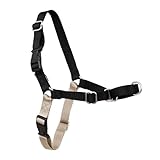
Front-clip harnesses matter specifically for treat-free training because of timing. When you mark and reward with food, you can capture a good position in a fraction of a second. Without that instant marker, you need the environment itself to communicate "this isn't working" — and a front-clip harness does exactly that.
What to avoid:
- Standard flat collars put all pulling pressure on the neck, give the dog no useful information about direction, and can trigger an opposition reflex that makes them pull harder.
- Slip leads can work beautifully in experienced hands, but they require split-second timing to apply and release pressure correctly. Beginners almost always either hold constant tension — which teaches nothing — or apply pressure too late. Save slip leads for once you understand the training system.
- Bungee leashes are probably the most counterproductive tool I see on walks. They feel comfortable, but they completely absorb the tension signal your dog needs to feel. The whole communication loop depends on your dog noticing the difference between a tight leash and a loose one. Bungee leashes blur that line entirely.
For leash length: six feet is the standard for good reason. A leather or biothane leash in that range gives you enough slack to reward a natural heel position while keeping you close enough to redirect before pulling gets momentum. I use a half-inch wide biothane leash — it's easy to grip, weatherproof, and communicates hand movements clearly.
How Leash Grip and Body Position Communicate Direction to Your Dog
Here's something most training guides skip entirely: how you hold the leash is itself a training tool.
The technique I teach is called the anchor hand method. Place your dominant hand at your hip, thumb looped through the handle, and keep it locked there. Your non-dominant hand slides along the leash as needed for small adjustments. That's it — but it changes everything.
Last spring, I worked with a woman named Carla whose 60-pound Labrador dragged her down every sidewalk. She'd been trying to use her arms to "resist" the pulling, which left her exhausted and her dog completely unbothered. First session, I had her anchor her hand at her hip and stop moving her arms. Within 15 minutes, her dog had already started checking in with her — not because of any reward, but because the feedback from the leash became consistent and predictable for the first time.
When your anchor hand stays fixed:
- The leash tension becomes a reliable signal, not random resistance
- Your dog learns that forward pulling produces a consistent, neutral consequence
- Your body naturally turns and redirects rather than being pulled off-balance
Your body position matters too. Slightly turned toward your dog, weight back on your heels — this invites them into your space rather than chasing them forward. Leaning into the direction of pulling unconsciously tells your dog you're following their lead.
Get this foundation right, and every method in the next section starts working faster than you'd expect.
Foundation Skill: Teaching Your Dog What the Loose Leash Feeling Means
Before your dog can walk nicely on leash, it needs to understand something most owners skip entirely: what a slack leash actually feels like — and why that feeling is worth maintaining.
This is where the J-curve concept comes in. When you hold the leash at your side and your dog stands or moves at roughly your hip level, the leash should hang in a soft J-shape between your hand and the clip on their collar or harness. That gentle arc isn't just aesthetic. It's a physical signal to your dog that says this is the neutral zone — nothing bad is happening, nothing is being demanded. The moment that J straightens into a diagonal line, tension enters the equation for both of you.
I spend the entire first session with new clients doing nothing but helping them feel that difference. I'll have them hold the leash and walk across the yard while I gently increase and release tension from the other end. Nine times out of ten, they're shocked by how little pressure they were unconsciously applying before we started. If you can't feel the difference, your dog certainly can — and they've likely been compensating for it for months.
The Attention Game Without Food Lures
The reality of treat-free training: your reinforcement windows are narrower. With a piece of chicken, you can reward a behavior a half-second after it happens and still communicate clearly. Without food, you're working with praise, release, and environmental payoffs — all of which require better timing and a calmer environment to land effectively.
This is exactly why you must start indoors or in a securely fenced yard with essentially zero distractions. The living room works perfectly. The front sidewalk does not — not yet.
The exercise is simple:
- Stand still with your dog on a 4–6 foot leash, held loosely at your side
- Wait. Don't prompt, don't call their name, don't shuffle your feet
- The moment your dog turns their head or body toward you — even glances in your direction — say "yes" in a clear, bright tone
- Immediately follow with a release reward: drop the leash, open the back door, let them put their nose in the grass, toss a
they’ve been eyeing
That release is the reward. You're teaching your dog that checking in with you unlocks access to the things they already want from the environment. No food required — just good observation and fast follow-through.
I worked with a two-year-old Labrador named Biscuit in early 2026 who had never voluntarily offered eye contact on leash. His owner assumed he was simply "not that kind of dog." After three five-minute sessions of this stationary attention game in their kitchen — using the back door to the yard as the release reward — Biscuit was orienting toward her consistently. The environment did the work. We just stopped blocking it.
Using Environmental Rewards: Sniff Spots, Open Gates, and Forward Progress
Once your dog understands the attention game in a still position, you can begin weaving environmental rewards into movement — and this is where the J-curve pays off on actual walks.
The three most powerful environmental rewards I use:
- Sniff spots: A patch of grass, a fence post, a fire hydrant — to a dog, these are essentially social media feeds. Letting your dog sniff on leash is deeply reinforcing and costs you nothing
- Open gates and thresholds: Forward progress itself is a reward. A dog that holds a loose leash gets to move forward; a dog that pulls doesn't
- Verbal release to explore: A cue like "go sniff" signals that the J-curve has earned them freedom for 30–60 seconds
This is also where my 5-second rule becomes essential. If your dog's leash goes taut and stays taut for more than five seconds without you doing something to interrupt it, they are actively practicing pulling. That pattern reinforces itself quickly. Stop, redirect, reset the J-curve — every single time, without exception. It sounds tedious because it is, briefly. But it's far less tedious than re-training a confirmed puller six months from now.
The

can be genuinely useful here once you move outdoors — it gives your dog enough range to reach sniff spots as rewards while you maintain enough line to feel when tension starts building.
Core Training Methods That Replace Treats Entirely
Once your dog understands what a loose leash feels like, you need a reliable toolkit of reinforcers that have nothing to do with food. These four methods work because they tap into something more fundamental than a cookie: the dog's own desire to move forward, play, and connect with you.
The 'Be a Tree' Method — Done Correctly
Most people have heard of this technique and most people do it wrong. Standing still when your dog pulls isn't the point. The reward is the resumption of forward movement, and your timing has to be precise.
Here's the full sequence:
- Dog pulls → your feet plant completely, zero forward momentum
- You wait silently — no "no," no leash corrections, no repeated commands
- The moment the leash goes slack (even slightly), you immediately step forward
- That first step is the reinforcer
The mistake I see constantly is handlers waiting too long after the leash goes slack before moving again. You have about half a second. Miss that window and you've taught your dog that slack leash eventually means movement, which is a much weaker lesson.
The Direction Change Method Step-by-Step
The 180-degree turn is my personal go-to for dogs who find forward momentum so exciting that standing still doesn't register as a consequence. With a young Labrador I worked with in 2026, the Be a Tree method barely made a dent — but direction changes transformed his walking within two weeks.
The sequence:
- Dog forges ahead and leash tightens
- Without saying anything, pivot on your heel and walk briskly in the opposite direction
- Keep the pace purposeful — you're not shuffling, you're walking
- The moment the dog catches up and the leash goes slack, pivot again toward your original destination
The penalty yards concept adds structure to this: each pull costs the dog 3-5 deliberate steps backward before forward progress resumes. It's not a correction — you're not yanking or scolding. You're simply making the physics of pulling extremely unproductive. Dogs figure this out faster than you'd expect because the cause-and-effect is immediate and consistent. Pulling = going backward. Loose leash = going where we actually want to go.
Use a
in open spaces when you’re first building this skill — it gives you room to complete the direction change without running out of leash.
How to Use Tug and Play as Mid-Walk Reinforcement
This is the method that food-skeptical owners overlook entirely, and it's genuinely powerful for high-drive dogs. When your dog offers an extended stretch of loose leash walking — I typically wait for a solid 15-20 consecutive steps — you stop, pull out a toy, and do a 30-second tug or chase game right there on the sidewalk.
Border Collies, Retrievers, and most terriers find this more motivating than any treat I've ever used. I carry a
or a short tug toy in my back pocket specifically for this. The game ends, you put the toy away, and you keep walking. The dog learns that *their self-control directly produces the thing they love most*.
A few practical notes:
- Keep the play session short — 20 to 30 seconds maximum, then end it clearly
- You initiate and end the game; never let the dog paw at your pocket demanding it
- The toy disappears completely when not in use — mystery keeps the value high
Verbal Markers Without Food: Making Praise Actually Mean Something
Generic praise fails for a specific reason: "good boy" delivered in a calm, even tone doesn't tell the dog which exact behavior earned it, and it doesn't carry enough emotional charge to compete with environmental distractions.
What actually works is a specific, animated verbal marker timed to the precise moment of loose leash contact — something like "YES, walk!" delivered with genuine energy. The word "yes" functions as a marker (it signals that exact moment was correct), and "walk" begins to carry meaning through repetition.
The keys to making this work:
- Timing first — say it the instant the leash goes slack, not a second after
- Consistent wording — pick your phrase and use it identically every time
- Match your energy to what you're reinforcing — a flat "yes" teaches nothing; a sharp, bright "YES" teaches a lot
Your voice is a legitimate training tool. Most owners just haven't used it with enough precision to discover that.
Building Duration and Distance: The Progression Plan
One of the biggest mistakes dog owners make — one I made myself early in my career — is trying to jump straight from backyard practice to a busy sidewalk after a few good sessions. Without treats acting as a constant feedback loop, your timing has to be sharper and your environment management smarter. The 3D framework (Duration, Distance, Distraction) gives you the structure to avoid that trap.
The rule is simple but non-negotiable: increase only one variable at a time. If you're adding distance, keep distractions low. If you're introducing a new environment, shorten your session. Violating this principle is the single fastest way to unravel weeks of solid progress.
Week-by-Week Training Progression for Treat-Free Success
Week 1 — The Backyard
Start with 5-minute sessions in your own backyard or another familiar, low-distraction space. Your only job this week is building the muscle memory of the loose leash feeling — that relaxed, J-shaped lead — and practicing the stop-and-redirect techniques covered earlier. Don't worry about covering ground. A successful Week 1 might mean you walk a total of 40 feet.
Week 2 — Driveway and Quiet Street
Now you're adding mild novelty — slightly more smells, the occasional passing car, maybe a neighbor checking their mail. Keep sessions to 10 minutes maximum. The environment is doing some of the work now, introducing low-level stimulation your dog has to learn to move through calmly.
Week 3 — Neighborhood Walks with Controlled Dog Exposure
This is where most owners feel the pressure spike. You'll encounter other dogs — but your goal this week is exposure at distance, not proximity. If you see a dog approaching, cross the street or create space before your dog hits threshold. A
Similar Posts
Potty Training Your Dog: A Comprehensive Guide for Any Age
Potty training is the first real test of patience for every dog owner. Whether you’re starting with an 8-week-old puppy or an adult rescue who never learned the rules, the fundamentals are the same: consistency, timing, and management. I’ve guided hundreds of dog owners through this process, and the ones who succeed aren’t the ones…