Dog Impulse Control Games That Actually Work (2026)
Every dog I've ever worked with that had a "behavior problem" — the jumper, the leash-puller, the counter-surfer, the dog who couldn't sit still at the vet — shared one common deficit. It wasn't disobedience. It wasn't stubbornness. It wasn't even a lack of training. It was poor impulse control.
Here's what surprises most dog owners when I tell them: your dog already knows how to sit. They already understand "leave it." The problem is that when excitement, arousal, or temptation spikes above a certain threshold, all that training evaporates. The knowledge is there — the self-regulation to access it under pressure simply isn't.
I've spent over 15 years working with everything from eight-week-old puppies to seven-year-old rescue dogs with deeply ingrained reactive habits. The single most transformative shift I've seen in dogs — and their owners — comes not from teaching more commands, but from building genuine impulse control through consistent, well-structured games.
And yes, I said games. That's intentional. The training methods in this guide are genuinely fun for your dog, which means better engagement, faster learning, and results that hold up in the real world — not just in your living room with a treat pouch clipped to your hip.
In this guide, you'll learn the core games I use with my own clients, how to troubleshoot when things stall, and how to tailor everything to your dog's specific age, breed, and temperament. You'll also walk away with a concrete long-term plan you can start this week.
Let's begin where impulse control itself begins — with understanding why it matters more than any individual command you'll ever teach.
Why Impulse Control Is the Foundation of Every Well-Behaved Dog
Ask most dog owners what they want from training, and you'll hear the same things: a dog who comes when called, walks nicely on leash, doesn't jump on guests. What they're actually describing — without realizing it — is a dog with strong impulse control.
Impulse control is your dog's ability to pause, think, and make a choice rather than simply react. It's the canine equivalent of emotional regulation, and it underpins every single behavior you will ever try to teach. Without it, you can drill "sit" a thousand times and still watch your dog blast through an open front door the moment a squirrel appears on the other side.
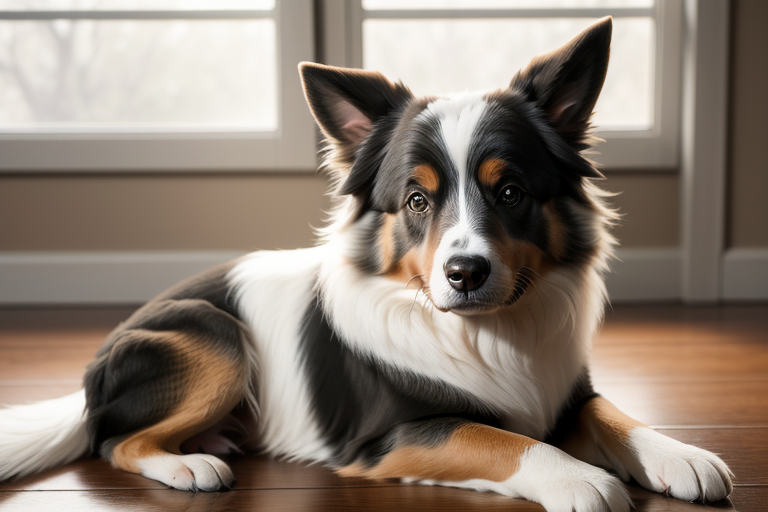
I learned this the hard way early in my career, working with a beautifully trained Border Collie named Radar. His owner had done everything right — he knew 40+ cues, responded perfectly in the living room, and could execute a flawless heel in the backyard. But the moment we stepped near a busy trail, Radar was gone. Lunging, spinning, completely unreachable. His obedience was impeccable. His impulse control was essentially nonexistent. We had built an impressive structure on a cracked foundation.
That experience shaped how I approach every dog I work with now.
The Difference Between Obedience and Impulse Control
This distinction matters more than most owners realize. Obedience is your dog responding to a cue you give — "sit," "stay," "come." Impulse control is your dog's capacity to regulate their own arousal and override instinct before you even have to ask.
Think of it this way: obedience is reactive (your dog responds to you), while impulse control is proactive (your dog governs themselves). A dog with genuine impulse control doesn't lunge toward the food on your coffee table because they've developed the internal circuitry to pump the brakes — not because you said "leave it" in time.
There's a useful neurological parallel here. Dogs, like young children, have an underdeveloped prefrontal cortex — the brain region responsible for decision-making and inhibiting impulsive behavior. Deliberate, repeated practice literally strengthens the neural pathways that override instinct. You're not just teaching behaviors; you're building a different kind of brain. These games are the reps.
In my experience across hundreds of client dogs, impulse control deficits are the root cause of roughly 80% of the behavioral complaints I hear — counter-surfing, door-bolting, leash reactivity, rough play, resource guarding escalations, you name it. Owners come to me thinking they have a "stubborn" or "dominant" dog. What they almost always have is a dog who was never taught to pause.
Which Dogs Need This Most (And Why Every Dog Benefits)
Certain dogs will make impulse control training feel like an uphill battle — and that's okay, it just means they need it more urgently.
High-priority candidates include:
- High-drive working breeds — Border Collies, Belgian Malinois, Jack Russell Terriers — whose intensity is a feature, not a bug, but needs direction
- Adolescent dogs between 6 and 18 months, when hormones surge and previously reliable behavior often falls apart
- Reactive or anxious dogs, who are essentially stuck in a constant state of limbic system override
- Dogs from under-stimulating backgrounds, where boredom has made every stimulus feel overwhelming by contrast
That said, I've worked with mellow Basset Hounds and senior rescues who benefited just as much as the high-octane dogs. A calm dog with poor impulse control is still a dog who steals sandwiches and ignores recall around other dogs. The stakes are just lower until they suddenly aren't.
The argument I make to every owner I work with: the earlier you invest in impulse control games, the faster everything else comes together. A dog with a strong internal pause button learns new skills more quickly, generalizes to distracting environments with less repetition, and bounces back faster when they make mistakes. It compounds. A
and a handful of

invested now saves you months of frustration later.
Building impulse control isn't about suppressing your dog's personality or enthusiasm. It's about giving them the cognitive tools to live comfortably and confidently in a world that constantly demands they override their instincts. That's a gift — and it starts with a handful of simple, playful games.
What You Need Before Starting Impulse Control Games
The setup work you do before your first training session will determine whether this goes smoothly in week one or drags into a months-long battle of wills. I've seen owners skip this stage and then wonder why their dog is spinning in circles and grabbing treats off their hand. The answer is almost always one of the things I'm about to cover.
Your Gear Checklist
You don't need much, but what you do need matters. Here's what I have within arm's reach before every impulse control session:
- High-value treats — Real food outperforms kibble every single time for this type of training. I use small pieces of cooked chicken, string cheese torn into pea-sized bits, or
like Zuke’s Mini Naturals when I need something convenient. The treat needs to be worth working for.
– **A treat pouch** — Fumbling with a bag in your pocket breaks the training flow at the worst moments. A
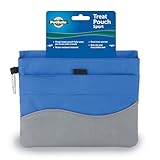
clipped to your waistband keeps your hands free and your timing sharp.
– **A standard 6-foot leash** — Not retractable. You need to manage distance without tension becoming a variable.
– **A quiet, low-distraction space** — Your living room with the TV off, or a fenced backyard in the early morning. Not the dog park. Not the front yard where squirrels exist.
Understanding Your Dog's Arousal Threshold
Every dog has an arousal threshold — the invisible line between "engaged and thinking" and "so stimulated they've lost access to their brain." Once a dog crosses that threshold, no amount of treat-waving will get a reliable response. You're not training at that point; you're just waiting for them to come back down.
Before your first session, spend five minutes watching your dog. What does "engaged but calm" look like on them specifically? For my own dog Rue, a border collie mix, it's soft eyes, a slightly wagging tail, and weight balanced evenly. When she tips over threshold, her tail goes rigid and her pupils dilate. Knowing that difference lets me catch her before she loses her ability to make good choices.
Start every game below your dog's threshold. Always. That's how the learning actually sticks.
Setting Up Your Training Environment for Success
Location is not a detail — it's a training variable. I watched a client spend three weeks trying to teach "it's yer choice" at her kitchen table while her kids were doing homework nearby. We moved to her bedroom, closed the door, and her reactive rescue learned the concept in under 25 minutes. Same dog, same treats, completely different outcome.
Your environment should have:
- Minimal movement in your dog's peripheral vision
- No other pets competing for the treats
- Consistent timing — train at the same time of day if possible, ideally not right after a meal or in the hour before one
Session length is non-negotiable: 3–5 minutes maximum, especially with puppies and high-drive breeds. Mental effort exhausts dogs faster than physical exercise. Ending on success after four minutes beats a ten-minute session where your dog checked out at minute six.
Choosing the Right Reward Hierarchy for Your Dog
Not every dog ranks rewards the same way. A food-motivated Lab might work beautifully for cheese. A toy-driven Malinois might need a quick tug reward to stay engaged. Before you start, do an informal reward preference test: offer three different treats back-to-back and notice which one your dog eats fastest, offers eye contact after, and actively moves toward. That's your tier-one reward — save it exclusively for the hardest moments in impulse control games.
Your Own Emotional State Is Part of the Equation
Your calm is contagious, and so is your frustration. Dogs read body language with an accuracy that embarrasses most humans. Slow your movements down by about 30% before you start. Drop your shoulders. Breathe out before you give a cue. I've seen handlers with genuinely difficult dogs make real progress simply by slowing their own pace — the dog relaxed because the human did first.
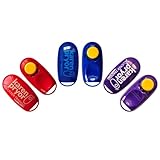
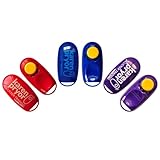
Decide now whether you're using a clicker or a verbal marker like "yes." Either works, but pick one and stay consistent for at least the first two weeks. That repetition builds a neural shortcut in your dog's brain — the marker becomes a precise signal that means that exact thing you just did earned a reward. Inconsistency during this window muddies that signal significantly.
The 5 Core Impulse Control Games Every Dog Should Learn
These five games form a deliberate progression. Each one builds on the mental framework established by the last — so resist the urge to skip ahead. A dog who understands "It's Yer Choice" will pick up Treat on the Floor in about three minutes. A dog who hasn't? You'll spend twenty minutes managing frustration instead of teaching anything.
Game 1 — It's Yer Choice (IYC)
This single game changed how I approach every aspect of impulse control training. I first used it with a young Border Collie named Reef who would literally knock treats out of my hand mid-training session. Within one week of IYC, he was waiting with eye contact before I'd even asked.
How to do it:
- Load a few small
into your palm and close your fist
– Present your closed fist to your dog at nose level
– Let them sniff, lick, paw, and nudge — say nothing, do nothing
– The instant they pull their nose back even slightly, open your hand and let them take a treat
– Repeat until they’re pulling back immediately
Once they're reliably pausing, you can open your palm flat. The rule stays the same: any attempt to mug the treat closes your fist. The dog is never told "no" — they discover through consequences that patience is the only strategy that works.
Common mistakes:
- Saying "leave it" or "no" — this teaches them to respond to a cue, not to self-regulate
- Rewarding too slowly after they pull back (you have about a half-second window early on)
- Moving to an open palm before they're consistently calm with a closed fist
Game 2 — The Restrained Recall
This game builds explosive, joyful recalls while simultaneously teaching your dog to tolerate the frustration of not yet being released. The tension is the point.
Have a helper hold your dog's harness gently while you back away, building excitement with your voice. Then call your dog and have them release simultaneously. No helper? Loop a

around a sturdy fence post and hold both ends — step back, let the lead create light tension, then release it as you call. The dog learns that excitement plus patience equals the best reward: getting to you.
Start at five feet. Most dogs are ready to work at 20–30 feet within a week.
Game 3 — The 1-2-3 Recall (Leslie McDevitt's Pattern Game)
Borrowed from Leslie McDevitt's Control Unleashed work, this game uses a predictable counting pattern to reduce arousal and build orientation toward you in distracting environments. Say "one" and toss a treat to your left. Say "two" and toss a treat to your right. Say "three" — and your dog will spin back to look at you, anticipating something great. Reward that eye contact heavily.
What makes this game so effective is how quickly dogs relax into it. The predictability removes the anxiety of "what happens next?" and replaces it with confident anticipation.
Game 4 — Treat on the Floor
Place a treat on the ground and cover it with your foot. Your dog will dig, sniff, and paw at your shoe. Wait. The moment they look up at your face — mark that with a "yes!" and reward from your hand, not from the floor.
Progressing to real-world scenarios: Once your dog understands the game, place the treat uncovered and simply stand near it. Then practice near dropped food during meal prep. Then near crumbs at the park. Each environment is a new level of the same game — same rules, higher stakes.
Game 5 — The Stay-and-Release Game
This isn't a static obedience stay. It's a dynamic conversation about delayed gratification. Ask for a sit or down, then release your dog enthusiastically to a thrown treat or a toy. The release — not the waiting — becomes the reward they're working toward.
Build duration in five-second increments. Add distance by shuffling backward one step at a time. Add distraction by dropping something nearby. The dog learns that holding position is never permanent, and that what comes after the wait is always worth it.
Play these five games in order. The conceptual understanding genuinely transfers — and you'll feel the difference by game three.
Advanced Impulse Control Games for Dogs Who Have Mastered the Basics
Once your dog has a solid grasp of the foundational games, it's time to raise the stakes. These advanced exercises aren't just harder versions of what came before — they target specific real-world challenges like reactivity, door manners, and the hair-trigger arousal that makes high-drive dogs so exhausting to live with. This is where training gets genuinely interesting.
Look at That (LAT): Game Setup and Progression Stages
Look at That, developed by Leslie McDevitt in her Control Unleashed program, is one of the most counterintuitive exercises I've ever taught — and one of the most effective. Instead of asking your dog to ignore a distraction, you actively mark and reward them for noticing it.
Here's how I set it up:
- Stage 1 — Sub-threshold exposure: Find a distance where your dog can see the trigger (another dog, a cyclist, a stranger) without reacting. The moment they glance at it, click and treat. You're building a glance-and-check-in reflex.
- Stage 2 — Introducing the cue: Once the dog is offering the behavior reliably, add "look at that" just as their eyes move toward the distraction.
- Stage 3 — Closing the distance: Gradually decrease the distance over multiple sessions. The dog learns that noticing the trigger predicts a reward from you — their attention swings back to your face automatically.
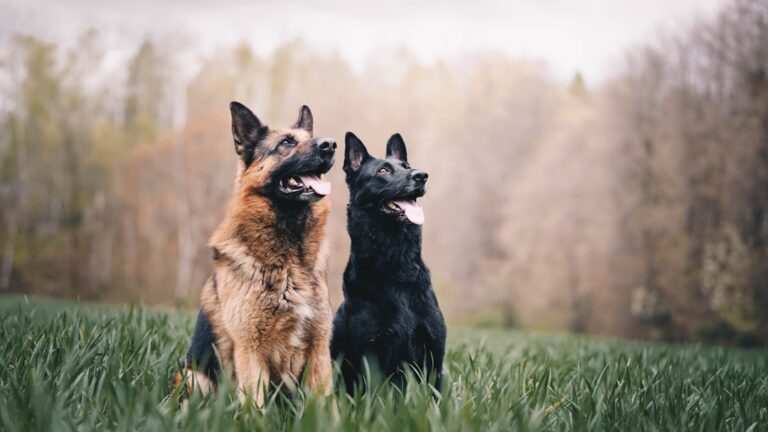
I worked with a three-year-old German Shepherd in early 2026 who would lunge at joggers with zero warning. Within six weeks of LAT sessions on a
, his owner described the moment he spotted a runner, looked at her, and sat. That check-in is the whole game. It rewires the emotional response at the source.
The Boundary Game: From Living Room to Front Door
Tom Davis's Boundary Game takes the concept of "place" training and turns it into a genuine impulse control drill. The goal is a dog who chooses to remain on their boundary — a
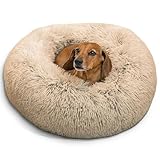
, cot, or mat — not because they’re commanded to stay, but because leaving the boundary never pays off.
Progression looks like this:
- Establish the boundary in a low-distraction environment. Reward heavily for all four paws on the surface — duration comes before distance.
- Add movement challenges. Walk around the mat, crouch down, even briefly leave the room. Return and reward before the dog breaks.
- Introduce real-world triggers. This is where most owners stop too early. I use a doorbell recording on my phone to simulate arrivals. Then strangers knocking. Then actually opening the front door.
- Proof with visitors. A dog who holds their boundary while a real person walks through the door has genuinely learned something. That's not "stay" — that's self-regulation.
The boundary becomes a coping strategy the dog reaches for independently. I've seen dogs put themselves on their mat when they're overstimulated. That's the long-term goal.
Using Tug and Prey Items to Build the Off Switch
High-drive dogs — your Belgian Malinois, your Border Collies, your working-line Labs — need arousal management built through the very things that excite them, not around them. Avoiding prey objects with these dogs is a training dead end.
The Off Switch Game works like this:
- Start a vigorous tug session. Let your dog really engage.
- Give a verbal cue — I use "finish" — and go completely neutral. Drop your energy, stop moving, stand tall.
- The instant the dog releases and offers eye contact or a sit, the game restarts explosively.
The dog learns that disengaging is what makes the good thing happen again. This is manding in its purest, highest-drive form — the dog discovers that calm, offered behavior is the universal key to access. Food, greetings, tug, door openings — the currency is the same.
For