Verbal vs Clicker Marker Training for Dogs (2026)
Most dog trainers will tell you the clicker is the gold standard of marker training — and they're not wrong. But I've watched countless frustrated owners fumble with a clicker during a critical training moment, miss the behavior entirely, and wonder why their dog seems confused. I've also seen dogs trained exclusively with verbal markers reach competition-level precision. The tool matters less than most people think. How and when you use it matters enormously.
I've been training dogs professionally since 2011, working with everything from anxious rescue mutts to high-drive Belgian Malinois destined for sport work. In that time, I've used clickers, verbal markers, tongue clicks, whistles, and even laser pointers as event markers. Every single one can work. Every single one can fail. What I've learned is that the "clicker vs. verbal marker" debate usually misses the real question: which marker fits your dog, your hands, your environment, and your goals right now?
This guide settles that debate properly. You'll understand exactly why marker training works so well neurologically, get an honest breakdown of where clickers outperform verbal markers (and vice versa), and learn how experienced trainers combine both in a dual-marker system for more nuanced communication. We'll also cover the mistakes I see handlers make repeatedly with both methods — mistakes that quietly sabotage progress for months.
Whether you're training your first puppy or troubleshooting a dog stuck on a plateau, understanding this distinction will sharpen every session you do from here forward.
Let's start at the foundation: what marker training actually is, and why a dog's brain responds to it so powerfully.
What Is Marker Training and Why It Works So Well for Dogs

If you've ever tried to reward your dog for sitting nicely, only to have them already standing by the time the treat reached their mouth, you've experienced the core problem that marker training solves. That two-second gap between behavior and reward is enough to accidentally reinforce the wrong thing entirely.
Marker training fixes this by inserting a precise, instantaneous signal — either a click from a
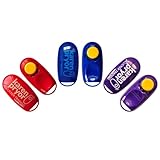
or a specific spoken word — at the exact moment your dog does what you’re looking for. That signal acts as a bridge, essentially freezing the behavior in time and telling your dog: *that exact thing, right there, is what earns your reward.* The treat can follow a second or two later, because the marker has already done the communicating.
The debate between clicker and verbal isn't about one being magic and the other being inferior. It's about understanding the mechanism behind both and using whichever you can deliver with the most consistency.
The Science of Classical Conditioning: How a Marker Gets Its Power
A marker doesn't start out meaningful to a dog. The first time you click or say "yes," your dog has no idea what it means. What gives a marker its power is classical conditioning — the same mechanism Pavlov discovered when his dogs started salivating at the sound of a bell.
Here's how it works in practice: you repeatedly pair the marker with something the dog already finds genuinely rewarding — usually a high-value food treat. Click, treat. Click, treat. After enough repetitions (typically 20–50 pairings in a single session for most dogs), something shifts. The marker itself becomes what behaviorists call a conditioned reinforcer. The dog's brain starts processing the sound as if it is the reward, triggering the same anticipatory response.
This is why marker training feels almost magical once it's established. You're not just bribing your dog in the moment — you're speaking directly to their learning system in a language it's already wired to understand. The marker becomes information, not just a noise.
Both verbal markers and clickers operate through identical psychological machinery. The debate between them isn't a debate about science — it's a debate about real-world application, which we'll dig into ahead.
Why Timing Matters More Than Most Owners Realize
Dogs learn in milliseconds, not in narratives. When your dog performs a behavior, there's an extraordinarily brief window — researchers generally put it at under one second — in which a consequence can be clearly linked to that behavior. Miss that window, and you haven't failed to reward; you've potentially rewarded something else entirely.
This is why well-meaning praise like "goooood boy" often fails as a training tool. By the time those two words land, your dog has already shifted their weight, glanced away, or taken a step. You meant to mark the sit. You may have accidentally marked the getting-up.
I saw this play out vividly with a German Shepherd named Brix who was struggling with a reliable "down." His owner was lavishing him with warm verbal praise, but Brix kept breaking position early. When we tracked it carefully, the praise was arriving about 1.5 seconds after the down — right as Brix was beginning to push back up. He wasn't being stubborn. He was learning exactly what we were teaching him, just not what we intended to teach him.
A well-timed marker compresses that feedback window dramatically. Instead of a fuzzy reward that lands somewhere in a two-second range, you're delivering a sharp, consistent signal that points at a single instant in time. Paired with

your dog genuinely wants, that precision is what makes behaviors click into place so much faster than conventional reward methods.
The marker isn't a gimmick — it's a communication upgrade that respects how dogs actually process cause and effect.
Clicker Training: Strengths, Limitations, and Who It's Best For
There's a reason Karen Pryor's work sparked a genuine revolution in dog training. The clicker is a precision instrument, and once you've used one properly, you understand exactly why it earns its reputation.
The core advantage comes down to one word: consistency. Your voice changes. When you're tired, excited, frustrated, or distracted, your "yes!" sounds different every single time. The clicker doesn't care how your day is going. Whether you're on repetition three or repetition three hundred, the sound is acoustically identical. For a dog's brain, which is constantly scanning for reliable patterns, that uniformity is enormously valuable.
Modern tools like the
— including the widely used i-Click (updated for 2026 with a softer button profile that reduces hand fatigue during long sessions) — remain staples in serious trainers’ gear bags for exactly this reason.
Why Dogs Reach Fluency Faster With a Clicker
In early shaping sessions, the clicker's emotional neutrality gives it a measurable edge. Unlike your voice, which carries emotional tone whether you intend it to or not, the click is a clean, neutral signal. It means one thing: that behavior, at that exact moment, earned a reward. No warmth, no frustration leaking through — just information.
I noticed this clearly when teaching a four-month-old Belgian Malinois named Rue to offer a nose touch to a target stick. With verbal markers, her accuracy was decent but scattered — she'd hit the stick, then look at my face to read my energy. The moment I switched to a clicker, her targeting tightened within a single session. She stopped searching my expression for confirmation and just trusted the sound.
The clicker particularly excels at:
- Precision shaping — capturing micro-behaviors like a slight head tilt, a chin rest, or the exact moment four paws contact the ground
- Distance work — marking a behavior from 20 feet away with a sound that travels clearly
- Duration building — clicking the moment a dog breaks position to mark the preceding hold accurately
- Working with dogs who are highly sensitive to handler body language, since the clicker removes emotional "noise" from the equation
Clicker Conditioning: How to Properly 'Load' a Clicker Before Training Sessions
Here's where many owners go wrong: they just start clicking and wonder why their dog looks confused. Before the clicker means anything, you have to charge it — a process called loading.
It takes about five minutes and works like this:
- Have 15–20 small, high-value
ready
2. Click once. Immediately deliver a treat. Pause two to three seconds.
3. Repeat — click, treat, pause. Don’t ask for any behavior. The dog doesn’t need to “do” anything.
4. After 15–20 repetitions across one or two short sessions, watch your dog’s response when you click without a treat visible. If they perk up and look expectant, the clicker is loaded.
The sequence is always click first, then treat — never simultaneously, never treat before click. That order matters because the click predicts the treat, not the other way around.
When the Clicker Creates Problems: Sound Sensitivity and Handler Limitations
The clicker's sharp acoustic signature is precisely what makes it effective — and precisely what makes it wrong for some dogs. I've worked with several noise-sensitive dogs who startled at the click even after weeks of careful conditioning. In those cases, pushing through rarely works. A softer-sounding button clicker helps occasionally, but with genuinely sound-sensitive dogs, a verbal marker is almost always the better long-term choice.
Beyond the dog, there are real handler limitations worth acknowledging:
- The clicker requires a free hand — difficult if you're managing a leash, treating, and handling simultaneously
- It can be dropped, forgotten at home, or lost mid-session at the worst possible moment
- Over time, some handlers develop gear dependency, struggling to train effectively without it
None of these problems are dealbreakers for the right handler-dog pair. But they're worth weighing honestly before you commit to building your entire foundation around a piece of equipment you need to remember to carry.
The clicker is genuinely excellent — just not unconditionally excellent. Knowing the difference is what separates thoughtful trainers from ones who blindly follow a method.
Verbal Marker Training: Strengths, Limitations, and Who It's Best For
Your voice is the one training tool you will never leave on the kitchen counter. That single fact is what draws so many handlers — including me — toward verbal markers as their primary system. A sharp, distinct word spoken at the exact moment your dog performs the right behavior functions identically to a clicker once it's been properly conditioned. The mechanics are the same; the instrument is different.
I made the switch to a primary verbal marker about eight years ago when I started working with a search-and-rescue handler whose hands were never free. Leash in one, radio in the other, treat
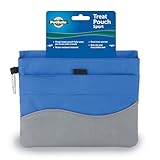
on the hip. A clicker simply wasn’t practical. Watching her use a crisp “Yes!” with the same precision I’d always associated with the click genuinely shifted how I thought about this.
Choosing Your Marker Word and Why Consistency of Tone Beats Consistency of Volume
The word itself matters less than you'd think. I've worked with handlers who swear by "Yes," others who use "Mark," and one memorable agility competitor who trained her border collie exclusively on "Beep." All of them worked. What those words share is more important than what makes them different: they're short, sharp, phonetically distinct from everyday conversation, and used exclusively for marking correct behavior.
"Good boy" fails as a marker not because it's the wrong sentiment, but because you say some version of it forty times a day in casual contexts. Your dog can't isolate its meaning. Reserve your marker word completely — it should never appear in your normal speech outside of a training context.
Here's where verbal markers get genuinely tricky: the consistency problem isn't about volume, it's about emotional tone. A "Yes" delivered when you're calm and focused sounds measurably different to your dog than a "Yes" barked out when you're frustrated that they finally got it after the twelfth attempt. Dogs are extraordinarily sensitive to prosodic variation — the rhythm, pitch, and emotional coloring of speech. A clicker produces the same acoustic signal every time. Your voice doesn't.
This is why I spend two to three dedicated sessions doing nothing but standardizing my verbal marker before attaching it to any new behavior chain. I practice saying the word in different emotional states, different environments, different physical positions. I record myself and listen back. The goal is a word that lands the same way every single time — the emotional equivalent of a metronome click.
A practical drill: say your marker word ten times in a row at different speeds and volumes, then have someone tell you which ones sounded different. You'll be surprised.
Verbal Markers in Real-World Contexts: Walks, Public Settings, and Off-Leash Work
This is where verbal markers genuinely shine. Consider a loose-leash walk along a busy street: your

is in one hand, you’re managing your dog’s position with the other, and your dog happens to check in with you beautifully instead of lunging at a cyclist. With a clicker, you’re fumbling. With a verbal marker, “Yes!” comes out instantly and your treat delivery follows without breaking stride.
The same advantage applies across several real-world scenarios:
- Multi-dog households — you can mark one dog specifically without needing a free hand per animal
- Therapy and facility work — a quiet "yes" is far less disruptive in a hospital or care home than a click
- Off-leash distance work — your voice carries context and urgency in ways a clicker physically cannot at 50 yards
- Water and weather — no mechanical parts to malfunction when it's raining or your hands are wet
The honest limitation is this: verbal markers demand more deliberate upfront investment from the handler. The clicker does half the consistency work for you by being a machine. Handlers who are naturally expressive, highly emotional, or who train across very different moods will need to work harder to make a verbal marker reliable.
For handlers who put in that practice, a well-conditioned verbal marker is arguably more versatile than any tool you'll ever strap to your belt.
Head-to-Head Comparison: Clicker vs. Verbal Marker Across Key Training Scenarios
Knowing why each marker works is useful. Knowing when to reach for which one is what actually changes your results on the training field. Here are the scenarios where these tools genuinely diverge — and where the difference is significant enough to affect your dog's progress.
Precision Shaping Sessions: Where the Clicker Has a Measurable Edge
When you're building a behavior from scratch through shaping, timing is everything. We're talking about the difference between marking a behavior at the right moment versus 0.3 seconds too late — which, in shaping, is the difference between teaching what you intended and accidentally reinforcing something adjacent to it.
The
produces a sharp, consistent acoustic signal that lands in roughly 0.1–0.2 seconds from the moment your thumb moves. A verbal “yes” — even a practiced one — typically clocks in slower, and it varies slightly in pitch and duration every single time you say it.
I noticed this most clearly when shaping a chin rest behavior with a three-year-old Labrador named Scout. We were building the behavior from the very first moment his chin contacted my palm, and the clicker let me mark that exact millisecond of contact. When I switched to a verbal marker mid-session as an experiment, he started offering chin approaches rather than actual contact — because my "yes" was landing just a fraction too late. That's the clicker's real advantage: it doesn't care how tired you are or what else is on your mind. The sound is the same every time.
Scenarios where the clicker's precision gives you a measurable edge:
- Early shaping and capturing subtle behaviors like duration, stillness, or body position
- Teaching nose work and scent indication, where the exact sniff-to-source moment matters
- Working with fast, high-drive dogs where behaviors flash by quickly
- Any session involving small approximation steps in a behavior chain
Real-Life Handling and Handler Practicality: The Verbal Marker's Daily Advantage
Distance and distraction work is the clearest example of where the verbal marker pulls ahead. If you're recalling your dog across a field or reinforcing a stay from 40 feet away, your
keeps you connected physically, but your marker still needs to travel. A clear, sharp “Yes!” carries meaningfully at distance. A clicker does not — the sound dissipates quickly, and beyond 20–30 feet it becomes unreliable in any outdoor environment.
Service and therapy dog contexts present a different challenge. In a hospital corridor, a courtroom, or a quiet library, an audible click draws attention in a way that disrupts the environment. Most experienced service dog trainers I've spoken with transitioned to verbal markers specifically because the word "yes" blends into normal human conversation. A click does not.
In agility and flyball, the verbal marker wins on pure practicality. Running a course, managing your own footwork, and handling a leash or target while also operating a clicker creates a juggling act that breaks focus. Most sport trainers I know moved to a verbal marker because it keeps their hands free and their attention on the dog's line.
Then there's the nuanced case of reactive and fearful dogs. There is no universal answer here. I've worked with noise-sensitive dogs who startled at the click even in calm environments, and others who were more unsettled by sharp human vocalizations than any mechanical sound. The right approach is to trial both in low-stress conditioning sessions before committing, watching closely for signs of tension — ears back, lip licking, body stiffening — in response to each sound.
The pattern that keeps emerging: the clicker earns its place on the training mat; the verbal marker earns its place in the real world. Understanding which context you're in on any given day is half the decision made already.
Using Both Together: A Dual-Marker System for Advanced Training
The clicker vs. verbal debate is a false choice. Many professional trainers — myself included — don't pick one and abandon the other. We run both simultaneously, with each marker assigned a specific job. The result is a more flexible, more powerful training system than either tool delivers alone.
The core idea is simple. The clicker handles precision shaping in controlled sessions. The verbal marker carries behavior into the real world. Each marker lives in its own lane, and your dog learns to respond to both — not because they're interchangeable, but because each one signals something slightly different about the training context.
How to Condition Two Separate Markers Without Creating Confusion
The most common concern I hear: "Won't my dog get confused?" In 15+ years of working with dogs, I have never seen a dog fail to distinguish a clicker from a human voice. Dogs are extraordinarily good at reading context, and they pick up on environmental cues we barely notice. The key is conditioning each marker separately and keeping its use consistent.
Here's the protocol I use:
- Week 1–2: Condition the clicker alone in quiet, structured sessions. Keep it brief — 5 to 10 repetitions per session — using high-value
Similar Posts
Boxer Puppy Biting Hard? How to Stop It Fast (2026 Guide)
Why Boxer Puppies Bite So Hard: Understanding the Breed-Specific Challenge If you’ve just brought home a Boxer puppy and feel like you’re being attacked by a tiny alligator, you’re not alone. I’ve worked with dozens of Boxer puppies over the years, and their owners are often shocked by just how hard those little jaws can…
Dog Aggressive Toward Cats? Training Fixes That Work
Introduction Picture this: You're relaxing on the couch when your cat strolls into the room. In an instant, your dog's body goes rigid. Ears forward. Eyes locked. Before you can react, your dog launches across the room in a frenzy of barking and lunging. Your cat bolts for safety, and your heart is racing just…
Maltese Separation Anxiety Training Tips for 2026
Understanding Separation Anxiety in Maltese Dogs Our Top Pick PetSafe Easy Walk No Pull Harness Check Price on Amazon → If you've ever watched your Maltese start trembling the moment you reach for your car keys, you're not alone. These little white fluffballs are wonderful companions, but they're also champions at developing separation anxiety –…
Balanced vs Positive Only Dog Training: Which is Better?
Introduction: Understanding the Training Philosophy Divide Picture this: Two professional trainers stand side-by-side at a dog training facility, both working with reactive dogs that lunge and bark at other dogs on leash. The first trainer uses a Karen Pryor i-Click Dog Training Clicker Check Price on Amazon → , marking calm behavior with clicks and…
Dog Nose Work Scent Training for Beginners (2026)
Your dog's nose is roughly 100,000 times more sensitive than yours — and if you're not actively using that superpower, you're leaving your dog's greatest source of mental stimulation completely untapped. I discovered nose work almost by accident back in 2026 when a border collie mix named Remy came into my training program completely shut…