Dog Calming Signals: What Your Dog Is Telling You (2026)
Most dog owners have no idea their dog has been talking to them for years.
I realized this embarrassingly late in my career. After nearly a decade of working with dogs, I watched a video of myself running a group training session and spotted something I'd completely missed in the moment: a Border Collie mix was yawning, looking away, and licking her nose in rapid succession while I stood just three feet in front of her. She wasn't tired or hungry. She was telling me, clearly and repeatedly, to back off and give her some space. I hadn't listened, because I hadn't known how.
That's the thing about calming signals — once you see them, you genuinely cannot unsee them. These are the subtle, instinctive gestures and postures dogs use to communicate stress, diffuse tension, and negotiate social situations with humans and other dogs alike. Norwegian dog trainer Turid Rugaas first described and named this language in the 1990s, and in my 15+ years of hands-on training work, I've watched this knowledge transform the relationships between hundreds of owners and their dogs.
In this guide, you'll learn to identify the 10 most common calming signals, understand exactly what your dog is communicating in different contexts, and discover how to use these signals yourself to become a clearer, calmer presence for your dog. We'll also cover a critically important warning sign that far too many owners miss entirely.
If you've ever felt like your dog's behavior came out of nowhere — a snap, a shutdown, a sudden bout of anxiety — there's a good chance the signals were there all along.
Let's start at the very beginning.
What Are Calming Signals? The Foundation of Dog Communication

I remember sitting in a veterinary waiting room a few years ago, watching a Golden Retriever across from me. His owner was scrolling her phone, completely unaware that her dog had yawned four times in three minutes, turned his head away from the approaching vet tech, and was slowly licking his lips. She looked up, saw him sitting quietly, and said, "He's so good. He never gets stressed."
He was absolutely stressed. He was just saying so in a language she hadn't learned to read yet.
This is where calming signals come in — and understanding them will change the way you see your dog forever.
The Term That Changed Modern Dog Training
In the 1990s, Norwegian dog trainer and behaviorist Turid Rugaas noticed something that had been hiding in plain sight. After years of careful observation across hundreds of dogs, she catalogued over 30 distinct behaviors that dogs use specifically to reduce tension — in themselves, in other dogs, and in the humans around them. She coined the term calming signals to describe this entire communication system.
Her 1997 book On Talking Terms With Dogs quietly became one of the most important texts in modern canine behavior, and in 2026, her framework still underpins how the best trainers and behaviorists interpret dog body language.
The core insight is deceptively simple: dogs are not just reacting to the world. They are actively communicating about how they feel, almost constantly — and most of us are missing the conversation entirely.
The Science Behind Why Dogs Evolved These Signals
Dogs are a social species descended from wolves, who relied on group cohesion for survival. Outright aggression within a group is costly — it wastes energy, causes injury, and fractures social bonds. So over thousands of years, canines evolved a sophisticated system of conflict-avoidance behaviors that let them say "I mean no harm" or "please slow down, this is too much" without ever escalating to a growl or snap.
Domestic dogs refined this system further through co-evolution with humans. Research in comparative cognition has shown that dogs are uniquely tuned into human social cues — more so than wolves raised by humans, and arguably more so than our closest primate relatives. That sensitivity runs both ways. Dogs watch us constantly, and they use this same signaling system with us, hoping — often in vain — that we'll respond.
When a dog yawns during a tense moment, shakes off after an interaction, sniffs the ground abruptly, or turns sideways instead of approaching head-on, these aren't random behaviors. They are intentional communicative acts shaped by millions of years of social evolution.
Calming Signals vs. Stress Signals vs. Appeasement Gestures: How They Differ
This is where owners — and honestly, even some trainers — get tangled up. These three categories overlap, but they're not the same thing:
-
Calming signals are proactive. The dog is attempting to prevent conflict or reduce tension before it escalates. A slow blink, a deliberate yawn, a curved approach — these are offers of peace.
-
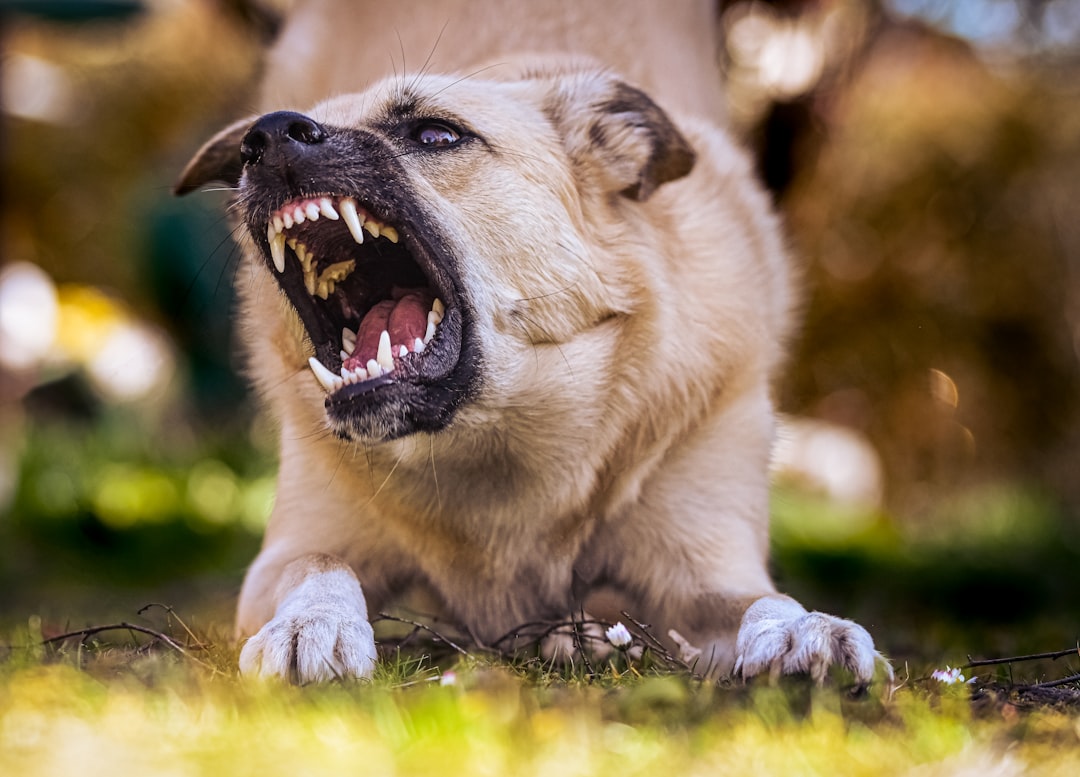
Stress signals are reactive. They tell you the dog's internal state has already tipped into discomfort — think panting with a closed mouth, a tucked tail, or excessive shedding during a car ride. Stress signals are symptoms. Calming signals are communication.
-
Appeasement gestures (sometimes called submissive behaviors) are specifically directed at a perceived social superior to say "you're in charge, I'm not a threat." Rolling over, lowering the head, avoiding eye contact — these can overlap with calming signals but carry a different social meaning.
Why does the distinction matter? Because misreading them leads to bad decisions. I've seen owners interpret a dog's appeasement gestures as "friendliness" during an introduction that was actually making the dog deeply uncomfortable. A
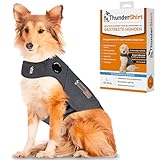
can help take the edge off for some dogs in high-stress environments, but it doesn’t replace learning to read what your dog is telling you in real time.
The most important thing to understand before we go any further is this: calming signals are subtle. They're easy to miss if you're not looking, and most owners aren't looking — because nobody taught them to. That changes today.
The 10 Most Common Calming Signals Every Owner Must Recognize
Once you know what you're looking for, you'll start seeing these signals everywhere — during training sessions, at the dog park, in your living room when you raise your voice during a phone call. Here's a detailed breakdown of each one.
1. Yawning
A yawn during a training session is one of the most consistently misread signals I encounter. Most owners assume their dog is bored or tired. In my experience, it almost always means "I'm at capacity right now." If your dog yawns mid-session, that's your cue to shorten the exercise, lower the difficulty, or take a genuine break — not push harder.
2. Lip Licking or Tongue Flicks
A single, quick flick of the tongue over the nose — when there's absolutely no food nearby — is a textbook calming signal. I see it in nearly every stressful introduction scenario I work through with clients. Watch for it when your dog meets a stranger at the door or sits in a vet waiting room. It's subtle and fast, but once you've spotted it a few times, you can't unsee it.
3. Turning the Head or Body Away
Dogs deliberately break eye contact or angle their entire body sideways to signal "I am not a threat." If you're scolding your dog and they look away, they are not being defiant or guilty. They are actively trying to de-escalate. Punishing that response — or forcing eye contact — is deeply counterproductive and erodes trust.
4. Sniffing the Ground
What looks like sudden, distracted sniffing during a greeting or tense moment is almost never random. Dogs use displacement sniffing as a way to say "let's all just calm down." I've watched dogs do this during off-leash greetings where one dog was slightly too forward — the other would drop their nose to the ground for a few seconds, and the tension dissolved almost immediately.
5. Moving in a Curve or Arc
Healthy dogs rarely approach each other head-on. A dog who walks in a wide arc toward another dog isn't being evasive — they're being polite. A straight-line approach is considered rude in dog body language and often triggers defensive reactions. If your dog curves wide, that's a sign of good social awareness.
6. Freezing or Going Still
A brief, sudden freeze is one of the most important signals to catch in real time, because it's often the last warning before a reaction. In early 2026, I was working with a reactive rescue named Boone — a blocky-headed shepherd mix who'd been undersocialized. During one session, he went perfectly still for about two seconds when an off-leash dog rushed him. I caught it just in time to create distance. If I'd missed that freeze, the next thing would have been a lunge. A freeze is the calm before the storm if you don't remove the stressor.
7. Sitting or Lying Down
Offering a spontaneous sit or down mid-greeting is a powerful peace gesture, especially from larger dogs toward smaller or more nervous ones. It's the canine equivalent of crouching down to seem less imposing. A big dog choosing to make themselves smaller is an act of real social intelligence.
8. Slow Blinking and Soft Eyes
Squinting slightly or blinking slowly is an active choice to appear less intense. It's the same signal cats use, and it works across species — including toward humans.

and other rest-focused tools can help dogs practice being in a soft, relaxed state where these expressions come naturally.
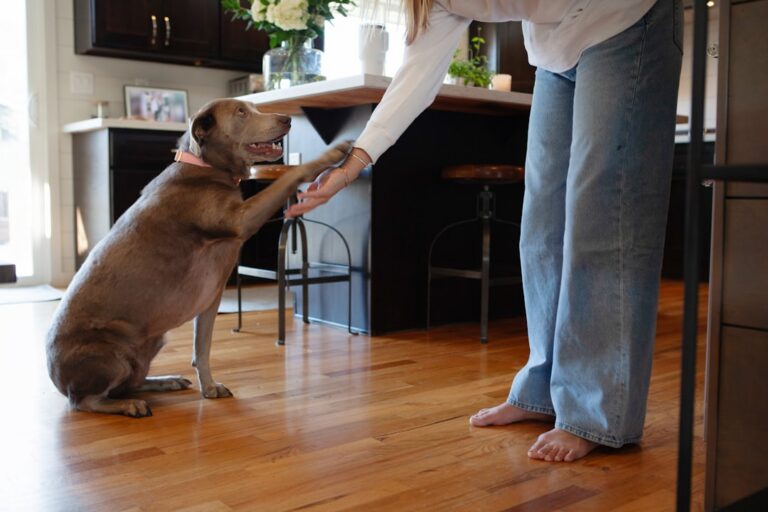
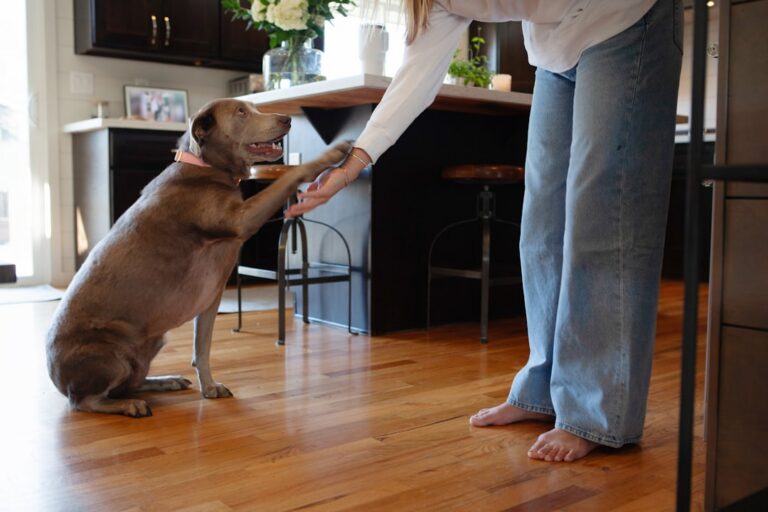
9. Pawing or Play Bow
Both gestures can be genuine play invitations, but they also function as tension-breakers in socially ambiguous moments. A play bow between two dogs who've just had a stiff greeting often signals: "We're okay. Let's reset."
10. Splitting
This one stops people in their tracks the first time they see it. A dog will physically walk between two people arguing, or between two dogs who are getting tense. They are actively intervening to reduce conflict. It's one of the most sophisticated social behaviors dogs display.
How to Tell the Difference Between a Calming Signal and Random Behavior
The key question is always: what just happened? A yawn after a nap is a yawn. A yawn the moment you ask your dog to repeat a difficult command for the fifth time is communication. Context and timing are everything.
Reading Clusters: Why One Signal Alone Rarely Tells the Full Story
One lip lick doesn't tell you much. A lip lick plus a head turn plus ground sniffing within the same 30-second window? That dog is clearly communicating stress. Train yourself to watch for signal clusters — three or more signals in a short timeframe almost always confirm that your dog is actively trying to manage a situation emotionally.
What Your Dog Is Actually Trying to Tell You (Context-by-Context Breakdown)
Recognizing a calming signal is one thing. Understanding why your dog is offering it in a specific moment is what actually changes how you respond. The same lip lick means something quite different during a training session than it does when a stranger crouches down to greet your dog. Context is everything here.
When Calming Signals Are Directed at You vs. Another Dog
This is one of the most important distinctions I teach my clients. When your dog yawns while looking toward another dog across the street, they're communicating to that dog — essentially saying "I'm not a threat, let's keep this calm." But when your dog yawns while you're repeating a cue for the fifth time in a row, that signal is aimed squarely at you.
I worked with a Border Collie mix named Frankie in early 2026 whose owner genuinely believed he was bored during their training sessions. He kept yawning and sniffing the ground while she practiced "leave it." He wasn't bored — he was overwhelmed. The signals were directed at her, asking her to ease the pressure. Once she understood that, everything changed.
The practical test: notice the direction of your dog's gaze and body orientation when they signal. Orientation toward you or into neutral space typically means you're the audience.
High-Stakes Scenarios: Recognizing Signals Before They Escalate to Growling or Snapping
This is where reading calming signals stops being interesting and becomes genuinely important.
During Training Sessions
If your dog produces three or more calming signals — yawning, lip licking, ground sniffing — within a single 10-minute training window, they have almost certainly hit their cognitive or emotional threshold. This isn't stubbornness; it's your dog's nervous system waving a white flag. The correct response is immediate: lower the difficulty, shorten the session, or end it entirely on a success. Pushing through these signals doesn't build resilience — it builds avoidance and erodes trust in the training process.
During Greetings with Strangers or Other Dogs
Watch for head turns and curved approaches when your dog first encounters someone new. These say "I come in peace — let's not escalate this." The problem is that humans constantly override them. We allow strangers to approach head-on, bending directly over the dog's face. We let dogs greet nose-to-nose on tight leashes. Both situations eliminate the natural buffer your dog was trying to create. A

gives dogs enough slack to arc their approach rather than being forced into confrontational straight-line greetings.
When You're Angry or Raising Your Voice
Your dog's yawning and looking away when you're frustrated is one of the most misread signals I encounter. Owners often interpret it as indifference or defiance. It is neither. Dogs are exquisitely sensitive to human emotional tone — research has consistently shown they read our facial expressions, vocal pitch, and body language in real time. When your dog looks away and yawns while you're annoyed, they are actively trying to de-escalate your emotional state. They're doing the work of calming the situation down. The appropriate response is to take a breath and recognize that your dog just did something quite sophisticated on your behalf.
At the Vet or Groomer
A dog moving through a sequence of yawning, repeated lip licking, then freezing is approaching their stress ceiling. Communicate this to your vet or groomer directly: "She's showing a lot of stress signals — can we take a short break?" Most good professionals will welcome this rather than push through. A

with a smear of something tasty applied to the exam table can interrupt that escalating sequence and genuinely help.
During Child-Dog Interactions
This context demands the most urgent response. A dog who has moved from yawning to freezing near a child is not "being patient" — they are one step away from a growl or snap. Intervening before that escalation is your responsibility as the adult in the room. Calming signals near children are never cute or dismissible. They are information, and acting on them quickly is what keeps everyone safe.
How to Use Calming Signals Yourself to Communicate With Your Dog
Most people assume calming signals are a one-way channel — something dogs do that we observe. But one of the most transformative shifts I've made in my work with fearful and reactive dogs is learning to send these signals back. When you start speaking even a little of your dog's language, the results can be remarkable.
I remember the first time I deliberately used a slow yawn with a rescue Cattle Dog named Petra. She'd been cowering in the corner of her foster home, trembling at my presence. Instead of doing what felt natural — moving toward her, talking gently, trying to make friends — I sat sideways on the floor, looked slightly past her, and yawned slowly and deliberately. Within about 90 seconds, she yawned back. Then she took three steps toward me. That single interaction changed how I approach every nervous dog introduction.
This isn't anthropomorphism or wishful thinking. You're not pretending to be a dog. You're borrowing a vocabulary they already understand.
A Step-by-Step Greeting Protocol Using Calming Signals
When you're meeting a nervous or unfamiliar dog, your default human behaviors are almost perfectly wrong. Facing the dog directly, making sustained eye contact, reaching your hand out palm-down, and leaning forward — all of this reads as threatening in canine body language.
Here's what to do instead:
- Approach from the side, not head-on. Turn your body at roughly a 45-degree angle. A polite dog approaching another dog almost never comes straight at them.
- Break eye contact immediately. A soft, brief glance is fine. Sustained direct eye contact is a challenge in dog language — avoid it with any dog you don't know well.
- Slow down your movements dramatically. We naturally want to be efficient. Dogs read speed as urgency or threat. Move like you have nowhere to be.
- Crouch down and look slightly away. Getting lower reduces your looming silhouette. Looking away signals you're not fixated on them.
- Yawn slowly and deliberately. This isn't silly — it's a genuine signal. Multiple 2026 animal behavior studies have documented measurable reductions in cortisol-related behaviors in dogs when humans mirror yawning and use slow blinking during high-stress moments like veterinary handling and nail trims.
- Let the dog come to you. Resist every urge to reach out. If they want contact, they'll initiate it.
What NOT to do is just as important:
- Looming over a dog (standing tall and leaning forward) is one of the most consistently misread human behaviors
- Reaching over the top of the head to pet — most dogs find this uncomfortable; under the chin is far less threatening
- Rushing the greeting out of enthusiasm or impatience
- High-pitched, rapid baby talk can actually increase arousal rather than calm it in anxious dogs
A
placed on the floor nearby during introductions can also give a nervous dog something to focus on and self-soothe, which takes the social pressure off the moment entirely.
Teaching Children to Use Calming Signals Around Dogs
Children are, unintentionally, the worst offenders when it comes to doing the opposite of calming signals. They run toward dogs, squeal, make sustained eye contact, and hug — all behaviors that a dog reads as either a threat or wildly overstimulating.
Teaching kids even two or three basic signals can genuinely prevent bites. Start with what I call "Be a tree and look at your shoes." When a dog approaches and the child feels unsure, they stand still, drop their hands to their sides, and look down. No eye contact, no flailing, no running. This alone dramatically reduces the chance of an escalation.
Then teach them the turn-away approach: if they want to say hello to a dog, they turn their body to the side first, crouch down slowly, and wait. The dog gets to decide whether contact happens.
Pair this with a

reward for the dog during child interactions to build positive associations, but the body language piece comes first — always.
The goal isn't to make children fearful of dogs. It's to give them a simple, powerful toolkit that respects how dogs actually communicate. When kids get it right and watch a nervous dog relax and walk toward them, their confidence grows too. It's one of the most rewarding things I get to witness in this work.
Calming Signals in Multi-Dog Households: What the Dogs Are Telling Each Other
When you have more than one dog, you're watching a live, ongoing negotiation happen in your living room every single day. Most owners miss it entirely. I spent years training individual dogs before I really started paying attention to inter-dog calming signals, and once I did, I saw multi-dog households in a completely different light.
The dog who always curves their body when approaching a housemate, consistently offers a sit before engaging, and frequently turns away mid-interaction isn't being submissive in some passive, weak sense. That dog is actively managing the relationship. They're the diplomat of the household, doing constant, quiet work to keep the peace.
The Real Relationship Map Is Written in Calming Signals
Watch your dogs together for 20 minutes with fresh eyes and ask yourself: who is doing most of the signaling? In a healthy dynamic, you'll see it flowing both ways — one dog turns away, the other offers a slow blink and a sniff to the ground. It's a conversation.
What concerns me far more is when that flow stops. A dog who suddenly stops offering calming signals to a housemate is one of the most consistent early warning signs of a deteriorating relationship — and owners miss it almost every time. The dogs aren't fighting yet, so everything looks fine. But the communication has broken down. One dog has essentially stopped bothering to negotiate. That silence is loud, if you know how to hear it.
I had a client in early 2026 with two Labrador mixes who had lived together peacefully for three years. She called me because of "sudden aggression." When I came to observe, the older dog had completely stopped curving, stopped offering sits, stopped doing anything conciliatory around the younger one. There was no warmth in their interactions anymore — just stiff, parallel tolerance. The "sudden" aggression had been building for months. The road signs had simply gone unread.
Resource Guarding: Read the Room Before the Bowl
Near food bowls, toys, or resting spots, slow the footage down in your mind. This is where rapid lip licks and freezing are your critical early-warning system. A dog who lip licks twice, then goes completely still over their bowl as the other dog walks nearby is not relaxed — they're escalating internally. The stillness isn't calm; it's compressed tension.
I've used this exact observation — catching the freeze before the snap — to interrupt hundreds of potential conflicts before a single tooth was shown. A

Similar Posts
Teach Your Dog Polite Greetings: No Jumping (2026)
Here's a frustrating truth I've seen play out hundreds of times in my training career: a dog can learn to sit on cue in under two days, but that same dog will still be launching himself at houseguests six months later. Jumping isn't a training gap — it's a communication gap, and closing it requires…
How to Teach Your Dog Attention & Focus on Owner Command
Introduction: Why Teaching Your Dog to Focus on You Changes Everything Picture this: You're at the park, your dog is mid-sniff of something fascinating, and you call their name. Nothing. You try again, louder this time. Still nothing. Meanwhile, a squirrel darts across the path, and suddenly your dog is lunging forward like they're auditioning…
Train Your Dog to Walk Past Bikes & Skateboards (2026)
Every single time a skateboard rattles past, your dog loses their mind — and honestly? That's completely normal, and there's a fascinating reason for it that most owners never hear. I've worked with hundreds of reactive dogs over my 15+ years as a trainer, and wheel-based distractions like bikes and skateboards come up more consistently…