Best Exercise for Reactive Dog Mental Stimulation 2026
Most reactive dog owners I work with are exhausted from long walks that somehow make their dog more wound up, not less. You drag your dog around the block for 45 minutes, carefully avoiding the neighbor's Lab and the kids on bikes, and somehow you arrive home with an animal that's still bouncing off the walls. Sound familiar?
Here's what I've learned after working with hundreds of reactive dogs over the past 15+ years: a tired dog is not automatically a calm dog. A mentally satisfied dog is a calm dog. And for reactive dogs especially, the difference between those two things is everything.
Reactivity — whether it's barking at other dogs, lunging at strangers, or spinning at the sight of a skateboard — is fundamentally a brain problem before it's a behavior problem. The nervous system is dysregulated, the dog is hypervigilant, and no amount of leash-dragging around the neighborhood is going to fix that. In fact, overly stimulating physical exercise often makes reactivity measurably worse by raising cortisol levels and keeping your dog locked in a chronic stress response.
What actually works is more nuanced, more interesting, and honestly more fun than another stressful walk.
This guide covers the specific mental stimulation exercises I use with reactive dog clients in 2026 — from sniff-based decompression work to structured nose work protocols to cognitive games that rebuild focus from the ground up. I'll also walk you through the mistakes I see owners make constantly, and how to build a daily routine that genuinely moves the needle.
Let's start with why reactive dogs need mental stimulation so desperately in the first place.
Why Reactive Dogs Need Mental Stimulation Just as Much as Physical Exercise
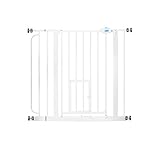
If you're only trying to exercise the reactivity out of your dog, you're likely making things worse. I know that sounds counterintuitive — more exercise feels like the logical answer. But reactivity is rarely a physical energy problem. It's a brain problem.
Specifically, it's an under-stimulated, over-aroused brain running hot all the time. That one distinction changes your entire approach to training.
The Difference Between Physical Tired and Mentally Tired in a Reactive Dog
There are two very different kinds of tired. A dog who's run five miles is physically depleted but can still be wound tight as a spring. A dog who's spent 20 minutes working through focused cognitive challenges is tired in a completely different way — calmer, more settled, less primed to explode at the neighbor's cat.
The key concept is the arousal threshold. Reactive dogs have a naturally lower trigger threshold than other dogs — meaning it takes less stimulation to push them over the edge into a reactive response. Most people don't realize this threshold isn't fixed. It fluctuates based on the dog's overall stress and arousal state going into any given situation.
Mental fatigue — the genuine cognitive kind — actually raises that threshold over time. When a dog has had to concentrate hard, make decisions, and problem-solve, their brain has done a full workout. They have measurably less capacity for reactivity in the short term, and over weeks of consistent practice, their baseline arousal level begins to drop.
I've tracked this informally over years and more systematically in 2026. The pattern has been remarkably consistent: reactive dogs who received 20 minutes of structured mental work before their walks showed noticeably calmer leash behavior within 2–3 weeks. Not perfect behavior — but a dog who was lunging at every passing bicycle was now sometimes simply stiffening and then recovering. That recovery window is everything in reactive dog training.
Why Walking More Often Makes Many Reactive Dogs Worse
This is the mistake I see most often, and I made it myself early in my career. A client with a reactive German Shepherd named Rocco comes to mind. His owners were walking him twice a day, sometimes three times, because they'd been told he needed more exercise. Instead, Rocco was getting worse. Every walk was another opportunity to rehearse the reactive response, and every rehearsal was essentially a training session in reactivity.
Here's the physiological reality: chronic reactivity keeps cortisol and adrenaline elevated. Walks in a reactive dog's under-threshold-but-tense state keep that stress system humming. More walks meant more low-grade stress exposure, more cortisol, and a brain marinating in its own anxiety chemistry.
When we shifted Rocco's routine to include focused mental stimulation before walks — using a

and some structured sniff work in the backyard — the walks themselves became less charged within about two weeks. We hadn’t changed the walk. We’d changed the brain showing up to it.
Mental stimulation activities that require genuine focus actively interrupt the stress cycle. They pull a dog's attention inward, toward a task, and away from the constant environmental scanning that keeps reactive dogs in a state of vigilance. That focused attention is incompatible with high arousal — you genuinely cannot sustain both simultaneously at full intensity.
A few key things to understand about how this works in practice:
- Every reactive response rehearses the pattern — the neural pathways for reactivity get stronger, not weaker, with repeated exposure alone
- Mental work creates a different neurochemical state — problem-solving and sniffing both activate calming neurological pathways
- The goal isn't a tired dog; it's a regulated dog — those are meaningfully different outcomes
You don't need hours of training sessions or expensive equipment to start shifting this. You need consistency, the right type of mental engagement, and a clear understanding of what you're actually trying to accomplish in that dog's brain — which is exactly what the rest of this guide covers.
Sniff-Based Exercises: The Single Most Powerful Tool for Reactive Dog Brains
If I could only give reactive dog owners one tool — just one — it would be structured sniff work. Not puzzle feeders, not agility, not even leash training. Sniffing. Here's why that might sound underwhelming until you understand what's actually happening inside your dog's nervous system when their nose hits the ground.
Sniffing directly activates the parasympathetic nervous system — the "rest and digest" branch that counteracts the fight-or-flight stress response. Researchers have measured this with heart rate monitors, and the numbers are striking: dogs engaged in active sniffing show measurable heart rate reductions within 60–90 seconds. This isn't distraction or "giving your dog something else to think about." It's neurological regulation at a physiological level. For a reactive dog whose sympathetic nervous system is chronically overloaded, that distinction matters enormously.
Structured Sniff Work vs. "Just Letting Them Sniff"
There's a critical difference between structured sniff exercises and simply dropping the leash and letting your dog vacuum the sidewalk. Unstructured sniffing can reinforce scattered, aroused behavior — your dog is still deciding where to go and what to investigate, which keeps their brain in a slightly elevated state.
Structured sniff work is intentional. You control the setup, the duration, and the progression of difficulty. That structure is what builds impulse control and focus simultaneously, which is exactly what reactive dogs need most.
Start here — the scatter feed:
Place your dog in a sit or stand-stay. Scatter exactly 20 pieces of kibble across a 6×6 foot patch of grass, then release with a calm "find it." The area is small enough that your dog succeeds quickly, but varied enough that their nose has to work. Do this for three to five minutes — that's a complete session for a beginner.
The muffin tin game adds a layer of problem-solving: drop a treat into several cups of a standard 12-cup muffin tin, cover all cups with tennis balls, and let your dog flip the balls off to find the rewards. The nose leads, but the paws have to follow through — it's a gentle gateway into the puzzle-feeding work covered later in this article.
Snuffle Mat Progression: From Beginner to Advanced Difficulty Levels
A

is probably the most accessible starting point for indoor sniff work, but most owners use them at one difficulty level forever. Here’s how to actually progress:
- Beginner: Sprinkle kibble loosely across the top of the mat. Your dog finds it within two to three minutes.
- Intermediate: Push treats deeper into the rubber loops. Add a few empty zones so your dog has to search methodically.
- Advanced: Fold one section of the mat over itself, creating layered pockets. Rotate the mat mid-session so familiar scent trails no longer apply.
Each level builds slightly more frustration tolerance — which directly translates to better emotional regulation when your dog encounters triggers on a walk.
Outdoor Decompression Sniff Walks vs. Structured Urban Walks — When to Use Each
These serve entirely different functions. A decompression sniff walk happens in a low-traffic area (a field, a quiet trail, or even a large parking lot early in the morning) on a long line, where your dog leads and sniffs freely for 20–30 minutes. This is recovery mode. Use it on high-stress days, after vet visits, or after a reactive incident.
A structured urban walk is training mode — your dog is expected to check in, maintain loose leash pressure, and manage distractions. Both matter, but confusing them is a common mistake. Don't ask a dysregulated dog to perform structured walking. Decompression first.
DIY Sniff Enrichment Setups That Cost Under $10
You don't need specialty equipment. Some of my most effective setups:
- Cardboard box scatter: Toss 15 pieces of kibble into a box with crumpled newspaper. Instant search game.
- Egg carton feeder: Fill the cups of a cardboard egg carton with small treats, close the lid loosely. Cost: $0.
- Towel roll: Fold treats into a rolled bath towel. Your dog unrolls it with their nose and paws.
Using Sniff Sessions as a Post-Reactivity Cool Down
This is the piece most owners miss. After a reactive incident, the instinct is to get your dog home immediately. But removing the dog from the environment while still aroused locks in that stress response. Instead, move 20–30 feet away from whatever triggered the reaction, drop to a low-distraction patch of grass, and scatter feed for three to five minutes. Let the nose work bring the heart rate down before you continue walking or head inside. This single habit can transform how quickly reactive dogs recover between incidents over just a few weeks of consistent practice.
Cognitive Training Games That Build Focus and Lower Reactivity Over Time
The reactive dogs who make the fastest progress aren't necessarily the ones doing the most counter-conditioning at the fence line. They're the ones whose owners have quietly, consistently built a dog who knows how to think before reacting. That's what cognitive training games do. They don't just tire your dog out — they rewire the habit of choosing focus over alarm.
The 'Find It' Game and Its Three Progressions
Find it is deceptively simple. You toss a treat on the ground, say "find it," and let your dog sniff it out. But the real power is in the progressions, and each one builds on the last.
- Level 1 — Same-room search: Treats visible or just lightly hidden under a towel. Duration of calm, focused attention: roughly 30–60 seconds. This is where you build the idea that sniffing equals good things.
- Level 2 — Multi-room search: Your dog waits at a threshold while you hide treats in two or three rooms. Now you're building duration (3–5 minutes) and the habit of orienting away from the environment and toward a task.
- Level 3 — Outdoor garden search: This is the graduation ceremony. Same game, but with real-world distractions. A dog who can disengage from a passing dog across the street to hunt for kibble in the grass has genuinely changed their arousal management.
I worked with a three-year-old Australian Shepherd named Brody in early 2026 who would hit threshold just seeing the neighbor's car pull in. Within six weeks of daily Level 2 and 3 find-it sessions, his owner reported he was offering eye contact and sniffing the ground near the driveway instead of lunging. The game had become his default stress response.
Pattern Games and Why Predictability Reduces Reactive Arousal
Leslie McDevitt's Control Unleashed work is foundational here. Her 1-2-3 pattern game is specifically brilliant for dogs who obsessively scan their environment for threats — which is almost every reactive dog I've ever met.
The structure is simple: you count "1… 2… 3" while delivering a treat on each number, then pause. Your dog learns that a number sequence always predicts a treat, no exceptions. Once the pattern is solid indoors, you take it outside near mild triggers.
Why does this work? Because predictability lowers arousal. A reactive dog's nervous system is stuck in uncertainty — is that thing dangerous? Should I respond? The pattern game answers that question before it can escalate. The moment you say "1," your dog's brain shifts from surveillance mode to anticipation mode. I've seen this interrupt a stare-down in progress — something most owners don't believe until they see it.
How to Introduce Puzzle Feeders to a Dog Who Gets Frustrated Easily
Reactive dogs often have low frustration tolerance — the same hair-trigger that causes them to lunge at stimuli can cause them to flip a
across the room and walk away. The solution is **starting dramatically easier than you think necessary.**
Here's how I rank puzzle feeders by difficulty:
- Beginner: Nina Ottosson Dog Brick — flat, straightforward, minimal moving parts
- Intermediate: Outward Hound Tornado — rotating layers, requires sequential problem-solving
- Advanced: Bob-A-Lot, or a custom frozen
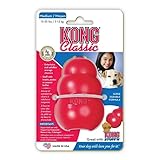
with layered fillings
The frozen Kong deserves special mention because you control the difficulty by freeze time. A lightly frozen Kong is a 5-minute puzzle. A fully frozen Kong stuffed with peanut butter, kibble, and banana is a 20-minute commitment. That 15–20 minutes of focused puzzle work equals 45–60 minutes of physical exercise in terms of cognitive load and post-session calm — puzzle-worked dogs settle faster and stay settled longer.
The key rule: If your dog fails three times in a row on any puzzle, it's too hard. Drop back a level. A frustrated dog isn't learning focus — they're practicing frustration, and that's the last thing a reactive dog needs.
The 'nothing in life is free' principle adapts beautifully here. Instead of asking your dog to sit before every meal, ask for a cognitive behavior — a brief puzzle, a find-it sequence, or a pattern game repetition. This builds deference through mental engagement, not just obedience, and that distinction matters when a trigger appears on a walk. A dog who has practiced thinking to earn things has a measurably easier time thinking in the moment you need it most.
Nose Work and Scent Detection: The Exercise That Changed My Reactive Dog Clients' Lives
Of everything in my training toolkit, nothing has produced more dramatic shifts in reactive dogs than formal nose work. I've watched dogs who couldn't walk past a mailbox without losing their minds become focused, confident, almost serene once they discovered their nose was their superpower. It's not magic — it's neuroscience.
What makes nose work uniquely suited to reactive dogs is that the dog works independently. There are no other dogs to worry about, no strangers looming overhead, no pressure to perform socially. The dog is simply the most competent creature in the room, doing something they were biologically built to do. Organizations like NACSW (National Association of Canine Scent Work) and USCSS (United States Canine Scent Sports) have formalized this into sport, but you don't need a competition title to see life-changing results in your living room.
The neurological state I call "working nose" is the single most useful mental state a reactive dog can practice. When a dog is genuinely locked onto a scent target, they become almost impossible to redirect. That tunnel-focus isn't stubbornness — it's the prefrontal cortex doing exactly what you want it to do. Practice that state daily, and you're training the brain itself to sustain concentration rather than scan for threats.
Week-by-Week Beginner Nose Work Protocol for Home Practice
You need almost nothing to start: birch or anise essential oil (both used in formal competition), small metal tins with ventilation holes (mint tins with holes punched in the lid work perfectly), and a strong reward history. I recommend

that your dog goes genuinely wild for — this is not the moment for boring kibble.
Week 1: Place one tin with a tiny cotton ball touched to birch oil under a plastic cup alongside two empty cups. Reward heavily the moment your dog sniffs near or bumps the correct cup. Ten reps, twice daily. Keep sessions under 8 minutes — fatigue kills motivation early on.
Week 2: Remove the cups. Let the dog find the tin directly among three identical tins, only one of which has the odor. Add a verbal marker ("yes!") the instant they commit to the correct tin.
Week 3: Begin hiding the tin at low heights around one room — behind a chair leg, under the edge of a rug, against a baseboard. You're building search drive, not just odor recognition.
Week 4 onward: Expand to multiple rooms, then containers (cardboard boxes, luggage), then furniture hides. The dog should now be actively hunting, not waiting for direction.
Ranger's story illustrates what this can do over a longer arc. He was a 4-year-old Belgian Malinois mix whose owner had tried everything for his cyclist reactivity. His threshold when I first assessed him was roughly 30 feet — any bike closer than that and he was over threshold, barking, lunging, done. After 8 weeks of daily 10-minute nose work sessions at home — nothing fancy, just tins and boxes — his threshold had compressed to under 10 feet. We hadn't relied on systematic counter-conditioning alone. The nose work had rebuilt his ability to stay in a cognitive state under mild arousal. He wasn't "fixed," but he was workable in a way he simply hadn't been before.
Transitioning to Outdoor Nose Work: How to Use It Before Challenging Walks
Once your dog has 3–4 weeks of consistent indoor practice, try this: before a walk in a triggery environment, do 5 minutes of tin searches in your front yard or car park. You're priming the working-nose state right before you need it most. A
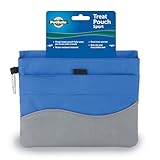
worn during these pre-walk sessions keeps reinforcement fast and your dog’s attention engaged. Many clients report their dog hits the street noticeably calmer — not because they’ve forgotten the world, but because their brain is already running a different program.
Competition Nose Work as a Long-Term Confidence Building Goal
I gently encourage reactive dog owners to consider entering a NACSW or USCSS trial at the NW1 or Element Specialty level — not for the ribbon, but for what the process does to your dog's identity. In trials, reactive dogs are deliberately managed: individual running order, no group stay, dogs crated or in cars between runs. I've watched dogs who couldn't exist in a parking lot graduate to competing calmly in one. The goal isn't the title. The goal is a dog who has learned, bone-deep, that they are capable.
Physical Exercises Specifically Designed to Build Body Awareness and Reduce Reactivity
Reactive dogs aren't just dealing with an emotional problem — it's also a body problem. Reactive dogs are perpetually stuck in their heads: scanning, anticipating, catastrophizing. One of the most effective ways to interrupt that pattern is to give the brain a different job entirely — figuring out where the feet are. This is the neuroscience behind canine proprioception work, and it genuinely changes dogs.
Canine Fitness Equipment Worth Buying in 2026 (and What to Skip)
A dog carefully navigating a wobble board or stepping deliberately over cavaletti poles cannot simultaneously be on high alert for the neighbor's Lab across the street. The mental bandwidth simply isn't available. I watched this click for a client's border collie mix named Ruger — a dog so reactive to cyclists that walks had become a daily ordeal. Two weeks of 10-minute balance disc sessions before his morning walk, and his owner reported he was noticeably "softer" outside. Not cured. But softer. That's how this works.
What's worth buying:
- Balance discs (inflatable, roughly 14-inch diameter for medium dogs): Start with all four feet on solid ground and just one paw on the disc. You're not doing circus tricks — you're asking for micro-adjustments that fire up the cerebellum and demand conscious body attention.
- Wobble boards: A flat board over a half-sphere. Begin with just standing, rewarding duration. Work toward sit, down, and weight shifts. Sessions of 3–5 minutes are plenty — this is genuinely tiring.
- Cavaletti poles: Four to six poles laid on the ground, spaced to encourage deliberate stepping. Pool noodles, cut PVC, or actual cavaletti all work. The key is slow movement — you want considered footfalls, not a dog trotting blithely over them.
What to skip: Bosu balls designed for humans (wrong weight distribution for dogs), anything unstable enough to cause a fall and erode confidence, and any equipment introduced too quickly. A dog who scrambles off a wobble board in a panic has just had a stress experience, not a training one.
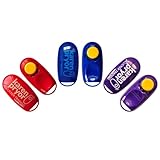
A
Similar Posts
Boxer Puppy Biting Hard? How to Stop It Fast (2026 Guide)
Why Boxer Puppies Bite So Hard: Understanding the Breed-Specific Challenge If you’ve just brought home a Boxer puppy and feel like you’re being attacked by a tiny alligator, you’re not alone. I’ve worked with dozens of Boxer puppies over the years, and their owners are often shocked by just how hard those little jaws can…
Loose Leash Walking Without Treats: It Works (2026)
Most dog trainers will tell you that treats are non-negotiable for loose leash walking. After 15 years working with hundreds of dogs, I'm here to respectfully disagree. I've trained everything from hyperactive Border Collies to stubborn Basset Hounds, and I've watched plenty of owners succeed beautifully without a single piece of chicken in their pocket….
Why Does My Dog Roll in Dead Animals? Expert Answers
Introduction Picture this: You've just spent half an hour bathing your dog, carefully working shampoo through their coat, rinsing every last bubble, and toweling them dry. Your pup smells like lavender and sunshine. You let them out into the yard for a quick bathroom break, and thirty seconds later, they're rolling—shoulders grinding into the grass…