Dog Territorial Aggression Toward Strangers: 2026 Guide
Most dog owners assume a barking, lunging dog at the fence is just "doing its job." But here's what 15 years of working with reactive and aggressive dogs has taught me: territorial aggression toward strangers is one of the most misunderstood — and most frequently mismanaged — behavior problems I encounter. What looks like loyalty and protectiveness on the surface is often anxiety, poor socialization, or a learned pattern that's spiraling out of control.
I've worked with hundreds of dogs who've escalated from fence-barking to full bites, and almost every owner said the same thing afterward: "I thought it was normal. I thought he'd grow out of it." He didn't. And by the time they called me, the problem was significantly harder — and riskier — to address than it would have been at month three.
The good news? Territorial aggression is genuinely treatable in most dogs. Not always curable, but manageable to the point where your dog can live a safe, lower-stress life — and so can you.
This guide covers everything you need to understand this behavior honestly: what it actually looks like (it's not always obvious barking), why it develops, how to assess the real danger level your dog presents, and the specific training protocols I use with clients — starting with safety management and building through desensitization and counter-conditioning.
Whether your dog growls at the mail carrier or has already made contact with a visitor, this guide meets you where you are.
Let's start by making sure we're both looking at the same problem — because territorial aggression is frequently confused with other types of reactivity, and that confusion leads to the wrong solutions.
What Dog Territorial Aggression Toward Strangers Actually Looks Like

If you've landed here because your dog loses their mind when someone walks past your fence, steps onto your porch, or gets too close to your car in a parking lot — you're in the right place. But before we can fix anything, we need to make sure we're actually dealing with territorial aggression and not something that merely resembles it. Getting this wrong doesn't just slow your progress; it can actively make the problem worse.
The single most common mistake in first consultations isn't the training itself — it's misidentification. Owners come having spent months applying the wrong approach because they (or a well-meaning friend) called the behavior something it wasn't.
The Territorial Aggression Behavioral Sequence Step by Step
Territorial aggression follows a remarkably consistent pattern. Once you know it, you'll recognize it immediately. Here's the classic escalation sequence:
- Alert stare — Your dog spots the stranger and freezes, eyes locked on, body suddenly still. This is the moment most owners miss because it looks like normal curiosity.
- Stiff body posture — Weight shifts forward onto the front legs. The tail may rise and stiffen (not a happy wag). Hackles can rise along the back of the neck and shoulders.
- Low growl — Often quiet enough that owners don't notice it, especially outdoors. This is your dog's first verbal warning.
- Barking and lunging — The escalation most people actually see. By this point, your dog has already moved through three earlier warning signals.
- Snap or bite — This only happens if the perceived threat doesn't retreat. The dog's goal is removal of the intruder, not injury for its own sake.
The key word in step five is "goal." Territorial aggression is fundamentally space-driven. Your dog isn't afraid of this particular stranger as a global threat to their safety — they're defending a defined zone. That zone might be your backyard, your living room, your car, or even a specific stretch of your regular walking route that your dog has mentally claimed over time.
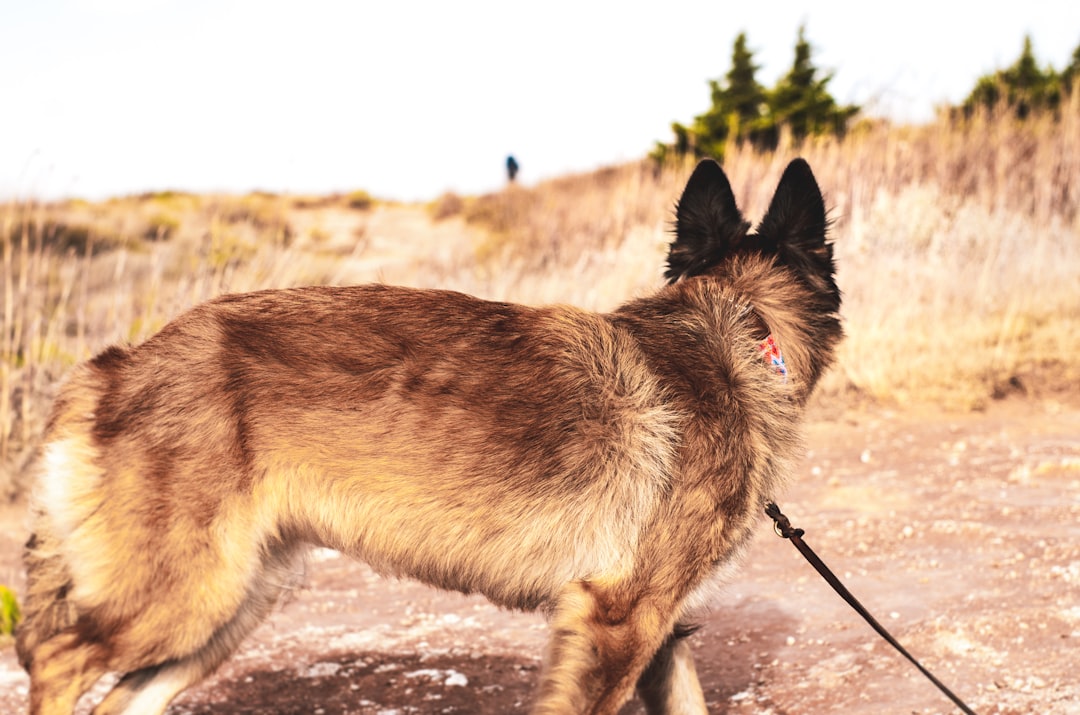
I worked with a German Shepherd mix named Bauer whose owners were baffled because he was completely fine greeting strangers at the park, but became explosive the moment anyone stepped through their front gate. That spatial specificity — calm outside his territory, reactive inside it — is the clearest diagnostic signal for territorial aggression you'll ever see.
Territorial vs. Fear Aggression: Key Differences That Change Your Approach
These two types of aggression are the ones owners most often mix up, and the training interventions are meaningfully different, so this distinction is worth getting right.
| Territorial Aggression | Fear Aggression | |
|---|---|---|
| Body language | Forward-leaning, confident, tall posture | Crouched, ears back, tucked tail |
| Trigger location | Inside or near the dog's defined zone | Can happen anywhere |
| Response to stranger retreating | Dog typically settles | Dog may still remain distressed |
| Motivation | Remove the intruder | Increase distance from a perceived threat |
A fear-aggressive dog is trying to make something scary go away. A territorially aggressive dog is evicting a trespasser. The emotional states driving these behaviors are different, which is why flooding a territorial dog with stranger exposure can actually increase confidence and aggression, while the same approach with a fear-aggressive dog typically increases panic.
Redirected aggression (when a frustrated dog bites the nearest available target — often the owner) and resource guarding (defending a specific object or food) can look similar in the moment but have entirely different triggers. Territorial aggression is specifically about space, not objects or general fear.
One point I make in almost every initial consultation: owners delay seeking help by six months to a year on average because they've labeled territorial aggression as their dog "just being protective." That framing feels flattering — my dog loves me enough to guard my home — but it normalizes a behavior that, left unaddressed, tends to escalate. Your dog isn't protecting you. They're managing their own anxiety about boundary violations, and they need your help to do it differently.
A
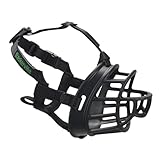
fitted properly can be a valuable safety tool during assessment — not a punishment, but a way to observe your dog’s full behavioral sequence without risk while you figure out exactly what you’re dealing with.
The Root Causes: Why Some Dogs Become Territorially Aggressive
Understanding why your dog behaves this way isn't just academic — it directly shapes how you'll approach the problem. Territorial aggression toward strangers rarely has a single cause. In most cases, it's a combination of genetics, missed developmental windows, and patterns that accidentally got reinforced over months or years.
Breed Tendencies: Working With Your Dog's Genetics Instead of Against Them
Some dogs are territorially aggressive because generations of selective breeding made them that way on purpose. German Shepherds, Rottweilers, Dobermans, Cane Corsos, Boerboels, and similar guardian breeds were developed specifically to assess strangers as threats and respond accordingly. That alertness, that suspicion of unfamiliar people approaching their space — that's not a malfunction. It's the software running exactly as written.
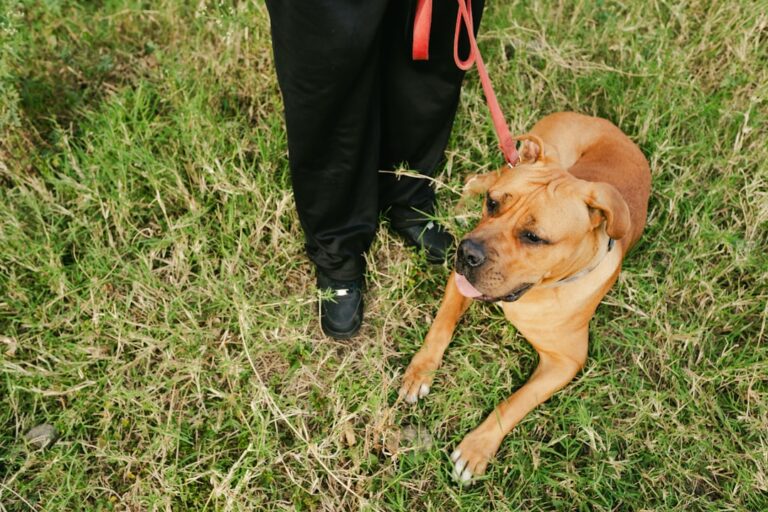
I worked with a Cane Corso owner in 2026 who was genuinely baffled that her 18-month-old male was lunging at visitors. She'd had Golden Retrievers her whole life. What felt alarming to her was, from her dog's genetic perspective, completely logical behavior. Recognizing this changes everything: you're not fixing a broken dog, you're channeling a working instinct into appropriate behavior.
The training goal shifts accordingly. You're not trying to eliminate territorial awareness — you're teaching the dog when that instinct is appropriate and when it isn't. That's a realistic target. Erasing a deeply bred drive entirely is not.
Other contributing factors beyond breed include:
- The critical socialization window (3–14 weeks): Dogs that had limited exposure to strangers during this developmental period often grow up genuinely perceiving unfamiliar people as threats. This isn't stubbornness — it's a nervous system that never learned that strangers are safe. The window closes, and undoing that deficit as an adult dog takes significant work.
- Hormonal influences: Intact males show statistically higher rates of territorial aggression. Research suggests neutering reduces aggression in roughly 60% of cases — a meaningful number, but not a guarantee. It's a variable worth discussing with your vet, not a silver bullet.
- Trauma at the threshold: A single frightening event at the boundary of their territory — a dog fight near the fence line, a confrontational stranger at the front door — can create lasting reactivity. The dog's brain encodes that location as dangerous and stays on high alert there afterward.
- Learned escalation: Dogs that showed mild reactivity at 12 months and received no intervention often graduate to full territorial aggression over 18–36 months. The behavior intensifies because nothing interrupted the feedback loop.
How Owners Accidentally Train Their Dogs to Be Territorial
This is the part most owners don't see coming, and it's one of the most important concepts I explain to clients.
Every single day, in millions of homes, something like this happens: the mail carrier approaches, the dog barks furiously, the mail carrier drops off the mail and leaves. From the dog's perspective, the barking worked. The threat retreated. The territory was defended successfully.
This is called a variable reinforcement schedule, and it's one of the most powerful learning patterns in behavioral science — the same mechanism that makes slot machines addictive. The dog doesn't know the mail carrier was always going to leave anyway. All it knows is: I barked → threat left → barking is effective. Do this 250 times over a year and you've built a deeply entrenched behavior.
The same pattern plays out with delivery drivers, joggers, neighbors, and guests who leave after a visit. The dog never learns that strangers are harmless because strangers — from the dog's viewpoint — always eventually retreat.
Owners also sometimes inadvertently reward the behavior by rushing over to comfort a barking dog, which the dog can interpret as social reinforcement rather than calming. A

pouch kept near the front door can help you redirect and reward calm behavior the moment a stranger approaches — flipping the script before the barking cycle begins.
Most territorially aggressive dogs aren't broken or dangerous by nature. They're dogs whose genetics, early experiences, and daily reinforcement history combined to produce a behavior that now feels essential to their survival. That's workable — but only once you understand what built it.
Accurate Assessment: How Dangerous Is Your Dog's Territorial Aggression?
Before you plan a single training session, you need an honest answer to one question: how serious is this, really? I've worked with owners who panicked over a dog that was mostly bluster, and I've worked with owners who waited far too long because they convinced themselves their dog "would never actually bite." Both mistakes are costly — one in wasted anxiety, the other potentially in someone's safety.
Understanding the Dunbar Bite Scale for Territorial Aggression
The most practical assessment tool I recommend to owners is Dr. Ian Dunbar's Bite Scale, a six-level framework that categorizes dog bites by their physical and behavioral severity.
Here's how it maps to territorial aggression specifically:
- Level 1 — Aggressive behavior (lunging, barking, snapping) with no skin contact. The dog is reacting, but showing significant bite inhibition.
- Level 2 — Teeth make skin contact but don't break it. Often a "warning bite" or inhibited snap. Still manageable, but take it seriously.
- Level 3 — One to four punctures from a single bite, with the deepest puncture shallower than half the length of the dog's canine tooth. This is the line where professional help stops being optional.
- Level 4 — Deep puncture wounds, lacerations from the dog holding and shaking. High danger. This dog requires immediate intervention from a certified veterinary behaviorist or certified applied animal behaviorist — not a general trainer.
- Levels 5 and 6 — Multiple bites, severe injuries, or a fatality. These situations involve law enforcement, potential liability, and very difficult decisions about the dog's future.
If your dog has never made contact with a person, you're likely working with a Level 1. That's the scenario where a committed owner, a solid training plan, and consistent management can genuinely change the trajectory. The moment skin contact has occurred — even once — the calculus shifts significantly.
Measuring Your Dog's Threshold Distance: A Practical Exercise
One of the most underused assessment tools costs nothing: a tape measure and a notebook.
Your dog's threshold distance is the exact distance at which they first react to a trigger — in this case, a stranger approaching your property or your home. This number matters enormously. A dog that first stiffens and stares at 30 feet is in a very different situation than a dog that doesn't react until a stranger is 6 feet away.
Here's what I have owners do: on a calm day with no prior stress, have a helper walk toward your boundary at a normal pace while you watch your dog. Note the exact distance — measured afterward — when your dog first shows any reaction: an ear flick, a body orientation change, a low rumble. That's your working threshold. You'll need this number in Section 5 when we talk about setting up desensitization exercises.
A

is useful here if you’re assessing in an open yard — it keeps you connected to your dog without creating tension that might artificially inflate the reaction.
The Body Language Red Flags I Take Seriously
Not all aggression looks the same, and some presentations concern me far more than others. Watch for:
- Whale eye (showing the whites of the eyes) combined with a rigid body
- A hard stare with a sudden freeze — the dog stops moving entirely before reacting
- Hackles raised across the shoulders and hips alongside a low, crouched body posture
- Most critically: absence of a warning growl
That last point deserves emphasis. A dog that growls before snapping is communicating — and that's actually a safety signal you can work with. A dog that goes from calm to biting with no warning has either been punished for growling in the past (stripping away that communication layer) or has very low arousal thresholds. Either way, a bite-without-warning dog is a significantly higher risk regardless of the bite's severity level.
An Honest Word About When YouTube Isn't Enough
I've had owners come to me after spending months on online tutorials with a dog at Level 3 or above. By that point, we're often unraveling learned patterns that could have been addressed much earlier. If your dog has made skin contact with a stranger, bites without warning, or has a threshold distance under 10 feet, skip the DIY phase and go directly to a professional. That's not a failure — it's the right call. A
for safe outings in the interim isn’t a punishment; it’s responsible ownership while you get proper support in place.
Safety Management: The Non-Negotiable First Step Before Any Training
Here's something I tell every client who calls me about a territorially aggressive dog: management is not training, and training is not management. They serve completely different purposes, and confusing them is the single biggest reason training programs fail before they even get started.
Management means preventing your dog from practicing the aggressive behavior while you work on the underlying emotional response. Every time your dog lunges at a delivery driver, charges the fence at a neighbor, or corners a guest in your hallway, that behavior is being reinforced and the neural pathway gets a little deeper. You cannot counter-condition a dog who is rehearsing aggression three times a day. The math simply doesn't work in your favor.
Your Physical Management Toolkit
For on-leash situations outside the home, two pieces of equipment are non-negotiable. First, a 6-foot double-clip leash — one clip to the collar, one to a harness — so if one connection fails under the sudden load of a lunge, you still have your dog. Second, a properly fitted front-clip harness like the
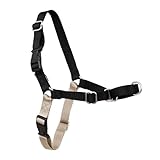
. Front-clip designs redirect the dog’s momentum toward you rather than allowing them to gain traction pulling forward. I’ve seen owners struggle for months with a standard back-clip harness and solve 60% of their control problem overnight just by switching.
The third tool deserves its own section.
Muzzle Training: Why It's an Act of Responsible Ownership, Not Cruelty
Many clients still look at me with genuine alarm when I recommend a muzzle. I understand the reaction — it looks harsh. But putting a properly conditioned muzzle on a dog who has bitten or is at serious bite risk is one of the most responsible things you can do for that dog. It keeps them legally safe, keeps visitors physically safe, and allows you to practice training scenarios that would otherwise be too risky.
My standard recommendation is the Baskerville Ultra — a basket-style muzzle that allows panting, drinking, and taking treats, which means your dog can function normally and you can reinforce good behavior even while they're wearing it. Use the
conditioning protocol: start by just letting your dog sniff it, then feed high-value treats with the muzzle held near their nose, then gradually shape them to push their snout in voluntarily. Done right, over 7–10 days, most dogs will eventually *offer* to put their nose in because they’ve learned it predicts good things.
One client of mine — a woman with a 4-year-old German Shepherd who had bitten two people — cried the first time her dog trotted over and voluntarily pushed his face into the muzzle for a piece of chicken. "He doesn't even mind it," she said, genuinely surprised. That's the goal.
Setting Up Your Home to Prevent Territorial Rehearsal
Inside your house, threshold management is everything. Your dog should not have free access to the front door or windows during guest arrivals — this is when territorial arousal spikes fastest and highest.
Practical tools here include:
- Baby gates (a
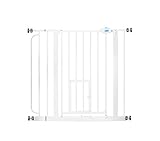
placed in a doorway keeps your dog in a back room during arrivals)
– **Tethers** anchored to a wall stud in a calm part of the house, used with a stuffed

to create a positive association with being confined during doorbell moments
– **Crates** for dogs who are crate-trained and relaxed in them — never as punishment
For your yard, chain-link fencing is actively harmful for territorial dogs. The visual access to everything passing by creates a frustration loop that worsens territorial aggression over time. Privacy fencing — solid wood or vinyl — eliminates most visual triggers immediately. If full replacement isn't possible, attaching privacy slats to existing chain-link is an inexpensive interim fix.
Communicating Risk to Others
In 2026, with bite liability laws increasingly strict in most states, how you talk about your dog matters. My recommended language for visitors and neighbors: "My dog is in a structured training program and doesn't greet people he doesn't know yet — please don't approach him or reach toward him." That framing is honest, non-alarming, and creates no legal admission of a known vicious animal.
"Dog in Training" and "Do Not Pet" vests serve a