Shih Tzu Not Responding to Training? Fix It in 2026
You call your Shih Tzu's name. Nothing. You ask for a sit. Nothing. You try again with your best treat in hand — and your dog makes direct eye contact, then slowly looks away like you're a mildly interesting piece of furniture. If this sounds familiar, you're not failing as a dog owner. You've just met one of the most charmingly stubborn little personalities in the canine world.
I've been training dogs professionally since 2011, and I'll be honest: Shih Tzus have humbled me more times than I can count. Early in my career, I made the classic mistake of applying techniques that worked beautifully on Labradors and Border Collies — and watched them fall completely flat on this breed. That experience pushed me to study Shih Tzu temperament specifically, and what I learned changed everything about how I approach these dogs.
Here's what most training guides miss: a non-responsive Shih Tzu isn't broken, defiant, or untrainable. In almost every case I've worked with, the dog is responding perfectly logically to the training environment they've been given. The problem isn't the dog — it's the mismatch between method and breed.
This guide gives you a complete, practical roadmap for turning that selective hearing around. We'll cover why Shih Tzus disengage, how to pinpoint your specific dog's pattern, and the exact positive reinforcement techniques calibrated for this breed's unique temperament — including how to make training stick in real-world environments, not just your living room.
Let's start by getting to the root of what's actually happening in your Shih Tzu's head when they seem to tune you out completely.
Why Your Shih Tzu Seems to Ignore You: The Real Reasons Behind Non-Responsiveness
Your dog probably isn't ignoring you on purpose, and they're almost certainly not stupid. What's actually happening is usually far more interesting — and far more fixable — than simple stubbornness.
At least 60% of the "unresponsive" Shih Tzus I've worked with simply hadn't been fully taught what the cue meant. The owner called the command learned. The dog had a different understanding entirely. That gap between assumption and reality is where most training breakdowns live.
The Breeding Factor: Why Selective Listening Is Literally Built In
Shih Tzus were developed over centuries as companion lap dogs for Chinese imperial royalty. They weren't herding livestock, retrieving game, or guarding perimeters. Their entire evolutionary job description was to be charming, warm, and emotionally attuned to their person — on their own terms.
This matters enormously for training. Unlike Border Collies or German Shepherds, selectively bred to take direction and defer to human cues, Shih Tzus were bred to make independent decisions about how to be delightful. That "what's in it for me?" attitude isn't defiance. It's the breed doing exactly what its genetics shaped it to do.
So when your Shih Tzu hears "sit," calmly blinks at you, and then walks to the sofa, they're not being rude. They're being a Shih Tzu.
Four Actual Causes of Non-Responsiveness
Understanding why your dog isn't responding is the most important diagnostic step you can take. In my experience, it almost always comes down to one of four things:
- Sensory issues — Hearing loss is genuinely common in Shih Tzus, particularly after age 7. I've worked with owners who spent months labeling their senior dog "stubborn" before a vet confirmed significant hearing decline. The dog wasn't ignoring them. The dog couldn't hear them.
- Motivation mismatch — You might be using a treat your Shih Tzu finds mildly acceptable when you need something that makes them absolutely light up. Not all rewards are created equal for this breed.
- Distraction threshold — A Shih Tzu that responds beautifully in your kitchen may genuinely not recognize the same command outdoors with traffic noise, wind, and unfamiliar smells competing for attention. This isn't failure — it's an incomplete generalization of the behavior.
- Unclear handler communication — We're often far less consistent than we think. Different hand gestures, varying tones, commands buried in sentences — dogs read all of this, and inconsistency creates confusion.
Breed Temperament vs. True Behavioral Problems: How to Tell the Difference
Typical Shih Tzu selective responsiveness looks like: responding well in low-distraction environments, responding to high-value rewards but ignoring lower-value ones, and showing general attentiveness to you even when not complying with a specific cue.
True behavioral problems look different. If your dog is showing anxiety, hypervigilance, aggression, or complete disengagement even in familiar, calm environments, that's worth taking seriously as a separate issue — one that goes beyond breed temperament and may need professional support.
A

can actually help clarify your communication in the meantime, since it creates a precise, consistent signal that removes the ambiguity of your voice.
Ruling Out Medical Causes: Hearing Tests and Vet Checks Worth Doing in 2026
Before blaming training, rule out biology. Follow this sequence for any Shih Tzu with persistent non-responsiveness:
- Schedule a veterinary hearing assessment — Ask specifically about a BAER (Brainstem Auditory Evoked Response) test if your dog is over 6 years old or if you suspect age-related decline.
- Check for ear infections — Shih Tzus are prone to chronic ear issues that muffle sound and cause discomfort. A dog in ear pain is not a dog focused on your training session.
- Consider vision changes — If your dog is missing hand signals they previously caught, eye health may be a factor.
I had a client in early 2026 whose 9-year-old Shih Tzu, Biscuit, had been written off as "too old to train." One vet visit confirmed moderate bilateral hearing loss. We switched to hand signals and vibration cues, and within three weeks Biscuit was responding more reliably than he had in years. The dog was never the problem.
Start with the medical picture. Everything else builds from there.
Diagnosing Your Shih Tzu's Specific Non-Responsiveness Pattern
Before you change a single thing about how you train, figure out what's actually happening. Most owners jump straight to solutions without identifying the real problem. A Shih Tzu ignoring "sit" at the dog park is a completely different situation than one ignoring "sit" in your living room — and they require different fixes.
Run a 3-Day Observation Log
This is the single most useful thing I ask clients to do before our first real session together. It takes about five minutes a day and reveals patterns that would otherwise take weeks to notice.
For each training attempt, jot down:
- Which command failed (and which ones worked)
- The environment — kitchen, backyard, street, park
- Time of day
- How long since your dog last ate
- Whether your dog made eye contact before ignoring you — this one is critical
That last point is where most people have their "aha" moment. There's a meaningful difference between a dog who checks out — glazed eyes, nose suddenly glued to the ground, body turning away — and one who actively defies you, making direct eye contact, processing your request, and then deliberately turning away. I've seen both in the same dog within the same training session.
Checking out usually signals sensory overload, fatigue, or under-motivation. Active defiance — which takes some intelligence to pull off — typically means your dog understands exactly what you want and has decided the reward isn't worth it. These two patterns require completely different interventions, and mixing them up is one of the most common mistakes I see.
The 5-Command Audit: A Quick Diagnostic Test You Can Do Today
Run through five commands your dog theoretically knows: sit, down, stay, come, and leave it. Do this twice — once in a low-distraction space and once somewhere with moderate activity, like your front yard.
Then do something that surprises most owners: swap your usual training treats for a small piece of rotisserie chicken and run the exact same sequence.
With dry kibble, a Shih Tzu's response rate might hover around 30%. With chicken? They're practically offering commands before they're asked. Same dog, same environment, same handler. If your dog's responsiveness jumps dramatically with higher-value food, you don't have a defiance problem — you have a reward value mismatch.

designed specifically for high-reward moments can help bridge this gap without cooking chicken every session.
Common Handler Habits That Accidentally Train Your Shih Tzu to Ignore You
Here's the uncomfortable part of the diagnosis: sometimes the pattern points back at us.
Ask a family member — ideally someone who doesn't normally train the dog — to give the same five commands using the same treats. Record what happens. The results are often humbling. I've watched dogs go from total non-responsiveness with one person to near-perfect compliance with another in the same afternoon. Patterns to watch for:
- Command repetition — saying "sit, sit, SIT" teaches your dog that the first "sit" is just a warm-up
- Delayed reward timing — if the treat arrives three seconds after the correct behavior, the dog isn't sure what earned it
- Inconsistent body language — leaning forward, making direct eye contact, or looming over a Shih Tzu can actually suppress their behavior rather than encourage it
- Emotional tone drift — frustration creeps into your voice on the third repetition, and Shih Tzus are remarkably sensitive to that shift
A
can expose timing problems — if you’re struggling to click at the exact moment of correct behavior, that gap is likely undermining your dog’s understanding of what you’re rewarding.
The goal of this diagnostic phase isn't to assign blame. It's to get specific. Vague problems produce vague solutions. Once you know exactly when, where, and how your Shih Tzu's responsiveness breaks down — and whether you're part of that equation — you have something concrete to work with.
Rebuilding the Foundation: Starting Over Without Starting From Scratch
Starting over doesn't mean everything you've done is wasted. It means you're finally going to build on solid ground instead of sand.
The most effective reset I've used with dozens of Shih Tzus is a 2-week "nothing in life is free" protocol combined with reintroducing exactly one command — not three, not five, one. Your dog earns every good thing (meals, play, couch access, treats) by offering a small, achievable behavior first. This isn't about being strict. It's about restoring the concept that your attention and requests actually mean something.
I worked with a 4-year-old Shih Tzu in early 2026 whose owner had essentially given up on training, repeating "sit, sit, Biscuit, sit, SIT" until Biscuit wandered off. Two weeks of nothing-in-life-is-free, focused entirely on reestablishing eye contact as the only required behavior, and Biscuit was offering attention voluntarily within 10 days. The foundation came back fast — it just needed to be rebuilt on one solid pillar first.
How to Use a Marker Word or Clicker Effectively With Shih Tzus
Timing is everything with marker training, and Shih Tzus are surprisingly sensitive to it. A
gives you a consistent, neutral sound that’s faster and more precise than your voice — especially useful when capturing fleeting natural behaviors.
Charge the marker first. Click (or say your marker word — I use "yes") and immediately treat, 20–30 times over two short sessions. No commands yet. Just building the association: that sound means something good just happened. Once your Shih Tzu's ears perk at the click, you're ready to train.
The 'One Command, One Chance' Rule That Stops Repetition Dead
Say the command once. If your dog doesn't respond within 3 seconds, calmly remove the opportunity and wait. Don't repeat it. Don't add "please." Don't escalate.
Repetition is the single biggest training killer I see with Shih Tzu owners. When you say "sit" seven times, you're not teaching sit — you're teaching your dog that "sit" means nothing until the eighth time with a raised voice.
If your Shih Tzu has heard "sit" ignored dozens of times, that word is poisoned — diluted into background noise. My honest advice: retire it entirely. Switch to "park," "base," or any word you've never used before. I've seen owners laugh when I suggest this, then come back a week later genuinely amazed that their dog responded to the new cue immediately. Start fresh with it, and guard it carefully this time.
Keep every session to 3–5 minutes maximum. Shih Tzus are brachycephalic, meaning that flat face affects their breathing during physical or mental exertion. Three 4-minute sessions spaced through the day consistently outperform one 20-minute session that leaves the dog mentally checked out. Set a timer. Stop before you think you need to.
Choosing High-Value Treats That Actually Motivate Your Shih Tzu
Not all Shih Tzus are food-motivated — but most are motivated by the right food. Kibble during training rarely cuts it. You need your dog thinking, I need to figure out what this person wants because that smell is extraordinary.
Rotation matters more than people realize. What works Monday may bore your dog by Thursday. My current go-to rotation for Shih Tzu clients:
- Tiny pieces of rotisserie chicken (thumbnail-sized or smaller)
- Freeze-dried liver broken into pea-sized bits
- Plain boiled shrimp — surprisingly effective and low-calorie
- Small squares of string cheese
Use a

to keep rewards fast and accessible — fumbling in your pocket creates a 2-second delay that breaks the training loop entirely.
One last note on luring vs. capturing: Shih Tzus with independent natures often become dependent on the lure and stop thinking for themselves. Capturing — waiting for your dog to naturally offer a behavior, then marking and rewarding it — builds a dog that offers behaviors rather than one that only performs when bribed. It takes more patience, but the responsiveness you build is genuinely yours to keep.
Positive Reinforcement Techniques Specifically Calibrated for Shih Tzu Temperament
Training methods built around food-heavy luring often work initially with this breed, but plateau fast — leaving owners convinced their dog is "too stubborn to train" when the real issue is a reward system that stopped speaking to the dog weeks ago.
Shih Tzus were bred for centuries as companion dogs to Chinese royalty. They are, at their core, relationship-first animals. Once I started treating that as a training asset rather than a complication, my results with the breed transformed entirely.
Praise and Play Are More Powerful Than You Think
Most owners underestimate verbal praise with Shih Tzus. I've had clients watch in genuine disbelief as their "untrainable" dog responded repeatedly to a crisp, enthusiastic "YES! Good girl!" delivered with a 10-second play burst — no treat involved. This works because the breed is hardwired to read and respond to human emotional tone.
The key word is enthusiastic. Flat, monotone praise does nothing. But a sharp, celebratory vocal marker paired with a quick tug on a
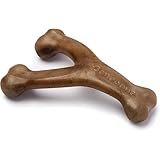
or a burst of silly play? For a Shih Tzu with solid baseline conditioning, that can be just as reinforcing as a piece of chicken — sometimes more so, because it involves *you*, which is what they actually want.
I worked with one Shih Tzu owner in early 2026 who had been clicking and treating for four months with minimal progress on recall. Within two sessions of switching to play-burst rewards — a small fleece tug the dog went absolutely wild for — recall became the most reliable behavior in his repertoire. The treat hadn't been motivating enough. The play was.
Toy and Play Rewards: Underused Tools That Work Especially Well for Shih Tzus
Most people reach for a
pouch as the default. For Shih Tzus, also experiment with:
- Short tug sessions (10–15 seconds of active play, then request another behavior)
- Chase games — let them "catch" you for a few seconds after a correct response
- Enthusiastic petting with verbal celebration, especially around the ears and chest
- Releasing them toward something they want — more on that below
The goal is a diverse reinforcement menu so you're not dependent on any single reward type, and so the dog stays engaged because they genuinely don't know what great thing is coming next.
How to Phase Out Treat Dependence Without Losing Response Reliability
Many owners are afraid that reducing treats will cause behaviors to fall apart. It doesn't have to — but it must be done deliberately.
The science here is a variable ratio reinforcement schedule — the same principle that makes slot machines compelling. Once your Shih Tzu is responding reliably to a cue (8 out of 10 correct responses in varied settings), start rewarding every second correct response, then every third, then randomly. The dog never knows which correct response earns the jackpot, so they keep trying. Response reliability actually increases during this phase, which surprises most owners.
Avoid removing treats too early or too abruptly. The behavior needs to be truly solid first.
The Premack Principle is your other major tool here, and it's criminally underused. A high-value activity your dog already wants becomes the reward for compliance. Your Shih Tzu is straining toward that interesting bush on a walk? Ask for a "sit" first. The moment they sit, say "go sniff!" and let them have it. You've just used real-world access as your reinforcer — no treat required, and you've built reliability in a genuinely distracting environment.
One Rule I Never Break With This Breed
Avoid punishment-based corrections entirely. In 15+ years of working with Shih Tzus, I've seen more shutdown behavior and learned helplessness caused by leash corrections, harsh "no" responses, or physical reprimands than by any other single factor. This breed shuts down emotionally rather than pushing back. Once that happens, rebuilding confidence takes weeks — and with the techniques above, you'll never need to go there anyway.
Training Non-Responsive Shih Tzus in Real-World Environments
Here's something I tell every frustrated Shih Tzu owner who comes to me after their dog "knew sit perfectly at home and then completely lost their mind at the park": the dog didn't forget anything. You skipped several crucial steps between the kitchen and the park bench.
Real-world responsiveness isn't a single skill — it's a chain of progressively harder skills, and Shih Tzus are particularly unforgiving when you try to rush that chain.
The Four-Stage Proof System (Skip Steps at Your Peril)
Systematic desensitization to distractions must happen in a specific sequence:
- Indoors, no distractions — master the behavior here first, every single time
- Your backyard or a quiet hallway — mild environmental novelty
- A quiet park on a weekday morning — low foot traffic, few dogs
- A busier sidewalk or weekend park — real-world complexity
Owners who nail stage one and jump straight to stage four inevitably wonder why their Shih Tzu is acting like they've never met. Skipping stages two and three is by far the most common reason these dogs fall apart in public. Budget at least 3–5 successful training sessions at each stage before advancing.
Distance is a variable most owners never think to practice. Your Shih Tzu might respond beautifully to "sit" at 2 feet but deliver a total blank stare at 10. Before adding environmental distractions, build response reliability at 3 feet, 5 feet, 8 feet, and 10 feet — indoors, where nothing else competes for their attention. I use a
Similar Posts
When to Hire a Dog Trainer (Don’t Wait) | 2026 Guide
Most dog owners wait about six months too long. I've been training dogs professionally since 2011, and if I had to name the single most common mistake I see — across thousands of consultations, from anxious first-time puppy owners to experienced handlers with a "problem dog" they can't figure out — it's this: waiting. Waiting…
Emotional Support Dog Training at Home (2026 Guide)
Most people who ask me about emotional support dog training are already doing more of it than they realize — they just don't know how to make it intentional. Over the past 15 years, I've worked with hundreds of dog owners navigating the emotional support animal process, and the same misconception keeps surfacing: that an…
How to Fade Treats in Dog Training: A Gradual Step-by-Step Guide
Introduction: Why Your Dog Still Needs Treats After Learning Commands Picture this: Your dog has finally mastered "sit." You're thrilled—weeks of training have paid off! So you stop using treats altogether. Within days, your once-obedient pup is ignoring you, wandering off, or offering the world's slowest, most reluctant sit you've ever seen. Sound familiar? This…
Train Your Dog to Tolerate Nail Trimming at Home (2026)
Introduction If you've ever wrestled with a squirming, terrified dog while trying to trim their nails, you know the drill. Your heart races as your dog frantically tries to escape. You might manage to clip one or two nails before everyone needs a break—and by "break," I mean your dog hides under the bed for…
Dog Only Listens to One Person? Training Fix That Works
Introduction: When Your Dog Only Listens to One Person You call your dog to come inside. Nothing. Not even a glance in your direction. Ten seconds later, your partner says "Come," and your dog trots over immediately like they've been shot out of a cannon. Sound familiar? If you've experienced this frustrating dynamic, take a…