Training an Unsocialized Rescue Dog (2026 Guide)
Most people expect a rescue dog to be grateful. What they get instead is an animal pressed against the back wall of a crate, refusing to make eye contact, flinching at the sound of a spoon hitting a bowl. That gap between expectation and reality is where a lot of well-meaning adoptions quietly fall apart.
I've worked with hundreds of under-socialized rescue dogs over the past 15 years, and the ones who arrived with zero socialization history are in a category of their own. These aren't dogs who need a refresher on "sit" or a few weeks to settle in. They're dogs whose brains literally developed without the normal sensory input puppies need during the critical window between 3 and 14 weeks. The wiring is different — and that changes everything about how you approach training.
Here's what I want you to know before we get into the practical steps: this is absolutely workable. I've seen dogs who spent their first two years in a barn with no human contact eventually learn to sleep on the couch next to their person. It takes longer than most trainers will tell you upfront, it requires a specific sequence of steps, and it demands that you rewire some of your own instincts about what "progress" looks like.
In this guide, I'll walk you through the full picture — from setting up a safe environment before training even begins, to building genuine trust, to introducing the outside world in a way a fearful dog can actually handle.
But first, we need to get clear on exactly what "never socialized" means, because it's one of the most misunderstood terms in rescue dog training — and misreading it is where most owners make their first mistake.
What 'Never Socialized' Actually Means — And Why It Changes Everything
When people tell me they've adopted a "poorly socialized" dog, I always ask a follow-up question: where did this dog come from, and how old were they when human contact began? The answer completely changes what we're working with — and I've watched owners spin their wheels for months because nobody explained this distinction to them upfront.
There's a significant difference between a dog who had limited socialization and a dog who had none during the window that actually matters.
The Critical Socialization Window: What Happens in the Brain When It Closes
Between roughly 3 and 12 weeks of age, a puppy's brain is in an extraordinary developmental state. Neural pathways are forming at a rate that will never happen again. During this window, whatever a puppy experiences — hands, faces, voices, surfaces, sounds — gets coded as normal. Not just familiar. Neurologically, fundamentally normal.
When that window closes and a puppy has never encountered a human, a leash, or a linoleum floor, the brain doesn't stay neutral. It defaults to threat. Every new stimulus gets processed through the fear circuitry first, because nothing was pre-loaded into the "safe" category during the period when that categorization was biologically easy.
This is why I'm careful to tell new owners: this is not a training problem. It is a rehabilitation problem. The distinction matters enormously. Training assumes a dog with a neutral or positive baseline who needs to learn rules and behaviors. Rehabilitation means we're working against hardwired fear responses that exist below the level of conscious thought. Your dog isn't being stubborn or spiteful. Their nervous system is doing exactly what it was built to do when the formative window was empty.
Common Rescue Backgrounds That Produce This Dog
The dogs I see with true socialization deficits typically come from a handful of specific situations:
- Hoarding cases — dozens of dogs kept with minimal human interaction, sometimes generations of dogs who were never handled
- Puppy mills — dogs bred in crates with near-zero positive human contact, particularly breeding females who spent years isolated
- Feral colonies — born outside with a feral mother, sometimes partially trapped and brought in after 8, 10, or 12 weeks
- Rural neglect situations — dogs kept exclusively outdoors, on chains, or in outbuildings with no household exposure
- Long-term solitary confinement — dogs surrendered after years in a single room or crate with one person who has since died or surrendered them
I worked with a beagle mix named Huckleberry in 2026 who came from a hoarding case — 47 dogs in a two-bedroom house. He was approximately 4 months old at rescue but had never been touched by a stranger, never walked on a leash, never heard a television. He would flatten himself completely still when approached, eyes glazed, not growling — just gone. That shutdown response is one of the most common things I see with truly unsocialized dogs, and it reads as calm to well-meaning owners who don't realize it's a fear response.
A sit command was genuinely irrelevant at that stage. Huckleberry needed weeks of just existing near humans before anything resembling training could begin.
How to Assess Where Your Dog Actually Falls on the Spectrum
Not every undersocialized rescue falls at the extreme end, and it's worth honestly assessing your dog's starting point. Ask yourself:
- Does your dog freeze, flee, or shut down when approached, or do they show curiosity mixed with caution?
- Were they handled as a puppy at all, even briefly?
- Do they have any positive associations with humans — even one specific person?
- How do they respond to food in the presence of a stranger? Can treats override the fear at all, or does the fear completely override the food drive?
A dog who is fearful but food-motivated in low-stress environments is in a fundamentally different place than one who won't take food from anyone outside their primary caregiver under any circumstances. Both can improve. Both deserve patient, skilled support. But they're different starting points, and pretending otherwise sets everyone up for frustration.
Set your expectations now, not six months from now: a dog who missed the socialization window can absolutely live a full, rich, joyful life. They can learn routines, feel safe at home, even develop genuine enthusiasm for certain activities. What they will likely never be is a dog who greets strangers easily, thrives in dog parks, or bounces back quickly from novel experiences. And honestly? That's okay. Your job isn't to fix them into a different dog. It's to help them become the safest, most comfortable version of themselves.
Before You Start Training: The Safety and Environment Setup Phase
I've made this mistake myself — not with my own dog, but with a foster I took in during my early years. A 4-year-old shepherd mix named Hector who'd spent his entire life on a chain. He arrived trembling, pupils blown wide, pressed flat against the back of the crate. Within 48 hours, I was trying to lure him into a sit with treats. He wasn't ready. He wasn't even there yet, psychologically speaking. The treats sat untouched on the floor, and I spent a week undoing the pressure I'd created by moving too fast.
The truth that rescues and well-meaning owners often skip over: a dog that doesn't feel safe cannot learn. The brain's threat-response system hijacks everything else. Before you even think about commands, you need to spend 2 to 8 weeks — sometimes longer — just letting the dog exist without demands.
The 3-3-3 Rule Revisited: Why Rescue Dogs Need Even Longer Decompression
You've probably heard the 3-3-3 rule — 3 days to decompress, 3 weeks to learn the routine, 3 months to feel at home. It's a solid framework for most rescues. But for dogs that were never socialized, consider it a minimum, not a timeline.
A dog with zero positive human exposure often needs the full 8 weeks just to get through that first stage. Don't measure progress by the calendar. Measure it by behavior. Is the dog eating consistently? Choosing to rest without hypervigilance? Moving through the space voluntarily rather than staying frozen in one corner? Those are your actual milestones for this phase.
Setting Up a Safe Room That Actually Helps (Not Just Isolates)
The environment you choose matters more than most people realize. I recommend a bathroom or spare bedroom over a living room for the first 30 days. That sounds counterintuitive — shouldn't the dog be around the family? Not yet. Busy living rooms have unpredictable foot traffic, shifting light, TV noise, and multiple people moving in and out. That's overwhelming stimulation for a dog whose nervous system is already overloaded.
A good safe room setup includes:
- A
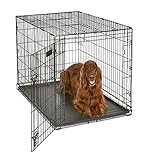
with the door removed or propped open — never forced closed during decompression
– A

or folded blankets placed *inside* the crate so it becomes a voluntary retreat
– Consistent **low light** — no bright overhead fixtures if you can avoid them
– **White noise or a fan** to buffer household sounds
– Minimal foot traffic — family members should move past the room, not through it
The goal isn't isolation for its own sake. It's controlled, predictable exposure. The dog should start to learn that this space has a pattern, and patterns become safe.
Reading the Red Flags: When Your Dog Is Not Ready for Training
These body language signals are non-negotiable stop signs. If you're seeing any of them, no training agenda applies:
- Freezing — complete stillness, muscles locked
- Extreme avoidance — turning away, hiding behind furniture, refusing to look at you
- Refusing food, even high-value treats like chicken or cheese
- Trembling or full-body shaking when approached
- Elimination from fear — urinating or defecating when someone enters the room
Any one of these tells you the dog is in survival mode. Training in that state doesn't just fail — it can actively damage trust.
Equipment and Household Rules Before You Step Outside
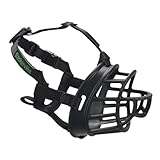
Before this dog ever crosses your threshold on leash, you need two things sorted. First, proper equipment: a well-fitted martingale collar or
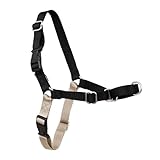
adjusted so there’s no slack. Never a retractable leash with these dogs — they offer zero control in a flight-panic moment, and a sudden lunge can mean a lost dog within seconds.
Second, household rules, enforced with everyone including guests:
- No forced petting — let the dog initiate all contact
- No direct eye contact as a greeting — turn sideways, look away
- No loud voices or sudden movements near the safe room
- No picking up — being lifted off the ground is terrifying for a fearful dog
Post these rules on your fridge if you need to. I'm not joking — I've literally done this with fosters when family was visiting. The dog's comfort is not negotiable during this phase, and "but I'm a dog person" is not an exemption.
Building the Foundation: Trust Before Commands
The mistake I see almost every new rescue adopter make is bringing home a severely under-socialized dog and within 48 hours trying to teach "sit." The impulse is understandable — you want to connect, you want to feel like you're making progress. But with a dog that has never learned humans are safe, asking for obedience before establishing trust is like trying to build the second floor of a house before laying the foundation.
Commands come later. Trust comes first. And trust, with these dogs, has to be earned in a very specific way.
The Trust Account
I think about this relationship as a bank account — except with under-socialized dogs, the account starts overdrawn. Every positive interaction makes a small deposit. Every frightening experience — even a well-intentioned one, like a stranger reaching down to pet them — makes a large withdrawal. The math is brutal at first. You might make ten careful deposits in a day and one accidental withdrawal wipes out most of them.
This framework genuinely changes how you move through the world with your dog. You stop asking "did I do anything wrong?" and start asking "what did that moment cost us?"
The Garden Hose Technique
The single most important exercise you'll do in month one isn't a command at all. I call it the garden hose technique — named for the way you want to appear as non-threatening as a piece of garden furniture.
Here's exactly how it works:
- Sit on the floor in the same room as your dog — sideways, never face-on
- Don't look at them directly; let your gaze drift to the side
- Every 20–30 seconds, toss a high-value treat toward them without reaching in their direction
- Do nothing else. Don't talk. Don't coax. Don't look expectant.
- Let them choose whether to approach
I did this with a border collie mix named Pepper who had spent her first two years in a hoarding situation. For the first four sessions, she wouldn't move from behind the couch. On day six, she crept forward and took a treat from two feet away. I genuinely teared up. That moment — her choice — was worth more than a hundred trained recalls.
Finding the Right Reinforcer
A dog that refuses food is a dog too stressed to learn. If your dog won't eat, nothing else in this section matters yet — back up and reduce environmental pressure first.
When they are ready to eat, run a hierarchy test: start with plain kibble, move to

, then boiled chicken, then hot dogs, then freeze-dried liver. Work through the list until you find the thing that makes their nose twitch fastest. That ingredient is your currency for the next several months. Guard it carefully — don’t let it become ordinary.
Consent-Based Handling
In 2026, the ASPCA's behavioral science team published updated guidance confirming what many of us had already seen in practice: dogs who are taught they can move away build trust faster than dogs subjected to forced petting. This feels counterintuitive. Surely more contact means more bonding? Not with fear-based dogs.
The practical version: whenever your dog is near you, keep your hands relaxed and still. If they lean in, briefly offer contact, then stop and wait. If they lean in again, they're consenting. If they move away, you stop completely — every time, without exception. This consistency is what makes the trust account grow.
Reading Calming Signals and Stress Indicators Specific to Under-Socialized Dogs
Under-socialized dogs often show compressed stress signals — the early, subtle ones get skipped because they never learned that subtle signals work. Watch specifically for:
- Yawning outside of wake-up moments
- Lip licking with no food present
- Whale eye — whites of the eyes showing at the edges
- Sudden stillness (often missed — freezing is not calm, it's overwhelmed)
- Excessive sniffing the ground during an interaction
The Name Game: Teaching Your Dog That Their Name Predicts Good Things
Before you teach anything else, teach your dog that their name means something wonderful is coming. Say the name once, quietly. The instant they glance at you — even accidentally — mark it with a cheerful "yes!" and toss that highest-value treat. Keep
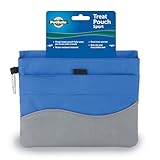
clipped to you constantly in the early weeks so you’re never caught fumbling.
Don't repeat the name if they don't respond. One soft cue, then silence. Repetition teaches them to tune it out.
Track Everything
Progress with these dogs is genuinely easy to miss without data. Keep a simple weekly journal — approach distance in feet, food acceptance rate (did they eat? hesitate? refuse?), and stress signals observed. When you're in week eight wondering if anything is working, being able to flip back and see that approach distance went from 8 feet to 3 feet is the thing that keeps you going.
Core Training Techniques That Work With Fear-Based Dogs
Most people go wrong the same way: they bring home a shut-down, under-socialized dog and immediately start teaching "sit." Training feels productive — it gives you something to do — but asking a terrified dog to perform behaviors before you've changed how they feel is like asking someone to do algebra while their house is on fire.
The sequence matters enormously.
Classical Counter-Conditioning Comes First — Always
Classical counter-conditioning (CC) works on the emotional layer, not the behavioral one. You're not asking the dog to do anything. You're simply pairing the scary thing (a stranger's voice, a broom, your hand reaching toward them) with something the dog genuinely loves — usually high-value food — over and over until the scary thing predicts the good thing automatically.
No behavior required. No "sit." No eye contact. Just: scary thing appears → food appears. Scary thing disappears → food stops.
I worked with a hound mix named Clover in early 2026 who had spent her first two years in a rural hoarding situation with almost no human contact. Her new owner kept trying to lure her closer with treats, frustrated that she wouldn't come forward. He was skipping the emotional groundwork entirely. We spent three full weeks where he simply tossed treats in her direction every time he walked into the room — no reaching, no talking, no pressure. By week four, Clover was orienting toward him when he entered instead of flattening against the wall. That shift — from fear response to anticipation — is what makes everything else possible.
Only after you see consistent approach behavior or neutral body language in the presence of previously scary triggers should you layer in operant training.
The BAT 2.0 Framework
Developed by Grisha Stewart, Behavior Adjustment Training (BAT 2.0) is one of the most powerful tools I use with fear-based dogs. The core idea: rather than flooding the dog with a scary stimulus until they give up, you set up scenarios where the dog can practice functional coping at distances where they feel safe.
The functional reward in BAT isn't food — it's the ability to move away. You allow the dog to approach a trigger at their own pace, then the moment you see stress begin to mount, you cheerfully walk them away. Distance is the reward. This builds genuine confidence rather than suppressed fear responses, which look like improvement but aren't.
Capturing Calm — The Skill Most Owners Miss
Most owners only reinforce active behaviors: sitting, lying down, coming when called. But with fear-based dogs, capturing calm is often more valuable than any command.
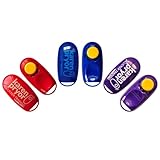
Using a
or a simple marker word like “yes,” watch for:
– **Soft, blinking eyes** after a tense moment
– **A slow weight shift forward** toward something the dog was avoiding
– **A full-body exhale** or shake-off
– **Ears moving from pinned-back to neutral**
The instant you see any of these, mark and reward quietly. You're building an association between relaxed states and good outcomes — and teaching the dog that they have some control over how they feel.
Luring vs. Free-Shaping: Why Distance Matters
Luring (holding food near your body to guide the dog) can backfire with under-socialized dogs because it requires them to move into handler proximity. Free-shaping with a clicker — where you simply click and toss the treat away from you to reward any approximation of a target behavior — lets the dog maintain comfortable distance while still learning. The dog controls the geometry of the interaction, which is crucial for rebuilding agency.
A Word on Flooding — Don't
Flooding means forcing a dog into full exposure to their fear until they shut down. Well-meaning owners do this constantly: holding the dog while strangers pet it, walking directly into a busy park on day two. I've worked with dozens of dogs that were flooded this way, and the trust damage consistently adds 6–12 months to the rehabilitation timeline. The dog isn't "getting used to it." They're experiencing learned helplessness — giving up because escape is impossible. That's not progress.
The First Commands, In Order
Once classical CC is working, teach these in sequence:
- Marker word ("yes") — establishes communication
- Hand target (touch) — builds approach behavior on the dog's terms
- Sit — simple, low-pressure
- Mat/place — creates a portable safe space that becomes critical for desensitization work
Using a Long Line for Training Without Triggering Leash Pressure Panic
A