Dog Territorial Fence Barking: Fix It in 2026
Your neighbors probably don't hate your dog. But after the third time they've knocked on your door about the fence barking, it's starting to feel that way.
Territorial fence aggression is one of the most common — and most mishandled — behavior problems I see in my work with dogs. In over 15 years of working with reactive and aggressive dogs, I'd estimate that fence barking accounts for nearly a quarter of the cases referred to me by frustrated owners who've already tried everything they can think of. And here's what surprises most of them: the problem almost always gets worse before anyone tries to address it, simply because the dog has been rehearsing the behavior unchecked for months or even years.
That rehearsal matters enormously, and I'll explain exactly why in a moment.
What I've learned — often the hard way, through cases that didn't go as planned — is that fence aggression isn't just a "barking problem." It's a deeply rooted behavioral pattern driven by arousal, perceived threat, and a reinforcement cycle that most owners unknowingly fuel every single day. Treating it like a simple nuisance gets you nowhere.
In this guide, you'll get the complete picture: what's actually driving your dog's behavior, how to honestly assess how serious the situation is, and a step-by-step training approach grounded in current behavioral science. I'll also be direct about the mistakes that set owners back weeks or months, and when the smartest move is calling in a professional.
Let's start with the part most articles skip entirely — what's genuinely happening in your dog's brain when they hit that fence.
What's Actually Happening When Your Dog Goes Berserk at the Fence

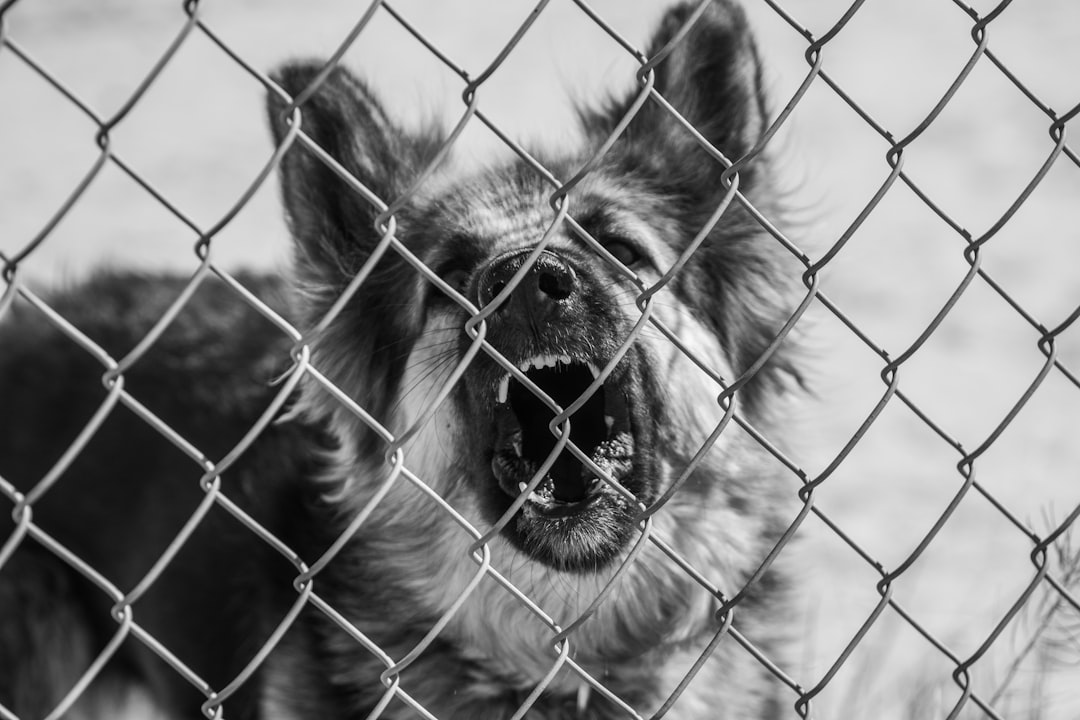
If you've ever watched your otherwise sweet, well-behaved dog transform into a snarling, lunging maniac the moment someone walks past your fence line, you've probably asked yourself: what is wrong with my dog?
The short answer is nothing — and also, quite a bit.
Territorial aggression is not disobedience. Your dog isn't misbehaving any more than you'd be "misbehaving" if a stranger walked into your home uninvited. From your dog's perspective, they are doing exactly what their biology is asking them to do: protecting their pack, their food, their sleeping spots, and their people from a potential threat. This isn't a character flaw. It's a deeply hardwired survival behavior that kept dogs' ancestors alive for thousands of years.
Understanding this distinction matters enormously, because it changes how you respond. Punishing a dog for territorial behavior is like punishing someone for flinching when startled — the impulse runs deeper than conscious choice.
The Reinforcement Loop Nobody Talks About: Why Fence Barking Gets Worse Over Time
Here's where things get genuinely frustrating, and it's something I explain to almost every client dealing with fence aggression: your dog is winning every single time.
Think about what actually happens. The mail carrier walks up the path. Your dog erupts — barking, lunging, throwing themselves at the fence. And then? The mail carrier leaves. From your dog's perspective, they just successfully repelled an intruder. The barking worked.
This is what behaviorists call an inadvertent reinforcement loop, and it's one of the most powerful conditioning patterns I've encountered in over 15 years of training. The behavior is rewarded on a near-perfect schedule — every person, every dog, every cyclist who walks away after the barking starts becomes evidence that fence barking is the most effective thing your dog has ever done. By the time most owners call me, their dog has rehearsed this "victory" hundreds or thousands of times.
I worked with a three-year-old Belgian Malinois named Rocket in early 2026 whose owner couldn't figure out why he'd become more reactive over time, not less. When I mapped out his daily routine, the answer was clear: Rocket had a clear sightline to a busy footpath and spent roughly four hours a day "successfully" defending his yard. He wasn't getting worse — he was getting better at a behavior that was being relentlessly reinforced.
Barrier frustration adds another dimension. The fence doesn't just define territory — it physically prevents your dog from resolving the encounter on their own terms. That frustration amplifies the arousal state significantly, which is why fence barking often looks more explosive than aggression in open spaces.
Barrier Frustration vs. True Territorial Aggression: Spotting the Difference
These two things frequently overlap, but distinguishing them helps you understand what you're actually working with.
True territorial aggression typically follows a recognizable pattern:
- Alert barking (2-5 rapid barks)
- A period of watchful stillness
- Gradual deescalation once the "intruder" moves on
- The dog returns to baseline relatively quickly
Barrier frustration with a reinforcement loop looks different:
- Immediate, sustained explosive reaction
- Lunging, fence-running, and snarling that escalates rather than settles
- Slow or incomplete recovery even after the trigger is gone
- Possible redirected aggression — where the dog, unable to reach the target, turns and snaps at whoever is nearest, including you
That last point is genuinely dangerous. A dog simultaneously in a high-arousal and blocked state is unpredictable, and a
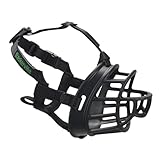
can be an essential safety tool during early management — not as punishment, but as a precaution while you work through the training process.
Breed predispositions are real, but don't let them become excuses. German Shepherds, Rottweilers, Dobermans, and herding breeds like Border Collies and Australian Shepherds carry generations of selective breeding for guarding and boundary-awareness. These dogs aren't "bad" — they're doing exactly what humans bred them to do. But any dog, including Labrador Retrievers and Golden Retrievers, can develop fence aggression given the right combination of environment, reinforcement history, and opportunity.
Knowing why this happens is the foundation for changing it.
Assessing the Severity of Your Dog's Fence Aggression Before You Do Anything Else
Here's a mistake I see constantly: owners either dismiss fence barking as "just a phase" for months, or they panic and immediately hire the first trainer they find after one intense episode. Both responses waste time and money, and one of them can genuinely put people at risk. Before you buy equipment, watch tutorials, or change a single routine — spend some honest time figuring out what you're actually dealing with.
I use a simple 1-5 severity scale based on three factors that matter most: recovery time, what triggers the reaction, and the physical intensity of your dog's response.
Level 1-2 looks like alert barking that stops within 30 seconds once the trigger (a passing dog, a jogger, the mail carrier) moves on. The dog's body language loosens up afterward — tail drops back to neutral, they'll take a treat, they can redirect their attention to you. This is genuinely manageable with consistent training alone, and the methods in this article will work well for you.
Level 3-4 is where most owners reading this find themselves. Sustained barking lasting two minutes or longer, fence-running, lunging hard enough to rattle chain link, hackles raised in a ridge from neck to tail. Critically: you cannot interrupt this dog once they're in it. I worked with a 4-year-old male Belgian Malinois in 2026 whose owner had to physically carry him inside because verbal cues, his name, and even high-value treats completely failed once he locked onto the neighbor's dog. That threshold — where your dog is genuinely unreachable mid-episode — marks the jump from Level 2 to Level 3. This requires a structured protocol and environmental management working together.
Level 5 is different in kind, not just degree. This includes redirected bites to handlers during or after fence episodes, attempts to chew through or destroy the fence itself, and aggression that has started appearing in other contexts — on leash walks, in the car while passing the same triggers. If any of these apply, go straight to the professional help section of this article.
Red Flags That Mean You Need a Certified Professional Right Now
Don't try to train through these solo:
- Your dog has made tooth contact with a person, even during fence excitement (redirected biting)
- The aggression has generalized — it's no longer only at the fence
- Your dog won't eat high-value food within 5 minutes of a fence episode ending
- You feel physically unsafe managing your dog near the fence
- The behavior has escalated noticeably over the past 3 months
A
can be an important safety tool while you wait for professional support — not a solution, but a responsible interim measure that protects everyone involved.
How to Do a Trigger Inventory (and Why Most Owners Skip This Critical Step)
Most owners skip this because it feels like busywork. It isn't. One week of systematic documentation will tell you more about your dog's fence aggression than months of guessing.
For seven days, log every fence episode with these five data points:
- Time of day — patterns here are extremely common (afternoon dog-walking hours, morning garbage truck routes)
- Specific trigger — not just "a dog" but what kind, what distance, moving or stationary
- Duration — from first bark to full calm, timed on your phone
- Recovery time — how long until your dog accepts a treat or responds to their name
- Body language details — hackles, tail position, vocalization type (barking vs. growling vs. both)
Keep this log somewhere simple — a notes app works fine. What you'll likely discover is that your dog isn't reacting to everything. There's usually a pattern: specific trigger types, distances, times of day, or combinations of factors that push them over threshold. I had a client in early 2026 who was convinced her dog reacted to all dogs at the fence. Her trigger log revealed he was completely fine with small dogs passing at a distance — it was specifically large, off-leash dogs approaching the fence directly that caused Level 4 reactions. That distinction completely changed her training plan.
This data is also genuinely valuable if you bring in a trainer or behaviorist. You'll walk in with a clear picture instead of vague descriptions, saving both consultation time and money.
Environmental Management: The Foundation You Must Build Before Any Training Works
Here's the hard truth I share with every client who comes to me frustrated that their training "isn't working": you cannot counter-condition faster than your dog can practice the problem behavior. If your dog is sprinting to the fence and losing their mind 12 times before lunch, every one of those episodes is actively reinforcing the pattern. The arousal spikes, the barking, the fence charging — each repetition digs the neural groove deeper. Training sessions become almost pointless when you're fighting that tide.
Management isn't the boring prerequisite you skip to get to the "real" training. It is the training, at first. You have to cut the practice reps before anything else can gain traction.
Blocking the View: Which Fence Modifications Actually Work
The single most effective management tool I've used with clients is eliminating visual access to the trigger. Dogs are visual hunters. If they can't see what's out there, the arousal response often drops dramatically — sometimes by 70-80% within the first week based on what I've observed across dozens of cases.
Your options, from quickest to most permanent:
- Privacy slats for chain-link fencing — My go-to recommendation for renters or anyone who wants fast results. In 2026, you're looking at roughly $80–150 for 100 linear feet, depending on material. They weave into the chain-link and block sightlines at dog eye level effectively. Not beautiful, but functional.
- Commercial privacy screening mesh — Products like Windscreen4less attach directly to chain-link and block visibility without a full renovation. Good for irregular fence shapes or temporary setups.
- Solid wood panel additions — More permanent, more expensive, but genuinely transformative. If you own your home and this is a long-term dog, it's worth the investment.
- Planted hedgerows — Arborvitae planted along a fence line creates a living barrier that thickens over 2–3 seasons. Slower payoff, but an excellent long-term option for people who want an attractive solution.
One client had a Belgian Malinois mix named Otter who would go absolutely nuclear every time a jogger passed their corner lot. We installed privacy slats on the chain-link sections facing the sidewalk — took about two hours on a Saturday — and within four days, Otter's fence charging had dropped from constant to occasional. That gave us the breathing room to actually start counter-conditioning. Without that step first, we were spinning our wheels.
Creating a Safe Outdoor Schedule That Doesn't Trap You Indoors Forever
Telling you to "just supervise your dog" isn't realistic long-term. But strategic supervision during peak trigger windows is completely manageable once you know what you're looking for.
Map your specific situation. In most residential neighborhoods, foot traffic and dog walking peaks happen 7–9am and again 4–7pm. Those are your highest-risk windows. During those times, either supervise closely (meaning you're actually watching,

on hand) or simply limit yard access and redirect to indoor enrichment like a

or a sniff session.
Outside those windows, many dogs can be in the yard with minimal incident. You're not trapped indoors forever — you're just being strategic about when unsupervised yard time happens.
Two additional management strategies I find underused:
- The airlock approach — Install a simple wire garden fence 3–4 feet inside your main fence line. This buffer zone keeps your dog physically further from the trigger, which meaningfully reduces their arousal response. Even 3 feet of distance makes a difference for many dogs.
- Indoor ambient management — White noise machines near fence-facing windows, strategic furniture repositioning away from sightlines, and consistent timed outdoor access routines all lower your dog's baseline arousal throughout the day. A calmer dog at rest is a dog with more capacity to make good choices outside.
Get this foundation in place first. Everything that follows depends on it.
The Core Training Protocol: Counter-Conditioning and Desensitization Done Right
Here's the distinction that changes everything: counter-conditioning isn't teaching your dog to suppress barking. It's neurologically rewiring what the trigger means to your dog at an emotional level. You're not saying "stop reacting to that person." You're changing the equation so that "person approaching fence" becomes a reliable predictor of something wonderful. The bark was a symptom. The underlying emotional response — fear, overstimulation, territorial alarm — is what you're actually treating.
This matters because suppression and conditioning look similar on the surface but produce completely different dogs. A suppressed dog is a pressure cooker. A counter-conditioned dog genuinely feels differently about the trigger.
Finding Your Dog's Threshold Distance: The Most Important Variable in the Whole Protocol
Threshold is the line between "my dog notices the trigger but can still think" and "my dog has left the building mentally." Once a dog crosses threshold and starts barking, lunging, or fixating, the learning window has closed. You're no longer training — you're just rehearsing the problem.
Finding that line requires honest observation, not optimism. Take your dog to the fence area with no trigger present. Then have a helper walk by at 60 feet. Watch your dog's body language carefully:
- Below threshold: ears perk, body stays loose, dog glances at the person but can still take a treat and look back at you
- At threshold: dog stiffens, weight shifts forward, gaze locks — you have maybe two seconds before the bark
- Over threshold: barking, lunging, unable to hear you at all
I worked with a German Shepherd named Atlas whose owner swore he was "fine until they got close." When we actually measured it, Atlas was hitting threshold at 47 feet — his owner just hadn't noticed the subtle body stiffening that preceded the explosion. We started all sessions at 65 feet and made real progress within three weeks.
Some dogs need triggers 50+ feet away. Others can work at 15 feet from day one. Don't guess — actually test it, then add a comfortable buffer. Start too far rather than too close.
What "High-Value Treats" Actually Means and Why Kibble Won't Cut It Here
Your dog is in a high-arousal situation competing with something their nervous system has classified as a genuine threat. Kibble — their everyday food — registers as background noise at best.
For counter-conditioning at a fence line, you need real meat: boiled chicken breast, string cheese cut into pea-sized pieces, small bits of hot dog, or freeze-dried liver. The treat needs to hit the brain's reward circuits hard enough to compete with the territorial response. A

worn on your hip makes delivery fast enough to matter — you have a one-to-two second window between trigger appearing and emotional response forming.
One important note: scatter feeding is particularly powerful in this context. Instead of hand-delivering every treat, toss a handful on the grass near the fence. Sniffing engages the parasympathetic nervous system — it's physically incompatible with the stress response and drops arousal faster than almost anything else.
Building a Training Session: A Sample Week-by-Week Progression
Weeks 1–2: Pure Classical Conditioning
Keep it simple. Trigger appears → high-value treat appears. That's the entire session. Run 20–30 repetitions, 2–3 sessions daily. You're not asking for any behavior. You're just building the association: that thing outside = chicken happens.
Watch for the conditioned emotional response (CER): your dog spots the trigger and immediately looks to you with loose body language and bright eyes. That's the sign the association is forming.
Weeks 3–4: Introduce an Alternate Behavior
Once you're seeing a consistent CER, layer in a cue. "Watch me" works well — ask for eye contact the moment the trigger appears, then reward heavily. A

can sharpen your timing here if you’re comfortable using one. Alternatively, cue “find it” and scatter treats on the ground, combining the alternate behavior with the parasympathetic benefits of sniffing.
Weeks 5–6: Gradually Decrease Distance
Move the starting point closer by 3–5 feet only when your dog is consistently staying below threshold at the current distance. Rushing this phase is the most common way to undo weeks of progress — be patient, and let your dog's body language lead the timeline.
Teaching Specific Behaviors That Replace Fence Barking
Once you've done the foundational counter-conditioning work, your dog is ready for something genuinely exciting: learning what to do instead. The goal shifts from "stop reacting" to "here's the job I need you to do when you see that trigger."
Building a Fence Recall from Scratch: Step-by-Step
The fence recall is the single most useful skill I teach territorial dogs — and this is not your regular recall with a bit more enthusiasm behind it. High-arousal environments need their own conditioning history. A dog who comes perfectly when called from sniffing a bush has zero guarantees of responding when they're locked onto a stranger at the fence line. The neurological state is completely different.
Here's how I build it from scratch:
- Choose a unique cue. I use a specific whistle pattern with my own dogs — something acoustically distinct from everyday verbal cues. A

works beautifully here because the sound cuts through arousal in a way that “Biscuit, COME!” often doesn’t.
– **Start at zero arousal, far from the fence.** Inside the house, in the kitchen, cue → dog looks at you → jackpot reward. Do this 50+ times before the fence ever enters the picture.
– **Gradually increase difficulty in tiny steps.** In the backyard with no triggers present. Then near the fence when it’s quiet. Then when there’s mild movement at a distance. Each step requires the dog to be succeeding 8 out of 10 tries before you raise the criteria.
– **The jackpot matters enormously here.** When you call your dog away from an actual trigger, that response deserves your most spectacular reward — real chicken, hot dogs, whatever your dog considers extraordinary.
I had a client in 2026 whose German Shepherd had been erupting at the fence for three years. After six weeks of systematic fence recall training, she could call him away from a jogger at the perimeter. He wasn't happy about it, but he came. That's the goal — not a dog who feels nothing, but a dog who has a practiced response that overrides the impulse.