Dog Attention Seeking Whining & Pawing: Stop It (2026)
It's 11 PM, you're exhausted, and your dog has been pawing at your arm and whining for the past 20 minutes — even though they've been fed, walked, and given more belly rubs than most dogs see in a week. Sound familiar?
Here's what surprises most dog owners I work with: the more you respond to this behavior — even to correct it — the stronger it gets. Every glance, every frustrated "stop it," every half-hearted push of the paw counts as a reward in your dog's mind. You're not dealing with a stubborn or manipulative animal. You're dealing with a dog who has accidentally learned that whining and pawing work.
I've worked with hundreds of dogs over the past 15 years who presented this exact issue — from young Labs who'd bruise your arms with relentless pawing to senior Beagles who'd whine at a pitch that could shatter glass. Stopping this behavior isn't just about training technique. It's about understanding why the dog developed it in the first place.
In this guide, I'll walk you through the root causes, the body language signals that separate harmless attention-seeking from genuine distress, and a practical, step-by-step protocol that produces lasting results. I'll also cover the mistakes that cause most owners to accidentally make things worse — including the "just ignore it" advice that backfires more often than not.
But before we dive into solutions, we need to start where every good training plan starts: understanding what's driving the behavior.
Why Dogs Whine and Paw for Attention: The Root Causes You Need to Understand First

Before you can change this behavior, you need to understand why it's happening — because the fix for a learned habit looks completely different from the fix for a dog in genuine distress. Jumping straight to training without making this distinction is one of the most common mistakes I see, and it can actually make things worse.
Most attention-seeking whining and pawing is learned behavior, not some inherent personality flaw in your dog. Your dog isn't being manipulative in any calculated, human sense. They're simply doing what has reliably worked before. Dogs are exquisitely good at reading cause and effect, and if nudging your arm during dinner once got them a piece of chicken, they filed that information away for future use.
The Four Core Drivers Behind the Behavior
When I assess a dog for attention-seeking behavior, I'm always working through four possible root causes:
- Learned habit reinforcement — The behavior was accidentally rewarded in the past and has become the dog's go-to strategy for getting what they want. This is the most common cause by far.
- Unmet physical needs — Hunger, a full bladder, insufficient exercise, or understimulation can all produce whining and pawing that looks identical to pure attention-seeking but has a legitimate physical trigger.
- Anxiety and stress — Dogs experiencing separation distress, environmental changes, or chronic stress often use physical contact-seeking as a self-soothing mechanism.
- Medical discomfort — Pain, nausea, cognitive decline in older dogs, and other health issues can all manifest as sudden, uncharacteristic whining or restlessness.
The timeline of when a behavior appeared tells you a great deal. A behavior that started suddenly after a routine disruption — a new baby, a house move, a change in your work schedule — points strongly toward anxiety. A behavior that has gradually escalated over months, becoming more frequent and more dramatic, almost always indicates a reinforcement history: the dog has learned that persistence pays off.
The Reinforcement Trap: How You Accidentally Taught This Behavior
I worked with a Labrador named Chester whose owner, a retired teacher, was baffled because he had become relentless — pawing, whining, nudging — from the moment she sat down in the evening. She insisted she never rewarded the behavior. "I ignore him," she told me.
Except she didn't. Not consistently. Maybe eight times out of ten she held firm, but that ninth time — when she was tired, or on the phone, or just worn down — she'd give him a scratch behind the ears to quiet him. That intermittent reinforcement is actually more powerful than consistent rewarding. It's the same psychological mechanism that makes slot machines addictive. Chester had learned that if he just kept going, eventually the jackpot came.
This is the reinforcement trap, and almost every owner of an attention-seeking dog has fallen into it. It doesn't make you a bad owner. It makes you human.
When Whining and Pawing Signal a Medical Problem — Not a Training Issue
A dog who whines frantically at 3 AM is communicating something categorically different from a dog who nudges your arm during a Netflix binge.
Red flags that suggest medical or urgent physical causes include:
- Behavior that appears suddenly with no prior history, especially in a previously calm dog
- Whining paired with pacing, inability to settle, or repeated position changes (potential bloat or orthopedic pain)
- Pawing directed at a specific body part — their own ear, face, or abdomen
- Changes in appetite, elimination habits, or energy levels
- In dogs over 8 years old, new nighttime restlessness or disorientation can signal canine cognitive dysfunction
If any of these fit your situation, your first call should be to your veterinarian, not a trainer. Rule out a health issue first — a training problem is far preferable to a missed medical one.
A

or

can help take the edge off boredom-related whining while you work through the training process — but they’re tools, not diagnoses. Understanding which of the four drivers is running the show in your house is the foundation everything else is built on.
Reading Your Dog's Body Language: Is This Attention-Seeking or Something More Serious?
Before you can respond correctly to whining and pawing, you need to know what you're actually dealing with. Well-meaning owners routinely reinforce anxiety, ignore genuine pain signals, and spend weeks on training protocols that were never going to work — because they misread the message their dog was sending.
This is the diagnostic step most guides skip. Don't.
The Attention-Seeking Checklist: 7 Signs Your Dog Is Simply Demanding Your Focus
Classic attention-seeking behavior has a distinctly performative quality. The dog isn't distressed — they're lobbying. Here's what that typically looks like:
- Loose, wiggly body posture — no rigidity, no tension. The whole rear end might be swinging.
- Soft, direct eye contact — they're watching your face for a reaction, almost like they're waiting for the punchline.
- A loose, mid-height tail wag — not tucked, not rigidly high, just easy.
- The "pause and check" behavior — the whining stops for a second the moment you glance up. They registered your attention and momentarily got what they wanted.
- Situational timing — it happens when you're on the phone, working at a desk, or talking to another person. Whenever your focus is directed elsewhere.
- Redirectability — toss a
across the room and the whining pauses while they investigate. They can be interrupted.
7. **Behavior that disappears when you’re not home** — a neighbor, a pet camera, or a dog walker confirms the house is quiet without you there.
I had a client with a three-year-old Labrador named Biscuit who would begin whining precisely fourteen seconds after she opened her laptop. We actually timed it across multiple sessions. The moment the screen lit up, Biscuit positioned himself directly between her and the monitor and began his campaign. Body loose, tail going, one paw placed deliberately on her knee. Pure theater. He wasn't distressed — he was strategic.
Red Flags That Mean a Vet Visit Comes Before Training
Some signals that owners interpret as "my dog being dramatic" are meaningful distress cues, and training will make things worse — not better — if the underlying cause isn't addressed first.
Anxiety-driven whining and pawing looks meaningfully different from the attention-seeking version:
- Whale eyes — you can see the whites of their eyes, usually while they're scanning the environment
- Panting without physical exertion — and it doesn't stop when you engage with them
- Pacing or inability to settle — even when you sit down and give them full attention, they can't relax into it. This is the critical distinction: engagement doesn't satisfy them
- Repetitive, escalating behavior — it doesn't have a "pause and check" quality; it just keeps building
Pain-related vocalizations have their own signature. They tend to be higher-pitched, sharper, and inconsistent — a yelp when the dog shifts position, stands up from lying down, or is touched in a specific area. Watch for guarding behavior alongside the vocalization: turning to look at a body part, flinching away from touch, reluctance to put weight on a limb.
In consultations, I assess three things when sorting this out quickly:
- Duration of the whining bout — attention-seeking whines tend to cycle and pause; anxious or pain-related whining is more sustained
- Whether the dog can redirect to a toy — a
loaded with food will interrupt an attention-seeking dog almost every time; an anxious or painful dog often won’t engage with it at all
– **Whether the behavior occurs when humans aren’t present** — true attention-seeking requires an audience
If you're seeing whale eyes, sustained panting, and a dog who can't settle even with your full engagement, that's not a training issue yet. Rule out a medical cause and consider whether anxiety is the real driver — both warrant professional assessment before you attempt any behavioral protocol. Getting the diagnosis right at this stage saves weeks of frustration later.
The Science Behind Why Ignoring Alone Doesn't Work (And What Actually Does)
Here's the advice almost every dog owner has received at some point: "Just ignore it, and it'll stop." In theory, a behavior that produces zero results should eventually fade out. The problem is that theory and a real dog at 7 AM are two very different things.
Extinction Bursts Explained: What to Expect in the First 2 Weeks
When you cut off reinforcement from a previously rewarded behavior, you don't get immediate silence. You get the opposite. In behavioral science, this is called an extinction burst — a dramatic, temporary spike in the behavior before it decreases.
Think of it like a vending machine. If you've put money in that machine fifty times and gotten a snack, and suddenly it stops paying out, you don't calmly walk away. You press the button harder, you press it more, you maybe smack the side of the machine. Your dog operates on exactly the same logic.
In established attention-seeking behaviors — ones reinforced for months or years — extinction bursts typically last 10 to 20 minutes before the dog settles. That's nearly a quarter-hour of escalating whining, louder pawing, and increasingly dramatic behavior from a dog who has every reason to believe that trying harder has worked before.
The dogs I struggle with most in my practice aren't the untrained ones. They're the ones whose owners tried pure ignoring, hit the extinction burst at the 8-minute mark, and gave in. Once you cave during an extinction burst, you haven't just failed to reduce the behavior — you've supercharged it. The dog has now learned that if he whines long enough and loud enough, the magic number is somewhere around 15 minutes.
This is why pure extinction — ignoring as a standalone strategy — sets most owners up to fail.
Why Punishment Makes Attention-Seeking Worse, Not Better
The instinct to correct whining with a verbal "No!" or a spray bottle feels logical. It doesn't work because any response is attention. For a dog whining because they want your focus, a sharp "quiet!" is a reward — it's eye contact, your voice, engagement. You've just confirmed that whining produces results. I've seen dogs learn to whine more enthusiastically when scolded, because the pattern becomes consistent: whine, get a reaction.
Punishment also adds anxiety and confusion without teaching the dog what to do instead, leaving the root behavior unaddressed.
What the Science Actually Recommends
The gold standard isn't ignoring — it's Differential Reinforcement of Incompatible behavior (DRI). The concept is straightforward: simultaneously ignore the unwanted behavior and actively reward an alternative behavior that physically cannot occur at the same time.
A dog cannot lie quietly on their

while also pawing at your leg. A dog cannot hold a sit while also jumping up and whining. You’re not just removing reinforcement — you’re rerouting the dog’s energy toward something that earns them what they actually want. DRI gives the dog a clear answer: *this* works, *that* doesn’t.
There's one more piece of behavioral science every owner needs to understand before starting: variable reinforcement schedules. Research consistently shows that intermittent, unpredictable rewards create far more persistent behavior than consistent rewards. A slot machine pays out roughly once every ten pulls — and that's precisely why people stand there pulling the lever for hours. If your dog has been rewarded for whining on an unpredictable schedule (sometimes you ignore it, sometimes you give in), that behavior is now running on slot-machine logic. It is extraordinarily resistant to extinction.
Consistency isn't just helpful — it is the entire ballgame. Even one payoff in ten attempts is enough to keep the behavior alive indefinitely. Have a plan, make sure every person in the household understands it, and use a

to mark the exact moment your dog chooses the right behavior instead.
The science isn't complicated. The execution is hard. That's what the next section is for.
The Step-by-Step Training Protocol to Stop Attention-Seeking Whining and Pawing
Most people want to jump straight to "how do I stop it." The training protocol I use with clients works because it's sequential. Skipping phases is the single most common reason dogs revert within two weeks.
Here's the structure, broken into four phases.
Phase 1 (Days 1–5): Audit Your Reinforcement History
Before you change anything, watch what you're already doing.
For 48 hours, keep a simple log — a notes app works fine — and record every single time you respond to whining or pawing in any way. That includes:
- Looking at the dog
- Saying "no," "stop," or "enough"
- Sighing loudly
- Getting up and moving to another room
- Pushing the paw off your leg
I did this exercise with my own Border Collie mix, Rue, and was genuinely embarrassed. I counted 34 responses in a single evening — most of them things I didn't even consciously register as responses. Verbal corrections were her favorite. She'd whine, I'd say "Rue, stop," and she'd pause, satisfied. I was her slot machine.
This audit phase isn't about guilt. It's about establishing a clear baseline so you understand exactly what you're reinforcing and how often.
Phase 2 (Days 6–14): Install the Replacement Behavior First
Most training advice gets this wrong: it tells you to stop rewarding the behavior before the dog has anything else to offer. That's frustrating for both of you.
Instead, teach a "go to your place" command on a specific, consistent surface before you start withdrawing attention. A Kuranda-style elevated bed works well because it has a clear physical boundary — the dog knows exactly when they're "on" versus "off." A dedicated bath mat works just as well if it's used only for this purpose.
Teaching the 'Go to Your Place' Command as the Core Replacement Behavior
The steps are straightforward:
- Lure the dog onto the mat with a treat and click or mark the moment all four paws land
- Build duration in 5-second increments using a

reward every few seconds initially
3. Add the verbal cue (“place” or “mat”) only after the dog is moving toward it reliably
4. Practice **10–15 short repetitions per session**, twice daily
Within a week, most dogs have a solid default behavior — something they can offer instead of whining or pawing. That shift in the dog's mind, from "demand attention" to "go to my spot and good things happen," is the turning point.
Phase 3 (Weeks 3–6): Structured Attention on Your Schedule
Once "place" is solid, flip the dynamic entirely. You initiate every interaction. Aim for 5–7 deliberate engagement sessions per day, each lasting 2–3 minutes — play, training, calm petting, whatever your dog loves.
Between those sessions, all solicited attention gets zero response. Not a glance. If your dog whines, you become a statue. If they paw you, you stand up and turn your back.
The schedule sounds rigid, but it's actually reassuring to the dog. When attention is predictable and frequent, the desperation behind the whining drops significantly within two weeks in most cases.
Phase 4 (Ongoing): Proof Across Real-Life Contexts
This is where previously trained dogs regress most predictably: when guests arrive, during mealtimes, or during any high-excitement moment. The dog's arousal spikes, old habits resurface, and you're back to square one.
Deliberately practice "place" during these exact scenarios. Put the mat near the dinner table. Ask a friend to come over specifically for a training session. Use a
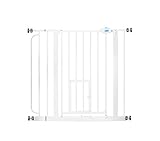
to create physical boundaries when guests arrive while you build reliability.
How to Handle the Whining Correctly in the Exact Moment It Happens
The most common mistake is delayed non-response — you hold out for 30 seconds, then finally look at the dog. That's not ignoring; that's a 30-second variable schedule, which actually strengthens the behavior.
True extinction means zero response from the first whine. If you can't manage that in a given moment, physically remove yourself or use a gate to create distance — calmly, without drama.
Managing the Environment While Training: Baby Gates, Tethers, and Timing
Set your environment up so the dog can't succeed at pestering you. Use gates to keep the dog in a separate space during high-temptation moments — your work calls, dinner, guests. This isn't punishment; it's management that prevents rehearsal of the unwanted behavior while the new habits take root.
Meeting the Real Need Underneath the Behavior: Exercise, Mental Stimulation, and Enrichment
The training protocol matters, but if you're pouring water into a bucket with a hole in the