Teaching Bite Inhibition in Adult Dogs (2026 Guide)
Most dog trainers will tell you that bite inhibition is something puppies learn before 16 weeks — and they're not wrong. But after 15 years of working with adult dogs who never got that early education, I can tell you something those same trainers often leave out: it's still teachable. Harder, yes. Slower, absolutely. Impossible? Not in my experience.
I've worked with everything from a 4-year-old Labrador who'd never learned that human skin wasn't fair game during play, to a rescued 7-year-old shepherd mix whose bite history had two previous owners ready to give up entirely. In both cases — and in dozens like them — consistent, structured training made a measurable difference.
The frustrating reality for most owners reading this is that you're dealing with a dog whose mouth habits are already grooved in. The neural pathways are established. The reflexes are practiced. That's a real obstacle, and I won't minimize it. But adult dogs are capable of remarkable learning when you give them the right conditions, clear communication, and — critically — enough time.
This guide walks you through every stage of the process: how to honestly assess where your dog is starting from, why management has to come before training, and which specific techniques actually move the needle with adult dogs. We'll also dig into the why behind the biting — because fear, arousal, and frustration each require a different approach — and finish with how to make your progress stick long-term.
Before any of that, it's worth understanding exactly why adult dogs present unique challenges that puppy-focused advice simply doesn't address.
Why Bite Inhibition Is Harder — But Not Impossible — to Teach Adult Dogs

If you've ever watched a litter of eight-week-old puppies play, you've seen bite inhibition being negotiated in real time. One puppy bites too hard, the other yelps and disengages, and the biter learns: that amount of pressure ends the fun. Repeated thousands of times across weeks of play with littermates and correction from mom, this is how a dog builds an internal pressure gauge — a learned understanding that mouths can cause pain, and that controlling bite force is how social relationships stay intact.
That window, roughly 3 to 16 weeks of age, is when bite inhibition is most naturally absorbed. By the time a dog reaches adulthood, those early lessons are either baked in or they aren't. And if they aren't, you're not dealing with a training gap so much as a rehabilitation process — which is a fundamentally different thing.
That distinction matters for how you approach this work.
The Difference Between a Dog Who Was Never Taught and One Who Unlearned It
These two situations look similar on the surface — an adult dog who mouths or bites too hard — but they require different starting points.
A dog who was never taught bite inhibition (think: removed from the litter too early, raised in isolation, or kept in a neglectful environment) has no internal reference point for pressure control. He's not being defiant. He genuinely has no learned concept that his bite force exists on a spectrum, or that modulating it is even possible. I worked with a three-year-old Lab mix named Hector in early 2026 who had been kept mostly isolated in a backyard for the first two years of his life. When he got excited and grabbed your arm, it wasn't aggression — it was just unfiltered contact. He had zero bite history, zero malice, and zero calibration. That's a dog who needs to be taught from scratch, and those cases tend to go well.
A dog who has unlearned bite inhibition is more complicated. Some dogs who experienced trauma, punishment-based training, or chronic frustration actually regress — their early inhibition gets overridden by fear or pain responses. These dogs may have had appropriate bite control at some point and lost access to it under stress. Rehabilitation here means not just teaching the skill, but also peeling back the emotional state that's hijacking it. (That territory is covered in depth in Section 5.)
Realistic Expectations: What 'Success' Actually Looks Like for an Adult Dog
Here's something I've learned from working with dozens of adult dogs on this issue: success rarely means perfect. What it means, practically, is:
- The dog can take

from your hand gently, even when excited
– Accidental contact — a grabbed sleeve, an over-enthusiastic greeting — doesn’t leave marks
– The dog shows *awareness* that pressure matters, and self-corrects during play
– You can read the moments when bite inhibition is likely to fail, and manage them proactively
What success probably doesn't look like, especially in dogs with significant socialization gaps, is a dog who performs flawlessly in every context with every person forever. And that's okay. It's an honest outcome.
Most adult dogs without an established bite history can make meaningful progress within 8 to 16 weeks of consistent, structured work. That's longer than a puppy — sometimes significantly longer — but the success rate for motivated owners working with dogs in that category is genuinely high.
The key word is consistent. This isn't a twice-a-week training class situation. It's a daily practice, woven into how you interact with your dog during regular life. A
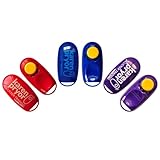
can help mark precise moments of soft mouth contact and speed up the feedback loop considerably, particularly in the early stages.
What I don't want you to take away from this section is discouragement. The adult brain is more set in its patterns, yes — but it is not rigid. Dogs remain learners their entire lives. The dogs I've seen make the most dramatic improvements in bite inhibition weren't puppies. They were adult dogs whose owners finally understood what they were actually working with, and committed to the process anyway.
That's where we're starting.
Assessing Your Dog's Bite Threshold Before You Start Training
Before you do a single training repetition, you need to know exactly what you're working with. Well-meaning owners who jump straight into bite inhibition exercises with dogs who have serious bite histories are, in effect, trying to jog on a broken ankle. The assessment phase isn't just preliminary paperwork — it determines which protocol you use, how quickly you can move, and whether you need professional support before you attempt anything at home.
Understanding Ian Dunbar's Bite Level Scale for Adult Dogs
Ian Dunbar's Bite Level Scale is the single most useful framework I've found for having honest conversations with dog owners about bite history. Here's a quick breakdown:
- Level 1 — Air snap or bite that makes contact but causes no mark on skin. Often a warning.
- Level 2 — Skin contact with no puncture. May leave a red mark or minor abrasion.
- Level 3 — One to four punctures from a single bite, none deeper than half the length of the dog's canine tooth.
- Level 4 — One to four punctures with at least one deeper than half the canine tooth length, plus possible tearing or bruising from the dog holding or shaking.
- Level 5 — Multiple Level 4 bites in a single incident, or multiple separate Level 4 incidents.
- Level 6 — A fatality.
Most adult dogs that owners bring to me for "mouthing problems" are working somewhere between Level 1 and Level 2 — nuisance behavior that's genuinely fixable with consistent owner-led training. But I once worked with a rescue Labrador mix whose new family described him as "mouthy during play." When I dug into his shelter history, I found a documented Level 4 bite to a previous adopter. That completely changed how we approached his case. What looked like rowdy enthusiasm was actually arousal-based reactivity with a documented history of serious injury. Knowing that distinction isn't academic — it's the difference between a training plan and a safety crisis.
When cataloguing your dog's history, be as specific as you can: What triggered each incident? Who was involved — a stranger, a family member, a child? Did the dog give warnings first, or did the bite seem to come out of nowhere? Context matters enormously. A Level 3 bite that happened during veterinary handling tells a different story than a Level 3 bite during a resource guarding episode with a housemate.
Identifying your dog's specific triggers before training is equally important:
- Resource guarding — food, toys, resting spots, even people
- Handling sensitivity — resistance to grooming, touching paws or ears, or restraint
- Fear responses — biting when the dog feels cornered or can't escape
- Arousal-based mouthing — escalating during high-energy play or greetings
Each of these requires a slightly different emphasis when layered onto your bite inhibition work, which is why knowing the why behind the biting matters as much as the how hard.
One practical tool I always recommend at this stage: film your dog. Set up your phone and capture normal interactions — greetings, play sessions, handling routines, mealtime. You're not trying to provoke anything; you're capturing baseline behavior. This footage is valuable in two ways. First, it gives you a before snapshot so you can see progress weeks from now rather than relying on memory. Second, if you end up consulting a professional remotely — increasingly common in 2026 — that footage gives them real behavioral data rather than your verbal description filtered through anxiety and hindsight. A
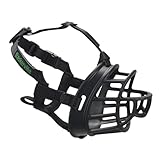
worn during video sessions can also yield useful information — does your dog accept the muzzle calmly, or does the handling required to put it on trigger stress responses? That alone tells you something important.
When to Bring in a Professional Before Attempting DIY Training
This is non-negotiable: any dog with a documented or suspected Level 3 bite history or higher needs a professional assessment before owner-led training begins. Specifically, you want either a licensed veterinary behaviorist (Dip ACVB) or a Certified Applied Animal Behaviorist (CAAB). Not a general trainer, not a board-and-train facility — a credentialed specialist who can evaluate your specific dog, rule out medical contributors like pain or neurological factors, and design a protocol that matches your dog's actual risk level.
Starting bite inhibition training with a Level 4 dog using techniques designed for Level 1 mouthing doesn't just waste time — it can reinforce dangerous patterns or create situations where someone gets seriously hurt. Get the assessment first. Then train.
The Foundation: Management First, Training Second
Management isn't admitting defeat — it's what makes training possible in the first place.
Every time an adult dog practices biting, that behavior gets more deeply wired. Neuroscience backs this up: repeated behavior literally strengthens the neural pathways associated with it. So if you're working hard on bite inhibition three days a week but your dog is still getting into biting situations on the other four days, you are working against yourself. Management and training have to run in parallel, not in sequence.
I worked with a Rhodesian Ridgeback mix named Brutus in early 2026 whose owner was genuinely confused about why his training wasn't sticking. After about twenty minutes of conversation, I identified the problem: his teenage kids were roughhousing with the dog every afternoon after school, reliably triggering the grabbing and mouthing they were trying to eliminate in formal sessions. No management plan was in place. Once we fixed the environment, Brutus's progress accelerated within two weeks. Same dog, same techniques — but now the training had room to breathe.
Setting Up Your Home Environment to Prevent Rehearsal
Start by writing down every known trigger your dog has. Be specific: visitors at the door, children running, hands reaching toward his face, high-pitched voices, playing tug past a certain arousal level. This is your trigger list, and it needs to be shared with every single person in the household.
Inconsistency between family members is one of the most common reasons bite inhibition training stalls. If one person is carefully managing every interaction while another casually lets the dog jump and mouth during play, the dog never gets a clean learning environment. Post the trigger list on the fridge if you have to.
Practical management tools that work for adult dogs:
- **
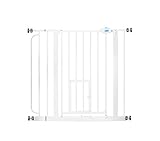
** to block access to high-trigger zones (front entryways, kids’ bedrooms, the kitchen during meal prep)
– **Tethering protocols** — a short drag leash or a fixed tether point that keeps the dog anchored in a calm space during known risk windows, like when guests arrive
– **Structured downtime** before and after high-arousal activities; an over-threshold dog is far more likely to bite than a settled one
– Removing **interactive toys or games** that escalate arousal until you’ve built more reliable bite inhibition in calmer contexts
Avoid the trap of "flooding" — deliberately exposing your dog to bite-triggering situations under the belief that he'll eventually work through it. What flooding actually does is spike cortisol, lower the bite threshold, and teach the dog that the overwhelming thing keeps happening regardless of his signals. You end up with a dog who bites faster, not slower.
How to Properly Condition an Adult Dog to a Basket Muzzle
A well-fitted basket muzzle is not a punishment — it's a safety tool that gives you freedom to train. When a dog can't bite, you can practice handling exercises, work with a trainer, or safely manage vet visits without impossibly high stakes. A
style basket muzzle is the right choice specifically because it allows the dog to pant, drink water, and take treats through the front — all critical for training.
The "muzzle love" conditioning process works like this:
- Day 1–2: Place the muzzle on the floor. Let the dog sniff it. Treat heavily. Repeat 5–10 times per session.
- Day 3–4: Hold the muzzle open and drop a high-value treat inside. Let the dog put his nose in voluntarily to get it. Never push or force.
- Day 5–7: Once the dog is nosing in eagerly, hold it in place for one second before releasing — and treat. Gradually increase duration.
- Week 2+: Fasten the clip briefly, treat repeatedly through the front, then remove. Build up to longer durations over days, not hours.
The whole process typically takes two to three weeks done correctly. Rushing it produces a dog who fights the muzzle — a setback you don't need.
The goal of all this management isn't to keep your dog restricted forever. It's to protect the training process long enough for new habits to form. Think of it as scaffolding: essential while you're building, but designed to come down once the structure can hold itself.
Core Training Techniques for Teaching Bite Inhibition in Adult Dogs
Teaching an adult dog to control mouth pressure requires a fundamentally different toolkit than what works with puppies. With the right protocols applied consistently, most adult dogs show measurable improvement within 3–6 weeks.
Why the Puppy "Yelp Method" Often Backfires With Adults
The classic advice — yelp loudly when teeth make contact, mimicking a littermate's pain response — works reasonably well for socially motivated puppies who genuinely want to repair the interaction. With adults, I've watched this go wrong in two very predictable ways.
For fear-based biters, a sudden high-pitched yelp is essentially an alarm sound. It spikes arousal, triggers a stress response, and can push a dog that was already over threshold into a more reactive state. I once worked with a 4-year-old rescue Shepherd mix whose previous owners had been faithfully yelping for months — and his biting had gotten progressively worse. The yelp wasn't correcting him. It was exciting him.
For attention-seeking biters, the yelp is practically a jackpot. A dramatic human reaction — noise, movement, eye contact — is exactly the social reward that reinforces the behavior. You think you're communicating pain; your dog thinks he's found the cheat code for getting your attention.
The reliable alternative for adults is immediate, calm, total withdrawal of attention — not after a full bite, but the moment you feel any increase in pressure. Turn your back. Walk out of the room if needed. No eye contact, no verbalization, no dramatic response. The absence of reaction is the message. Return calmly after 30–60 seconds and try again.
Hand Feeding Protocols: A Step-by-Step Daily Routine
One of the most underused techniques in adult bite inhibition work is turning every meal into a structured training session. This works best as a 2–4 week foundation protocol before adding any more complex work.
Here's how it works in practice:
- Feed your dog's entire daily kibble or wet food by hand, piece by piece or in small pinches
- The moment your dog's mouth is soft — lips relaxed, tongue contact rather than teeth — continue delivering food steadily
- The instant you feel any tooth pressure, freeze your hand completely and wait. Do not pull away sharply — that can trigger a grab reflex
- When the dog backs off or softens, immediately resume delivery
- Work in short sessions: 5–10 minutes, twice daily is more effective than one long session
A

can bridge the gap for dogs who eat too fast to train during meals initially — use it for one meal and do hand feeding at the second.
What makes this protocol powerful isn't just the repetition — it's the value transfer. Food delivery becomes conditioned to soft mouth contact. The dog learns that pressure makes the good thing stop, and softness makes it flow. Over 2–4 weeks, dogs consistently begin offering a gentler mouth proactively, even before food appears.
Using "Off" and "Gentle" Cues as Proactive Bite Inhibition Tools
Rather than only reacting to biting, teaching two specific cues gives you a way to interrupt and redirect before pressure happens.
"Off" means "remove your mouth from whatever it's on, right now." Train it in zero-stakes contexts first — ask for it when your dog is sniffing your hand, licking your arm, or mouthing a toy you're holding. Mark and reward the withdrawal. The goal is a cue that reliably breaks mouth contact before pressure escalates.
"Gentle" functions differently — it's a predictive cue you give before handing over a treat or during petting, signaling that soft behavior is expected in this moment. Pair it consistently with slow, controlled food delivery and calm handling. Over time, hearing "gentle" primes the dog neurologically for a lower-arousal, more inhibited response.
This connects to something often overlooked: impulse control exercises — "leave it," loose-leash walking, waiting at doorways — build the same inhibitory neural pathways that bite control relies on under stress. A dog who has practiced hundreds of repetitions of "I want it, but I wait" has a genuinely stronger braking system. Start easy, make it habitual, and that restraint generalizes further than most owners expect.
Addressing the Root Causes: Fear, Arousal, and Frustration-Based Biting
If your dog is biting because they're terrified, overstimulated, or at the end of their emotional rope, teaching them to bite more softly is like putting a bandage over a broken bone. You have to address why the biting is happening, or you'll endlessly patch a symptom while the underlying problem gets worse.
Counter-Conditioning Specific Bite Triggers in Adult Dogs
Fear-based biting is the one I see most often mishandled. Owners focus entirely on the bite — the moment of contact — when the real intervention needs to happen 30 seconds before that, when the dog first notices the trigger and the anxiety starts climbing.
Counter-conditioning means systematically pairing the thing your dog fears with something genuinely wonderful, until the emotional response shifts. If your dog bites when strangers reach toward their face, you're not just teaching "don't bite strangers." You're teaching "a stranger reaching toward my face predicts good things." These run in parallel — you're not choosing one or the other.
The process in practice:
- Identify the specific trigger at the lowest possible intensity (a stranger at 10 feet away, not 2 feet)
- Deliver high-value treats the moment the dog notices the trigger, before any stress escalates
- Work in multiple short sessions (5 minutes or less) daily
- Increase intensity only when the dog is showing relaxed, happy anticipation at the current level
I worked with a 4-year-old German Shepherd mix named Hector in early 2026 who had been biting delivery drivers for two years. His owners had tried corrections, citronella, everything. What actually moved the needle was pairing the sight of the delivery van from inside the house — before Hector could reach the door — with a

loaded with peanut butter. Within six weeks, he was alerting to the van and then immediately looking at his owner for his lick mat. Not perfect, but no bites since.