Blind Dog Training Tips & Home Adjustments (2026)
Most blind dogs don't know they're supposed to give up.
I've worked with hundreds of dogs over my career, and some of my most determined, joyful, well-adjusted clients have been dogs with zero vision. What consistently surprises new owners — and honestly, what surprised me early on too — is how little blindness actually limits a dog's quality of life when the humans around them know what to do.
The hard part isn't the blindness itself. It's the first few weeks, when everything feels chaotic and heartbreaking, and you're second-guessing every decision. I've sat with owners who were convinced their dog was suffering, only to watch that same dog confidently navigate their home, respond to new verbal cues, and wrestle playfully with a housemate eight weeks later. The transformation is real — but it requires a clear plan.
That's exactly what this guide gives you. You'll learn how your dog is actually processing their world right now (it's more capable than you think), what to do in the critical first 72 hours after a diagnosis, and which home adjustments make the biggest practical difference. From there, we'll cover the specific training commands blind dogs need, how to handle outdoor walks safely, and how to keep your dog mentally sharp and emotionally confident long-term.
Whether your dog lost their sight suddenly due to injury, or you're managing a gradual condition like progressive retinal atrophy or SARDS, this guide applies to you.
Let's start where most owners have the most urgent questions — understanding what your dog is actually experiencing right now.
Understanding Blindness in Dogs: What Your Dog Is Actually Experiencing
Before you can help your blind dog thrive, you need to understand what's actually happening inside their world — and it's very different from what most owners imagine in those first panicked hours after a diagnosis.
Common Causes of Blindness in Dogs and How Each Affects Training Timeline
Not all blindness is the same, and this distinction matters enormously for how quickly your dog will adapt and how you should approach early training.
Gradual vision loss — caused by conditions like progressive retinal atrophy (PRA) or cataracts — gives your dog months or even years to quietly compensate. Dogs experiencing this type of loss are essentially building their non-visual map of the world while they're still losing their sight. By the time they're fully blind, they've already been practicing. I've worked with Labrador Retrievers with late-stage PRA who were so thoroughly adapted that their owners genuinely hadn't noticed the full extent of the vision loss until a vet appointment confirmed it.
Sudden-onset blindness is an entirely different situation. Conditions like SARDS (Sudden Acquired Retinal Degeneration Syndrome), acute glaucoma, or trauma can take a dog from full sight to complete darkness in hours or days. These dogs experience genuine disorientation — they have a detailed visual memory of their environment but suddenly can't access new visual information to confirm it. Expect a harder initial adjustment period of two to four weeks, and don't mistake early confusion for permanent inability.
The practical training implication: a dog who lost vision gradually is often ready to start learning new verbal cues within days. A dog who went blind suddenly may need a full week of calm decompression before formal training sessions are productive.
Early warning signs owners commonly miss:
- Bumping into objects consistently on one side (suggesting partial or one-eye vision loss)
- Startling when approached closely, especially from the front
- Reluctance to use stairs or jump onto furniture in dim lighting
- Cloudy or dilated pupils that don't respond normally to light
- Increased clinginess or anxiety in unfamiliar spaces
If you're seeing these signs, get a veterinary ophthalmology referral. Early diagnosis changes the training approach significantly.
How Dogs Mentally Map Their Environment Using Non-Visual Senses
Here's what every owner of a newly blind dog should genuinely internalize: your dog is not experiencing the world the way a blind human does. A dog's nose contains roughly 300 million olfactory receptors — compared to our 6 million. Their hearing captures frequencies and spatial information we can't perceive. Blindness removes one sense from a system that was never primarily dependent on vision to begin with.
I watched a seven-year-old Beagle named Rosie navigate her backyard three weeks after losing both eyes to glaucoma. She trotted the fence line, located her favorite digging spot, and found her water bowl without a single hesitation. Her owner was in tears — not from sadness, but from the realization that Rosie had essentially rebuilt her world from scent and memory while they'd been worrying.
Dogs build cognitive spatial maps using a combination of scent trails, sound echoes, air current changes, and texture underfoot. The corner of a room smells different from the middle. A doorway creates a distinct air pressure change. Carpet ends where tile begins. These are the landmarks your blind dog is using constantly, and they're remarkably reliable.
This brings me to the single most important thing I tell owners in my first session with them: your emotional response to your dog's blindness may cause more setbacks than the blindness itself. When you're anxious, tense, or grieving — and grief is completely normal here — your dog reads that through your breathing, your muscle tension, and the quality of your leash handling. To them, that anxiety signals danger. I've seen newly blind dogs who were progressing beautifully start showing fear responses, appetite loss, and increased disorientation simply because their owners were inadvertently communicating that something was terribly wrong.
A
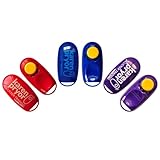
and a
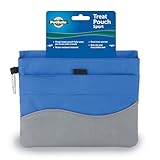
kept on your body serve a secondary purpose beyond training mechanics — they give you something concrete and positive to *do*, which helps regulate your own emotional state during those early weeks.
Your dog's blindness is a management challenge, not a tragedy. The sooner you genuinely believe that, the faster your dog will confirm it.
The First 72 Hours: Immediate Steps After a Blindness Diagnosis
The call from the vet confirming your dog has lost their vision is genuinely devastating. The instinct is almost always the same: do something. Move things around to help. Carry the dog. Bubble-wrap the house. That impulse is understandable — but acting on it in those first few days is one of the most common ways owners accidentally make recovery harder.
Here's what actually helps.
What NOT to Do in the First Week (Common Mistakes That Set Dogs Back Months)
Do not rearrange your furniture. Your dog has spent months or years building a precise mental map of your home — where the couch sits, how many steps to the water bowl, the exact angle of the hallway corner. That map is still intact and fully functional the moment they lose their sight. The moment you move the coffee table "to give them more room," you've erased that spatial learning and reset their confidence to zero.
I watched this happen with a client's 9-year-old Labrador named Hector in early 2026. His owner, meaning well, completely rearranged the living room the same afternoon she got the diagnosis. Within 48 hours, Hector was frozen in the middle of the room, refusing to move. It took three weeks of careful work to rebuild what had taken him years to learn naturally.
Do not carry your dog everywhere. It feels protective, but it denies them the chance to use their remaining senses — hearing, smell, whisker sensitivity — to relearn navigation. Let them move. Let them make contact with familiar surfaces. That's how confidence rebuilds.
Start the Verbal Warning System Immediately
Within the first few hours, introduce what I call a verbal warning cue — a single, consistent word you'll use before any potentially surprising interaction: before touching the dog, before stairs, before doorways, before obstacles. I use the word "careful" with most of my clients, though "easy" works equally well. The word itself doesn't matter. The consistency does.
Say it calmly, once, then pause a beat before the interaction. Over time — and faster than you'd expect — your dog begins to understand that word as a heads-up that navigation or touch is coming. This becomes the single most important foundation for everything else you'll train later.
Scent-Mark Key Locations Within 48 Hours
Smell is now your dog's primary GPS system. Within the first two days, begin scent-marking important locations using pet-safe essential oils applied to a cotton ball or a small piece of fabric near (not directly on) key spots. I use lavender near the water bowl area and eucalyptus near the door to the yard — two distinct scents that create consistent, reliable landmarks.
Keep the scents subtle. A single drop on a nearby surface is plenty. You're creating olfactory signposts, not a spa.
Emergency Safety Checklist for Newly Blind Dogs
Before your dog navigates the home independently, do a safety perimeter assessment. Get on your hands and knees and move through every room at your dog's eye level. You're looking for:
- Sharp furniture corners at face and chest height
- Stairwell openings that have no barrier — install a
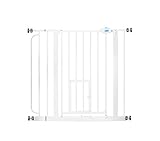
at the top of any staircase immediately
– **Pool edges, deck drops, or raised garden beds** in the yard
– **Gaps between furniture** where a dog could become wedged and panic
– **Loose rugs** that slide underfoot and disrupt footing confidence
This walk-through consistently surprises owners. The leg of a glass coffee table is nearly invisible at dog level. A three-inch drop off a deck edge is a significant fall for a disoriented animal.
Book the Ophthalmology Consult This Week
Schedule a veterinary ophthalmology appointment within the first seven days. Not all blindness is permanent. Treatment options for conditions like cataracts, SARDS, and certain inflammatory conditions have expanded significantly, and early intervention can sometimes matter enormously for outcomes. A general vet can confirm vision loss; an ophthalmologist can tell you why and whether anything is recoverable.
The first 72 hours feel enormous. Take them one step at a time: don't move anything, start your warning word, mark the scents, check the hazards, call the specialist. Everything else can wait.
Home Adjustments That Make the Biggest Difference
When I walk into a client's home after their dog has lost vision, I'm not looking at it the way they are. I'm crouching down, tracing the paths between rooms, thinking about what information that dog's paws, nose, and ears can pick up. The home doesn't need a complete overhaul — but it does need to be redesigned around different senses. Here's what actually moves the needle.
Room-by-Room Safety Guide: Kitchen, Living Room, Stairs, and Yard
Scent trails are one of the most underused tools I've seen transform a blind dog's independence. Using a pet-safe diluted lavender spray (a few drops in a water bottle, nothing more), map out a light mist along baseboards — from the bedroom doorway to the water bowl, from the living room to the back door. I had a client with a 9-year-old Labrador named Biscuit who went blind from SARDS. Within five days of laying those scent trails, Biscuit was navigating the hallway to the kitchen without a single hesitation.
Texture mapping works in parallel. Place distinct floor mats or carpet runners at every decision point your dog needs to make:
- The top and bottom of every staircase
- The entrance to the kitchen (where hard flooring often starts)
- Directly beside the water and food bowls
- The threshold of your back door
The paws register the texture change a half-second before the brain catches up — and that half-second is everything. It tells the dog where they are without requiring any mental reconstruction. A
at the top of stairs provides a useful backup during the first few weeks until those texture cues are fully solid.
In the living room, the single most important thing you can do is stop moving furniture. Moving a coffee table two feet doesn't just cause a collision — it breaks the dog's trust in their own mental map, which takes days to rebuild. Commit to a layout. If you need to rearrange, do it deliberately and walk your dog through the new configuration several times with treats.
Sound anchors are equally powerful. A small tabletop water fountain near the water bowl creates a consistent auditory landmark. A ticking clock in the bedroom helps the dog orient toward their sleeping space. These aren't tricks — they're spatial reference points that replace visual landmarks your dog no longer has.
Outdoor Space Adjustments: Fencing, Pathway Markers, and Yard Safety
If you have a pool or elevated deck, install a solid barrier immediately. This is not optional. Blind dogs have no visual warning before a drop or edge, and the panic response in water — especially in a dog already anxious about their environment — is a genuine drowning risk that owners consistently underestimate. A pool fence needs to be solid or fine-mesh, not decorative railing a dog can fall through.
For yard navigation, scent trails work outdoors too — diluted lavender or a pet-safe marking spray along a garden border or fence line helps create a perimeter the dog learns to follow. Stepping stone pathways from the door to the grass area give consistent texture underfoot. Keep garden hoses, tools, and kids' toys off those paths entirely.
Budget-Friendly vs. Premium Adaptive Home Products for Blind Dogs in 2026
You don't need to spend a fortune. Here's an honest breakdown:
Budget-friendly (under $30 total):
- Rubber-backed bath mats from any home goods store for texture mapping
- A cheap plug-in fountain from a pet store
- DIY scent trail spray (distilled water + 2–3 drops lavender, under $5 to make)
Premium options worth considering:

at feeding stations — adds nose engagement and location anchoring simultaneously
– Purpose-built **halo harnesses** designed for blind dogs that create a bumper ring around the head to absorb light collisions (several brands now produce these in the $40–$80 range)
– Smart home night lights with motion sensors along key routes — useful if your dog retains any light perception
The budget approach works just as well as the premium one in most cases. What matters is consistency, not cost. Pick a system, implement it fully, and make sure everyone in your household knows not to move, remove, or change any of it without telling you first.
Core Training Commands Every Blind Dog Needs to Learn
When a dog loses their vision, your voice becomes their eyes. That's not a metaphor — it's a literal functional shift in how they navigate the world. The commands in this section aren't tricks or extras. They're the vocabulary your dog needs to stay safe, confident, and connected to you.
Start Here: The 'Careful' Warning Cue
If I could only teach a blind dog one thing, this would be it. 'Careful' (some trainers use 'watch it' — pick one word and stick with it) means slow down, something is in front of you. It replaces the visual information the dog no longer has access to.
I worked with a 7-year-old Labrador named Biscuit who lost his sight to SARDS in early 2026. His owner had been letting him bump into the coffee table repeatedly, assuming he'd eventually map it. He didn't — he just started flinching constantly. Within three days of teaching 'careful' paired with a gentle stop before each piece of furniture, Biscuit was moving through the living room with noticeably less tension in his whole body. The word itself became a comfort signal.
Teach it this way: say 'careful' calmly before the obstacle, guide your dog to a stop, then treat. You're not correcting anything — you're predicting. Do this every single time for the first two weeks until the word alone causes a natural slow-down.
The Five Commands That Build a Functional Foundation
1. 'Find it' (nose-work redirect)
Blind dogs compensate immediately by ramping up their sniffing. This command channels that behavior productively. Drop a

on the ground, say ‘find it,’ and let them work. It builds confidence *and* mental stamina simultaneously — two things they need urgently right now.
2. 'Step up' and 'step down'
Teach these at curbs and stairs with a treat lure timed to the exact moment each paw transitions. Say 'step up' as the front paw lifts, not before, not after. Run 5–10 repetitions per session for 3–5 consecutive days before you expect reliability outdoors. Rushing this — attempting a long walk with stairs before the cue is solid — is one of the most common mistakes I see.
3. Touch targeting (nose-to-hand)
Hold your flat palm near your dog's nose and wait. The moment they make contact, click or mark with 'yes' and treat. Over several sessions, ask for the touch from a foot away, then two feet. The result is a mobile anchor point — your hand becomes something they can follow through crowds or unfamiliar spaces without needing leash pressure. It's a game-changer in veterinary waiting rooms.
4. Name recognition sharpening
For a sighted dog, their name might just mean 'something's happening.' For a blind dog, it needs to mean orient your ears to my voice immediately. Run 30-second recall games 3x daily for the first month: say the name once, and the instant they turn toward you, treat enthusiastically. Use your highest-value reward — real chicken, cheese, whatever makes their nose go wild.
Positive Reinforcement Timing for Blind Dogs: Why the Clicker Becomes Even More Powerful
Sighted dogs can read your body language to fill in the gaps when your timing is slightly off. Blind dogs can't. A
bridges that gap with a precise, consistent sound that marks the *exact* moment of correct behavior — before you’ve fumbled for a treat. In my experience, blind dogs often progress faster with a clicker than sighted dogs do, because they’re already tuned in so acutely to sound.
Training Session Length and Frequency: Avoiding Cognitive Overload
Keep sessions to 5–8 minutes maximum, especially in the first month. Blind dogs are processing an enormous amount of auditory and olfactory information just to exist in a space. A training session adds cognitive load on top of that.
Three short sessions daily outperforms one long session every time. Watch for these signs you've pushed too far: yawning mid-session, sniffing the ground disinterestedly, or simply walking away. Those aren't stubbornness — they're a dog telling you their brain is full. Respect it, end on a success, and pick up tomorrow.
Teaching the 'Touch' Target Command Step by Step
- Hold your flat hand 2–3 inches from your dog's nose, palm facing them
- Stay completely still and patient — let curiosity do the work
- The instant nose meets palm, mark with 'yes' or a click and deliver a treat
- Repeat 8–10 times, then end the session
- Next session, gradually increase the distance your hand is from their nose
- Once solid, add the verbal cue 'touch' just before presenting your hand
- Practice in new rooms and eventually outdoors — generalization matters
Within a week, most dogs will be confidently nose-bumping your hand on cue. That small behavior opens up a surprisingly large world for them.
Leash Walking and Outdoor Navigation With a Blind Dog
The outdoors is a completely different sensory landscape for a blind dog — full of unpredictable sounds, unfamiliar smells, and surfaces that appear without warning. The dogs who struggle most on walks aren't struggling because of their blindness. They're struggling because their owners haven't yet developed a shared language for navigating the world together. That language is learnable, and it makes an enormous difference.
Build a Pre-Walk Ritual and Stick to It Obsessively
Before you ever touch the front door handle, your blind dog should already know what's coming. Develop a verbal pre-walk sequence — the same words, in the same order, every single time. Something like: "Walk time. Harness on. Good boy. Leash on. Almost ready. Let's go."
This might sound excessive, but consider what a suddenly opening door means to a dog who can't see: an unexpected rush of sound, wind, and unfamiliar scent with zero visual context. That's startling at best, anxiety-inducing at worst. A consistent verbal sequence gives your dog about 60 seconds of orientation before that door opens. After two or three weeks, you'll see the difference — ears forward, body relaxed, tail up. They're ready because they knew it was coming.
Leash Pressure as a Steering Language
One of the most practical skills I teach owners is using gentle leash tension as directional communication:
- **