How to Train Your Dog to Spin in a Circle (2026)
Most dog owners are shocked to discover that the spin — that cute, dizzy little circle trick — is one of the fastest skills a dog can learn, often in a single 5-minute session. I've taught it to everything from bouncy 8-week-old puppies to stiff-jointed senior dogs, and it almost never fails to click quickly. That makes it a goldmine for building confidence in nervous dogs, momentum in stubborn ones, and genuine enthusiasm in dogs who've started to find training boring.
I'll be honest — when I first started training dogs professionally in the early 2010s, I treated the spin as just a party trick. Something to impress guests. It took a few years of working with reactive and fearful dogs before I realized how much therapeutic and foundational value this tiny behavior actually carries. A dog that can spin on cue has learned to follow a lure, respond to a hand signal, and offer body movement willingly. Those are skills that transfer directly into heel work, agility, and cooperative care routines.
In this guide, I'll walk you through everything from the very first lure placement to teaching distinct left and right spins by name — the way I'd teach it if you were standing right beside me in a training session. You'll also get my honest troubleshooting advice for the problems I see most often: dogs that half-spin and stop, dogs that grab for the treat, and dogs that just stare at you like you've lost your mind.
Whether you're brand new to trick training or looking to polish a shaky spin, let's start with why this trick deserves a permanent spot in your training toolkit.
Why Teaching the Spin Is One of the Best Foundation Tricks
If I had to pick one trick to teach every single dog I work with — regardless of age, breed, or training history — the spin would be in my top three, every time. I've used it with nervous rescue dogs, high-drive border collies, and stubborn bulldogs who seemed convinced that cooperation was optional. In almost every case, it delivered results that went well beyond "my dog knows a party trick."
Here's why I keep coming back to it, and why I think you should start here too.
It Builds Body Awareness From the Ground Up
Most dogs have surprisingly poor rear-end awareness. They know their front end exists — that's where the treats go, after all — but their back half? Often a mystery to them. When I started working with a young Australian Shepherd named Piper in early 2026, she was constantly knocking agility jump wings with her hindquarters because she simply didn't know where they were. Three weeks of consistent spin training, and her tight turns on course improved dramatically.
The spin forces a dog to coordinate all four limbs through a controlled, full-body rotation. That physical demand builds proprioception — the dog's sense of where its body is in space — in a way that a simple sit or down never does. For any dog you're thinking of taking into agility, rally, or canine freestyle, this is essentially foundational physical therapy disguised as a fun game.
Five Minutes of This Will Tire Your Dog Out
I hear this from owners constantly: "We walked for an hour and he's still bouncing off the walls." Here's the thing — physical exercise and mental exercise are not the same, and dogs need both.
Spin training is cognitively demanding. Your dog is learning to read your hand signal, sequence a full rotation, and check back in with you for reinforcement — all in rapid succession. In my experience, 5 minutes of focused spin training tires many dogs more effectively than a 20-minute walk. I've seen genuinely hyper adolescent dogs settle into a calm down-stay after nothing more than a short spin session. It's not magic; it's mental fatigue doing its job.
A
and a handful of

are all the equipment you need to deliver that kind of enrichment in your living room, on a rainy day, with zero prep time.
The Luring Mechanics Transfer Directly to Other Tricks
This is the part most beginner trainers don't realize until they're already several tricks in: the way you lure a spin is nearly identical to how you lure a bow, a rollover, and even weave pole entries. The arc of the hand, the pace of movement, the timing of the reward — once your dog understands how lure-following works through the spin, every subsequent trick has a shorter learning curve.
Teaching the spin first is essentially installing an operating system. The individual tricks are just apps.
It Quietly Reduces Reactivity and Motion Sensitivity
This one surprised me the first time I observed it deliberately. Dogs that are anxious about fast movement — whether from a handler, another dog, or environmental chaos — tend to become sensitized to rapid motion over time. Spin training, done gradually and positively, habituates dogs to deliberate handler movement in a context that is entirely safe and reward-rich.
I've worked with a handful of leash-reactive dogs where regular spin training formed part of a broader desensitization protocol. It's not a standalone fix for reactivity, but it builds a dog's comfort with motion and focus on the handler — two things that genuinely matter when you're trying to redirect attention on a busy street.
Left and Right Spins: A Benefit Most People Overlook
When you eventually teach both a left spin (commonly called "spin") and a right spin (often called "twist"), you're doing something genuinely useful for your dog's physical health: promoting symmetrical muscle development. Just like a human athlete who trains both sides of the body, a dog that practices rotational movement in both directions develops more balanced core and hindquarter musculature.
It's a small thing, but over months and years of training, it adds up — and that's the kind of detail that separates thoughtful training from going through the motions.
What You Need Before You Start Training
Before you ask your dog to do anything, you need to set them up to succeed. I've watched plenty of enthusiastic owners jump straight into spin training with the wrong treats, in the wrong location, in sessions that run way too long — and then wonder why their dog looks confused or checked out after five minutes. A little preparation makes the difference between a dog who nails this trick in two days and one who's still wandering in random circles two weeks later.
Choosing the Right Treats for Luring vs. Rewarding
The spin relies heavily on lure-based training, which means your treat needs to hold your dog's nose like a magnet. If your dog can take it or leave it, the lure won't work.
For luring specifically, you want something small, soft, and genuinely exciting. I've had great results with Zuke's Mini Naturals — they're already pea-sized right out of the bag, which is ideal. When I'm working with a dog who needs extra motivation, I'll switch to small cubes of cooked chicken breast cut to roughly 1cm × 1cm. That size is important: big enough to smell and feel rewarding, small enough that your dog doesn't fill up after eight repetitions.
Here's a rule I follow with every dog I train: 10 treats in a session should feel like a light snack, not a meal. If your dog is losing interest by treat number six, there's a good chance the pieces are too large, or the treat itself isn't high-value enough for the environment you're working in.
Keep your
accessible and ready to go before the session starts — fumbling with a bag while your dog waits kills the momentum entirely.
Setting Up Your Training Space for Success
Where you train in the early stages matters almost as much as how you train. I made the mistake years ago of trying to introduce new tricks at a community dog park, thinking the other dogs nearby would motivate the one I was working with. What actually happened was thirty seconds of engagement followed by total distraction. It set us back by several days.
For initial spin training, stick to a low-distraction environment:
- A quiet living room with the TV off
- A fenced backyard in the early morning before the neighborhood gets noisy
- A garage or basement if you have one — anywhere that gives you a boring, predictable backdrop
You're not training for the park yet. That comes later, once the behavior is solid (covered in the proofing section). Right now, your dog's full attention is the resource you're protecting.
Session length is non-negotiable for me: 3 to 5 minutes maximum, two to three times per day. I use a simple phone timer. When it goes off, the session ends — even if things are going well. Short sessions prevent frustration, keep your dog mentally fresh, and actually build retention faster than long grinding sessions ever will. Dogs consolidate learning during rest periods, so those breaks between sessions are doing real work even when you're not.
One more thing to sort out before you begin: your marker system. A marker is the precise signal — delivered the instant your dog does the right thing — that communicates "yes, that behavior earns a reward." You can use a
for a sharp, consistent sound, or a verbal marker like **”yes”** said in a bright, clear tone. Either works. What doesn’t work is switching between both randomly, or using “yes,” “good,” “nice,” and “yep” interchangeably. Pick one and commit to it now, before your first session.
If your dog has never followed a lure before, don't skip ahead. Spend two to three days doing simple nose-target exercises — hold a treat near your dog's nose and reward them for following your hand a few inches left, then right, then in a small arc. Once they're reliably tracking the lure with their nose, you're ready to build the full spin. Rushing past this foundation is one of the most common reasons the spin breaks down early.
Get these basics right, and the actual training will feel almost easy.
Step-by-Step: Teaching the Spin Using Lure-Based Training
This is where the real work happens — and honestly, where most people either nail the foundation or accidentally teach their dog a lopsided oval. Breaking the spin into three distinct phases is the single biggest factor in whether your dog ends up with a clean, confident circle or a hesitant shuffle that never quite comes together.
Before you begin each session, grab something genuinely motivating. Soft, pea-sized pieces work best here — you need a treat your dog can smell clearly through a closed fist.
I also strongly recommend having a
ready, or a crisp verbal marker like “yes,” so your timing is sharp.
How to Hold the Lure Correctly (Hand Position Breakdown)
Your hand position dictates everything. Hold the treat pinched between your thumb and index finger, knuckles facing up, at your dog's nose level — not above it, not below it. Think of your hand as the tip of a compass needle; your dog's nose should be magnetized to it.
The most common grip mistake I see is holding the treat too loosely, which means the dog can get it early and the lure loses its power. Squeeze firmly enough that they can smell it but can't steal it.
Phase 1 — The Quarter Circle (Days 1–2)
Start with your dog standing in front of you. Move your lure hand in a slow, deliberate arc toward their shoulder blade — as if you're drawing the first quarter of a clock face starting at 12 and moving toward 3. The moment their head turns approximately 90 degrees, click and reward immediately.
Keep sessions short: 5 repetitions, then a break. You're not building a full behavior yet — you're teaching your dog that following this hand arc pays off.
Phase 2 — The Half Circle (Days 2–3)
Once your dog is turning into that quarter arc confidently 8 out of 10 attempts, extend your arc to 180 degrees before marking. You're now guiding them from their nose, around their shoulder, and toward their hip.
I'll be honest — this is the phase I used to rush early in my career, and I paid for it every time. One dog I worked with, a young Border Collie mix named Pepper, would make it to about 160 degrees and then pop her head up looking for the treat before completing the motion. It took us an extra week to unlearn that anticipation because I'd moved to the full circle too fast. Resist the temptation to skip ahead. Fluency at 180 degrees is what makes the full circle feel effortless rather than forced.
Phase 3 — The Full Circle (Days 3–5)
Now complete the full 360-degree arc. Guide your dog's nose all the way around until all four paws return to their starting position — and this is where timing becomes absolutely critical. Mark the exact moment their body completes the circle, not a half-second after. A late click rewards the dog standing still rather than the completion of movement.
A word on luring speed: go slower than feels natural. Early in my training days, I'd move my hand at a pace that worked for me, not my dog. The result was that dogs would lose the scent of the treat mid-arc, break off the circle, and look up confused. The treat in a closed fist has to be detectable the entire time — slow, smooth, and consistent.
Troubleshooting: What to Do When Your Dog Stops Mid-Circle
If your dog stalls partway through, don't repeat the cue or nudge them forward. Instead, back up one phase. If they're stopping at 270 degrees, return to rewarding the half circle for another session or two. Breaking down is always a sign you advanced too quickly — it's information, not failure.
Knowing When to Move to the Next Phase
The rule I use: 8 successful repetitions out of 10 attempts, across two separate short sessions. Not just one good session — dogs can have a great day that doesn't reflect true understanding. Consistent performance across sessions is your green light.
Reward placement tip: always deliver the treat at nose height, directly in front of your dog after completion — never from the side. Reaching to the side pulls their head off-center on the final step and gradually warps the shape of the circle over dozens of repetitions. Front and center, every time.
Fading the Lure and Adding a Verbal Cue
This is the stage where most people either rush ahead too fast or stall out entirely — and I've been guilty of both at different points in my training career. Getting the timing right here is what separates a dog who really knows "spin" from one who's just following your hand around in circles.
The Difference Between a Lure and a Hand Signal
A lure is food that physically guides the dog's body. A hand signal is a gesture that communicates what you want. They can look almost identical from the outside, but your dog experiences them very differently — and that distinction matters enormously as you move forward.
When you're luring, your dog is essentially following their nose. When you fade the lure, you're asking them to respond to a visual cue without the food incentive built into the motion itself. Most dogs are ready to make this transition around days 5–7 of training, once they're completing full circles with 90% or better consistency. Don't rush this. If you fade too early and your dog starts failing, you haven't taught them anything — you've just removed the scaffolding before the building is finished.
Here's how I fade the lure in practice: I take the treat out of the hand I'm using to signal, hide it in my other hand, and run through the exact same circular arm motion. My dog doesn't know the treat has moved. When they complete the spin, I mark it (either with a verbal "yes!" or a
) and deliver the treat from my other hand. To the dog, it looks like magic. To me, it’s the beginning of a real trained behavior.
Over the following 7–10 days, I gradually shrink that arm arc — full circle → elbow leading the motion → wrist → a smaller finger rotation. I think of it like slowly turning down a dial. I had a Border Collie mix named Remy who was so motion-sensitive that I could condense my spin signal to a single extended finger making a tight clockwise loop — no bigger than drawing a quarter on a whiteboard — within two weeks. That's the goal: a clean, compact hand signal that your dog reads clearly.
Keep your
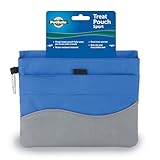
clipped to your hip during this phase. You want fast, frictionless treat delivery so your timing doesn’t slip.
How to Test Whether Your Dog Truly Understands the Cue
Before you add any verbal cue, confirm the hand signal is working on its own. My rule: if your dog completes the spin 7 out of 10 attempts using only the hand signal with no food in the signal hand, the behavior is solid enough to start layering in a word.
Now, about that word — and when to introduce it. Add the verbal cue later, not earlier. I know that feels counterintuitive. The word is the whole point, right? But dogs are physical learners first. If you say "spin" while they're still figuring out what the lure is asking them to do, that word becomes background noise — meaningless syllables attached to confusion. I've retrained plenty of dogs whose owners had been saying "spin spin SPIN" for weeks and achieved nothing except a dog who'd learned to tune out the word entirely.
The correct sequence is:
- Say your chosen word once ("spin," "around," "twirl" — pick one and stick with it)
- Pause one beat
- Give the hand signal
That pause is doing real work. It gives your dog a split second to process the word before the signal arrives, which is exactly how the association gets built.
After about a week of pairing word + signal consistently, run your true understanding test: stand still, say your cue word once, and keep your hands at your sides. Does your dog spin? If they get it right 7 out of 10 tries across a few different sessions, in a few different spots, then congratulations — your dog genuinely knows what "spin" means. That's not just a trick. That's communication.
Teaching the Opposite Direction (Left vs. Right Spin)
Once your dog is spinning fluently in one direction — responding consistently off-lure with a clean verbal cue — it's time to introduce the second direction. This is where a lot of owners stop, assuming one spin is enough. That's a missed opportunity, and over the long term, it can work against your dog physically.
I've worked with competition dogs whose handlers trained only a single-direction spin for over a year. By the time those dogs were performing regularly, you could see the asymmetry: tighter muscle development on one side, a subtle stiffness when turning the other way. One Border Collie named Remy had such a strong clockwise preference that she'd initiate a clockwise spin when asked for a sit if she was overstimulated. Her body had defaulted to one movement pattern. Teaching both directions from the beginning — in the right sequence — prevents exactly this.