Australian Cattle Dog Mental Stimulation Needs (2026)
A 30-minute walk won't even take the edge off an Australian Cattle Dog. I learned this the hard way with my first ACD, a blue heeler named Striker, who dismantled an entire couch cushion in under four minutes — after a two-mile morning run. He wasn't being destructive out of spite. He was bored out of his mind, and I simply didn't understand what I'd signed up for.
Here's the truth most people don't hear before bringing one of these dogs home: ACDs aren't just physically demanding — they're cognitively demanding in a way that puts most other breeds to shame. These are dogs purpose-built over generations to make independent decisions while managing livestock across rugged Australian terrain for eight to ten hours a day. That brain doesn't switch off because you live in a suburb.
In my 15+ years working with herding breeds, I've seen more Australian Cattle Dogs surrendered, rehomed, or labeled "problem dogs" for one reason above all others: chronic mental understimulation. The good news? Once you understand what this breed genuinely needs — and how to deliver it sustainably — ACDs become some of the most rewarding dogs you'll ever train.
This guide covers everything from recognizing the warning signs of a mentally starved ACD to building a practical daily enrichment routine using training, scent work, puzzle feeders, and dog sports. Whether you have a puppy or a five-year-old cattle dog who's slowly destroying your sanity, you'll leave with a real action plan.
Let's start at the root of everything — why the ACD's mental needs are so different from the average family dog.
Why Australian Cattle Dogs Have Unusually High Mental Stimulation Needs

If you've ever watched an Australian Cattle Dog figure out how to unlatch a gate, dismantle a baby-proof cabinet lock, or systematically remove every cushion from your couch, you've witnessed something that's equal parts impressive and infuriating. That's not a bad dog. That's a working brain doing exactly what it was designed to do — solve problems — just without an appropriate outlet.
Understanding why ACDs are wired this way is the first step toward actually meeting their needs.
The 150-Year Blueprint for an Independent Problem-Solver
Australian Cattle Dogs weren't bred to sit next to a shepherd and wait for instructions. They were bred to move massive, stubborn cattle — animals that can weigh 10 times what they do — across hundreds of miles of rugged Australian outback, often making split-second decisions on their own. When a 1,000-pound bull breaks from the herd and heads for the scrub, there's no time to check in with the stockman. The dog has to assess, decide, and act.
That selective pressure, applied consistently over 150+ years, produced a dog with a fundamentally different cognitive profile than most other breeds. ACDs aren't just athletic. They are independent decision-makers with a baseline neurological drive to be actively engaged with a problem at all times.
What most owners miss: an idle ACD brain doesn't simply power down and rest. It invents work. Fence-chasing, obsessive barking at shadows, repetitive digging along the same fence line, dismantling furniture — these aren't random mischief. They're a working dog's attempt to self-prescribe the stimulation it desperately needs. I've seen ACDs develop elaborate solo games involving a single tennis ball and a couch that would honestly impress you if you weren't also paying for the upholstery damage.
The Cattle Dog Brain vs. Other Herding Breeds: What Makes ACDs Uniquely Intense
Border Collies get most of the press as the "intense herding breed," and they deserve it. But in my experience working with both, there's a meaningful difference in how they process and respond to mental demands.
Border Collies tend to be exquisitely handler-focused — they're constantly watching you for the next cue. ACDs operate with greater autonomy. They were bred for situations where the human simply wasn't close enough to give direction. This means:
- They're faster to problem-solve around you when you try to restrict them
- They get frustrated more quickly when given repetitive, low-complexity tasks
- They're more likely to generalize a solution they've found and apply it everywhere (learned fence-unlatching, I'm looking at you)
- They maintain arousal levels longer into the day than most breeds, including other herding dogs
Neurological studies on herding breeds — including research from 2026 that continues to build on earlier canine cognition work — consistently show elevated baseline arousal and faster puzzle-completion speeds in working lines compared to companion breeds. This isn't stubbornness or dominance. It's hard-wired cognitive capacity demanding an outlet.
Physical Exercise Alone Is Not Enough: The Science Behind Why
This is where good owners go wrong, repeatedly and with the best intentions. The logic seems sound: tire the dog out, the dog will settle. For a Labrador Retriever, that equation often works reasonably well. For an ACD, a 5-mile run frequently produces a dog who is physically tired and still mentally unsatisfied — which is actually a more volatile combination than a dog who simply hasn't been walked yet.
Physical and mental fatigue draw from different neurological reserves. A training session that requires your dog to hold focus, work through frustration, and earn reinforcement through effort produces a fundamentally different type of tiredness than a run. In practical terms:
- Physical exercise depletes the body; a well-exercised ACD may still pace, vocalize, or fixate
- Mental work — training, problem-solving, scent games — engages the prefrontal processing that physical movement doesn't touch
- The combination of both is what actually produces a calm, settled dog
I tell every ACD owner I work with to plan for 45 to 90 minutes of structured mental work daily, completely separate from whatever physical exercise they're already providing. That number surprises people. It shouldn't. You adopted the canine equivalent of a PhD candidate who also runs ultramarathons. A leash walk around the block and a

after dinner isn’t going to cover it.
Once you understand what this brain actually needs, meeting those needs becomes one of the most rewarding relationships in dog ownership. ACDs want to be challenged. They'll meet you more than halfway.
Recognizing Mental Understimulation: Signs Your Cattle Dog Is Going Stir-Crazy
Most owners notice the dramatic stuff — chewed furniture, holes in the yard, the lamp that mysteriously fell off the table. But by the time an Australian Cattle Dog is destroying things, you've already missed several earlier warning signs. Learning to read the full spectrum of understimulation signals, from subtle to explosive, can save you a lot of baseboards.
The Red Flags That Are Hard to Miss
Some behaviors are unmistakably the ACD brain running out of road:
- Obsessive heeling and ankle nipping — your dog isn't being dominant or aggressive; they're doing the only job-adjacent thing available to them in the absence of real work
- Shadow and light chasing — what starts as a cute quirk can rapidly develop into a full compulsive disorder in ACDs. I've watched dogs spend four or five consecutive hours tracking light reflections across walls, unable to disengage even when called. It stops being play almost immediately.
- Fixating on reflections — mirrors, glass doors, phone screens. If your ACD is stalking their own reflection with intensity, that's a brain looking desperately for a stimulus to lock onto
- Fence-running — repetitive back-and-forth patrolling along a fence line, often paired with frantic barking, is a classic outlet for a herding brain with nothing to organize
- Barking at nothing — or more accurately, barking at everything equally, which signals an inability to filter and prioritize information. An appropriately stimulated ACD is selective about what warrants a response.
The Subtle Early Signs Owners Almost Always Miss
By the time the couch cushions are gone, the dog has been signaling distress for days or weeks:
- Excessive yawning during downtime — not sleepy yawning, but repeated stress yawns during quiet periods when you'd expect a dog to be relaxed
- Inability to settle after long walks — if your dog comes home from a 90-minute run and immediately starts pacing or pestering, that's a critical signal
- Restless environmental scanning — constantly monitoring every corner of the room, unable to just be somewhere without processing it
- Whale eye during quiet periods — that half-moon of white at the edge of the eye isn't just for scary situations. I regularly see it in understimulated ACDs during what should be calm downtime.
The "Tired But Wired" Paradox
Physical exhaustion and mental exhaustion are not the same currency. You can run a Cattle Dog into the ground and still come home to an anxious, destructive animal — because the part of their brain that needs occupation hasn't been touched.
I worked with an 18-month-old ACD named Juniper in 2026 whose owner, a marathon runner, was genuinely taking her on 8-mile runs before 7am. Juniper was physically fit, well-exercised by any reasonable standard, and was systematically shredding the baseboards in three rooms. We introduced three short
sessions per day — roughly 10 to 15 minutes each — and within two weeks, the baseboard destruction stopped entirely. The miles hadn’t changed. The mental engagement had.
Destructive behavior in ACDs is almost never spite, revenge, or dominance. It is a brain left without a legitimate problem to solve for too many consecutive hours. Understanding that reframes everything.
Compulsive Behaviors to Watch For — and When to Call a Veterinary Behaviorist
Shadow chasing, light fixation, and repetitive fence-running can cross from annoying habits into genuine compulsive disorders faster in ACDs than in most breeds. If a behavior is happening for more than 30 minutes at a stretch, is difficult to interrupt, or is occurring daily despite increased activity, don't wait. Contact a certified veterinary behaviorist (find one through the American College of Veterinary Behaviorists). This is beyond standard training territory.
How Symptoms Differ Across Life Stages
- Puppies (under 12 months) tend toward mouthing, nipping, and hyperactivity — they lack the focus for sustained compulsive behaviors but can establish bad habits fast
- Adults (1–6 years) are where the full force of understimulation hits — this is your baseboard-shredding, fence-running, shadow-chasing window
- Seniors (7+) often show understimulation as anxiety and restlessness rather than destruction — don't mistake a quieter senior ACD for a dog whose mental needs have decreased
Foundation Mental Stimulation: Training as the Primary Brain Exercise
Put down the puzzle toys for a minute and pick up your treat pouch instead. Structured training is, without question, the single most effective mental workout you can give an Australian Cattle Dog — and most owners dramatically underestimate it.
The reason is cognitive load. When your cattle dog figures out a puzzle feeder, they're solving a contained, mechanical problem. When they're learning a new command or executing a behavior chain, they're processing your body language, interpreting verbal cues, suppressing competing impulses, making decisions, and holding a sequence in working memory — all simultaneously. I've watched dogs that bounced off the walls for an hour calm completely within 15 minutes of genuine training work.
A key insight that changed how I structure sessions: learning three new behaviors in a week will tire your ACD far more effectively than drilling 20 repetitions of things they already know. Repetition maintains skills. Novel learning builds cognitive fatigue — the good, satisfying kind that produces a dog who settles willingly.
Building a Daily Training Schedule That Actually Works for Busy Owners
The biggest mistake I see busy owners make is saving up a single 30-minute training block at the end of the day. For ACDs specifically, 5-minute micro-sessions spread 4 to 6 times through the day consistently outperform that approach on both cognitive fatigue and long-term retention.
Here's what that looks like in a real household:
- Morning (before your coffee): 5 minutes on whatever new behavior you introduced yesterday
- Midday (lunch break or a quick step outside): 5 minutes of behavior chain practice
- Afternoon (before the after-work rush): 5 minutes introducing one novel element — a new location, a new hand signal, a slight variation on a known cue
- Evening: 5 minutes of review, ending on something easy so the session closes on success
That's 20 minutes total, scattered through your day, and it will do more for your cattle dog's mental state than an hour of fetch.
For training content, I strongly recommend building behavior chains — sequences of multiple commands executed in order without individual rewards between behaviors. Start with a 5-behavior chain: sit → down → spin → shake → place. Once your dog runs that sequence smoothly, expand it. I currently work with a client's cattle dog on a 12-behavior chain, and after two runs of that sequence, he is done in the best possible way. Keep a
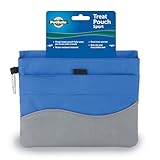
clipped on during sessions so rewards are fast and the pace stays high.
Advanced Obedience and Trick Training: Raising the Cognitive Bar Over Time
ACDs adapt to mental challenges faster than almost any other breed I've trained. What challenges them in week one becomes routine by week three — which means you need a deliberate strategy for continuously raising the cognitive bar.
Three approaches work particularly well with this breed:
- Variable reward schedules: Don't reward every correct repetition. Reward unpredictably — sometimes on the third rep, sometimes the first, sometimes the seventh. This mirrors the cognitive unpredictability of actual stock work and keeps attention locked in.
- Novel commands weekly: Introduce at least one new behavior every 7-10 days. It doesn't need to be complex — "back up," "touch," "middle" — the novelty itself is the point.
- Deliberate session variation: Change your training location, your clothing, your posture. ACDs that only perform reliably in the kitchen haven't truly learned — they've pattern-matched. Breaking patterns forces deeper cognitive engagement.
A
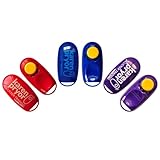
can be genuinely useful here because the precision of the marker helps your dog isolate exactly which behavior earned the reward — and that specificity accelerates learning of complex chains.
The overarching principle: training isn't just about manners for an ACD, it's a primary mental need. Think of it less as teaching your dog to behave and more as giving their brain the complex problem-solving work it was literally bred to do.
Puzzle Toys, Enrichment Feeders, and DIY Mental Games
Your cattle dog doesn't need more expensive toys. They need the right toys introduced the right way. I've watched owners drop $150 on a collection of advanced puzzles, only to have their dog disengage completely within a week — not because the dog was bored, but because the setup was wrong from the start.
The Difficulty Mistake That Kills Puzzle Engagement
The most common error is starting too hard. ACDs are brilliant, and owners assume that means skipping straight to Level 3 or Level 4 puzzles. In my experience, that's exactly backwards.
I worked with a client in 2026 whose two-year-old ACD named Ranger had been given a complex sliding puzzle immediately. Ranger pawed at it twice, couldn't figure it out, and walked away. Within three days, he refused to even approach it. That pattern — frustration leading to learned helplessness around puzzles — is genuinely difficult to reverse.
Always start at Level 1-2, even for an obviously intelligent dog. The goal in early sessions isn't challenge; it's building the habit of engagement and the confidence that effort pays off. My go-to starting points are the Nina Ottosson Dog Tornado (Level 2 — just enough complexity to be satisfying without overwhelming) and the Outward Hound Hide-N-Slide, which rewards persistence without requiring the fine motor problem-solving most dogs find genuinely confusing at first.
Once your dog is solving a Level 2 puzzle in under 90 seconds across three consecutive sessions, that's your signal to level up.
Rotation Is Non-Negotiable
ACDs memorize puzzle solutions fast — typically within 2-3 uses. After that, the puzzle stops being mental work and becomes a mechanical sequence. Maintain a rotation of at least 6-8 puzzles on a rolling schedule, cycling each one out for 2-3 weeks before reintroducing it. By the time it comes back around, re-solving it requires genuine effort again.
For daily feeding, West Paw Toppl towers (two Toppls connected together) and the Kong Classic stuffed with frozen meals are workhorses I recommend to almost every client. Freezing the Kong the night before adds significant time-on-task — a Kong that might take 8 minutes fresh can take 25-30 minutes frozen. That's a meaningful chunk of cognitive effort that costs you nothing but 3 minutes of prep the evening before.
Snuffle Mats and Nose Work Feeders: Why Olfactory Enrichment Hits Differently
There's a physiological reason snuffle mat sessions leave dogs looking genuinely tired in a way that even a long walk sometimes doesn't: scent processing is cognitively expensive. A dog sorting through a snuffle mat to find 20 scattered pieces of kibble is running their brain hard.
I use

as a regular meal replacement 3-4 times per week for my own dogs. Scatter a full meal’s worth of kibble into the mat and let them work for it. Most ACDs take 10-15 minutes on a well-loaded mat and come up from it calmer and more settled than after most physical exercise sessions.
DIY Enrichment That Costs Almost Nothing
You don't need to spend much to keep an ACD's brain working. My favorite free-to-cheap options:
- Muffin tin game: Place kibble under tennis balls in a muffin tin. Takes 60 seconds to set up, 5-10 minutes to solve.
- Paper cup shuffle: Hide kibble under 6-8 overturned paper cups in a random pattern. Cheap, disposable, easily varied.
- Sniff boxes: A cardboard box filled with crumpled paper or toilet paper rolls with kibble hidden inside. Dogs go absolutely wild for these.
- Scatter feeding in grass: Instead of a bowl, throw the meal into a grassy area and let your dog forage. Takes 15-20 minutes and satisfies deep foraging instincts.
Replacing the Food Bowl Entirely
My strongest practical recommendation: stop using a food bowl. Every meal your ACD eats from a flat bowl is a missed opportunity. Feeding every meal through puzzles, Kongs, snuffle mats, or scatter feeding adds 15-20 minutes of daily cognitive work with almost zero extra effort — just a different container. Over a week, that's nearly two hours of enrichment that would otherwise simply not happen.
Nose Work, Scent Games, and Tracking: Tapping Into the ACD's Hidden Superpower
Most ACD owners are laser-focused on their dog's intelligence and trainability — and rightfully so. But nearly all of them are sleeping on something equally remarkable: the Australian Cattle Dog's nose. These dogs were bred to work vast open landscapes, tracking livestock across variable terrain in all weather conditions. That sophisticated olfactory system is still very much active in your living room right now, going completely unused.
Nose work is the single most cognitively exhausting activity you can offer a cattle dog, and one of the few that genuinely calms them rather than just burning off physical energy.
Here's a comparison I come back to constantly: 20 minutes of structured nose work will settle an ACD more effectively than 2 hours of fetch. The reason is neurological. Sustained olfactory processing — actively working through layers of competing scents to locate a specific odor — engages deep cognitive systems and demands independent problem-solving. The dog isn't reacting to you; they're thinking through a puzzle using a sense that's 40 times more sensitive than ours.
I saw this firsthand with a 4-year-old blue heeler named Ruckus, whose owner had tried everything to reduce his evening zoomies and destructive chewing. Two weeks after introducing a 15-minute nose work session in the late afternoon, the zoomies essentially disappeared. Same dog, same household — one new activity.
Getting Started: Your First Nose Work Sessions
You don't need expensive equipment to begin. The AKC Scent Work program uses four target odors — Birch, Anise, Clove, and Cypress — but for introductory sessions at home, Birch is where most trainers start. You'll need an odor tin (a small metal container with holes drilled in the lid), a handful of those four odors, and a simple array of 5-6 identical containers like cardboard boxes or muffin tins.
The foundation process is straightforward:
- Place a high-value treat inside the tin along with a drop of Birch oil
- Hide the tin in one of the containers in your array
- Release your dog with a clear "find it" cue and let them investigate
- Mark and reward heavily the moment they indicate on the correct container
Most ACDs progress to independent, confident searching within 3-4 sessions — faster than almost any other breed I've worked with. Their drive to solve the problem takes over quickly. A
Similar Posts
Why Does My Dog Roll in Dead Animals? Expert Answers
Introduction Picture this: You've just spent half an hour bathing your dog, carefully working shampoo through their coat, rinsing every last bubble, and toweling them dry. Your pup smells like lavender and sunshine. You let them out into the yard for a quick bathroom break, and thirty seconds later, they're rolling—shoulders grinding into the grass…
Goldendoodle Training Tips for Beginners (2026)
Most people assume that getting a "smart, easy-going breed" means training will basically take care of itself. Then their goldendoodle eats a couch cushion, jumps on every guest who walks through the door, and pulls them down the sidewalk like a sled dog — and suddenly that assumption feels very naive. I've worked with hundreds…