Goldendoodle Training Tips for Beginners (2026)
Most people assume that getting a "smart, easy-going breed" means training will basically take care of itself. Then their goldendoodle eats a couch cushion, jumps on every guest who walks through the door, and pulls them down the sidewalk like a sled dog — and suddenly that assumption feels very naive.
I've worked with hundreds of goldendoodles over the past 15+ years, and here's what I tell every new owner who walks into my training sessions looking slightly frazzled: this breed isn't difficult to train. But they are different to train, and those differences matter enormously, especially in the early weeks.
The good news? If you're a first-time dog owner, you may actually have an edge. You haven't built up years of inconsistent habits or outdated "dominance-based" instincts that I spend half my sessions helping experienced owners unlearn. You're starting fresh, and so is your dog.
This guide covers everything you need to set your goldendoodle up for genuine, lasting success — from what's actually happening in your dog's brain during those first two weeks home, to the seven commands that form the foundation of a well-behaved dog, to the socialization and mental enrichment work that most beginners overlook entirely (and then wonder why their dog is still a handful at 18 months).
Whether your goldendoodle is 8 weeks old or already testing your patience at 6 months, these methods work — because they work with how goldendoodles are wired, not against it.
Let's start there, with what actually makes this breed tick.
What Makes Goldendoodles Unique to Train (And Why Beginners Have an Advantage)

If you've just brought home a fluffy, wiggly Goldendoodle and have absolutely no idea what you're doing — good news. You may actually be better positioned to train this breed than someone who has spent years wrestling with a Beagle or a Basenji.
That's not just reassurance. There's a real reason Goldendoodles consistently rank among the most trainable dogs I work with, and understanding why will shape how you approach every session from day one.
The Genetic Combination That Works in Your Favor
Goldendoodles are a cross between a Golden Retriever and a Poodle — a genuinely fortunate combination of working traits. Golden Retrievers were bred to work alongside humans closely and cooperatively, producing a dog with an almost reflexive desire to please. Poodles are one of the most cognitively capable breeds in existence, consistently ranking near the top in working intelligence assessments.
What you get is a dog that wants to work with you and has the mental horsepower to learn quickly. In positive reinforcement training, that's the ideal starting point. The dog isn't just tolerating your requests; it's genuinely engaged in the process.
The beginner advantage is real, and I've watched it play out dozens of times: new dog owners approach training with patience and curiosity, not the accumulated frustration that comes from years of fighting a stubborn breed. When your dog is visibly excited to work with you — tail spinning, eyes bright, practically leaping toward the

— it’s much easier to stay consistent and positive.
The Goldendoodle Energy Curve: What to Expect From 8 Weeks to 2 Years
The dog you have at 10 weeks is not the dog you'll have at 10 months.
Young Goldendoodle puppies are eager and impressionable but have an attention span of about 3-5 minutes per training session. That's normal, and it's actually useful — short, frequent sessions build habits faster than long, exhausting ones. Around 6-9 months, many Goldendoodles hit what I call the adolescent plateau, where hormones, environmental distractions, and a growing sense of independence temporarily override all the good work you've done. Don't panic. Push through with consistency.
By 18-24 months, most Goldendoodles settle into genuinely reliable, responsive companions — provided the foundation work happened early. The energy is still there, but it becomes something you can channel rather than something that channels you.
F1 vs. F1B vs. Multigen: How Breeding Affects Your Training Approach
Not all Goldendoodles train exactly the same, and the generation matters more than most people realize.
- F1 Goldendoodles (50% Golden, 50% Poodle) tend to have a balanced temperament — enthusiastic without being anxious, smart without being demanding. They're often the most forgiving dogs to train as a beginner.
- F1B Goldendoodles (25% Golden, 75% Poodle) lean more heavily toward Poodle traits. That means sharper intelligence, but also a slightly more independent streak. These dogs get bored faster and need more mental stimulation woven into their training routines. A

isn’t optional for an F1B — it’s a training tool.
– **Multigenerational Goldendoodles** can vary significantly depending on the breeder’s selection priorities. Ask your breeder specifically about the parent dogs’ temperaments, not just their coat types.
The Mistake I See Beginners Make Most Often
Smart dog owners sometimes fall into a trap: they assume a smart dog will figure things out on its own, skip structured guidance, and expect the dog's intelligence to fill the gap.
What actually happens? The dog does figure things out — just not the things you wanted. I've seen highly intelligent Goldendoodles teach themselves to open cabinet latches, unzip bags, and systematically dismantle furniture cushions when left without mental direction. Boredom in a smart dog is a design problem, and the dog will engineer its own solution.
Structured training isn't about controlling a Goldendoodle — it's about giving a capable mind a job to do.
One realistic expectation before we go further: most Goldendoodles will grasp basic obedience commands within 2-4 weeks of consistent daily practice. Reliable off-leash recall — the kind you'd trust near a road or off a trail — takes 6-12 months of dedicated work. Plan accordingly, and you won't be disappointed.
Setting Up for Success: Your First 2 Weeks Home With a Goldendoodle
The most common mistake I see with new Goldendoodle owners: they bring this fluffy, brilliant puppy home on a Saturday, spend the weekend overwhelmed with excitement, and by Monday they're already Googling "why won't my puppy stop biting." The answer, almost every time, is that nobody had a plan before the puppy walked through the door.
Those first two weeks aren't just about bonding — they're laying the entire foundation for everything that comes after.
The 3-3-3 Rule: Give Your Goldendoodle Time to Land
You may have heard the 3-3-3 rule applied to rescue dogs, but it applies equally to puppies entering any new home: 3 days of decompression, 3 weeks to establish routine, and 3 months to feel fully settled.
During those first three days, resist the urge to start formal training. A puppy who just left their mother and littermates is running on stress hormones, processing an entirely new environment, and taking in an overwhelming flood of sensory information. Pushing "sit" and "stay" onto a dog who hasn't yet exhaled will only create a negative association with training from the start.
Instead, use those first 72 hours to simply be present. Let your puppy explore. Observe. Take notes on what frightens them, what excites them, what calms them down. That information is genuinely valuable later.
Crate Training Starts Night One — No Exceptions
Crate training from the very first night is non-negotiable if you want house training to go smoothly. The single biggest setback I see in beginner households is owners who let the puppy sleep in bed "just for tonight" and then struggle with inconsistency for the next four months.
A properly sized crate isn't cruel — it's a den. Goldendoodles, once acclimated, genuinely seek them out. For standard Goldendoodles, a
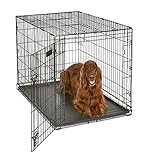
with a divider panel is practical because you can start with a smaller den-sized space and expand it as your puppy grows, saving you from buying two crates.
Place a

inside, add a worn t-shirt of yours for scent comfort, and expect some crying that first night. It’s normal. It passes. Consistency does not.
Essential Supplies Before Training Begins: What Actually Matters vs. Marketing Gimmicks
The puppy aisle will try to sell you everything. Here's what you genuinely need in week one versus what can wait:
Actually necessary:
- A correctly sized crate with divider
- A consistent enzymatic cleaner for accidents — regular cleaners leave scent traces that invite repeat accidents in the same spot
- A puppy collar with ID tags
- Small, soft training treats (pea-sized, not the large biscuits)
- A baby gate to limit access to one or two rooms initially
Marketing gimmicks you can skip for now:
- Elaborate puzzle toys (introduce these at week three or four)
- Retractable leashes (actively counterproductive for training)
- Gadget-heavy "bark control" devices
Puppy-proofing belongs in this category too, and most beginners underestimate it. Removing temptations — loose cables, shoes left out, accessible trash cans — isn't just about safety. It's training infrastructure. Every time your Goldendoodle chews something forbidden, they practice a behavior you'll spend weeks undoing. Prevention is always faster than correction.
Building a Daily Schedule That Makes Training Automatic, Not an Afterthought
Write this down before your puppy arrives. Seriously, on paper.
For puppies under 12 weeks, potty breaks every 45 to 60 minutes while awake is the baseline. Add 15 minutes of capacity for each week of age — a 14-week-old can typically hold it 60 to 75 minutes. After meals, after naps, and immediately after crate time are the three highest-probability potty windows. Don't miss them.
Build feeding, potty, play, and sleep into a written rotation and post it somewhere everyone in the household can see it. Get your household on the same vocabulary before the puppy arrives. Choose "off" for jumping, not "down." Choose "come," not "here." Wonderfully consistent individual training can unravel completely because Dad says "no" while Mom says "eh-eh" and the kids say nothing at all. Puppies don't average mixed signals — they just get confused.
One unified word bank, agreed on in advance, is worth more than any training gadget you'll find online.
Positive Reinforcement Fundamentals: The Science Behind Why It Works for Goldendoodles
Here's the simplest way to explain operant conditioning without putting you to sleep: your Goldendoodle's brain is constantly running a cost-benefit analysis. Did that behavior produce something good? Do it again. Did it produce nothing, or something bad? Try something else. Your entire job in early training is to rig that analysis — make the right behavior pay out so consistently and so generously that repeating it becomes the obvious choice.
Goldendoodles are exceptionally responsive to this approach. That Poodle intelligence means they're always looking for patterns, and the Golden Retriever side means they genuinely want to please you. Combine those traits with a system that clearly communicates "yes, exactly that," and the learning curve gets steep in the best possible way.
How to Use a Clicker (or Verbal Marker) Correctly From Day One
The biggest gap in most beginner training isn't their relationship with the dog — it's the communication lag between the moment a dog does something right and the moment the reward arrives. Dogs don't generalize well. They connect consequences to whatever they were doing in the most recent fraction of a second. If your Goldendoodle sits beautifully and you spend three seconds fumbling in your pocket, you may end up rewarding the fidget that followed the sit.
A marker — either a
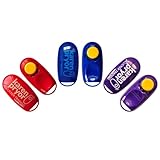
or a crisp verbal “yes!” — closes that gap instantly. The click or word becomes a promise: *whatever you just did, that was correct, and the treat is coming.* Here’s how to build that association from scratch:
- Click, then treat. Repeat 10-15 times in a row, no behavior required yet.
- Your dog will start perking up at the sound — that's the marker becoming meaningful.
- From this point forward, mark within 1.5 seconds of the behavior you want. Not 2 seconds. Not "as soon as I find a treat." 1.5 seconds is about the outer edge of what a dog can accurately connect to cause and effect.
I personally prefer a verbal marker with beginner clients because you always have your voice — you'll never accidentally leave it in another pair of pants.
Your Treat Hierarchy Changes Everything
Not all rewards are equal, and using the wrong tier of treat for the wrong situation is one of the most common beginner mistakes. Think of it like pay grades:
- Kibble or low-value treats: Reviewing behaviors your Goldendoodle already knows cold — basic sit in a quiet room, lying down on cue at home.
- Soft, mid-value treats (Zuke's Mini Naturals are my go-to): Learning new behaviors, practicing in slightly distracting environments.
- High-value rewards — real chicken, cheese cubes, tiny hot dog slices: Recalls, breakthrough moments on a difficult behavior, any time you're competing with a squirrel for attention.
Use your high-value treats like a bonus check. They should feel like a special occasion to your dog, which means don't burn them on behaviors that are already easy.
The Variable Ratio Schedule (And Why You Can Stop Treating Every Single Time)
Once a behavior is truly solid — your Goldendoodle is hitting it 9 out of 10 times across different locations and distractions — you can shift to a variable ratio reinforcement schedule. Instead of treating every correct repetition, you reward randomly: sometimes the 2nd rep, sometimes the 5th, sometimes the 1st.
This is the exact psychology behind slot machines, and it works on dogs for the same reason it works on humans. Unpredictable rewards are more motivating than guaranteed ones, and the behavior actually strengthens. Carry a
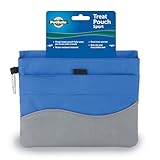
and keep your dog guessing.
Why Punishment Backfires With Goldendoodles Specifically
I need to address this directly because I've cleaned up the damage. I've personally rehabilitated several Goldendoodles — three come to mind immediately — where a single session with a prong collar or harsh correction method dismantled six months of careful, trust-based training. What I saw every time: shutdown behavior, flinching at raised hands, and a dog that stopped offering behaviors entirely because the cost of being wrong suddenly felt catastrophic.
Goldendoodles are emotionally sensitive dogs. Harsh corrections don't teach them what to do instead — they teach them that training is a minefield. The result is anxiety, not compliance. Read your dog's stress signals: yawning, lip licking, ears pinned back, or suddenly "forgetting" known behaviors are all signs the pressure is too high. Back off, simplify, and rebuild confidence. Progress made through trust lasts. Progress forced through fear doesn't.
The 7 Core Commands Every Goldendoodle Should Know in Order
The sequence here isn't arbitrary. Each behavior on this list builds on the one before it, and skipping ahead creates shaky foundations that collapse under real-world pressure. Teach these in order, and by week eight you'll have a dog who actually listens — not just in your kitchen, but at the dog park, on the sidewalk, and at the vet.
Step-by-Step Luring Technique for Sit, Down, and Stay
Sit is your starting point, and your most powerful tool as a beginner — because a sitting dog cannot simultaneously be jumping on your guests. Most Goldendoodles nail a lured sit in a single five-minute session, giving you your first real win and your dog its first experience of "oh, this is how we communicate."
The lure: hold a
at your dog’s nose, then slowly move it back over their head. Their bottom hits the floor as their nose follows up. The instant it does — mark it (a clipped “yes!” or a click from a
) and deliver the treat. Five repetitions, done.
Look/Watch Me comes next, and beginners consistently underestimate it. A dog making eye contact with you physically cannot be fixating on the squirrel across the street. Use it as the gateway to every other command in distracting environments. Lure your dog's eyes to yours by moving a treat from their nose up to the bridge of your nose. Mark the moment their gaze meets yours.
Down trips up a lot of people because they try pushing on the dog's shoulders — which creates opposition reflex and a very annoyed Goldendoodle. Instead, from a sit, move your lure straight down between your dog's front paws and then slowly slide it forward along the floor. The elbows follow. A more vulnerable position requires more patience; some dogs need four or five sessions before they're comfortable dropping into a down without hesitation. That's completely normal.
Stay has three independent dimensions, and this is where beginners most often go wrong: they try to add duration, distance, and distraction all at once. The progression looks like this:
- Duration first: 5 seconds → 15 seconds → 30 seconds → 2 minutes. Stay next to your dog the entire time.
- Distance second: One step away → five feet → across the room. Keep duration short when adding distance.
- Distraction last: Only after the first two are solid.
Recall Training Protocol: The "Goldendoodle Recall Game" That Actually Works
Come is the most important command on this list and the one most beginners quietly ruin by week three. Someone calls "come!" to put their dog in the crate before leaving, to do nail trims, to end a romp at the dog park. Within a month, "come" predicts only unpleasant things, and the dog starts playing keep-away.
For the first six months, recall should predict only good things. Here's the game I use:
- Have two people sit on opposite sides of a room, each with high-value treats.
- One person calls the dog enthusiastically — genuine excitement in your voice matters here.
- When the dog arrives, deliver a jackpot of three or four treats and a full-body celebration.
- The second person immediately calls. Back and forth for two to three minutes.
- Gradually increase distance, then