Miniature Schnauzer Barking Training Guide (2026)
If you share your home with a Miniature Schnauzer, you already know: these dogs have opinions, and they will absolutely tell you about them.
I've worked with hundreds of Mini Schnauzers over my career, and they remain one of the most misunderstood breeds when it comes to barking. Most owners come to me convinced their dog is "broken," "defiant," or just plain stubborn. What I've actually found, time after time, is that the barking almost always makes perfect sense — once you understand what's driving it. That's the piece most training guides skip entirely, and it's exactly why so many owners spend months following generic advice that simply doesn't stick.
Here's what I want you to take away from this guide: you are not trying to silence your Schnauzer. You are trying to communicate with them more effectively. That reframe alone has helped more of my clients make real progress than any single technique I've ever taught.
In the sections ahead, we'll dig into the specific reasons Mini Schnauzers bark more than most breeds, what realistic success actually looks like for this type of dog, and the foundational skills your dog needs before any bark-specific training can work. You'll get a concrete step-by-step protocol for the "Quiet" cue, strategies for the most common real-life scenarios, and honest guidance on when barking signals something deeper than a training issue.
Whether your dog erupts at the doorbell, goes ballistic on walks, or narrates your entire workday from home, there's a path forward — and it starts with understanding exactly why your Mini Schnauzer is so compelled to speak up in the first place.
Why Miniature Schnauzers Bark So Much (It's Not What You Think)

Here's the reframe that changes everything: your Mini Schnauzer isn't misbehaving when he barks. He's doing exactly what centuries of selective breeding designed him to do. The moment owners genuinely internalize this, their entire approach to training shifts — and the results follow.
The owners who struggle most are the ones who treat barking as defiance. It isn't. It's a deeply wired biological function dressed up as a behavior problem.
The Watchdog Wiring: How Selective Breeding Created a Vocal Dog
Miniature Schnauzers were developed in 19th-century Germany as farm utility dogs — specifically as ratters and yard guardians. Their job was to detect intruders (human or rodent), sound the alarm loudly and persistently, and keep sounding it until someone responded. That's not a character flaw. That's a job description.
The critical piece most owners miss is the persistence requirement built into that role. A ratter who barked once and gave up was a useless ratter. Natural selection and deliberate breeding favored dogs who kept going — who escalated their alert until acknowledged. That dog is now living in your apartment and barking at the UPS driver for four solid minutes.
Understanding this context does two things practically:
- It removes the frustration of thinking your dog is being stubborn or spiteful
- It tells you exactly why extinction-based approaches (simply ignoring the barking) so often fail with this breed — a dog bred to persist through non-response is going to outlast you every single time
Identifying Your Mini's Primary Bark Trigger Before You Train Anything
Not all Mini Schnauzer barking is the same, and treating it as one monolithic behavior is one of the most common training errors I see. There are three distinct bark types that virtually every Mini Schnauzer owner will recognize once they know to look for them:
-
Alert barking — Triggered by external stimuli: strangers, sounds, movement outside a window, the doorbell. Sharp, urgent, often in rapid bursts. This is the watchdog wiring firing exactly as designed.
-
Demand barking — Triggered by frustrated wants: food, attention, access to a room, a toy they can see but can't reach. Often lower-pitched and more rhythmic. This is a learned behavior that owners frequently create without realizing it.
-
Anxiety barking — Triggered by perceived threat or isolation. Often accompanied by pacing, whining, or destructive behavior. This requires a fundamentally different response than the other two types (covered in detail later in this guide).
The reason this distinction matters so much before you train anything is that the training response for each type is completely different. What works for alert barking can actually reinforce demand barking. What helps anxiety barking can inadvertently reward alert barking. Getting this wrong early sets you back months.
Spend one week before any formal training simply logging your dog's barks: what triggered it, what time of day, how long it lasted, and how you responded. You'll start seeing patterns within three days.
How much a Mini barks also varies enormously between individual dogs. Some bark twenty times in a full day; others seem to have a quota of two hundred before noon. This variation comes from three intersecting factors: lineage (dogs from working lines versus show lines behave quite differently), the critical socialization window between 3 and 12 weeks, and — this one stings — owner reinforcement history.
Which brings me to a mistake I watched unfold with my very first Mini Schnauzer client, a dog named Otto. His owner, trying desperately to quiet him during a Zoom call, handed him a treat the moment he paused his barking. Just once, she said. Just to get through the meeting. Within two weeks, Otto had figured out that barking produced treats if he timed the pause correctly. His barking had tripled. That single moment of "just one treat to quiet him" had accidentally created a demand barking loop that took six weeks of structured work to untangle.
The reinforcement history problem is fixable — but only once you understand what you accidentally taught. A

and

used *correctly* from the beginning can prevent exactly this kind of pattern from forming in the first place.
Knowing your dog's breed history, identifying which bark type dominates, and auditing your own responses puts you miles ahead of where most Mini Schnauzer owners start.
Setting Realistic Expectations: What 'Trained' Actually Looks Like for a Mini Schnauzer
Let me be straight with you about something I wish someone had told me before I spent three weeks convinced I was failing with my first Miniature Schnauzer, Pepper: a well-trained Mini Schnauzer still barks. She just barks less, stops when you ask, and recovers faster. If you're picturing a perfectly silent little dog gazing serenely out the window at a passing squirrel, I need to gently redirect that expectation — because chasing that outcome is exactly what causes owners to quit in month two, convinced that training "doesn't work."
The honest benchmark is this: success means reduced frequency, reliable response to a quiet cue, and shorter bark episodes. That's a genuinely meaningful result. It's also a trainable one. Total silence isn't.
Age-by-Age Expectations: Puppy vs. Adult vs. Senior Mini Schnauzer
Your Mini Schnauzer's age shapes not just how fast they'll learn, but what kind of progress you should realistically expect.
Puppies (8–16 weeks) are in a neurological sweet spot. Their associations form quickly, their habits aren't entrenched yet, and they haven't spent years being rewarded (accidentally or intentionally) every time they barked at the mailman. Consistent work with puppies in this window produces noticeable changes within 4–6 weeks — sometimes faster. Don't mistake early success for finished training, though. Puppies still need ongoing reinforcement through adolescence, which in Mini Schnauzers hits hard around 6–10 months.
Adult dogs (roughly 1–3 years) are a different project. This is the age range I see most often in my sessions, and it's also where expectations most often go sideways. If you've adopted a rescue Mini Schnauzer who's been barking at the fence for two years, that behavior is deeply grooved. You're not just teaching a new skill — you're competing with a well-practiced habit. Expect 3–4 months of consistent daily work before you see reliable results. That's not failure; that's neuroscience.
Senior Mini Schnauzers (7+ years) can absolutely learn, but they tend to have both stronger habits and, in some cases, physical factors affecting behavior — hearing changes, cognitive shifts, or discomfort can all increase barking. Progress is slower, and management strategies often carry more of the load. Be patient, be kind, and loop in your vet if barking suddenly increases in an older dog.
The Management vs. Training Distinction (Both Matter)
Management and training are different tools, and you need both.
Management means preventing bark opportunities — closing the blinds so your dog can't patrol the front window, using a
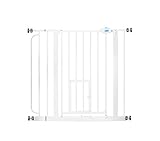
to keep them away from the front door during peak delivery hours, or crating during situations you know will trigger a spiral. Management doesn’t change your dog’s underlying emotional response to triggers. It just removes the chance to practice the behavior.
Training — the actual behavior change work — is what builds new responses over time. But training alone without management is like trying to fill a bucket with a hole in it. Every unreinforced barking episode essentially practices the old behavior while you're working to replace it.
Use both, deliberately. Neither replaces the other.
How to Use a Bark Log to Measure Real Progress
A bark log turns vague frustration ("she's still barking so much!") into actual data you can act on — and it costs nothing.
For 30 days, log each notable barking episode with five quick data points:
- Date and time
- Trigger (doorbell, passerby, other dog, nothing visible)
- Duration (in seconds or minutes)
- Intensity — use a simple 1–5 scale (1 = brief grumble, 5 = full alarm mode)
- Your response — what did you do?
Use the free Dogo app (which has a built-in training log feature) or a dedicated note in your phone's Notes app. The format matters less than the consistency.
After 30 days, patterns emerge that you simply cannot see day-to-day. You might discover 80% of intense barking happens between 4–6pm (hello, overstimulation from a tired dog), or that your "quiet" cue works beautifully for doorbell barking but not at all for fence barking. That's actionable information — and it's how you train smarter, not just harder.
users can add a note for whether the clicker was part of the response, which helps track what’s actually working.
Foundation Skills Every Mini Schnauzer Needs Before Bark-Specific Training
Here's the mistake I see most often when owners jump straight into bark training: they're trying to teach a "Quiet" cue to a dog whose brain is essentially on fire. A Mini Schnauzer mid-bark is neurologically aroused — cortisol up, focus gone, operant learning window closed. Asking that dog to respond to a new verbal cue is like whispering instructions to someone mid-sneeze. The cue needs a calm baseline to land on, and that baseline is built before week one of any bark-specific work.
Think of foundation skills as installing the communication hardware. Once it's in place, bark training is just running software on a system that already works.
Teaching 'Watch Me' as Your Interrupt Cue Foundation
"Watch Me" — or whatever eye-contact cue you choose — is the single most transferable skill in your toolkit. When your Mini locks eyes with you, two things happen simultaneously: their arousal drops, and you regain the communication channel that barking severs.
Before you touch bark training, proof three specific behaviors until they're automatic:
- Name recognition at 10 feet — call your dog's name from across the room and get a head-turn within 2 seconds, even with mild distractions present
- A reliable sit-stay held for 30 seconds — not just a sit that dissolves the moment you step back, but a genuine stay with duration
- Hand target — your dog touching their nose to your flat palm on cue, which gives you a physical redirect that bypasses the vocal chaos entirely
I worked with a Mini Schnauzer named Pretzel whose owner had spent six weeks trying to teach "Quiet." The dog had zero response. When we stepped back and spent just ten days building a solid Watch Me, the "Quiet" training that followed took four sessions to click. The cue finally had somewhere to land.
To build Watch Me, start with zero distractions. Hold a treat near your eye, say the cue once, and mark the moment your dog's gaze meets yours with a clicker or a crisp "yes."
Keep sessions to 3–4 minutes. Gradually add distance, then mild distractions, then real-world environments — in that order, not all at once.
Impulse Control Games That Directly Transfer to Bark Reduction
Barking at triggers is fundamentally an impulse control failure. Your Mini sees the mail carrier, and the threshold between "noticing" and "exploding" is milliseconds. Impulse control games widen that gap.
The two I use most reliably with Schnauzers:
- "It's Yer Choice" (a Susan Garrett classic): hold treats in a closed fist, wait for your dog to back off and offer calm behavior, then open your hand and reward. Minis catch on fast and it directly maps to "I see a trigger, I choose not to react."
- Doorway stays: require a sit before passing through any doorway. This sounds mundane, but it rehearses pausing before acting dozens of times daily. That pause is exactly what you're asking for when the neighbor's dog appears on the sidewalk.
Leash skills matter here more than most owners realize. A Mini that lunges and barks at every dog or stranger on walks is rehearsing that reactive behavior hundreds of times a week — and actively dismantling whatever quiet work you're doing at home. A
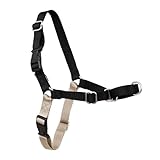
paired with proper leash mechanics isn’t just about manners; it’s bark training infrastructure.
Building the Reward Value: Why Your Treat Choice Matters More Than Your Technique
Kibble during distraction training is largely a waste of time with Miniature Schnauzers. High-value treats outperform kibble four-to-one when there's any environmental competition for your dog's attention.
My go-to options for Minis:
- Small cubes of cooked chicken breast (about 1/4-inch — tiny but potent)
- Zuke's Mini Naturals (soft, low-calorie, easy to break smaller)
- String cheese torn into pea-sized pieces
Keep a

clipped to you during every foundation session so rewards are delivered within 1–2 seconds of the correct behavior. Latency kills learning.
Don't underestimate mental enrichment, either. A Mini getting 15–20 minutes of nose work or puzzle feeding daily comes to training sessions with measurably lower baseline arousal — and barks significantly less overall. An under-stimulated Schnauzer isn't being stubborn; they're being a Schnauzer. Give that brain a job before you ask it to be quiet.
Step-by-Step Protocol for Training the 'Quiet' Cue
Here's the part most owners get backwards: you cannot teach a dog to stop barking if you've never allowed them to start. Suppressing every bark before you've built a genuine "off switch" creates dogs that are frustrated, anxious, and harder to work with. The protocol below is built around that reality.
The golden rule: allow 2–3 barks before you ever cue "Quiet." Your Mini Schnauzer needs to express the behavior before they can learn to terminate it on cue. Think of it like teaching "Sit" — you need the dog in motion before the cue means anything.
The 'Speak First' Method: Teaching Bark on Cue to Build an Off Switch
The Speak-then-Quiet sequence feels counterintuitive — teaching "Speak" first seems like you're moving in the wrong direction. You're not. The owners who commit to it are consistently the ones who message me six weeks later saying their dog is "a different animal."
Here's the exact sequence:
- Find your dog's natural trigger — the doorbell, you putting on shoes, a knock — something reliable that produces barking
- Let 2–3 barks happen without any reaction from you
- Say "Speak" while the barking is happening (this pairs the word to the behavior retroactively)
- After several repetitions over 2–3 days, test whether "Speak" produces barking on its own in a quiet room
- Once your dog barks reliably on the "Speak" cue, you own the behavior — now you can teach the off switch
When you control the start, the stop becomes dramatically easier to train. You're not fighting the behavior; you're managing it.
Session Structure: Frequency, Duration, and When to Raise Criteria
Once "Speak" is solid, introduce "Quiet" using this protocol — the timing here is everything:
- Trigger bark → 2 barks → say "Quiet" in a calm, flat tone (not loud, not excited)
- Mark silence within 1–2 seconds with a clear "Yes" — said calmly, not enthusiastically
- Deliver a high-value treat at chin level immediately (I use small pieces of real chicken or
— something genuinely motivating)
– **Extend duration in 2-second increments** across sessions — session one aims for 2 seconds of quiet, session three aims for 6, session five aims for 10
Keep sessions short: 3–5 minutes maximum, twice daily. Mini Schnauzers are sharp but they tip into frustration fast if you push too long.
The three failure points I see constantly:
- Rewarding too late — if you mark silence at 3 seconds but the dog has already started barking again at second 2.5, you've marked the bark. Timing is everything; a
Similar Posts
Dog Anxiety Medication + Training: The Complete Guide
Introduction: Why Medication Alone Isn't Enough for Anxious Dogs When Sarah's rescue dog Max started having panic attacks during thunderstorms, her veterinarian prescribed anti-anxiety medication. She filled the prescription, gave Max his daily dose, and waited for the transformation. Three months later, Max was still destroying her bedroom door during storms—just slightly calmer while doing…
Deaf Dog Training Hand Signals: Complete Guide 2026
Most people assume that training a deaf dog must be harder than training a hearing dog. After working with hundreds of dogs over the past 15+ years — including dozens of deaf and hearing-impaired dogs — I can tell you the opposite is often true. Deaf dogs are, in many ways, exceptional students. They're already…
Loose Leash Walking Without Treats: It Works (2026)
Most dog trainers will tell you that treats are non-negotiable for loose leash walking. After 15 years working with hundreds of dogs, I'm here to respectfully disagree. I've trained everything from hyperactive Border Collies to stubborn Basset Hounds, and I've watched plenty of owners succeed beautifully without a single piece of chicken in their pocket….